
In This Article
A neutral running shoe is a daily trainer built with no built-in correction for overpronation — just cushioning and a flexible platform that lets your foot move the way it wants to move. That’s the textbook version, anyway. In practice, “neutral” has quietly become the default category for most runners, including plenty of people who were told a decade ago they needed something stiffer.
Here’s what nobody tells you when you’re standing in the shoe aisle squinting at foam densities: the neutral category in 2026 is enormous, and it spans everything from a $65 grocery-run special to a $165 cloud you strap to your feet. Pick the wrong end of that spectrum for your actual mileage and you’ll either overpay for cushioning you don’t need or underpay for support your joints will eventually demand back with interest.
I dug through current specs, lab measurements, and miles of reviewer notes on the shoes actually sitting on shelves right now to put together this list. No filler picks, no shoes that got quietly discontinued last spring. Just seven men’s neutral road running shoes for men worth your money in 2026, organized so a brand-new runner and a marathon-training veteran can both find their match.
Quick gut check before we dive in: if your shoes wear down evenly and your ankles don’t roll inward dramatically when you watch yourself run on a treadmill, neutral is very likely your lane.
Quick Comparison Table: 7 Best Neutral Running Shoes at a Glance
| Shoe | Best For | Stack Height (Heel/Forefoot) | Drop | Price Range |
|---|---|---|---|---|
| Nike Revolution 8 | Budget / beginners | ~30mm / 20mm | 10mm | $60–$75 |
| Brooks Ghost 18 | Everyday all-rounder | 36mm / 26mm | 10mm | $145–$155 |
| Saucony Ride 19 | Durability-focused workhorse | 36mm / 28mm | 8mm | $140–$145 |
| ASICS Novablast 5 | Lightweight max cushion | 41.5mm / 33.5mm | 8mm | $135–$145 |
| HOKA Clifton 10 | Plush daily miles | 42mm / 34mm | 8mm | $145–$155 |
| New Balance Fresh Foam X 1080v14 | Wide feet / plantar comfort | 38mm / 32mm | 6mm | $160–$170 |
| ASICS Gel-Nimbus 27 | Long runs / recovery days | 43.5mm / 35.5mm | 8mm | $160–$170 |
A pattern jumps out fast here: stack height has basically taken over as the new battleground in running shoes, with four of these seven shoes now sitting north of 36mm in the heel. That’s the maximalist wave eating into what used to be “moderate cushion” territory. If you’re newer to running or watching your budget, the Revolution 8 and Ride 19 keep things lower to the ground and lower in price — but if your knees have logged a decade of pavement, the extra foam in the Nimbus 27 or Clifton 10 is buying you real protection, not just marketing.
💬 Found a shoe that caught your eye already?
Give this guide a quick share — it helps other runners stumble onto the right pair instead of guessing. 😊
Top 7 Neutral Running Shoes for Men: Expert Analysis
1. Nike Revolution 8 — Best Budget Pick
The Revolution 8 is what happens when a brand finally stops treating its cheapest shoe like an afterthought. Nike trimmed the foam and dropped the weight to roughly 9.3 ounces in a men’s size 9, which sounds like a footnote until you’ve spent a long run noticing how much a heavy shoe drags at mile six.
The EVA midsole and 10mm drop are tuned specifically for heel strikers, and independent lab testing has measured genuinely strong energy return in the heel — numbers that used to require spending three times as much. What that spec sheet won’t tell you: the forefoot cushioning is noticeably thinner than the heel, so if you’re a midfoot or forefoot striker logging more than 20 miles a week, you’ll feel the floor sooner than you would in a pricier trainer.
Reviewers consistently describe it as a confident first running shoe — breathable mesh upper, true-to-size fit, and wide-width options that a lot of $140 shoes still skip. The trade-off is durability ceiling: this is a shoe for building a habit, not chasing a marathon PR.
Best for: New runners, 5K–10K training, treadmill walkers, anyone testing whether running is going to stick before investing more.
✅ Genuinely light for the price
✅ Breathable mesh, wide-width options available
✅ 10mm drop suits heel strikers well
❌ Thin forefoot cushioning for higher mileage
❌ Basic stock insole
Price range: $60–$75 — one of the lowest-friction ways to start running without wondering if your shoes are sabotaging you.
2. Brooks Ghost 18 — Best Overall Daily Trainer
If neutral running shoes had a “default setting,” it would look a lot like the Ghost 18. Brooks didn’t reinvent anything here, and that’s sort of the point — this is the eighteenth lap of a formula that already works.
The nitrogen-infused DNA Loft v3 midsole gives you a 36mm heel / 26mm forefoot stack at a 10mm drop, which lands firmly in “moderate, not maximal” territory. What that means on the road: you get real shock absorption without that slightly disconnected, walking-on-a-mattress feeling some max-stack shoes produce. The wider platform adds a quiet sense of ground contact that a lot of stability-shoe converts appreciate.
Brooks also refreshed the upper with a softer flat-knit tongue, fixing the one real complaint runners had about the Ghost 17. What hasn’t changed is the firm, somewhat businesslike ride — this isn’t a bouncy, springy shoe, and testers who want pep in faster efforts tend to look elsewhere. For steady mileage, though, the consistency is the feature.
Best for: Runners who want one shoe for everything from easy jogs to long runs, especially first-timers building a base.
✅ Stable, predictable ride for daily mileage
✅ Durable outsole and upper
✅ Roomy, accommodating fit
❌ Not lively at faster paces
❌ Moderate cushioning if you specifically want max-stack plushness
Price range: $145–$155. For a closer look at how Brooks tuned this version, Doctors of Running’s full Ghost 18 breakdown gets into the lab numbers.
3. Saucony Ride 19 — Best Value Workhorse
Saucony had one job with the Ride 19: fix the durability complaints that dogged the Ride 18, where the outsole and foam broke down for a lot of runners well before the 300-mile mark. They responded by adding XT-900 carbon rubber to the heel and toe-off zones — the high-wear spots that actually fail first — and it shows in early testing.
The PWRRUN+ midsole is a TPU-based foam, which behaves differently than standard EVA: think of it as tiny compressed beads that pop back into shape rather than slowly flattening out, the same basic principle as the foam in running shoes twice this price. At a 36mm/28mm stack and 8mm drop, it’s not chasing maximalist numbers, but at roughly 9 ounces it punches well above its price tag for responsiveness.
What most buyers overlook about this shoe: the fit runs slightly narrow through the midfoot, even with a roomy-feeling toe box. If you’ve had width issues with past Sauconys, try before you buy or stick to a wide colorway.
Best for: High-mileage runners on a budget who want durability without sacrificing a livelier ride than a pure cushioned cruiser.
✅ Genuinely improved outsole durability
✅ Bouncier than its price suggests
✅ Versatile enough for the occasional faster mile
❌ Narrower midfoot fit for some
❌ Not the plushest option if max cushion is the goal
Price range: $140–$145.
4. ASICS Novablast 5 — Best Lightweight Max Cushion
This is the shoe that quietly broke the rule that “more foam means more weight.” The Novablast 5 stacks 41.5mm of FF Blast Max foam under the heel — genuinely maximalist territory — yet weighs in around 9 ounces, lighter than several shoes on this list with far less cushioning.
ASICS widened the toe box significantly from the Novablast 4, which fixed the single biggest complaint about that version. The ride is soft without being mushy, helped by midsole sidewalls and a wide platform that keep the shoe feeling stable even at that towering stack height — ASICS calls this “stable neutral,” and on the road it mostly delivers. The supercritical-style foam gives it noticeably more bounce per ounce than the Ghost or Ride.
In my experience comparing spec sheets across the category, this is the best cushioning-to-weight ratio you’ll find for the price. The trade-off shows up in traction: the outsole rubber coverage is moderate rather than extensive, so wet pavement and cold mornings ask for a bit more caution than shoes with fuller rubber soles.
Best for: Runners who want a genuinely lightweight neutral running shoe with maximalist cushioning, especially for longer efforts where weight fatigue matters.
✅ Exceptionally light for its stack height
✅ Roomier toe box than previous version
✅ Strong value at this cushioning level
❌ Traction is good, not great, in wet conditions
❌ Some testers find the ride a touch “mushy” rather than energetic
Price range: $135–$145. RunRepeat’s neutral shoe testing has independently verified similar stack and weight figures if you want to cross-check the lab data yourself.
5. HOKA Clifton 10 — Best Plush Daily Trainer
HOKA built its reputation on tall, light foam stacks, and the Clifton 10 pushes that formula further than any Clifton before it — 42mm in the heel, up a striking amount from the Clifton 9, with the brand’s first-ever jump to an 8mm drop after a decade at 5mm.
That drop change matters more than it sounds. A higher drop shifts cushioning toward the heel, which suits heel-strikers logging steady, comfortable miles — but if you’d built a habit around HOKA’s old lower-drop feel, the transition takes a few runs to stop noticing. The compression-molded EVA midsole and Meta-Rocker geometry are doing real work here: a shoe this tall has no business feeling this light at 9.8 ounces, and somehow it does.
The honest catch most reviews bury: this is now the priciest “everyday” trainer in the HOKA lineup at this tier, having gone up two years running, and a few testers have flagged the outsole rubber as the first thing to wear thin if you’re a heavy heel-shuffler. If you log serious miles in one pair, keep an eye on tread wear past month four.
Best for: Runners who want maximum cushioning without maximum weight, plus anyone on their feet all day who wants a shoe that doubles as a walking shoe.
✅ Enormous stack height that doesn’t feel heavy
✅ Wider, more accommodating fit than past versions
✅ Smooth rocker geometry for effortless transitions
❌ Price has crept up two releases in a row
❌ Outsole durability concerns for high-mileage heel strikers
Price range: $145–$155.
6. New Balance Fresh Foam X 1080v14 — Best for Wide Feet & Plantar Comfort
The 1080v14 is New Balance’s answer to “what if comfort was the entire point.” It’s not chasing speed, and it’s not trying to be the lightest shoe in the room — it’s built for runners who want a thick, marshmallow-soft ride that holds up at 25 to 70 miles a week.
What sets this one apart from everything else on this list is width selection: New Balance offers this shoe across narrow, standard, wide, and extra-wide builds, which is rare in a category where “wide” usually means one extra half-inch and a shrug. New Balance also firmed up the durometer slightly from the v13, addressing complaints that the previous version felt unstable for heavier runners — you still get that signature pillowy step-in, just with a touch more structure underneath it.
The spec sheet won’t mention this, but several testers note the standard-width toe box still runs narrow despite the overall plush feel, so runners with wider forefoots may want to size into the wide build by default rather than as a backup plan. At roughly 10.4 ounces, it’s also the heaviest shoe on this list outside the Nimbus.
Best for: Runners managing plantar fasciitis or general foot fatigue, recovery-day miles, and anyone who has struggled to find a wide-width neutral daily trainer men actually trust for distance.
✅ Best width range on this list, by a wide margin
✅ Genuinely plush, durable cushioning
✅ Holds up well over high weekly mileage
❌ Heaviest shoe in this lineup
❌ Standard toe box runs narrow despite the wide options
Price range: $160–$170.
7. ASICS Gel-Nimbus 27 — Best Premium Pick for Long Runs
When a long run stretches past 15 miles, the Gel-Nimbus 27 is the shoe built specifically for that back half when everything starts to ache. At 43.5mm in the heel, it’s the tallest stack on this list, built on FF Blast Plus Eco foam with a wider landing platform and reinforced sidewalls that give it a “stable neutral” character similar to the Novablast, just dialed toward maximum protection instead of bounce.
The new jacquard mesh upper is a genuine upgrade in breathability over previous Nimbus generations, though several testers note the heel area still runs warmer than the rest of the shoe on hot days — worth knowing if you’re a sweaty-foot runner doing summer long runs. At roughly 10.7 ounces, this is also the heaviest shoe here, a direct trade-off for that much foam and platform width.
What most buyers overlook about this model: despite ASICS marketing it as a neutral shoe, the torsional rigidity and wide heel platform give it more built-in stability than the category label suggests — which is exactly why it works so well for heavier runners or anyone returning from injury who wants extra reassurance underfoot without a true stability shoe.
Best for: Marathon training, recovery runs, heavier runners, and anyone whose joints want every millimeter of cushioning they can get on tired legs.
✅ Tallest, most protective cushioning on this list
✅ Wide platform adds confidence for heavier runners
✅ Durable outsole and midsole over high mileage
❌ Heaviest option here
❌ Heel area runs warm on hot days
Price range: $160–$170.
🔍 Take a closer look at the full spec sheets before deciding.
Click on any shoe above to check current pricing, sizing, and color availability — these details shift, so it’s worth a quick look before you check out.
Real-World Scenarios: Which Neutral Trainer Fits Your Running Life?
Specs are useful right up until you actually have to picture yourself wearing the shoe. So here’s the shortcut: match yourself to one of these four runners.
The brand-new runner, three weeks into a habit. You’re running 2–3 times a week, distances still feel arbitrary, and you genuinely don’t know yet if this sticks. Don’t overspend. The Revolution 8 gets you through this phase without wasting $150 on a habit you haven’t proven yet, and the wide-width option matters more than people expect for first-time runners whose feet haven’t adapted to repetitive impact.
The marathon-training veteran logging 40+ miles a week. You need durability that survives months of training without falling apart at week eight, plus enough cushioning to absorb accumulated fatigue. The Ghost 18 or Ride 19 are built exactly for this — consistent, durable, and unglamorous in the best way.
The recovery-day specialist nursing tired legs. Some of your weekly miles are supposed to be slow and easy, and your shoes should reflect that. The Gel-Nimbus 27 or Clifton 10 exist for exactly this — max cushioning that protects joints when you’re intentionally not pushing pace.
The weight-conscious runner who hates feeling shoes on their feet. You want cushioning, but you also notice every extra ounce by mile five. The Novablast 5 is the rare shoe that delivers serious stack height without the weight penalty most maximalist shoes carry.
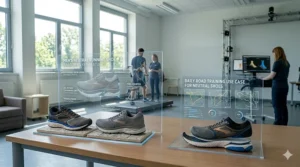
Common Pronation, Fit, and Comfort Problems — Solved by the Right Shoe
Problem: Your current shoes feel dead by month two. This is almost always an outsole or foam durability issue, not a “you ran too much” issue. The Ride 19’s redesigned XT-900 rubber zones exist specifically to solve this — it was the single biggest complaint about the previous version.
Problem: Your toes feel cramped no matter what you buy. Standard “true to size” sizing assumes a narrow American last that doesn’t fit every foot. Before assuming you need a half-size up, check width first — the 1080v14’s narrow-to-extra-wide range solves more cramped-toe complaints than sizing up ever will.
Problem: Your knees and hips ache after long runs, even in cushioned shoes. Worth knowing here: a Cochrane systematic review of running shoe types found the evidence that any particular shoe category meaningfully prevents injury is actually pretty thin — see the full Cochrane review if you want the data. That doesn’t mean cushioning doesn’t matter; it means the fix is usually more stack height and a comfortable fit, not a more “corrective” shoe.
Problem: You overheat in the heel during summer runs. Heavier, more structured shoes like the Nimbus 27 trap more heat at the heel collar. Switching to a lighter mesh option like the Novablast 5 for hot-weather runs, while saving the Nimbus for cooler long runs, solves this without buying a whole new rotation.
How to Choose Neutral Running Shoes for Men: A 6-Step Framework
Picking the right pair comes down to six honest questions, in this order:
- Check your wear pattern first. Look at the soles of your current shoes. Even wear across the whole sole usually means neutral is correct; heavy inner-edge wear can suggest overpronation worth discussing with a specialty running store before you buy.
- Be honest about weekly mileage. Under 15 miles a week, budget shoes like the Revolution 8 hold up fine. Past 30 miles a week, durability and cushioning quality start mattering more than price.
- Decide what “comfortable” means to you. Some runners want to feel the ground (Ride 19, Ghost 18); others want to feel nothing (Clifton 10, Nimbus 27). Neither is wrong — just be honest about which camp you’re in.
- Measure your actual foot width. Don’t guess. A foot that’s even slightly wider than standard will hate a narrow toe box no matter how good the foam is.
- Match stack height to your joint history. Older joints or past injuries generally do better with more cushioning underfoot, not less.
- Try before committing to a long-distance shoe. A 10-minute treadmill jog in-store catches fit problems that standing in the aisle never will.
Common Mistakes When Buying Neutral Running Shoes
The biggest one: buying based on what a running influencer wore in a marathon, not what your feet and mileage actually need. A $250 carbon-plated racer is a terrible daily trainer for someone running three easy miles a few times a week.
The second: assuming “neutral” means “no support at all.” Several shoes on this list, including the Nimbus 27 and Novablast 5, build in wide platforms and sidewalls for inherent stability — they’re neutral in that they don’t correct your gait, not in that they’re flimsy.
The third, and most expensive: replacing shoes by date instead of by mileage or visible wear. A shoe sitting in your closet for eight months doesn’t age the same way one that’s logged 400 miles does.
Neutral vs. Stability Running Shoes: What’s Actually Different
| Neutral | Stability/Motion-Control | |
|---|---|---|
| Built-in correction | None — foam and platform only | Firmer medial post or guide rails |
| Best for | Even wear pattern, no major gait issues | Diagnosed overpronation or supination correction needs |
| Ride feel | Generally softer, more natural | Firmer, more structured |
The line between these categories has actually blurred over the past few years — shoes like the Gel-Nimbus 27 and Novablast 5 borrow stability tricks like wide platforms and sidewalls while staying technically neutral. A broader research review of running injury paradigms backs up why this shift makes sense: the evidence behind aggressive pronation-control technology has never been as strong as shoe marketing implied, and a focused clinical review on footwear design and injury risk found that comfort and fit consistently matter more than corrective features. In practice, that means most runners are better served picking the neutral shoe that feels best, rather than chasing a “corrective” label.
What to Expect: Real-World Performance Across Stack Heights
Numbers on a spec sheet don’t translate directly to feel, so here’s the cheat sheet. Shoes in the 30–36mm heel range (Revolution 8, Ghost 18, Ride 19) feel grounded and responsive — you notice the road, which some runners want and others find too firm after 10 miles. Shoes climbing past 40mm (Novablast 5, Clifton 10, Nimbus 27) feel progressively more like running on a gym mat — fantastic for tired legs, less fantastic if you want to feel snappy during pickups.
The drop matters just as much as the height. An 8mm drop, used by most shoes on this list, suits the widest range of foot-strike patterns. The Ghost 18 and Revolution 8’s 10mm drop rewards heel strikers specifically, while the 1080v14’s lower 6mm drop favors midfoot strikers and feels noticeably flatter underfoot.
Features That Actually Matter (And Marketing Terms You Can Skip)
Actually matters: midsole foam technology. The jump from basic EVA (Revolution 8, Ghost 18) to TPU-based foams like PWRRUN+ (Ride 19) or supercritical-style foams like FF Blast Max (Novablast 5) is the single biggest factor in how lively a shoe feels underfoot — it’s not just marketing, it’s a real material difference in energy return.
Actually matters: outsole rubber coverage. More coverage means more durability and better wet-weather traction, full stop.
Mostly marketing: “engineered to reduce injury.” As the research above shows, no shoe category has been proven to meaningfully reduce injury risk across the board. Comfort and proper fit do far more work than any specific foam claim.
Mostly marketing: drastic year-over-year “upgrades.” Several shoes on this list, including the Ghost 18, changed only modestly from their previous version — which isn’t a knock, since consistency is often exactly what loyal wearers want.
Sizing, Width, and Fit: Getting It Right Before You Buy
Run true-to-size in your everyday sneakers but feel cramped in running shoes? You’re not imagining it — most running shoe lasts are narrower than casual sneaker lasts, especially through the midfoot. If you’ve had width complaints before, start your search with the 1080v14’s wide and extra-wide builds or the Revolution 8’s wide option rather than treating width as an afterthought.
A simple at-home check: stand on a piece of paper, trace your foot, and compare the trace to the shoe’s stated last width if it’s listed. It’s not perfect, but it catches obvious mismatches before they become a 10-mile mistake.
Long-Term Cost & Maintenance: When to Retire Your Running Shoes
Most neutral running shoes hold their cushioning for roughly 300–500 miles, though foam type changes that math. TPU-based foams like the Ride 19’s PWRRUN+ tend toward the higher end of that range; basic EVA foams like the Revolution 8’s midsole start losing bounce sooner.
Cost-per-mile is the number that actually matters, not sticker price. A $70 shoe that needs replacing every 250 miles costs roughly the same per mile as a $150 shoe lasting 500 — so “budget” and “expensive” aren’t automatically cheap or pricey in the long run. Track mileage with a running app rather than guessing by feel; foam fatigue is sneaky and rarely announces itself before it’s already cost you in sore knees.
FAQ
❓ What is a neutral running shoe for men?
❓ How do I know if I need neutral shoes instead of stability shoes?
❓ How often should I replace neutral running shoes for men?
❓ Are neutral running shoes good for flat feet?
❓ What's the difference between neutral and cushioned running shoes?
Conclusion
Seven shoes, seven different personalities, and honestly, no single “winner” — because the right neutral running shoe for men depends entirely on what your feet and your weekly mileage actually demand, not what’s trending in a forum thread. If you’re just getting started, the Revolution 8 removes financial risk from a habit you haven’t proven yet. If you’re already deep into training blocks, the Ghost 18 and Ride 19 will outlast almost anything in their price range. And if your joints have earned the right to some serious cushioning, the Nimbus 27, Clifton 10, and Novablast 5 are all genuinely excellent at giving it to you, just with slightly different personalities underfoot.
Whatever you land on, the six-step framework above should get you there faster than scrolling through fifty more reviews. Your feet will thank you either way.
✨ Found your next pair in this list?
🔍 Take a closer look at current pricing and availability before you commit — these shoes move fast, especially in popular sizes and colorways.
Recommended for You
- 7 Best Stability Running Shoes for Men With Overpronation (2026)
- 7 Best Stability Running Shoes for Men in 2026
- 7 Best Men’s Neutral Shoes for Half Marathon in 2026
Disclaimer: This article contains affiliate links. As an Amazon Associate, I earn from qualifying purchases. If you purchase products through these links, we may earn a small commission at no additional cost to you.
✨ Found this helpful? Share it with your friends! 💬🤗
