
In This Article
Somewhere around mile two, it shows up. A dull ache under the kneecap, or maybe a pinch on the outside of the joint that gets louder every time your foot hits the pavement. If you’ve been quietly Googling cushioned running shoes women knee pain at 11 p.m. instead of sleeping, you’re in very good company — this is one of the most common reasons runners end up in a physical therapist’s office. The good news is that footwear isn’t a cure-all, but it is one of the few variables you can actually control before your next run.
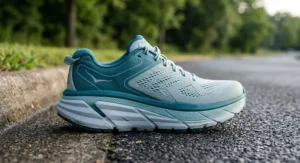
Here’s the honest version of what’s going on: every stride sends a jolt of force up through your foot, ankle, and knee, and a soft, well-engineered midsole absorbs a meaningful chunk of that shock before it reaches your joints. That doesn’t mean the squishiest shoe on the shelf automatically wins — heel drop, stability, and how the foam compresses under your specific stride all matter just as much as raw thickness. This guide breaks down seven real, currently available shoes, explains what the specs actually mean for a sore knee, and shows you how to shop smarter instead of just buying whatever influencer post you saw last week. 🏃♀️
We’ll get specific: real stack heights, real heel-to-toe drops, and honestly summarized aggregated review sentiment — not manufactured hype. By the end, you’ll know exactly which type of cushioning fits your particular knee pain story, whether that’s classic runner’s knee, IT band irritation, or general joint fatigue from logging miles on hard pavement.
What Are Cushioned Running Shoes for Women’s Knee Pain?
Cushioned running shoes for women’s knee pain are neutral or stability trainers built with thick, soft midsole foam — typically 35-45mm of stack height — designed to absorb ground-impact force before it travels up the kinetic chain to the knee. They’re not medical devices, but patellofemoral pain is commonly linked to the repeated stress that running and jumping sports put on the knee joint, which is exactly the kind of stress a deep, compliant midsole is built to soften.
Quick Comparison Table: Cushioned Running Shoes Women Knee Pain
| Shoe | Stack Height (Heel/Forefoot) | Drop | Best For |
|---|---|---|---|
| Hoka Bondi 9 | 42/37mm | 5mm | Overall knee-pain daily trainer |
| New Balance Fresh Foam X More v5 | 44/40mm | 4mm | Softest max-cushion feel |
| ASICS Gel-Nimbus 27 | 41.5/33.5mm | 8mm | Stable, dense cushioning |
| Brooks Glycerin 22 | High-stack DNA Tuned | 10mm | Long, easy-paced miles |
| Saucony Triumph 22 | 37/27mm | 10mm | Bouncy, energized cushioning |
| Hoka Gaviota 6 | 122.5/102.0mm base width | High drop | Overpronation-related knee pain |
| Skechers Max Cushioning Elite 2.0 | Ultra Go midsole | Moderate | Budget-conscious buyers |
Looking at the numbers, the clearest pattern is the drop split: Hoka Bondi 9 and the New Balance Fresh Foam X More v5 sit at the low end (4-5mm), which keeps the knee from being pushed as far forward on landing, while Brooks Glycerin 22 and Saucony Triumph 22 ride higher at 10mm for runners who prefer a more traditional heel-strike feel. If your knee pain flares specifically during longer runs, the deeper stack heights on the New Balance Fresh Foam X More v5 and ASICS Gel-Nimbus 27 are worth prioritizing, since more foam generally means more shock absorbed before it reaches the joint.
💬 Just one click — help others make better buying decisions too!😊
Top 7 Cushioned Running Shoes for Women’s Knee Pain: Expert Analysis
We’re not going to pretend every shoe here works identically. Cushioning is personal — some knees like a firm, controlled landing, others want to sink into foam like a memory-foam mattress. What follows are seven real, currently sold options spanning budget to premium, each picked for a different reason your knee might be complaining.
1. Hoka Bondi 9 — plushest ride with a knee-friendly 5mm drop
The standout here is the drop: at just 5mm, the Hoka Bondi 9 keeps your knee from traveling as far forward on each landing compared to traditional 10-12mm trainers, which matters if your pain tends to spike on hills or longer runs. The midsole uses a supercritical EVA foam with a 43/38mm stack height for men and 42/37mm for women, and reviewers note it feels noticeably softer and more responsive than the firmer foam used in earlier Bondi versions. Weighing roughly 9.3oz in a women’s size 8, it’s genuinely one of the lighter shoes in the max-cushion category, so you’re not trading comfort for a boat-anchor feel underfoot.
Based on the spec comparison, this shoe is best suited to runners whose knee pain worsens with cumulative mileage — daily training, recovery runs, and long walks where sustained shock absorption matters more than snappy responsiveness. Reviewers consistently report that the Bondi 9 feels plush without being unstable, thanks to a wider base and structured heel frame, though some testers found the redesigned upper runs narrower through the forefoot than prior Bondi models, which is worth noting if you have a wider foot.
Pros:
- ✅ Low 5mm drop reduces forward knee stress on landing
- ✅ Lighter than most max-cushion shoes in its class
- ✅ APMA-recognized for promoting foot health
Cons:
- ❌ Narrower forefoot fit than earlier Bondi versions
- ❌ Tall stack can feel unstable to first-time max-cushion wearers
Priced in the $160-$180 range at the time of research, the Bondi 9 sits at the premium end, but for knees that specifically dislike a steep drop, it’s one of the more targeted options on this list.
2. New Balance Fresh Foam X More v5 — tallest stack for maximum shock absorption
If raw cushioning volume is your priority, the standout feature is the stack height: the More v5 added 2mm of stack height over the previous version, bringing it to 44mm at the heel and 40mm at the forefoot with a 4mm drop. In practice, that means more foam sits between your knee and the pavement than almost any other shoe in this roundup, and the low drop keeps that extra height from translating into extra forward lean.
What most buyers overlook about a shoe this tall is that stability engineering matters just as much as foam depth — a wobbly max-cushion shoe can create new joint stress even while reducing impact force. Doctors of Running found the More v5 uses substantial sole flaring and sidewalls that make it “pretty stable” despite the enormous stack, calling it a stable-neutral shoe that can “take a beating while providing high amounts of cushion.” Reviewers on retail sites consistently mention that daily walks and runs feel noticeably easier on their knees, with several long-term wearers specifically crediting the shoe for reduced knee soreness on repeat purchases.
Pros:
- ✅ Tallest stack height in this roundup for maximum absorption
- ✅ Wide platform and sidewalls add stability despite the height
- ✅ Available in medium and wide width options
Cons:
- ❌ Heaviest shoe in this lineup, which some runners feel on faster efforts
- ❌ Not designed for tempo runs or race-day speed
At around $145-$160, the More v5 delivers genuinely maximalist cushioning without venturing into ultra-premium pricing — a strong value pick for anyone whose knee pain responds well to sheer depth of foam.
3. ASICS Gel-Nimbus 27 — most stable “mega max” cushioning
The standout feature here is balance: the Gel-Nimbus 27 carries a women’s stack height of 41.5mm at the heel and 33.5mm at the forefoot with an 8mm drop, landing it firmly in max-cushion territory while staying closer to a traditional drop than the Hoka or New Balance options above. That 8mm middle ground can be a smart pick if you’ve had knee trouble in very low-drop shoes but still want serious protection from a thick midsole.
Here’s what the spec sheet won’t tell you: reviewers repeatedly describe the ride as “firmer than expected” for its stack height, which sounds like a downside but is actually a feature for runners whose knees feel unstable or “mushy” in the softest available foams. Independent lab testing found the midsole becomes noticeably firmer in cold conditions, so cold-weather runners in northern climates should factor that into expectations. Long-time wearers with joint issues frequently mention wearing the Nimbus specifically for its combination of cushioning and reliable stability during both running and all-day standing.
Pros:
- ✅ 8mm drop bridges the gap between traditional and max-cushion shoes
- ✅ Firmer, more stable foam feel than plusher competitors
- ✅ APMA-recognized and praised by long-time wearers with joint concerns
Cons:
- ❌ Less plush than the Bondi 9 or More v5 for runners who want a softer landing
- ❌ Among the pricier options in this roundup
Expect to pay in the $155-$170 range, at the time of research, for a shoe that consistently earns loyalty from runners managing chronic joint discomfort.
4. Brooks Glycerin 22 — smoothest transitions for long, easy miles
The standout feature is the dual-density midsole: the DNA LOFT v3 cushioning uses larger foam cells in the heel for plush landings and smaller cells in the forefoot for a more responsive toe-off, which means the shoe doesn’t just cushion uniformly — it’s tuned to soften the hardest-impact part of your stride while still helping you push off efficiently. The midsole drop sits at 10mm, with a weight of roughly 10.2oz per shoe, putting it closer to a traditional running-shoe feel than the lower-drop options above.
Based on the spec comparison, this is the shoe for runners who’ve had good experiences with a classic drop and don’t want to relearn their stride to chase a lower-drop trend — sometimes the safest change for a cranky knee is adding cushioning without changing mechanics. Reviewers consistently praise the “luxuriously soft landings,” and one wear-tester quoted by Fleet Feet described the ride as “smooth, soft, and has some nice pop to it.” Several buyers specifically mention the shoe reducing knee discomfort on long training blocks and all-day wear.
Pros:
- ✅ Dual-density foam targets landing softness and toe-off energy separately
- ✅ Accommodating knit upper reduces rubbing on long runs
- ✅ Strong aggregate review scores across major retailers
Cons:
- ❌ 10mm drop may not suit runners who need a lower-drop shoe for knee relief
- ❌ Runs slightly heavier than some competitors at this price
At a price generally in the $145-$165 range, the Glycerin 22 remains one of the most consistently well-reviewed cushioned trainers on the market for long-distance comfort.
5. Saucony Triumph 22 — bounciest PEBA foam without the price of a racer
The standout feature is the foam technology itself: for the first time, the Triumph 22 uses PWRRUN PB, a PEBA-based foam previously reserved for Saucony’s racing shoes, giving this daily trainer noticeably more energy return than typical EVA-cushioned shoes at a similar price point. The offset sits at 10mm (37mm heel, 27mm forefoot), with a weight of around 8.8oz — lighter than several other shoes on this list despite the plush foam.
What most buyers overlook about a “bouncier” shoe is that energy return and shock absorption aren’t the same thing, and a livelier foam can sometimes feel firmer underfoot even while still reducing impact. Reviewers consistently describe the Triumph 22 as plusher and slower-feeling than previous Triumph versions, which for knee-pain sufferers is generally good news — a softer landing tends to matter more than race-day snappiness for anyone managing joint discomfort. One long-time wearer specifically credited the “wider midfoot” and “plump cushioning” with delivering the comfort they needed after recurring foot and knee issues.
Pros:
- ✅ PEBA-based foam offers more energy return than typical EVA midsoles
- ✅ Lighter weight than most shoes in the max-cushion category
- ✅ Wider midfoot platform improves landing stability
Cons:
- ❌ Less versatile for faster-paced training than firmer daily trainers
- ❌ Warm upper construction may bother runners in hot climates
Priced around $155-$165 at the time of research, the Triumph 22 is a smart pick for runners who want plush protection without fully sacrificing a lively, engaged ride.
6. Hoka Gaviota 6 — best stability pick for knees affected by overpronation
The standout feature is built-in structure: the Gaviota 6 embeds an H-Frame within its midsole that generates measurable torsional stiffness, keeping the foot centered through the stride, which is exactly the kind of support that matters when knee pain stems from the foot rolling inward too far (overpronation) rather than from impact force alone. Lab testing also found the shoe’s forefoot runs significantly wider than average, creating a broader landing platform for balance.
Here’s what the spec sheet won’t fully convey on its own: stability shoes aren’t just “firmer cushioned shoes” — they’re engineered to control excess foot motion, which can reduce the twisting force that travels up into the knee joint during fatigue or longer efforts. Independent lab tests describe the Gaviota 6 as promoting a steadier stride thanks to its dependable grip and wide, rigid base, and it’s frequently recommended specifically for runners managing knee discomfort tied to alignment issues rather than pure impact sensitivity. If your knee pain shows up more on the inside of the joint or worsens specifically during longer runs when your form starts to break down, this is the category to investigate before assuming you just need more foam.
Pros:
- ✅ Embedded stability frame reduces excess foot rolling
- ✅ Extra-wide forefoot platform improves landing balance
- ✅ Well-cushioned despite its supportive, structured design
Cons:
- ❌ Heavier and stiffer than neutral cushioned options on this list
- ❌ Overkill for runners with a neutral gait and no pronation issues
Generally priced in the $160-$180 range, the Gaviota 6 costs more than most neutral trainers here, but for the right knee-pain profile, that stability engineering is worth the premium.
7. Skechers Max Cushioning Elite 2.0 — budget-friendly cushioning under $85
The standout feature is accessibility: this is the only shoe on our list priced consistently under $85, making it the entry point for anyone who wants to try a max-cushion shoe before committing to a $150-plus pair. It uses an Ultra Go midsole paired with an Air-Cooled Goga Mat footbed and Natural Rocker Technology for a smoother heel-to-toe transition, plus a copper-infused lining marketed for added comfort.
Reviewers consistently describe the shoe as genuinely soft and comfortable for daily walking and light running, though it’s worth being honest here: this isn’t a performance running shoe built with the same biomechanical research budget as the Hoka or Brooks options above, and it isn’t positioned as a serious training shoe for higher weekly mileage. What most buyers overlook is that “budget” doesn’t mean “bad” for this specific use case — for someone easing back into walking or light jogging after a knee flare-up, an inexpensive, genuinely cushioned shoe can be the lower-risk way to test whether extra foam actually helps before spending on a premium pair.
Pros:
- ✅ Lowest price point in this entire roundup
- ✅ Copper-infused, air-cooled footbed adds comfort for all-day wear
- ✅ Rocker geometry smooths the heel-to-toe transition
Cons:
- ❌ Not built or marketed as a dedicated performance running shoe
- ❌ Less rigorous biomechanical testing data available compared to major running brands
At under $85, the Skechers Max Cushioning Elite 2.0 remains the most accessible way to test whether extra cushioning eases your knee discomfort before investing further.
Understanding Patellofemoral Syndrome and Why Cushioning Matters
Patellofemoral syndrome — often called “runner’s knee” — is the single most common diagnosis behind the dull, front-of-knee pain that sends women searching for cushioned shoes in the first place. Research shows the condition predominantly affects young female patients, and its causes are typically multifactorial rather than one single problem, meaning shoes are part of the picture, not the whole picture. The Mayo Clinic notes that patellofemoral pain is more common in people who run and play sports involving repeated running and jumping.
What most buyers overlook is that cushioning research on this specific condition is more nuanced than “softer is always better.” Some biomechanical studies actually suggest that very soft, deep midsoles change how the knee flexes during a stride, and researchers continue to study how that interacts with pain in already-sensitive knees. That’s not a reason to avoid cushioned shoes — for most runners with general impact-related soreness, added cushioning genuinely helps — but it is a reason to pay attention to how your specific knee responds to a new pair rather than assuming more foam automatically equals less pain.
How Impact Force Reduction Protects Your Knees
Every time your foot lands while running, ground reaction force travels upward through your ankle, shin, and knee — and that force is measured in multiples of body weight, not just a light tap. A well-cushioned midsole works by extending the time and distance over which that impact is absorbed, spreading the shock instead of letting it slam directly into cartilage and connective tissue.
Reviewers consistently describe the difference in practical terms rather than lab jargon: pavement that used to feel jarring starts to feel “softer” or “more controlled” underfoot. On paper, this means choosing a shoe with a genuinely deep, high-quality foam — like the stacked midsoles on the New Balance Fresh Foam X More v5 or Hoka Bondi 9 — can meaningfully reduce the raw impact force reaching a sensitive knee on every single stride, which adds up fast over a multi-mile run. That said, impact force reduction works best paired with sensible training choices: running on grass or a rubberized track occasionally, avoiding sudden mileage jumps, and not ignoring pain that persists beyond a mile or two.
The Low-Heel-Drop Benefit: Why Drop Height Matters for Knee Pain
Heel-to-toe drop — the difference in stack height between the heel and forefoot — turns out to matter more for knee stress than most casual shoe shoppers realize. A biomechanical study published on PubMed found that running in shoes with drops greater than 5mm significantly increased peak patellofemoral joint stress compared to running in shoes without a drop, largely due to an increased knee extension moment. In plain English: a higher heel drop can push the knee slightly further forward on landing, which raises the load on the kneecap joint specifically.
That’s exactly why shoes like the Hoka Bondi 9 (5mm) and New Balance Fresh Foam X More v5 (4mm) earn a specific mention for knee-pain shoppers, while higher-drop options like the Brooks Glycerin 22 and Saucony Triumph 22 (both 10mm) are better suited to runners who haven’t had trouble with traditional drop heights before. This doesn’t mean everyone with knee pain needs to chase a zero-drop shoe overnight — experts commonly recommend an 8mm to 4mm range as a reasonable middle ground rather than jumping straight to a fully flat shoe, since a sudden major drop change can create new strain elsewhere in the leg while your body adapts.
How to Choose Cushioned Running Shoes for Knee Pain
- Start with your pain pattern. Front-of-knee pain that worsens on stairs often points toward patellofemoral issues that respond well to lower-drop, high-cushion shoes; outer-knee pain during longer runs can suggest IT band involvement, where stability features matter more than raw softness.
- Check the heel-to-toe drop before the stack height. A lower drop (4-8mm) reduces forward knee stress more directly than simply adding more foam at a traditional 10-12mm drop.
- Match stability to your gait, not your preference. If your feet or ankles roll inward noticeably when you run, a structured shoe like the Hoka Gaviota 6 may reduce knee strain more effectively than a purely neutral max-cushion shoe.
- Try before you commit to bulk-buying. Foam feel is genuinely personal — what feels plush to one runner feels unstable to another, so a single test pair beats ordering three colors of the same untested shoe.
- Read aggregated review themes, not star ratings alone. Look specifically for repeated mentions of knee, joint, or long-run comfort in verified reviews rather than generic five-star praise.
- Budget for replacement mileage. Cushioned foam compresses and loses shock absorption over time, typically somewhere in the 300-500 mile range depending on the shoe and your body weight.
- Don’t ignore persistent pain. The Cleveland Clinic notes that patellofemoral pain syndrome usually develops over time and typically responds to a combination of rest, physical therapy, and gradual activity progression — a great shoe supports recovery, but it isn’t a substitute for medical guidance if pain persists.
Common Mistakes Women Make When Buying Running Shoes for Bad Knees
The single biggest mistake is assuming “cushioned” automatically means “right for my knees” — plenty of runners buy the softest shoe on the wall and still hurt, because their pain was actually a stability or fit issue, not an impact issue. A close second is buying based on colorway or brand loyalty rather than actually checking heel-to-toe drop, which — as the biomechanics research above shows — has a measurable, direct relationship with knee stress.
Another frequent misstep: holding onto worn-out shoes far past their useful life because they still “look fine” from the outside, even though the compressed midsole has quietly stopped absorbing shock the way it used to. Reviewers who track their mileage consistently report the biggest jump in comfort comes right after replacing shoes that had 400-plus miles on them, not from switching brands entirely. Finally, some runners chase a trendy low-drop or “barefoot-style” shoe too aggressively without transitioning gradually, which can shift stress to the Achilles or calf instead of actually solving the original knee complaint.
Max Cushion Shoes vs Traditional Running Shoes: What’s the Real Difference
| Feature | Max Cushion Shoes | Traditional Running Shoes |
|---|---|---|
| Stack Height | 35-45mm (e.g., New Balance Fresh Foam X More v5) | 20-30mm |
| Heel-to-Toe Drop | Often 4-8mm | Typically 10-12mm |
| Shock Absorption | Higher, engineered for impact reduction | Moderate, relies more on natural stride |
| Best For | Knee-sensitive runners, recovery days, long miles | Runners with no history of joint pain, faster training |
The practical difference goes beyond the numbers on paper. A max-cushion shoe like the ASICS Gel-Nimbus 27 or Hoka Bondi 9 is engineered specifically to extend the time your foot spends decelerating on impact, which is the whole mechanism behind reduced patellofemoral stress. Traditional trainers aren’t “bad” — many neutral runners do perfectly well in them — but for a knee that’s already sensitive, that extra 10-15mm of stack height and the typically lower drop genuinely change the physics of every single landing over a run.
✨ Ready to protect your knees on every run? Check current prices and find your perfect fit today! 👟
Practical Usage Guide: Breaking In, Maintaining, and Rotating Your Shoes
New cushioned shoes don’t need a dramatic “break-in period” the way stiff leather boots do, but your knees will thank you for easing in anyway. For the first week, alternate the new pair with your old shoes on shorter runs — this lets your stride adapt gradually to a different drop height or stack, rather than shocking your knee mechanics all at once. Pay attention to any new soreness in the first 10 days specifically; that’s usually your body telling you the shoe changed something in your gait, not that the shoe itself is defective.
Once broken in, rotate two pairs if your budget allows, since alternating shoes gives compressed foam time to fully rebound between runs, which keeps shock absorption more consistent over time. Track your mileage loosely — a simple note in your phone works fine — and start shopping for a replacement around the 300-350 mile mark if you’re knee-sensitive, rather than waiting for visible outsole wear, since midsole compression happens well before the tread looks obviously worn. A common first-30-days mistake is judging a shoe purely by day-one comfort; foam that feels amazing out of the box can pack down faster than a firmer option that takes a few runs to feel “right,” so give any new pair at least three to four runs before forming a final opinion.
Real-World Scenarios: Matching the Shoe to Your Knee Pain Story
If you’re a 34-year-old marathon-training mom squeezing in 5-mile runs before the school pickup line, your knees are absorbing repetitive, high-mileage impact week after week — the deep stack and low drop on the New Balance Fresh Foam X More v5 or Hoka Bondi 9 is built exactly for that kind of cumulative load, where shock absorption matters more than race-day speed.
If you’re a beginner runner in your 40s who noticed your knees ache more on stairs since starting a couch-to-5K plan, that pattern often points toward patellofemoral involvement, and a moderate-drop, well-cushioned shoe like the Saucony Triumph 22 paired with a gradual mileage increase tends to be a smarter starting point than jumping straight into an aggressive minimalist trainer.
If you’re a college student commuting on foot and jogging occasionally between classes on a tight budget, the Skechers Max Cushioning Elite 2.0 offers a genuinely comfortable, low-cost way to add cushioning to daily walking and light jogging without committing $170 you don’t have — with the understanding that a dedicated performance trainer might be worth upgrading to once running becomes a regular habit.
Buyer’s Decision Framework
- If your knee pain worsens with cumulative mileage, choose a max-stack neutral shoe like the Hoka Bondi 9 or New Balance Fresh Foam X More v5, because deeper foam reduces the total impact force reaching the joint over long runs.
- If your foot rolls inward noticeably when you run, choose a stability shoe like the Hoka Gaviota 6, because controlling excess motion reduces the twisting stress that drives some forms of knee pain.
- If you’re new to cushioned shoes and unsure what you need, choose a moderate option like the Saucony Triumph 22 or Brooks Glycerin 22, because a traditional 10mm drop won’t require a major gait adjustment.
- If your budget is the deciding factor, choose the Skechers Max Cushioning Elite 2.0 to test whether extra cushioning helps before investing in a premium pair.
- If cold-weather stability matters more than plush softness, choose the ASICS Gel-Nimbus 27, since its firmer foam profile holds up more predictably in low temperatures.
Softest Running Shoes for Women: What “Soft” Actually Means for Joint Pain
“Softest” gets thrown around loosely in shoe marketing, but from a biomechanics standpoint it really refers to how much the midsole foam compresses under load and how quickly it rebounds afterward. Genuinely soft shoes — like the New Balance Fresh Foam X More v5, which reviewers describe as delivering “cloud-like softness” while avoiding the common pitfall of feeling overly squishy — sink in more on landing, extending the time your knee has to absorb force gradually rather than all at once.
Here’s what most buyers overlook: softness and stability exist on something of a trade-off curve. A shoe engineered purely to feel soft in a five-second store test can feel unstable 8 miles into a run once fatigue sets in and your form starts to drift. That’s why the softest shoes on this list — the More v5 and Hoka Bondi 9 — both pair their plush foam with wider platforms and structural sidewalls specifically to keep that softness from tipping into wobbliness. If your knee pain includes any sense of instability or “giving way,” prioritize a softly cushioned shoe that also scores well on stability features, rather than chasing softness alone.
Running Shoes for Women with Bad Knees: Special Considerations
Women’s knee anatomy plays a genuine role here, not just marketing language. Research indicates women are more likely to develop patellofemoral pain than men, potentially related to how a wider pelvis affects the angle at which the bones of the knee joint meet. That’s part of why women-specific shoe lasts — which account for typical differences in foot width, arch shape, and heel volume — genuinely matter beyond just sizing down a men’s shoe.
Beyond anatomy, training patterns matter too. Many women managing knee pain are juggling running with strength training, walking commutes, or all-day standing jobs, which means the shoe often needs to double as comfortable daily footwear, not just a dedicated running shoe worn for 30 minutes and then removed. Shoes like the Hoka Bondi 9 and ASICS Gel-Nimbus 27, both carrying APMA Seal of Acceptance recognition for promoting foot health, tend to perform well in this dual-purpose role precisely because their cushioning holds up through extended wear, not just a single run.
Max Cushion Shoes for Joint Pain: Long-Term Value & Cost Analysis
A $170 shoe sounds expensive next to an $80 pair — until you calculate cost-per-mile. If a premium max-cushion shoe like the Hoka Bondi 9 genuinely lasts 400-500 miles before its shock absorption meaningfully declines, that works out to roughly 34-42 cents per mile. A budget option like the Skechers Max Cushioning Elite 2.0 costs far less upfront but may need replacing sooner if you’re logging serious weekly mileage, which can narrow the price gap more than the sticker price suggests.
The bigger long-term cost consideration, honestly, isn’t the shoe at all — it’s the downstream expense of ignoring persistent knee pain. Physical therapy visits, orthotics, or simply losing training consistency because every run hurts add up fast compared to the price difference between a mid-range and premium trainer. That’s not an argument to always buy the most expensive option; it’s an argument to actually replace worn-out cushioning on schedule rather than stretching a compressed pair for an extra six months to save $150.
FAQ: Cushioned Running Shoes for Women’s Knee Pain
❓ Do cushioned running shoes really help with knee pain?
❓ What heel drop is best for knee pain?
❓ How often should I replace cushioned running shoes?
❓ Are stability shoes better than neutral shoes for knee pain?
❓ Can the wrong running shoes cause patellofemoral pain syndrome?
Conclusion
There’s no single “best” shoe here — only the best match for your specific knee pain pattern, your mileage, and your budget. If cumulative impact is your main issue, the deep stacks on the New Balance Fresh Foam X More v5 or Hoka Bondi 9 are worth prioritizing. If your foot rolls inward under fatigue, the Hoka Gaviota 6‘s built-in stability frame addresses a different root cause entirely. And if you’re just testing whether extra cushioning helps at all, the Skechers Max Cushioning Elite 2.0 lets you find out without a $170 commitment.
Whatever you choose, remember that shoes are one piece of a larger picture that includes training load, strength, and recovery. Pay attention to how your knees actually respond over the first few runs, don’t be afraid to return a pair that isn’t working, and don’t wait until foam is visibly dead to replace it. Your knees log every single mile with you — it’s worth giving them the support that actually matches what’s causing the pain in the first place. 💪
Recommended for You
- Max Cushion Running Shoes for Women: 7 Elite Picks for 2026
- 7 Most Supportive Running Shoes for Women (2026)
- 7 Best Motion Control Running Shoes for Women’s Flat Feet (2026)
Disclaimer: This article contains affiliate links. As an Amazon Associate, I earn from qualifying purchases. If you purchase products through these links, we may earn a small commission at no additional cost to you.
✨ Found this helpful? Share it with your friends! 💬🤗
