

In This Article
Let’s be honest: the first time you see a pair of carbon plate shoes on a store shelf, they look less like footwear and more like something NASA rejected for being too aggressive. That curved sole, that stiff spine running through the middle — it’s intimidating, and if you’re new to running, you’ve probably wondered whether you’re even allowed to wear them yet. So, what is carbon plate shoes for beginners really about? It’s a running shoe category built around a rigid carbon fiber plate embedded in the midsole, designed to improve running economy and propulsion — and yes, beginners can wear them, just not the same way elites do. In fact, research out of the University of Colorado Boulder suggests slower, recreational runners may benefit even more proportionally than elites do. This guide breaks down seven real, current options, walks through the actual injury-risk research, and shows you how to ease in without wrecking your calves in week one. If you’re eyeing carbon plate shoes for beginners as your next purchase, here’s what the spec sheets won’t tell you.

Quick Comparison: 7 Carbon Plate Shoes for Beginners
Before diving into the details, here’s the scannable version. Prices shift constantly on Amazon, so treat these as ranges, not gospel.
| # | Shoe | Best For | Price Range |
|---|---|---|---|
| 1 | New Balance FuelCell SuperComp Trainer v3 | Most forgiving first carbon shoe | around $170–$190 |
| 2 | Skechers GOrun Speed Vortex Plasma | Tightest budget entry point | around $140–$160 |
| 3 | ASICS Magic Speed 4 | Budget performance trainer | around $140–$160 |
| 4 | On Cloudstrike | Traditional-feel transition shoe | around $190–$210 |
| 5 | Topo Specter Elite | Wide, accessible fit | around $200–$220 |
| 6 | Hoka Rocket X3 | Lightest stable racer | around $220–$250 |
| 7 | Saucony Endorphin Pro 4 | First marathon distance | around $225–$250 |
Looking at the spread, notice that the two cheapest entries — the Skechers GOrun Speed Vortex Plasma and ASICS Magic Speed 4 — sit roughly $80 below the premium racers, yet both still use a genuine carbon plate rather than a cheaper nylon substitute. That gap matters if you’re not sure you’ll stick with plated shoes long-term. Meanwhile, the Saucony Endorphin Pro 4 and Hoka Rocket X3 justify their higher price with race-specific geometry that most beginners won’t need until they’ve logged real base mileage.
💬 Found a shoe you like already? Bookmark this page before you check current pricing — you’ll want to compare it against the rest first!
Top 7 Carbon Plate Shoes for Beginners: Expert Analysis
Here’s the fuller breakdown, including weight and stack height, so you can see exactly what you’re paying for.
| Shoe | Weight (men’s) | Stack (heel/forefoot) | Drop | Price Range | Best For |
|---|---|---|---|---|---|
| New Balance FuelCell SuperComp Trainer v3 | ~10.0 oz | 40mm / 34mm | 6mm | ~$170–$190 | Daily speed work, long runs |
| Skechers GOrun Speed Vortex Plasma | ~7.8 oz | 38mm / 32mm | 6mm | ~$140–$160 | Budget-conscious first-timers |
| ASICS Magic Speed 4 | ~8.3 oz | 36mm / 28mm | 8mm | ~$140–$160 | Tempo runs, half marathon training |
| On Cloudstrike | ~9.1 oz | 39mm / 33mm | 6mm | ~$190–$210 | Runners who dislike an aggressive rocker |
| Topo Specter Elite | ~7.1 oz | 37mm / 31mm | 6mm | ~$200–$220 | Wide feet, accessible fit |
| Hoka Rocket X3 | ~7.3 oz | 38mm / 33mm | 5mm | ~$220–$250 | Lighter runners chasing a first PR |
| Saucony Endorphin Pro 4 | ~8.2 oz | 39.5mm / 31.5mm | 8mm | ~$225–$250 | First-time marathoners |
A quick read of the table shows a clear pattern: the shoes marketed as “trainers” (the New Balance FuelCell SuperComp Trainer v3 and ASICS Magic Speed 4) run heavier and lower-drop-neutral than the dedicated racers, which trades a little speed for a lot more forgiveness. If you’re deciding based on price alone, don’t — the Topo Specter Elite is barely heavier than the Hoka Rocket X3 but costs $20-30 less and fits a wider range of foot shapes, making it arguably the better value for anyone whose feet don’t match the narrow “elite” last most racing shoes are built around.
1. New Balance FuelCell SuperComp Trainer v3 — most forgiving carbon plate for beginners
Start here if you’re not sure you’re ready to commit. The standout feature is right there in the name: this is a “trainer,” not a race-day-only shoe, meaning it’s built to survive regular use rather than 150 fragile miles. The FuelCell midsole runs a genuine 40mm/34mm stack with a full-length carbon plate, and at a 6mm drop it won’t shock your calves the way an 8-10mm racer can on day one.
Based on the spec comparison with true racing shoes in this list, the thicker, roomier platform trades a bit of pop for a lot of stability — exactly the trade beginners should want. What most buyers overlook about this model is that it’s genuinely durable enough to log easy miles in, not just workouts, which matters when you’re still deciding whether plated shoes are worth the investment at all.
Reviewers consistently report that the ride feels “soft and springy” rather than aggressive, and the roomy toe box gets repeat praise from runners coming from wider daily trainers. Price sits in the mid-$100s to near $190, making it one of the more approachable ways into this shoe category, and the value case is strong if you plan to actually train in it rather than save it for one race a year.
Pros:
- ✅ Roomy platform forgives imperfect beginner form
- ✅ Durable enough for regular training, not just races
- ✅ Lower price than most plated racers
Cons:
- ❌ Heavier than dedicated racing-only carbon shoes
- ❌ Less snappy than firmer race-day models

2. Skechers GOrun Speed Vortex Plasma — lightest budget carbon racer
The standout here is simple: it’s the most affordable way to get an actual carbon plate, not a stiffened nylon plate marketed as one. Skechers built this on its Hyper Burst foam platform, a compound that’s noticeably springier than the brand’s older midsoles, paired with a 38mm/32mm stack that keeps things light without feeling flimsy underfoot.
On paper this means you’re getting genuine plated propulsion at a price point that undercuts nearly every major running brand’s racing lineup by $50 or more. Here’s what to weigh, though: Skechers hasn’t built the decades of running-specific review volume that Nike, Saucony, or Asics have, so aggregated sentiment is thinner — what does exist tends to praise the lightweight feel and true-to-size fit, with occasional notes about limited width options. If you cannot verify deep review history for a shoe, that’s worth factoring into your decision rather than ignoring.
For someone testing whether they even like the sensation of a carbon plate before spending $250, this is the lowest-risk entry point on this list, and the value verdict is straightforward: it’s hard to beat for the price if narrow sizing works for your foot.
Pros:
- ✅ Most affordable true carbon plate option available
- ✅ Lightweight Hyper Burst foam feels springy underfoot
- ✅ Accessible sizing runs true for most feet
Cons:
- ❌ Smaller review pool than major running brands
- ❌ Limited color and width options currently
3. ASICS Magic Speed 4 — best affordable entry-level speed trainer
Asics built the Magic Speed line specifically to bridge daily trainers and full racing shoes, and the 4th version leans further into that maximal-stack, budget-friendly identity. The standout feature is the FF Blast Plus midsole paired with a plate that’s noticeably more flexible than what you’ll find in the brand’s Metaspeed racers — a deliberate softening for exactly this audience.
What most buyers overlook about this model is that the 8mm drop actually helps rearfoot strikers (a common beginner gait pattern) ease into a plated ride without forcing a forefoot strike the way more aggressive racers do. Aggregated review sentiment consistently flags the shoe as “surprisingly comfortable for a plated model,” particularly for tempo runs and half marathon training blocks rather than all-out 5K efforts.
A common complaint in user reviews is that the upper runs slightly narrow, so runners with wider feet may want to size up half a size. At around $140-160, it’s one of the better value plays in this entire roundup for someone who wants a taste of carbon-plate speed without spending marathon-shoe money.
Pros:
- ✅ Budget-friendly entry into plated performance trainers
- ✅ Maximal stack cushions long training runs comfortably
- ✅ FF Blast+ foam balances bounce and stability
Cons:
- ❌ Not as fast-feeling as full racing carbon shoes
- ❌ Upper runs slightly narrow for wider feet
4. On Cloudstrike — closest carbon shoe to a traditional trainer
If the whole carbon-plate category feels like it was designed for people who already run 7-minute miles, the standout advantage of this shoe is that it doesn’t feel that way. On built the Cloudstrike around its familiar CloudTec cushioning pods rather than an ultra-soft, unstable superfoam, and the plate sits in a more conservative geometry than the brand’s aggressive Cloudboom racers.
Based on the spec comparison, the 39mm/33mm stack at a 6mm drop delivers a ride that multiple testers describe as the shoe that feels most like a regular running shoe among plated options — which is precisely why it shows up on “lower injury risk” recommendations for newer runners. Reviewers consistently note the stability underfoot on turns and cambered roads, a category where narrower racing shoes often feel twitchy.
The trade-off, and it’s a real one: you give up some of the explosive toe-off snap that makes shoes like the Rocket X3 feel genuinely fast. At roughly $190-210, it’s priced above the budget tier but below true racing flagships, and the value verdict favors anyone prioritizing comfort and confidence over outright speed in their first plated pair.
Pros:
- ✅ Traditional ride feel eases the transition for beginners
- ✅ CloudTec cushioning absorbs impact on longer runs
- ✅ Stable geometry lowers rollover and ankle-roll risk
Cons:
- ❌ Higher price than budget plated alternatives
- ❌ Less explosive toe-off than aggressive rocker racers
5. Topo Specter Elite — widest toe box for accessible fit
Topo’s first carbon racer made an immediate impression for one reason above all: fit accessibility. The standout feature is a genuinely wide platform and toe box in a category that’s historically built around a narrow, elite-runner last. Constructed with ATPU RevFoam — a foam that’s springier than older EVA compounds but a touch heavier than the newest PEBA blends — the Specter Elite still comes in at a feathery 7.1 oz for men’s sizing.
What the spec sheet won’t tell you, but reviewers note, is how much that extra width changes the experience for runners with wider or flatter feet who’ve historically been shut out of plated shoes entirely without discomfort or blistering. The wide base also adds a meaningful stability advantage over narrower competitors, something worth weighing heavily if you’re still building confidence on a rocker sole.
Aggregated sentiment praises the accessible fit and the energetic, propulsive landing, with the main knock being a firmer ride than max-cushion rivals. At around $200-220, this sits mid-pack in price but stands out clearly on fit — arguably the best pick here if you’ve been frustrated by narrow racing shoes in the past.
Pros:
- ✅ Wide toe box fits a broader range of foot shapes
- ✅ Featherweight build reduces fatigue over long distances
- ✅ Wide platform adds stability versus narrower racers
Cons:
- ❌ Smaller brand means fewer retail try-on locations
- ❌ Firmer ride than max-cushion competitors

6. Hoka Rocket X3 — most stable lightweight Hoka racer
Hoka deliberately built the Rocket X3 as the calmer sibling to its wildly-rockered Cielo line, and that’s the standout advantage for anyone newer to plated shoes. It’s the lightest carbon racer Hoka currently makes, yet the geometry is noticeably more controlled and less aggressive underfoot than the brand’s top-tier racer.
Based on the spec comparison, a 38mm/33mm stack at a 5mm drop keeps the ride low and connected to the ground compared to taller max-cushion rivals, which several testers credit for making it comfortable enough to use in tempo workouts, not just races. Here’s what to weigh: reviewers consistently point out that while it lacks the “wow factor” bounce of Hoka’s flagship racer, that restraint is exactly why it works well as a first carbon shoe — less unpredictability, more control while you learn how a plated ride feels.
A common theme in aggregated feedback is that it holds up well across a full training cycle rather than degrading after a handful of hard efforts. At roughly $220-250, it’s a premium purchase, and the value case depends on whether you’ll actually use it beyond race day — for a committed beginner training toward a specific goal, it earns its price.
Pros:
- ✅ Lightest carbon racer Hoka currently makes
- ✅ More controlled geometry than Hoka’s aggressive Cielo line
- ✅ Comfortable enough to double as a workout shoe
Cons:
- ❌ Premium price sits above beginner-budget expectations
- ❌ Firmer ride than max-cushion marathon-focused rivals
7. Saucony Endorphin Pro 4 — smoothest ride for first marathon distance
Saucony has quietly built one of the most consistent carbon racer lineups on the market, and the standout feature here is the brand’s Speedroll geometry, which rolls you forward through the gait cycle without the exaggerated, sometimes destabilizing rocker found in competitors. The PWRRUN HG and PWRRUN PB foam stack — with the carbon plate sandwiched between the two — creates a ride that’s firmer underfoot than the softest racers on this list, but that firmness translates into real stability over 26.2 miles when your form starts breaking down in the final hour.
Based on the spec comparison, the 8.2 oz weight and 39.5mm/31.5mm stack sit right in the traditional super-shoe range rather than the ultra-minimal builds Nike and Adidas favor, and reviewers consistently note that extra material underfoot as the reason it feels more secure late in a race. What most buyers overlook about this model is that it rewards patience — it’s not the flashiest first impression, but aggregated feedback repeatedly credits it with holding form and comfort deep into long runs better than lighter alternatives.
Priced around $225-250, it’s firmly premium, and the value case is strongest for someone specifically training toward a first marathon rather than shorter, faster races.
Pros:
- ✅ Speedroll geometry smooths forward motion for new marathoners
- ✅ PWRRUN PB foam holds up over full 26.2 miles
- ✅ More stable underfoot than narrower elite racers
Cons:
- ❌ Among the pricier options in this lineup
- ❌ Overkill for short, easy training runs
💬 Which of these caught your eye? Check current pricing on the one that fits your budget and foot shape best!
How to Transition to Carbon Plate Shoes: A Beginner’s Practical Guide
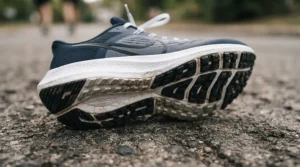
Transitioning to carbon plate shoes is less about the shoe and more about patience — a lesson a lot of eager beginners learn the hard way. Start by wearing the shoe for short, easy efforts first: a few miles at an easy pace, not your longest run of the week and definitely not a race. Your calves and Achilles tendon need to adapt to the altered ankle mechanics the plate and rocker create, and that adaptation takes weeks, not days. A sensible first-30-days approach looks like this: week one, one short easy run in the shoe; week two, add a single tempo effort; week three, introduce race-pace intervals; week four, consider a longer effort only if the first three weeks caused zero new soreness. Pair this rollout with calf-specific strength work — eccentric heel raises are the single most studied intervention for building tendon tolerance, and they’re worth adding to your weekly routine regardless of which shoe you’re wearing. The most common mistake beginners make is increasing mileage and shoe-newness at the same time; separate those two variables. If you notice new Achilles tightness, sharp midfoot pain, or calf soreness that changes your stride, back off immediately rather than pushing through — cardiorespiratory fitness improves in weeks, but tendons and bones need considerably longer to catch up.
Choosing Your First Marathon Shoe: Real-World Scenarios
Your first marathon shoe choice matters more than most beginners assume, and the right pick depends heavily on who you actually are as a runner, not just what’s trending. Consider three common profiles. First, the budget-conscious first-timer running 4.5-5 hours: the New Balance FuelCell SuperComp Trainer v3 makes sense here because its durability and roomy platform survive a full 16-week training block without needing a second pair reserved purely for race day. Second, the runner who’s nervous about instability and has read one too many injury horror story: the On Cloudstrike is the safer psychological and physical choice, trading some speed for a ride that feels closer to shoes you already trust. Third, the goal-oriented beginner chasing a specific finish time and willing to invest: the Saucony Endorphin Pro 4 rewards that commitment with stability deep into the back half of the race, when form typically falls apart. Notice none of these scenarios recommend the most aggressive racer in this list as a first marathon shoe choice — that’s intentional. Save the sharpest, most rocker-heavy options for a second or third race once you understand your own biomechanical response to plated shoes.
Common Beginner Mistakes: A Problem → Solution Guide
Problem one: buying the shoe your fastest friend races in, regardless of fit. Solution: match the shoe to your own foot shape and gait, not someone else’s marathon time — a narrow racer on a wide foot creates blisters and instability regardless of how fast it looks. Problem two: wearing a brand-new carbon shoe for the first time on race day. Solution: never do this; every plated shoe on this list needs at least three to four shakeout runs before you trust it under race conditions. Problem three: using a super shoe as a daily trainer. Solution: rotate it with a standard daily trainer, since most carbon plate shoes only hold their performance edge for roughly 150-250 miles before the foam degrades, compared to 400-500 miles in a standard trainer. Problem four: ignoring early warning signs like Achilles stiffness. Solution: treat any new soreness in the first two weeks as a signal to reduce volume, not a badge of toughness. Problem five: assuming price equals suitability. Solution: the most expensive shoe on this list isn’t automatically the right one for your foot shape or goal race — the comparison tables above exist precisely so you can match specs to your actual needs instead of your budget alone.
✨ Ready to build your rotation? Check current prices on your top pick and grab a comfortable daily trainer to pair with it!
How to Choose Carbon Plate Shoes for Beginners
If you want a fast answer: match stack height and stability to your experience level first, price second, and brand hype last. Here’s the fuller framework, in order of importance:
- Assess your current mileage base. If you’re running under 15 miles a week, prioritize durability and stability over outright speed — the New Balance FuelCell SuperComp Trainer v3 or ASICS Magic Speed 4 fit this stage well.
- Match the drop to your gait. Rearfoot strikers generally adapt more easily to 8mm-drop shoes like the Saucony Endorphin Pro 4, while forefoot-leaning runners tolerate lower 5-6mm drops better.
- Prioritize fit over hype. A shoe that pinches your forefoot will undo every performance benefit the plate offers — this is where the Topo Specter Elite‘s wide platform earns real consideration.
- Set a realistic budget range. Decide whether you’re testing the category (budget tier) or committing to a training cycle (premium tier) before you shop.
- Plan your rotation, not just one shoe. A single carbon plate shoe should never be your only pair; pair it with a standard daily trainer for easy miles.
- Read aggregated review sentiment, not star ratings alone. Look for recurring themes — repeated mentions of narrow fit or calf soreness tell you more than a 4.6-star average does.
- Test before you commit to race day. Log at least three shakeout runs before trusting any plated shoe under race conditions.
Carbon Plate Shoes vs Traditional Daily Trainers
The core distinction comes down to purpose: carbon plate shoes are engineered for short-term performance gains, while traditional daily trainers are engineered for long-term durability and stability across thousands of easy miles.
| Feature | Carbon Plate Shoes | Traditional Daily Trainers | Best For |
|---|---|---|---|
| Typical weight | 7-10 oz | 9-11 oz | Racers vs. everyday runners |
| Lifespan | ~150-250 miles | ~400-500 miles | Trainers win on longevity |
| Price range | ~$140-$250 | ~$100-$180 | Trainers win on cost-per-mile |
| Stability | Lower (rocker-driven) | Higher (flatter platform) | Trainers for beginners’ easy days |
| Ideal use | Races, key workouts | Daily mileage, recovery runs | Both, in rotation |
Reading across this table, the real takeaway isn’t that one category beats the other — it’s that they solve different problems entirely. A daily trainer absorbs the bulk of your weekly mileage at a fraction of the cost-per-mile, while a carbon plate shoe concentrates its performance benefit into the one or two runs a week where it actually matters. Beginners who try to make a single carbon shoe do both jobs typically end up disappointed on easy days and prematurely burn through the foam before race day even arrives.
Injury Risk in Carbon Shoes: What Beginners Need to Know
Injury risk carbon shoes discussions tend to get oversimplified into “safe” or “dangerous,” but the honest picture is more nuanced. Research on advanced footwear technology has documented cases of navicular bone stress injuries in runners using carbon fiber plate footwear, alongside more commonly reported issues like Achilles tendinopathy, calf strains, and plantar fasciitis. Prior studies point to biomechanical risk factors including reduced ankle dorsiflexion, higher peak rearfoot eversion, and certain foot arch types as contributors to these stress injuries. The mechanism isn’t fully settled — the rigid plate and curved rocker change how force moves through your ankle, foot, and calf, and that altered loading pattern is what raises risk, not some inherent flaw in the shoes themselves. Three groups face elevated risk specifically: runners with a history of Achilles tendinitis or plantar fasciitis, anyone increasing mileage and shoe-newness simultaneously, and beginners who haven’t yet built baseline calf and foot strength. None of this means carbon plate shoes for beginners are off-limits — it means the transition needs to be gradual, paired with strength work, and monitored for early warning signs rather than pushed through.
Features That Actually Matter (And Those That Don’t)
Marketing copy loves to emphasize plate stiffness as the single most important spec, but the research doesn’t fully back that framing. One study measuring the independent effect of a curved carbon-fiber plate found that reducing the plate’s forefoot bending stiffness had minimal effect on overall running economy, suggesting the foam, shoe geometry, and other design elements matter just as much as plate rigidity alone. What actually matters for a beginner: stack height and stability (how forgiving the ride feels at slower paces), fit and width (a shoe that pinches negates every performance benefit), and durability if you plan to train in it regularly. What matters less than marketing suggests: plate stiffness ratings in isolation, aggressive rocker angles that most beginners won’t fully utilize at slower paces, and ultra-lightweight builds that sacrifice the stability newer runners actually need. Reviewers consistently note that the shoes with the “wildest” specs on paper aren’t always the ones that feel best in practice — comfort and confidence at your actual training pace matter more than a shoe built for a 5-minute mile.
Long-Term Cost & Maintenance
Carbon plate shoes carry a higher cost-per-mile than daily trainers, and understanding that math upfront prevents disappointment later. A $200 pair of racing shoes that only holds peak performance for roughly 200 miles works out to about $1 per mile of race-ready cushioning, compared to roughly $0.30-0.40 per mile for a well-built daily trainer that lasts 400-500 miles.
| Tier | Price Range | Expected Peak Lifespan | Best For |
|---|---|---|---|
| Budget | ~$140-$180 | ~150-200 miles | Testing the category |
| Mid-range | ~$190-$220 | ~175-225 miles | Regular racers, half marathon training |
| Premium | ~$220-$250 | ~200-250 miles | Marathon-specific goal races |
The pattern here is intuitive but worth stating plainly: premium shoes tend to use more durable foam formulations, which slightly extends their useful life relative to budget options, partially offsetting the higher upfront cost. Maintenance-wise, rotate carbon plate shoes with a daily trainer to slow foam compression, avoid running in them on wet pavement more than necessary since tread patterns on racing shoes are typically shallower, and store them away from direct heat, which accelerates foam breakdown.

Frequently Asked Questions
❓ Are carbon plate shoes good for beginners?
❓ What's the best first marathon shoe choice for someone with no plated-shoe experience?
❓ How long does transitioning to carbon plate shoes usually take?
❓ Does injury risk carbon shoes research point to one specific injury?
❓ How many miles do carbon plate shoes last before losing their edge?
Conclusion
Carbon plate shoes for beginners aren’t inherently dangerous, and they’re not a shortcut either — they’re a tool that rewards patience and punishes shortcuts. The seven options above cover a real range: the New Balance FuelCell SuperComp Trainer v3 and Skechers GOrun Speed Vortex Plasma for testing the waters affordably, the ASICS Magic Speed 4 and On Cloudstrike for a stable middle ground, and the Topo Specter Elite, Hoka Rocket X3, and Saucony Endorphin Pro 4 for runners ready to commit to a specific goal race. Whichever you choose, the research is consistent on one point: gradual introduction, calf strength work, and a proper daily-trainer rotation matter more than which specific shoe you pick. Treat your first plated pair as an experiment in how your body responds, not a guaranteed PR machine, and you’ll get the benefit without the setback.
Recommended for You
- Carbon Plate Running Shoes: 7 Best Picks to PR in 2026
- 7 Best Waterproof Trail Running Shoes Women Trust in 2026
- Technical Trail Running Shoes for Women: 7 Rugged Picks for 2026
Disclaimer: This article contains affiliate links. As an Amazon Associate, I earn from qualifying purchases. If you purchase products through these links, we may earn a small commission at no additional cost to you.
✨ Found this helpful? Share it with your friends! 💬🤗
