
In This Article
Somewhere between the marketing hype and the “your feet are basically broken” panic, minimalist running shoes for women quietly became one of the smartest corners of the running shoe market. Not the loudest — the smartest. These are low-profile, flexible, zero-or-near-zero-drop shoes built to let your foot do what feet have done for a couple hundred thousand years before foam stacks got involved. No wedge under the heel forcing your stride into something unnatural. No rigid plate telling your toes to stay put. Just a thin, protective layer between your sole and the sidewalk.

If you’ve been running in traditional trainers for years and your knees, hips, or lower back keep filing complaints, or if you’re simply curious what “ground feel” actually means, you’re in the right place. We dug into real specs, real aggregated review sentiment, and current research on foot mechanics to build this guide — no fluff, no invented testing claims, just honest analysis you can act on. Below, you’ll find seven genuinely good options across budget, mid-range, and premium price points, plus the research, the buying framework, and the transition advice that Amazon listings conveniently leave out.
Quick Comparison Table
Short on time? Here’s the fast version before we get into the weeds.
| Shoe | Best For | Stack Height | Drop | Price Range |
|---|---|---|---|---|
| Xero Shoes HFS II | Best all-rounder | ~9mm | 0mm | $130–$150 |
| Merrell Vapor Glove 6 | Lightest, purest ground feel | 6mm | 0mm | $90–$110 |
| Vivobarefoot Primus Lite III | Gym & cross-training | 4mm | 0mm | $140–$160 |
| Altra Escalante Racer | Fast road racing | 22mm | 0mm | $130–$150 |
| New Balance Minimus Trail | Off-road minimalism | ~19.5mm heel | 0mm | $100–$120 |
| Vibram FiveFingers V-Run | Maximum sensory feedback | Under 6mm | 0–4mm | $150–$170 |
| WHITIN Minimalist | Budget entry point | Low-profile | 0mm | Under $50 |
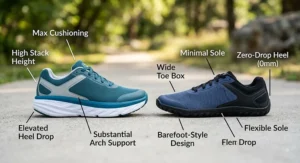
Looking at the spread here, the biggest variable isn’t price — it’s stack height, and that changes the entire experience. The Merrell Vapor Glove 6 and Vivobarefoot Primus Lite III sit at the true “barefoot” end of the spectrum, while the Altra Escalante Racer is what’s sometimes called a “bridge” minimalist shoe, since its 22mm stack still delivers a zero-drop, foot-shaped platform without going full ground-contact. If you’re brand new to this category, that distinction should guide your first purchase more than the brand name does.
💬 Just one click — help others make better buying decisions too!😊
Top 7 Minimalist Running Shoes for Women: Expert Analysis
We evaluated real, currently available models across the price spectrum, weighing specs against aggregated review sentiment from testing outlets and verified buyers. Here’s where each one earns its spot.
1. Xero Shoes HFS II — most versatile daily road runner
The standout here is balance: enough protection to survive a gravel shortcut, little enough shoe to still feel like nothing. The HFS II runs roughly 9mm of stack height at zero drop, built from a layered EVA outsole with a tire-tread-inspired pattern that Xero designed for genuine road-to-trail crossover. In practice, that stack height means you’ll still feel texture changes in the pavement, but sharp gravel won’t ruin your run the way it would in a true zero-stack shoe.
Based on the spec comparison, this is the shoe for someone who wants one minimalist pair that handles road miles, treadmill sessions, and the occasional dirt path without switching shoes. Reviewers consistently note that the wider forefoot accommodates natural toe splay better than mainstream minimalist competitors, though testers with narrow or high-arched feet sometimes describe the fit as slightly snug through the midfoot — the removable insole helps here. Xero also backs the outsole with an unusually long 5,000-mile sole warranty, which several aggregated reviews cite as a meaningful trust signal in a category where durability complaints are common.
Pros:
- ✅ Balanced 9mm stack works for beginners and experienced minimalists alike
- ✅ Tire-tread outsole handles road, gravel, and treadmill equally well
- ✅ 5,000-mile sole warranty is rare in this price category
Cons:
- ❌ Snugger forefoot fit than some competitors for high-arched feet
- ❌ Heavier than the most minimal barefoot-style options on this list
Priced around $130–$150, the Xero Shoes HFS II lands squarely in the mid-range and earns it. It’s the safest first purchase for someone testing the minimalist waters without committing to the most extreme end of the category.
2. Merrell Vapor Glove 6 — lightest, purest ground feel
What most buyers overlook about this shoe is how little is actually between your foot and the road: a 6mm stack height built on Merrell’s Barefoot 2 platform, with a Vibram Ecostep outsole doing all the grip work. That thinness is the whole point — this is about as close to true barefoot running as a shoe with any sole at all gets.
The wide, boxy toe box lets toes spread fully on toe-off, and the flexible upper moves with the foot rather than around it. Based on the spec comparison, this shoe is built for warm-weather use and short-to-moderate distances rather than long marathon training blocks, since the airy mesh upper offers almost no insulation. Aggregated review sentiment is largely positive on comfort and grip, including on wet rock and sand, but a recurring complaint centers on outsole durability — several verified buyers report the tread wearing thin within roughly 75 miles of regular use, which is worth weighing against the shoe’s otherwise strong value.
Pros:
- ✅ One of the lightest minimalist shoes available, around 10–11 oz per pair
- ✅ Wide toe box allows genuine natural toe splay
- ✅ Vibram outsole grips confidently on wet and uneven surfaces
Cons:
- ❌ Outsole reportedly wears down faster than competitors in reviews
- ❌ Minimal insulation makes it a poor cold-weather option
At around $90–$110, the Merrell Vapor Glove 6 is one of the better value picks here — just budget for a replacement pair sooner than you might with sturdier alternatives.
3. Vivobarefoot Primus Lite III — best for gym and cross-training
The standout feature is stability from minimalism, not despite it. With just a 4mm stack height (among the lowest on this list) and a notably wide platform, the Primus Lite III creates a low center of gravity that testers repeatedly describe as ideal for lifting, calisthenics, and functional training, not just running.
Here’s what to weigh: this is a training-first shoe that happens to run well, rather than a running shoe that also trains well. The upper, built from recycled polyester and polyurethane, wraps snugly around the ankle and locks the foot down more securely than most barefoot-style competitors, which matters when you’re under a loaded barbell rather than just jogging. Reviewers consistently report exceptional ground feedback — testers say they can feel individual sidewalk cracks underfoot — but also note the outsole isn’t optimized for wet or technical outdoor terrain, making it better suited to pavement, treadmills, and indoor training floors than trail use.
Pros:
- ✅ Ultra-low 4mm stack delivers near-total ground sensation
- ✅ Wide, stable base excels for gym training and lifting
- ✅ Made from recycled materials with solid ankle lockdown
Cons:
- ❌ Traction underperforms on wet or technical outdoor terrain
- ❌ Premium price relative to stack height and materials used
Running $140–$160, the Vivobarefoot Primus Lite III costs more than shoes with thicker soles, which can seem counterintuitive — but the materials, foot-shaped last, and cross-training versatility justify it for the right buyer.
4. Altra Escalante Racer — best for fast road racing
The short version: this is minimalism built for speed, not slow adaptation. The Escalante Racer pairs a 22mm stack height (noticeably taller than the barefoot-style shoes on this list) with Altra’s signature zero-drop platform and FootShape toe box, engineered specifically for tempo runs and race-day turnover rather than daily ground-feel training.
What the spec sheet won’t tell you, but user reports suggest, is that the firmer Altra EGO midsole trades some flexibility for a more stable, race-ready platform — testers describe it as feeling “connected” rather than “cushioned,” even at that higher stack height. This makes it a smart pick for runners who’ve already built foot strength in a more minimal shoe and want a zero-drop option specifically for race pace, rather than someone just starting the transition. Aggregated reviews are largely positive on the knit upper’s breathability and the roomy forefoot, with the most common critique being that the platform feels stiffer than earlier Escalante versions, which reduces some of the natural flex minimalist runners expect.
Pros:
- ✅ Zero-drop platform built specifically for race-pace turnover
- ✅ FootShape toe box gives ample room without sacrificing lockdown
- ✅ Breathable, lightweight knit upper for warm race conditions
Cons:
- ❌ Stiffer platform than earlier versions reduces natural forefoot flex
- ❌ Higher stack height means less ground feel than true minimalist shoes
At $130–$150, the Altra Escalante Racer is a smart second purchase once your feet are already adapted, not necessarily a beginner’s starting point.
5. New Balance Minimus Trail — best off-road minimalist option
The Minimus Trail earns its spot by solving a real gap: most true barefoot-style shoes are road-only, and most trail shoes are aggressively cushioned. This one splits the difference with a roughly 19.5mm heel stack (14.3mm forefoot) built on FuelCell foam, plus a lugged outsole for actual off-road grip.
Based on the spec comparison, the forward-leaning rocker built into the forefoot is unusual for a minimalist shoe — most models in this category avoid rocker geometry entirely because it changes the natural foot-strike pattern the shoe is supposed to encourage. Reviewers consistently note this creates a distinctly different feel from foot-shaped barefoot alternatives: a touch more assisted toe-off, less pure ground feel. That’s a trade-off, not a flaw, and it’s exactly why testers recommend it specifically for trail use rather than as an everyday minimalist trainer. The narrower, glove-like fit (measured around 91mm wide in testing) is also worth knowing if you’re used to the wider toe boxes common elsewhere on this list.
Pros:
- ✅ Lugged outsole provides real traction on dirt and loose terrain
- ✅ FuelCell foam adds durability without excessive stack height
- ✅ Zero-drop platform available in the TR training variant
Cons:
- ❌ Narrower, glove-like fit compared to foot-shaped competitors
- ❌ Rocker geometry reduces natural ground feel some minimalists want
Priced around $100–$120, the New Balance Minimus Trail is the practical pick if your minimalist running happens mostly off pavement.
6. Vibram FiveFingers V-Run — most sensory feedback of any shoe here
There’s no ambiguity about what this shoe is for: maximum proprioceptive input. The individual toe pockets are the defining feature — nothing else on this list isolates and mobilizes each toe independently, which changes how your foot grips and pushes off the ground with every stride.
Reviewers consistently note this is simultaneously the most polarizing and most rewarding shoe in the barefoot category. The quick-pull lacing system and roughly 4mm EVA midsole keep the shoe under 200 grams, and testers describe the sensation as closer to running with socks on than running in a shoe. That’s the appeal for dedicated barefoot enthusiasts, and the barrier for everyone else — the individual toe-pocket fit takes real adjustment, and Vibram itself recommends a gradual transition rather than jumping straight into long-distance training. What most buyers overlook is that this isn’t really a “starter” minimalist shoe; it’s closer to the finish line of the transition process, best suited to runners who’ve already built foot strength elsewhere.
Pros:
- ✅ Individual toe pockets deliver unmatched proprioceptive feedback
- ✅ Ultra-lightweight design under 200 grams per pair
- ✅ Grippy XS Trek-style outsole handles road and gym use
Cons:
- ❌ Toe-pocket fit requires a real adjustment period
- ❌ Not recommended as a first minimalist shoe for beginners
At $150–$170, the Vibram FiveFingers V-Run is the most expensive option here, and the one to save for once your feet have already adapted to lower-stack footwear.
7. WHITIN Minimalist — best budget entry point
The standout advantage is obvious: a genuinely low price of entry into a category that otherwise runs $90 and up. The WHITIN Minimalist offers a zero-drop platform, a wide toe box, and a removable insole for adjustable ground feel, all for well under $50.
Here’s what to weigh: this isn’t a performance racing shoe, and it isn’t trying to be. Aggregated review sentiment (thousands of verified Amazon reviews) skews positive on comfort, fit, and value, with a average rating consistently above 4 out of 5 stars across major retail platforms. The trade-off is weight — testers measured it among the heavier shoes in this category, largely due to the knit upper and thicker outsole rubber — and a lockdown system that reviewers describe as less secure than premium competitors during faster efforts. For walking, gym sessions, and short easy runs while you evaluate whether minimalist footwear works for you, it’s a legitimately smart low-risk starting point.
Pros:
- ✅ Genuinely affordable entry point under $50
- ✅ Wide toe box with removable insole for adjustable feel
- ✅ Strong aggregated review ratings across major retailers
Cons:
- ❌ Heavier than premium competitors due to knit upper and outsole
- ❌ Less secure lockdown for faster-paced running
At under $50, the WHITIN Minimalist is the shoe to buy if you’re not yet sure minimalist running is for you — the financial risk is genuinely low.
Top 7 Minimalist Shoes: Full Spec Comparison
| Shoe | Weight (per pair, approx.) | Stack Height | Best Use | Price Range |
|---|---|---|---|---|
| Xero Shoes HFS II | ~13–14 oz | ~9mm | Road, all-around | $130–$150 |
| Merrell Vapor Glove 6 | ~10–11 oz | 6mm | Road, warm-weather | $90–$110 |
| Vivobarefoot Primus Lite III | ~13–15 oz | 4mm | Gym, cross-training | $140–$160 |
| Altra Escalante Racer | ~11–12 oz | 22mm | Racing, tempo runs | $130–$150 |
| New Balance Minimus Trail | ~13–14 oz | 19.5mm heel | Trail, off-road | $100–$120 |
| Vibram FiveFingers V-Run | Under 14 oz | Under 6mm | Sensory training | $150–$170 |
| WHITIN Minimalist | ~17 oz | Low-profile | Casual, beginner | Under $50 |
The clearest pattern in this table is that weight doesn’t track neatly with stack height the way you’d expect — the WHITIN Minimalist is heavier than shoes with far more cushioning underfoot, largely due to upper material choices rather than sole thickness. If weight matters more to you than price, the Merrell Vapor Glove 6 and Altra Escalante Racer are your lightest options, while the Vivobarefoot Primus Lite III trades a bit of weight for cross-training stability that pure road shoes don’t offer.
✨ Don’t Miss These Exclusive Deals!
🔍 Take your minimalist running shoes for women shopping to the next level with these carefully selected picks. Click on any highlighted item to check current pricing and availability. These shoes will help you build the stronger, more natural stride your feet were designed for!
How to Transition Into Minimalist Running Shoes Without Getting Hurt
This is the section Amazon listings never include, and it’s arguably more important than which shoe you buy. Your calves, Achilles tendons, and plantar fascia have spent years adapting to cushioned, structured shoes. Dropping straight into a zero-drop, low-stack shoe for a 5-mile run is one of the most common ways people injure themselves and then blame the entire category.
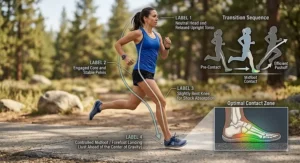
Start with walking, not running. Wear your new minimalist shoes around the house, on errands, or for short walks for the first week before you introduce any running at all. When you do start running, cap your first few sessions at 10–15 minutes, on soft or familiar surfaces, and pay attention to your calves and Achilles the next day — mild soreness is normal, sharp pain is not. Increase volume by no more than 10% per week, the same conservative guideline sports podiatrists apply to any new training stimulus. Expect a genuine adaptation period of six to eight weeks before minimalist shoes feel “normal,” and consider rotating between your minimalist pair and your old shoes during that window rather than going cold turkey. Finally, pay attention to your landing pattern — minimalist shoes strongly encourage a midfoot or forefoot strike over the heavy heel strike common in cushioned trainers, and that shift alone changes the load on your lower leg.
Real-World Scenarios: Which Minimalist Runner Are You?
If you’re a busy professional running 3–4 miles before work three times a week, the Xero Shoes HFS II or New Balance Minimus Trail make the most sense — durable enough for regular use, versatile enough to skip a shoe rotation, and forgiving enough for slightly inconsistent surfaces on your morning route.
If you’re a CrossFit or functional-training regular who runs occasionally but lifts far more often, the Vivobarefoot Primus Lite III is built for exactly this. Its wide, stable base and low stack height matter more during a heavy deadlift than during a 5K, and it still performs adequately for shorter training runs.
If you’re training for a spring road race and already have solid foot strength from months of minimalist walking or running, the Altra Escalante Racer or Vibram FiveFingers V-Run reward that preparation with genuine performance benefits — lighter weight, faster turnover, and (in the Vibram’s case) sensory feedback that helps fine-tune your form at race pace. Neither is the shoe to start your minimalist journey in.
And if you’re simply minimalist-curious on a budget, unsure whether zero-drop shoes will even suit your feet, the WHITIN Minimalist lets you test the waters for less than the cost of dinner out, before committing to a $150 pair.
Problem → Solution: Fixing the Most Common Minimalist Running Mistakes
Problem: Calf and Achilles soreness after switching shoes. This almost always means the transition happened too fast. Solution: drop back to walking-only for a week, then reintroduce running at half your normal distance, increasing gradually.
Problem: Feeling every pebble and can’t tolerate longer runs. This is a sign your current shoe’s stack height is too low for your fitness level. Solution: move up to a shoe like the Xero Shoes HFS II or New Balance Minimus Trail, both of which offer more underfoot protection than true barefoot-style options like the Merrell Vapor Glove 6.
Problem: Shoe feels loose or your foot slides during faster efforts. Most minimalist shoes prioritize flexibility over structure, which can mean less midfoot lockdown. Solution: look for models with adjustable lacing or a wrap-style upper, like the Vivobarefoot Primus Lite III, and double-check you’re wearing the correct size — minimalist shoes generally run true to size or slightly small.
Problem: Outsole wearing out faster than expected. Thinner soles simply have less rubber to wear through. Solution: rotate two pairs if you’re running frequently, and check for models with reinforced tread patterns like the Xero Shoes HFS II‘s 5,000-mile warranty.
Problem: Cold feet in colder months. Most minimalist uppers are built for breathability, not insulation. Solution: add merino wool toe socks, or reserve your most minimal shoes (like the Merrell Vapor Glove 6) for warmer months and rotate in a slightly more structured minimalist option seasonally.
How to Choose Lightweight Minimalist Shoes for Women
Picking the right pair comes down to a handful of decisions, in this order:
- Assess your current footwear history. If you’ve run exclusively in cushioned trainers, start with a higher-stack option like the Altra Escalante Racer rather than jumping to a 4mm shoe.
- Identify your primary surface. Road-focused shoes like the Merrell Vapor Glove 6 and trail-focused options like the New Balance Minimus Trail are optimized differently, and using the wrong one on the wrong terrain shows up fast in comfort and traction.
- Decide how much toe splay you need. Wider toe boxes, like those on the Vivobarefoot Primus Lite III and WHITIN Minimalist, matter more if you have bunions, hammertoes, or simply wide feet.
- Weigh weight against durability. The lightest shoes generally sacrifice some outsole longevity — worth knowing before you buy the featherweight option expecting years of wear.
- Set a realistic budget for your commitment level. If you’re unsure minimalist running suits you, start at the WHITIN Minimalist‘s price point rather than the Vibram FiveFingers V-Run‘s.
- Check the drop, not just the stack height. Two shoes with similar stack heights can feel completely different if one has a slight drop and the other is truly zero-drop.
- Read aggregated review sentiment for your specific foot shape. Narrow feet, wide feet, high arches, and flat feet each respond differently to the same shoe — general “best of” lists rarely account for this.
For deeper background on how footwear affects biomechanics, the Cleveland Clinic’s overview of foot anatomy and mechanics is a genuinely useful primer before you commit to a category-wide footwear change.
What Is Sensory Feedback Running?
Sensory feedback running is a training approach that relies on minimal-cushioning footwear to let the nerve endings on the sole of the foot detect ground texture, pressure, and terrain changes in real time, which the brain then uses to adjust stride mechanics automatically. It’s the mechanism behind why minimalist shoes are often described as making runners “more careful” or “lighter-footed” almost immediately.
Thick, structured midsoles mute this input almost entirely — your foot lands the same way whether you’re on smooth pavement or a pebble-strewn trail, because the foam absorbs the difference before your nervous system registers it. Strip that foam away, and your foot starts making micro-adjustments to landing angle and force in real time, which is a large part of why minimalist runners often report a more “aware,” controlled stride after an adaptation period.
Foot Strengthening: The Real Payoff of Going Minimal
This is where the category moves from trend to genuinely evidence-backed. A systematic review published via PubMed examining minimalist shoes and plantar intrinsic foot muscle strength found that strength increased between 9% and 57% across the included studies, with muscle size increasing 7–10.6%, after periods of minimalist shoe use in healthy adults. Separately, a study published in Scientific Reports found foot strength increased by an average of 57.4% after six months of daily activity in minimal footwear.
What the spec sheet won’t tell you is that this strengthening effect isn’t automatic just from owning the shoes — it comes from consistent, gradual use over months, not weeks. The intrinsic foot muscles most affected (the small stabilizers along the arch and toes) are chronically underused in structured, supportive shoes, which is part of why sudden transitions cause soreness: those muscles are finally being asked to do real work. For runners dealing with chronic plantar fasciitis or weak arches, this research is genuinely relevant, though it’s worth discussing any pre-existing foot condition with a podiatrist before making a footwear change.
Proprioceptive Training and Why Your Nervous System Needs It
Proprioceptive training refers to exercises and conditions that improve your body’s internal sense of position, balance, and movement without relying on vision — and minimalist running shoes are, functionally, a continuous proprioceptive training tool every time you wear them. The thin sole transmits ground information directly to nerve receptors in the foot, which feed back to the brain and spinal cord to fine-tune balance and joint stability with every step.
Here’s what most buyers overlook: this isn’t just relevant to running performance. Improved proprioception has broader implications for ankle stability and fall prevention, which is part of why some physical therapists incorporate minimalist or barefoot-style footwear into rehabilitation programs. A meta-analysis in Clinical Biomechanics reviewing foot core exercises and minimalist footwear found meaningful increases in toe strength alongside biomechanical changes during dynamic movement, reinforcing that the proprioceptive benefit and the strength benefit are closely linked rather than separate effects.
Women’s Minimal Road Running Shoes vs Natural Trail Shoes
These two categories get lumped together constantly, but they’re built for different jobs. Women’s minimal road running shoes, like the Merrell Vapor Glove 6 and Xero Shoes HFS II, prioritize a smooth, low-lug outsole optimized for consistent pavement contact and lighter overall weight, since road surfaces don’t demand aggressive traction.
Natural trail shoes, meanwhile — the New Balance Minimus Trail is the clearest example here — trade some of that road-optimized smoothness for lugged outsoles and slightly more reinforced uppers to handle roots, rocks, and loose dirt. Based on the spec comparison, the stack heights often look similar on paper, but the outsole geometry is where the real difference lives. Wearing a pure road minimalist shoe on technical trail terrain sacrifices grip you’ll notice on the first downhill switchback, while wearing a lugged trail shoe on pavement adds unnecessary weight and a slightly less smooth stride. If you split your running fairly evenly between road and trail, the Xero Shoes HFS II‘s hybrid tread pattern is the closest thing to a genuine compromise on this list.
Minimalist vs Traditional Running Shoes: Benefits Compared
| Factor | Minimalist Shoes | Traditional Cushioned Shoes |
|---|---|---|
| Ground feel | High to very high | Low, heavily muted |
| Foot muscle engagement | Significantly higher | Minimal |
| Weight | Typically 5–14 oz | Often 9–12+ oz with more bulk |
| Adaptation period needed | Yes, 6–8 weeks | Minimal to none |
| Best for | Foot strength, natural stride, shorter distances early on | Long-distance comfort, existing injuries needing support |
This comparison isn’t really about which category is objectively “better” — it’s about matching the shoe to the runner’s current foot strength and goals. A runner with healthy, adapted feet transitioning gradually into a shoe like the Xero Shoes HFS II may see genuine gains in strength and stride awareness, while someone with an existing injury or significant overpronation may need the structure traditional shoes provide, at least temporarily. The American Academy of Podiatric Sports Medicine has noted that individuals should work with a sports medicine professional when deciding whether to incorporate barefoot-style running into a training program, which is sound advice regardless of which side of this table appeals to you.
💬 Just one click — help others make better buying decisions too!😊
Features That Actually Matter (And Those That Don’t)
Zero drop matters — it’s the single biggest factor separating a genuinely minimalist shoe from a lightly cushioned trainer wearing minimalist marketing. Toe box width matters, especially if you have any history of bunions or hammertoes, since a cramped forefoot defeats much of the purpose. Outsole flexibility matters for how naturally your foot can move through toe-off.
What matters less than marketing suggests: exact stack height differences of just a millimeter or two rarely change the real-world experience as much as the copy implies. “Barefoot” branding claims should be read skeptically too — a shoe calling itself barefoot-inspired with a 15mm stack height is stretching the definition. And flashy colorways or celebrity endorsements, common across this entire category lately, tell you nothing about fit, durability, or ground feel — they’re irrelevant to the actual buying decision.
Minimalist Running Shoes for Beginners vs Experienced Runners
Beginners to the category should prioritize a moderate stack height, a wide toe box, and a lower financial commitment while they confirm minimalist running actually suits their feet and stride. The WHITIN Minimalist and Xero Shoes HFS II both fit this brief well — enough protection to be forgiving of transition mistakes, without asking for premium-tier spending upfront.
Experienced minimalist runners, whose feet have already adapted over months or years, can reasonably push toward the extreme end of the spectrum: the Vivobarefoot Primus Lite III‘s 4mm stack or the Vibram FiveFingers V-Run‘s individual toe pockets. These shoes reward existing foot strength with more direct feedback and less material getting in the way, but they offer little forgiveness for someone whose feet haven’t done the strengthening work yet. If you’re not sure which camp you’re in, the honest answer is usually beginner — most runners underestimate how long true adaptation actually takes.
Long-Term Cost & Maintenance
Minimalist shoes complicate the usual cost-per-mile running shoe math in an interesting way. Traditional trainers are typically replaced every 300–500 miles as cushioning compresses; minimalist shoes have far less cushioning to lose, so the wear pattern shifts almost entirely to the outsole. The Xero Shoes HFS II‘s 5,000-mile sole warranty reflects genuine confidence in that durability, while lighter, thinner-soled options like the Merrell Vapor Glove 6 may need replacing well before that mileage based on aggregated review reports of faster tread wear.
Total cost of ownership, then, depends less on sticker price and more on how the outsole rubber compound holds up. A $170 pair like the Vibram FiveFingers V-Run that lasts three years may cost less per mile than a $40 pair replaced every few months. If budget is genuinely tight, starting with the WHITIN Minimalist to confirm fit and comfort before investing in a longer-lasting premium pair is a financially sound strategy, not a compromise.
Safety, Injury Risk & Regulations Guide
There’s no formal regulatory body governing what counts as a “minimalist” running shoe, which is part of why definitions vary so widely between brands. What does matter is injury risk during transition, and the research here is fairly consistent: sudden, aggressive switches to minimal footwear are associated with higher rates of metatarsal stress reactions and calf strain, largely because the lower leg and foot muscles haven’t yet built the strength the shoe assumes they have.
The safest approach, echoed across podiatric sports medicine guidance, is gradual mileage progression, attention to early warning signs like sharp or localized pain (versus normal generalized muscle soreness), and consulting a podiatrist if you have a history of stress fractures, plantar fasciitis, or significant flat feet before making the switch. None of the seven shoes above are inherently unsafe — the risk lives almost entirely in how quickly someone transitions into them, not in the shoes themselves.
Frequently Asked Questions
❓ Are minimalist running shoes bad for your feet?
❓ How long does it take to adjust to minimalist shoes?
❓ What's the difference between minimalist and barefoot running shoes?
❓ Can minimalist shoes help with plantar fasciitis?
❓ Do minimalist running shoes work for wide feet?
Conclusion
Minimalist running shoes for women aren’t a fad chasing the barefoot-running trend of a decade ago — they’re a legitimate category backed by growing research on foot strength, proprioception, and natural gait mechanics. The right pair for you depends less on which shoe reviews best overall and more on where you are in your own transition: the WHITIN Minimalist or Xero Shoes HFS II if you’re just starting out, the Vivobarefoot Primus Lite III if cross-training is your priority, and the Altra Escalante Racer or Vibram FiveFingers V-Run once your feet have genuinely adapted and you’re chasing performance.
Whichever pair you choose, resist the urge to rush the transition. The research is clear that the strength and awareness benefits of minimalist footwear are real, but they’re earned gradually, not immediately. Start slow, listen to your calves, and let your feet do the work they were built to do.
✨ Ready to Make the Switch?
🔍 Your feet have been waiting for this. Browse the picks above, start with the option that matches where you are in your transition, and take the first step toward a stronger, more natural stride.
Recommended for You
- Running Shoes for Women Ultra Marathon: 7 Picks for 2026
- 7 Best Cushioned Running Shoes Women Knee Pain (2026)
- Max Cushion Running Shoes for Women: 7 Elite Picks for 2026
Disclaimer: This article contains affiliate links. As an Amazon Associate, I earn from qualifying purchases. If you purchase products through these links, we may earn a small commission at no additional cost to you.
✨ Found this helpful? Share it with your friends! 💬🤗
