In This Article
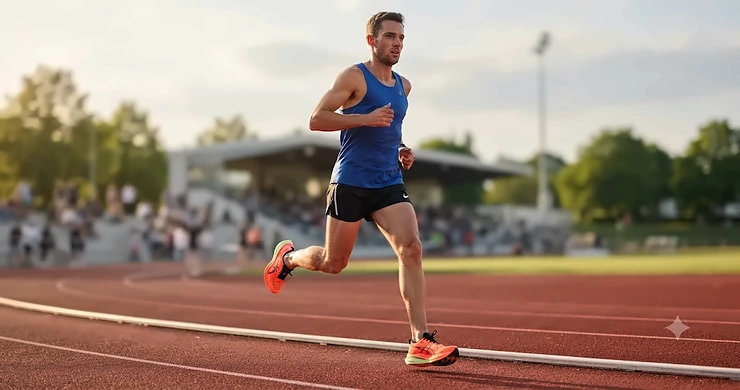
Picking men’s neutral shoes for half marathon training shouldn’t feel harder than the race itself, but with every brand claiming their foam is “the bounciest” or “the most responsive,” it’s easy to end up paralyzed in the shoe aisle (or, more likely, scrolling Amazon at 11 p.m. with twelve tabs open).
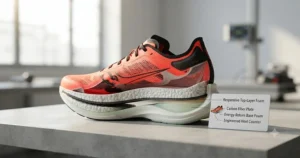
Here’s the short version: a neutral running shoe is built for runners who don’t need a medial post or guide rail to correct overpronation. Your foot already moves the way it’s supposed to, so the shoe’s only job is to cushion, protect, and help you turn over efficiently for 13.1 miles. That’s it. No corrective gadgetry, no “stability cage” — just foam, a comfortable upper, and a driveway-smooth ride.
Over the years I’ve trained for half marathons in everything from $70 clearance-rack trainers to $250 carbon-plated race shoes, and I’ll tell you up front: the “best” shoe is the one that matches your weekly mileage, your foot shape, and your race-day goals, not the one with the flashiest marketing copy. A daily trainer that feels like a marshmallow underfoot is fantastic for long Sunday runs, but it’s the wrong tool for a tempo workout.
In this guide, I’ve pulled together seven real, currently available models — a mix of budget-friendly daily trainers, max-cushion long-run shoes, and a couple of faster, race-ready options — so you can match a pair to your actual training plan instead of guessing.
Quick Comparison Table
| Shoe | Best For | Cushioning Feel | Price Range |
|---|---|---|---|
| Brooks Ghost 18 | Beginners & daily training | Balanced, medium-soft | $130–$150 |
| Nike Air Zoom Pegasus 42 | Speed days, narrower feet | Responsive, snappy | $130–$140 |
| ASICS Gel-Nimbus 27 | Long runs, joint protection | Maximum, plush | $110–$165 |
| New Balance Fresh Foam X 1080v14 | All-day comfort, recovery runs | Maximum, soft | $100–$165 |
| Saucony Endorphin Speed 4 | Race day & tempo runs | Propulsive, firm-bouncy | $150–$170 |
| HOKA Clifton 10 | Lightweight long miles | Maximum, light | $140–$150 |
| On Cloudmonster 3 | Bouncy long runs | Maximum, springy | $150–$170 |
Looking at the table, you’ll notice a pattern: the softer, max-cushion options (Nimbus, 1080v14, Clifton, Cloudmonster) are built to absorb shock over long miles, while the Pegasus and Endorphin Speed lean firmer and more propulsive for faster sessions. If you only buy one pair, the Ghost 18 sits right in the middle and won’t punish you on any given day. If you’re chasing a specific half marathon goal time, though, it’s worth having at least two shoes in rotation — one for grinding out the miles, one for race day.
💬 Just one click — help others make better buying decisions too!😊
✨ Don’t Miss These Exclusive Deals!
💬 Take your half marathon training to the next level with these carefully selected shoes. Click on any highlighted pair to check current pricing and availability — your legs will thank you on mile 11. 😊
Top 7 Men’s Neutral Shoes for Half Marathon: Expert Analysis
1. Brooks Ghost 18
The Brooks Ghost 18 is the shoe equivalent of a reliable sedan — nothing flashy, everything functional. Brooks rebuilt the midsole with nitrogen-infused DNA Loft v3 foam, which in practice means the ride feels noticeably lighter than older Ghost models without losing that signature cushioned-but-not-mushy feel. The new Ortholite X-60 sockliner is a small detail that makes a real difference on back-to-back training days; your foot doesn’t feel like it’s standing on a worn-out gym mat by week six of a training block.
What most buyers overlook is that the Ghost is APMA-accepted and certified as a diabetic-friendly shoe, which tells you something about how forgiving the fit really is — wide toe box, secure midfoot, no pressure points. Customer feedback consistently calls out the breathable upper and “true to size” fit, which matters a lot when you’re logging 30+ miles a week.
✅ Pros: forgiving fit for wide feet, durable outsole, beginner-friendly
✅ Versatile enough for walking and easy days too
✅ Backed by APMA Seal of Acceptance
❌ Cons: not the most exciting shoe for speed work
❌ Slightly heavier than some racing-oriented neutral shoes
Verdict: In the $130–$150 range, the Ghost 18 is the safest first purchase if you’re new to half marathon training and don’t yet know your preferences.
2. Nike Air Zoom Pegasus 42
Forty years in, the Nike Air Zoom Pegasus 42 is still Nike’s answer to “I just want one shoe that does everything reasonably well.” The big change this year is a full-length, curved Air Zoom unit replacing the old segmented setup — in practice, that smooths out the transition from heel strike to toe-off, especially noticeable on tempo runs where older Pegasus models could feel a bit clunky at the midfoot.
The ReactX foam is marketed as 13% more responsive than the previous React compound, and on the road that translates to a slightly snappier turnover at faster paces, not just a marketing footnote. Nike also widened the forefoot and toe box compared to the 41, which helps if your foot tends to splay on longer efforts.
✅ Pros: snappy ride for workouts, narrow-foot-friendly fit, iconic durability
✅ Good versatility between easy runs and speed sessions
❌ Cons: still runs a touch narrow for wide feet despite the update
❌ 12mm-feeling heel drop won’t suit every heel-striker preference
Verdict: Best for runners who want one shoe that can handle both long runs and the occasional fartlek session, in the $130–$140 range.
3. ASICS Gel-Nimbus 27
The ASICS Gel-Nimbus 27 is ASICS’ “Legends” max-cushion model, and the FF Blast Plus Eco foam paired with a PureGEL heel pad is exactly why it’s been a half marathon staple for over two decades. In practice, the soft landing zone in the heel matters most in the back half of a long run, when fatigue makes your form sloppy and shock absorption starts doing more of the work your muscles normally would.
What buyers consistently mention is how forgiving the Nimbus feels regardless of strike pattern — midfoot or heel strikers both report a smooth ride, which isn’t true of every max-cushion shoe. Right now this is also one of the better value plays on this list: Amazon has been discounting the Nimbus 27 by roughly a third ahead of the newer Nimbus 28, so you’re getting nearly identical cushioning tech for noticeably less.
✅ Pros: exceptional shock absorption, wide toe box, currently discounted
✅ APMA-accepted, great for joint-sensitive runners
❌ Cons: heavier than racing-oriented options
❌ Less responsive feel if you prefer a firmer, snappier ride
Verdict: At the current discounted $110–$165 range, this is arguably the best value-per-mile shoe on the list for long, easy training runs.
4. New Balance Fresh Foam X 1080v14
If the Nimbus is the long-standing favorite, the New Balance Fresh Foam X 1080v14 is its quieter, equally plush rival. New Balance built the midsole with roughly 3% bio-based content, which is a small sustainability detail, but the bigger story is how the foam compresses — slowly and evenly, rather than bottoming out, which is what gives this shoe its “walking on pillows” reputation among reviewers.
The triple jacquard mesh upper is genuinely one of the more breathable options here, and the gusseted tongue keeps debris out on dustier training routes. What most people don’t realize is that the 1080v14 has been quietly discounted by close to 40% on Amazon as the newer v15 rolls out — meaning you can pick up a $165 shoe for closer to $100–$129 depending on size and colorway.
✅ Pros: plush, recovery-friendly ride, breathable upper, currently discounted
✅ APMA Seal of Acceptance, great all-day comfort
❌ Cons: not built for speed work
❌ Bulkier feel may not suit minimalist-leaning runners
Verdict: A top pick for recovery runs and easy long runs in the $100–$165 range, especially while the discount lasts.
5. Saucony Endorphin Speed 4
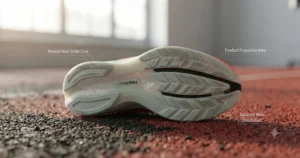
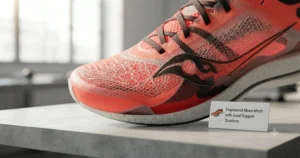
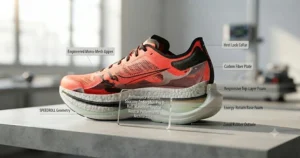
The Saucony Endorphin Speed 4 is where this list shifts from “comfortable daily trainer” to “legitimate race-day option.” It uses a winged nylon plate rather than the rigid carbon fiber plate found in Saucony’s full racing model, paired with PWRRUN PB foam — Saucony’s superfoam reserved for its faster shoes. In practice, the nylon plate gives you a propulsive toe-off without the unforgiving stiffness that can make full carbon-plate shoes uncomfortable for runners who aren’t used to them.
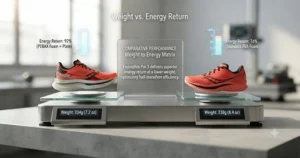
At roughly 8.2 ounces, it’s noticeably lighter than every cushioned trainer on this list, and the SPEEDROLL geometry — essentially a curved sole shape — does a lot of the work of keeping your stride efficient late in a race when your form starts to break down.
✅ Pros: race-ready propulsion without full carbon-plate stiffness, lightweight, versatile for tempo days
✅ Good middle ground between trainer and racer
❌ Cons: less cushioned than the max-foam options here, so it’s not ideal for every training run
❌ Premium price relative to daily trainers
Verdict: If you want one shoe for race day and your faster training sessions, this is the pick, in the $150–$170 range.
6. HOKA Clifton 10
The HOKA Clifton 10 has been a maintenance-mile workhorse for a decade, and the 10th edition adds 3mm more heel-to-toe drop than the Clifton 9 — a change you’ll actually feel if you’re a confirmed heel striker, since it shifts a bit more cushioning under the heel specifically. HOKA also added a double-lace lock to the redesigned jacquard upper, which sounds minor until you’ve dealt with a migrating tongue at mile nine of a long run.
Worth knowing: HOKA’s J-Frame technology gives the Clifton a small amount of built-in guidance at the base of the shoe. It’s still categorized and sold as a neutral shoe — there’s no medial post — but it’s a touch more structured underfoot than something like the Pegasus or Ghost, which is worth knowing if you specifically want a shoe with zero guidance features.
✅ Pros: ultralight for its cushioning level, wide stable base, plush step-in feel
✅ Great toe box room for swelling feet on long runs
❌ Cons: low-to-the-ground design means less plush than Nimbus or 1080v14 despite similar cushioning marketing
❌ Slightly firmer forefoot than some runners expect
Verdict: Ideal if you want HOKA’s famous lightweight cushioning for long runs, in the $140–$150 range.
7. On Cloudmonster 3
The On Cloudmonster 3 is the wildcard pick — and the one most likely to surprise runners who associate On with smaller, firmer “Cloud” shoes. This version adds a full triple-layer CloudTec system instead of the half-slab setup in earlier Cloudmonsters, which means more of the midsole compresses and rebounds with each stride rather than just a portion of it.
In practice, that translates to a noticeably more propulsive feel on long runs than the cushioning numbers alone would suggest — what most buyers overlook is that On’s Speedboard (a stiffening plate embedded in the Helion foam) is doing real work here, not just marketing language. It’s the kind of shoe that makes mile 10 of a long run feel less punishing than it should.
✅ Pros: surprisingly bouncy for a max-cushion shoe, durable outsole, fun-feeling ride
✅ Versatile for both long runs and moderate-paced training
❌ Cons: runs a bit wide in the midfoot for narrower feet
❌ Premium pricing compared to similarly cushioned trainers
Verdict: A great alternative to the Nimbus or 1080v14 if you want a springier ride, in the $150–$170 range.
Practical Usage Guide: Breaking In and Training With Your New Shoes
Buying the right shoe is only half the job — how you introduce it into your training matters almost as much.
Don’t debut new shoes on race day. This sounds obvious, but it’s the single most common mistake I see in half marathon training groups. Wear any new pair for at least 20–30 miles of easy running before attempting a long run or workout in them, so the foam has time to settle into its “true” feel.
Rotate two pairs if you’re running 4+ days a week. Foam needs roughly 24–48 hours to fully decompress between runs. Alternating your daily trainer (Ghost, Nimbus, 1080v14) with a lighter shoe (Pegasus, Endorphin Speed) on hard days also spreads wear more evenly, which extends the life of both pairs.
Watch the outsole, not just the upper. Most men’s neutral shoes for half marathon training last 300–500 miles, but visible wear on the outer heel edge or a flattened midsole (you’ll notice less rebound underfoot) are better indicators than mileage alone, since pace, surface, and body weight all affect breakdown speed.
Lace for your foot shape, not the default. A simple runner’s loop at the top eyelet (creating a small loop on each side and threading the lace through before tying) eliminates most heel-slip issues without needing a different size.
Real-World Scenario: Matching Runners to the Right Shoe
The first-timer training for their first half marathon: If you’re logging your first 8–12 mile long runs and just want something forgiving, the Ghost 18 or Fresh Foam X 1080v14 are the easiest starting points — both prioritize comfort over speed, and neither will punish imperfect form.
The time-goal chaser aiming for a PR: If you’ve already run a half and want to break a specific time, train in something cushioned like the Nimbus 27 for your long runs, but bring in the Pegasus 42 or Endorphin Speed 4 for tempo and interval days so your legs adapt to faster turnover before race day.
The high-mileage runner prone to joint soreness: Heavier training weeks (40+ miles) tend to reward maximum cushioning. The Clifton 10 and Cloudmonster 3 both protect joints well while staying light enough that you’re not fighting the shoe’s weight on tired legs.
If you fall into more than one category — most runners do as training progresses — owning two shoes from different rows in the comparison table above is genuinely more useful than owning one “perfect” pair.
How to Choose Men’s Neutral Shoes for Half Marathon
- Confirm you’re actually a neutral runner. A wet-foot test or a quick look at your old shoes’ wear pattern (even wear across the outsole suggests neutral) can save you from buying the wrong category entirely.
- Match cushioning to your weekly mileage. Higher mileage generally calls for more cushioning to manage cumulative impact.
- Decide your heel-to-toe drop preference. Heel strikers often prefer a higher drop (10–12mm), while midfoot/forefoot strikers may feel better in something lower (4–8mm).
- Separate your “training shoe” from your “race day shoe” mentally. They don’t have to be the same pair, and for many runners, they shouldn’t be.
- Try them on later in the day. Feet swell during long runs, so a shoe that feels snug at 8 a.m. may feel uncomfortably tight at mile 11.
- Read recent customer feedback, not just the spec sheet. Real-world comments about narrow toe boxes or sizing quirks are often more useful than the marketing copy.
- Budget for two pairs if you’re serious about a time goal. A daily trainer and a faster race-day shoe genuinely do different jobs.
Common Mistakes When Buying Half Marathon Running Shoes
The most common mistake is buying based on what’s trending on social media rather than your own gait and mileage — a shoe that’s perfect for an elite runner’s stride can be genuinely uncomfortable for a recreational runner with a different strike pattern.
Second is ignoring half-size sizing differences between brands. ASICS and HOKA, for example, often run slightly differently than Nike or Brooks, so the same US size doesn’t guarantee the same fit.
Third — and this one’s sneaky — is buying race-day shoes too close to race day. A nylon-plate shoe like the Endorphin Speed 4 needs a few shakeout runs before you trust it at race pace; you don’t want to discover a hot spot at mile 6 of your actual half marathon.
Finally, runners often underestimate how much a stiff, rigid sole can fatigue calves and Achilles tendons if you’re not used to the propulsive feel — ease into firmer, race-oriented shoes gradually rather than jumping straight from a max-cushion trainer into back-to-back tempo runs.
Neutral vs Stability Shoes: The Real Difference
Stability shoes add a medial post or a firmer foam wedge on the inner side of the midsole to slow down excessive inward foot roll, known as overpronation. Neutral shoes skip that structure entirely, letting your foot move through its natural range of motion.
The practical difference shows up over distance: if you genuinely overpronate and run in a neutral shoe anyway, you may notice increased fatigue in your shins or knees by mile 9 or 10, simply because nothing is helping manage that extra inward roll. Conversely, runners with a neutral gait who wear stability shoes sometimes report the opposite issue — the guide rail subtly fighting their natural stride.
This is why a basic gait check matters more than brand loyalty. According to the Mayo Clinic’s overview of running injury prevention, the right shoe for your specific gait pattern is one of the more meaningful, low-cost ways to reduce overuse injury risk over a training cycle.
What to Expect: Real-World Performance on Race Day
Specs on a page rarely match the experience at mile 10 with your heart rate climbing and your form starting to slip. Here’s what each cushioning style tends to feel like in that exact moment.
Max-cushion shoes like the Nimbus 27, 1080v14, and Clifton 10 tend to feel forgiving even as your stride gets sloppy — the foam compensates somewhat for declining form. Firmer, more responsive shoes like the Pegasus 42 reward good form but can feel harsher if your stride breaks down late in the race. Propulsive plated shoes like the Endorphin Speed 4 genuinely help maintain pace in the final miles, but only if your legs are conditioned to the stiffer ride beforehand — race week is not the time to find that out.
The honest takeaway: comfort late in a race usually matters more than peak responsiveness early on, which is part of why so many experienced half marathoners choose a slightly more cushioned shoe for racing than their fastest available option.
Benefits vs Traditional Trainers
| Shoe Type | Shock Absorption | Speed Potential | Best For |
|---|---|---|---|
| Max-cushion neutral (Nimbus, 1080v14, Clifton, Cloudmonster) | High | Moderate | Long runs, recovery, joint protection |
| Balanced neutral (Ghost, Pegasus) | Moderate | Moderate-High | Daily training, versatility |
| Plated race-day neutral (Endorphin Speed 4) | Moderate | High | Tempo runs, race day |
| Minimalist/barefoot-style trainers | Low | Variable | Experienced runners building foot strength |
The table makes the trade-off pretty clear: there’s no single shoe that maximizes both shock absorption and speed potential at once, which is exactly why a one-shoe training approach tends to plateau. Minimalist shoes deserve a mention because some experienced runners genuinely prefer them, but per the half marathon background on Wikipedia, the distance’s repetitive impact load over 21.1 kilometers makes minimalist options a poor starting point for most recreational runners.
Price Range & Value Analysis
| Shoe | Price Range | Estimated Mileage | Approx. Cost Per Mile |
|---|---|---|---|
| Brooks Ghost 18 | $130–$150 | 400–500 | ~$0.29–$0.33 |
| Nike Pegasus 42 | $130–$140 | 350–450 | ~$0.31–$0.36 |
| ASICS Gel-Nimbus 27 | $110–$165 | 400–500 | ~$0.25–$0.33 |
| NB Fresh Foam X 1080v14 | $100–$165 | 400–500 | ~$0.22–$0.33 |
| Saucony Endorphin Speed 4 | $150–$170 | 300–400 | ~$0.40–$0.50 |
| HOKA Clifton 10 | $140–$150 | 400–500 | ~$0.30–$0.34 |
| On Cloudmonster 3 | $150–$170 | 350–450 | ~$0.36–$0.43 |
Once you break it down per mile rather than sticker price, the currently discounted Nimbus 27 and 1080v14 are clearly the best value in this lineup. Plated shoes like the Endorphin Speed 4 cost more per mile partly because they’re not designed for daily-trainer mileage — they’re meant to be saved for key sessions, which actually extends their usable lifespan even though the upfront price is higher.
Long-Term Cost & Maintenance
Most runners underestimate how much shoe rotation affects their total annual spend. If you train year-round for multiple half marathons, you’ll likely go through 2–4 pairs annually depending on weekly mileage — meaning the per-pair price matters less than total cost of ownership.
Rotating a daily trainer with a faster shoe (rather than running every mile in one pair) actually extends the lifespan of both, since the foam in each gets more recovery time between runs. Storing shoes away from direct heat and sunlight also meaningfully slows foam degradation — a $150 pair stored in a hot car trunk all summer won’t last as long as the same shoe kept in a closet.
Replacing insoles before fully replacing the shoe is a smaller intervention some runners skip; a fresh sockliner can meaningfully extend comfort in the final 100 miles of a shoe’s life without the full cost of a new pair.
Features That Actually Matter (And Those That Don’t)
Matters: Toe box width relative to your actual foot shape, heel-to-toe drop consistency with what you already train in, and breathability for your climate.
Matters: Outsole rubber placement in high-wear zones — if you’re a heavy heel striker, check that the heel specifically has reinforced rubber, not just the forefoot.
Doesn’t matter much: Marketing terms like “engineered” anything, or specific foam names between competing brands that, in lab testing, often land within a few percentage points of each other in actual energy return.
Doesn’t matter much: Color and aesthetic “racing stripe” design elements — fun, but irrelevant to performance, despite how prominently brands feature them.
FAQ
❓ What is the difference between neutral and stability running shoes for half marathon training?
❓ Can beginners wear a carbon fiber plate shoe for their first half marathon?
❓ How many miles do men's neutral shoes for half marathon training typically last?
❓ What heel-to-toe drop is best for half marathon running shoes?
❓ Are HOKA shoes like the Clifton actually neutral shoes?
Conclusion
If there’s one thing every pair on this list has in common, it’s that none of them are objectively “the best” — they’re each built for a different moment in a half marathon training cycle. The Ghost 18 and Pegasus 42 are smart, versatile daily trainers. The Nimbus 27 and Fresh Foam X 1080v14 are currently excellent value for long-run comfort thanks to ongoing Amazon discounts. The Clifton 10 and Cloudmonster 3 split the difference between cushioning and a lighter, more energetic ride. And the Endorphin Speed 4 earns its higher price tag on race day specifically.
The honest advice I’d give a friend: buy one cushioned daily trainer first, run a few weeks in it, and only add a second, faster shoe once you actually know what your training plan needs. Chasing the “perfect” shoe before you’ve logged real miles usually wastes more money than it saves.
✨ Don’t Miss These Exclusive Deals!
🔍 Take your half marathon training to the next level with these carefully selected shoes. Click on any highlighted pair to check current pricing and availability. The right pair makes every long run just a little easier. 😊
Recommended for You
- Neutral Running Shoes for Men Under $150: 7 Best Picks for 2026
- 7 Best Neutral Running Shoes for Men With High Arches (2026)
- Neutral Running Shoes for Men: 7 Best Picks for 2026
Disclaimer: This article contains affiliate links. As an Amazon Associate, I earn from qualifying purchases. If you purchase products through these links, we may earn a small commission at no additional cost to you.
✨ Found this helpful? Share it with your friends! 💬🤗
