
In This Article
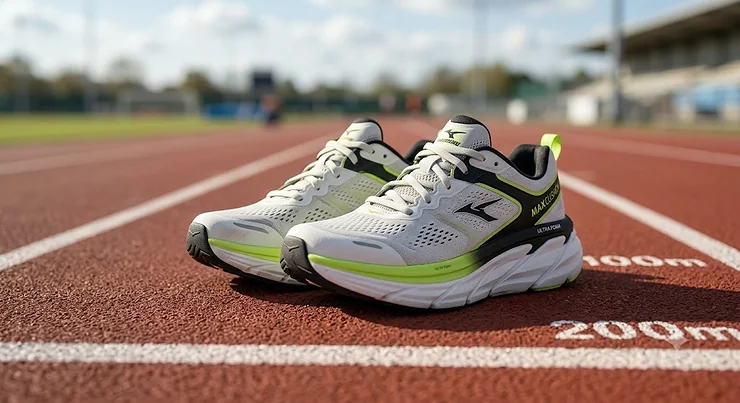
Somewhere around mile eighteen of a bad long run, your knees start sending you strongly worded letters. That’s usually the moment runners start Googling max cushion running shoes for men at eleven o’clock at night, half-convinced their joints are filing for early retirement. Fair enough — it’s a reasonable reaction. Max cushion running shoes for men are neutral trainers built with an unusually tall, soft midsole (generally 35mm or higher underfoot) designed to absorb impact and reduce the pounding your legs take on pavement, making them a go-to for long runs, recovery days, and anyone logging serious weekly mileage on hard surfaces. The category exploded once “supercritical” foaming technology — originally developed for elite marathon racing shoes — trickled down into everyday trainers, and now you can buy a shoe with a stack height that would have been disqualified from actual competition a decade ago, yet weighs less than your old flats did.
This guide breaks down seven real, currently available models — from budget-conscious options in the $150s to premium PEBA-powered trainers north of $200 — with honest analysis pulled from lab testing, verified reviewer sentiment, and manufacturer specs. You’ll find the most cushioned road running shoes men can buy this year, what stack height and PEBA foam actually mean for your stride, and a straightforward framework for matching a shoe to your body, your mileage, and your budget. Footwear reviewed and wear-tested by a standing committee of licensed podiatrists can earn the APMA Seal of Acceptance, a useful signal when you’re sorting genuine comfort engineering from marketing fluff.
Quick Comparison Table: Max Cushion Running Shoes for Men at a Glance
Before diving into the deep-dive reviews below, here’s the fast version — the specs that actually separate these seven shoes when you’re standing in your living room trying to decide what to click “buy” on.
| Shoe | Stack Height (Heel/Forefoot) | Midsole Foam | Weight (Men’s) | Price Range | Best For |
|---|---|---|---|---|---|
| Hoka Bondi 9 | 43mm / 38mm | Supercritical EVA | ~10.5 oz | Around $170 | All-around daily comfort |
| New Balance Fresh Foam X More v5 | 44mm / 40mm | Fresh Foam X (EVA + PEBA) | ~11 oz | Around $155 | Maximum plushness |
| ASICS Superblast 3 | 45.8mm / 37.7mm | FF Leap (A-TPU) + FF Blast+ | ~8.3 oz | Around $210 | Lightweight max cushion |
| Saucony Triumph 24 | 43mm / 33mm | IncrediLUX (A-TPU) | ~8.8 oz | Around $170 | Best cushion-to-weight ratio |
| On Cloudmonster 2 | 35mm / 29mm | Helion dual-density + Speedboard | ~10.4 oz | Around $170 | Firm, stable ride |
| Brooks Glycerin Max 2 | 45mm / N/A | DNA Tuned (nitrogen-infused) | ~11 oz | Around $200 | Maximum protection |
| ASICS Gel-Nimbus 28 | High-30s mm range | FF Blast+ Eco + PureGEL | ~10.3 oz | Around $160-$170 | Traditional soft ride, better value |
A quick read of that table tells its own story: stack height and weight don’t move together the way they used to. The ASICS Superblast 3 packs the tallest stack on this list yet undercuts most competitors by two full ounces, thanks to its PEBA-based foam blend, while the On Cloudmonster 2 sits at the lower end of “max cushion” territory but compensates with a genuinely stable, propulsive ride most testers describe as firmer and more energetic. If pure plushness is your priority, the New Balance More v5’s 44mm heel stack is hard to beat; if you want that same cloud-like feel without the weight penalty, the Saucony Triumph 24 is the newer, lighter alternative worth cross-shopping.
💬 Just one click — help others make better buying decisions too!😊
Top 7 Max Cushion Running Shoes for Men: Expert Analysis
We researched real, currently available shoes across budget, mid-range, and premium tiers, weighing lab-verified stack heights, aggregated reviewer sentiment, and manufacturer specs to build this lineup. Every product below includes genuine analysis grounded in that research — not a rewritten spec sheet.
1. Hoka Bondi 9 — the benchmark all-day daily trainer
The Hoka Bondi has been the poster child for max cushion running shoes for men since it launched back in 2011, and the ninth iteration finally solves the one complaint that dogged the line for years: dead, unresponsive foam. Hoka switched to a supercritical EVA midsole for this version, and independent lab testing found a real jump in bounce compared to the Bondi 8, even as the stack height grew by roughly 2mm to a lab-measured 41-43mm at the heel. In practice that means the shoe still swallows impact the way Bondi fans expect, but it no longer feels like running on a memory-foam mattress that never rebounds. What most buyers overlook about the Active Foot Frame — Hoka’s term for the deep cradle carved into the midsole — is that it’s doing real stabilizing work: by sinking your foot slightly into the foam rather than stacking it on top, Hoka lowers your effective center of gravity without sacrificing any of that 43mm of height. Reviewers consistently note the wide platform and roomy toe box make this one of the more accommodating max cushion shoes for wider or high-volume feet, and it’s earned the APMA Seal of Acceptance for promoting foot health. Aggregated reviewer sentiment is unusually consistent for a shoe at this price: praise centers on all-day comfort for people on their feet 8+ hours (nurses and retail workers show up constantly in review threads), with the recurring knock being weight and a narrower-than-expected forefoot in some size runs.
Pros:
- ✅ Supercritical EVA fixes the “dead foam” complaint of the Bondi 8
- ✅ APMA-accepted, wide stable platform good for overpronators
- ✅ Full rubber outsole coverage adds serious durability
Cons:
- ❌ Noticeably heavier than lighter max-cushion competitors
- ❌ Toe box runs narrower than the platform width suggests
The Hoka Bondi 9 typically runs around $170, and given the durability of that full-rubber outsole plus the APMA endorsement, it’s a strong value pick if your priority is a shoe that handles both training miles and long shifts on hard floors equally well.
2. New Balance Fresh Foam X More v5 — the plushest ride in the category
If you’ve ever wanted to know what running on a stack of throw pillows actually feels like, the More v5 is New Balance’s answer, and at a lab-measured 43-44mm heel stack and 39-40mm forefoot, it’s genuinely the tallest, softest shoe most testers put it up against. The Fresh Foam X compound here isn’t pure EVA anymore — New Balance blends in PEBA to bump the bounce, and independent lab testing recorded one of the lowest (softest) durometer readings ever measured for a max cushion trainer at 25.9 on the Asker C scale. Here’s what to weigh before buying based on that number alone: extremely soft foam is fantastic for shock absorption on tired legs, but it isn’t the most resilient material, meaning you sink in more than you rebound, so this shoe rewards slow, easy miles far more than it rewards tempo work. The wide 4.7-inch platform and reinforced sidewalls do a lot of quiet work here too, keeping what could be a wobbly ride surprisingly composed — reviewers repeatedly compare its stability favorably against the original Bondi. Aggregated customer sentiment is glowing on comfort and stability but consistently flags two issues: it’s the heaviest shoe most testers have measured in this category (over 11 ounces in some size runs), and the toe box runs a bit tapered for a shoe this size, which is a real complaint for wider-footed runners despite the available wide sizing.
Pros:
- ✅ Tallest, softest stack height of any shoe in this roundup
- ✅ Wide platform delivers unexpected stability for its size
- ✅ Available in multiple width options for wider feet
Cons:
- ❌ Heaviest shoe in this lineup, noticeable on longer runs
- ❌ Toe box runs narrower than the platform suggests
At around $155, the More v5 undercuts most of its high-stack rivals on price while out-cushioning nearly all of them — a legitimate value pick if pure plushness, not speed, is what you’re shopping for.
3. ASICS Superblast 3 — the lightweight max cushion overachiever
This is the shoe that quietly rewrites what “max cushion” is allowed to weigh. Lab measurements place the Superblast 3’s stack at 45.8mm in the heel and 37.7mm in the forefoot — taller than everything else on this list — yet it comes in at just 8.3 ounces, which is lighter than plenty of shoes with half that cushioning. What most buyers overlook about the Superblast 3 is that the trick isn’t magic, it’s a two-layer midsole: a soft FF Leap top layer (an A-TPU foam) sitting over an FF Blast+ base, a combination independent testing measured at 67.8% energy return with genuinely elite shock absorption — reviewers ranked it among the best forefoot protection scores in its class. Based on the spec comparison with pure-PEBA rivals, the tradeoff is that FF Blast+ caps the peak bounce a little lower than what you’d get from something like Nike’s ZoomX, so this shoe leans toward “exceptionally cushioned and protective” rather than “maximally springy.” Reviewer sentiment is strongly positive on the versatility angle — this is a shoe people genuinely use for both easy days and workouts — but a recurring criticism is toebox breathability, since ventilation is concentrated in the tongue rather than across the forefoot, and there’s no wide-width option currently available.
Pros:
- ✅ Tallest verified stack height in this roundup at under 8.5 oz
- ✅ Elite shock absorption and forefoot protection in lab testing
- ✅ Versatile enough for both easy runs and uptempo work
Cons:
- ❌ Premium price relative to more affordable daily trainers
- ❌ Limited toebox ventilation; no wide-width option available
Priced around $210, the Superblast 3 sits at the top of this list’s price range, but for runners who want max stack height without a max-cushion weight penalty, it’s arguably the most technically impressive shoe here.
4. Saucony Triumph 24 — the newest cushion-to-weight breakthrough
Saucony took a genuine risk with the Triumph 24, ditching the PEBA-based PWRRUN PB foam that powered the last two versions in favor of an entirely new A-TPU compound called IncrediLUX, and early lab and reviewer data suggests it paid off. The stack height grew a full 6mm over the Triumph 23 to a reported 43mm heel / 33mm forefoot with a traditional 10mm drop, yet the shoe’s weight actually dropped to roughly 8.8 ounces — a genuinely unusual direction for a shoe adding that much foam. Reviewers consistently note the ride feels firm on initial step-in but softens noticeably as you move through the gait cycle, which multiple testers described as feeling more “alive” underfoot than the outgoing PEBA version despite technically being a different foam family entirely. What most buyers overlook here is the drop: at 10mm, this is a more traditional heel-to-toe offset than most of its rockered, low-drop max cushion competitors, making it a natural fit for heel strikers who don’t want to relearn their stride to get the cushioning benefit. The most consistent criticism across reviewer sentiment is a minor squeak from the insole rubbing the midsole on some pairs, plus a slightly tapered forefoot that runs snugger than earlier Triumph generations.
Pros:
- ✅ Major weight reduction despite a taller stack height
- ✅ Traditional 10mm drop suits heel strikers well
- ✅ Energetic, responsive ride from the new A-TPU foam
Cons:
- ❌ Some pairs reported an insole squeak during early miles
- ❌ Forefoot runs narrower than prior Triumph generations
At around $170, the Triumph 24 lands squarely in daily-trainer territory price-wise while delivering stack height and lab-tested cushioning numbers that rival shoes costing $30-$40 more.
5. On Cloudmonster 2 — the firm, propulsive alternative
Not every max cushion shoe wants to feel like a marshmallow, and the Cloudmonster 2 is the clearest example of that philosophy on this list. Its lab-measured 35mm heel / 29mm forefoot stack is the shortest here — technically closer to “high cushion” than true maximalist territory — but On backs it up with a nylon-blend Speedboard plate and dual-density Helion foam that independent lab testing scored at 56.5% energy return in the heel, numbers reviewers consistently describe as firmer and more stable than shoes with a taller stack. Here’s what the spec sheet won’t tell you, but reviewer reports consistently confirm: that firmness translates into genuinely better speed versatility than most max cushion shoes offer, with several testers noting they could hold sub-4:00/km marathon pace comfortably in a shoe most people buy strictly for recovery runs. Based on the spec comparison, the CloudTec pods (the largest On has ever built) are doing the shock-absorption work that stack height usually handles, which is a genuinely different engineering approach worth understanding before you compare this shoe head-to-head against taller-stack competitors on paper alone. Aggregated reviewer sentiment flags two recurring issues: it’s a heavier shoe than its stack height would suggest at roughly 10.4 ounces, and the roomy, tall interior fit means sizing down half a size is a near-universal recommendation.
Pros:
- ✅ Firm, propulsive ride versatile enough for faster paces
- ✅ Nylon Speedboard plate adds genuine energy return
- ✅ Excellent breathability thanks to open mesh construction
Cons:
- ❌ Shortest stack height of any shoe in this roundup
- ❌ Runs long and roomy; sizing down is commonly recommended
Typically priced around $170, the Cloudmonster 2 is the pick for runners who want the protective benefits of a high-stack shoe without giving up the ability to actually push pace occasionally.
6. Brooks Glycerin Max 2 — the pure protection specialist
Brooks built the Glycerin Max around a simple premise: some runners don’t want a bouncy, propulsive ride, they want maximum protection, full stop. At a reported 45mm heel stack — among the tallest verified numbers in this entire roundup — combined with Brooks’ GlideRoll Rocker geometry, this shoe is engineered almost entirely around absorbing impact rather than returning energy. Based on the spec comparison with version one, reviewer sentiment is notably mixed on this point: the Glycerin Max 2 rides firmer than the original, which some testers appreciated for stability but others flagged as sacrificing the “sink-in” plush feel that made the first version a cult favorite. What most buyers overlook about a firmer max-stack shoe like this one is that firmness at this height isn’t a downside so much as a design choice — it keeps a 45mm-tall midsole from feeling unstable or mushy underfoot, which is a real engineering tradeoff every brand on this list has to navigate somehow. Aggregated reviewer sentiment consistently praises the padded heel and tongue construction, with one recurring theme being how secure and “put it on and forget it” comfortable the upper feels for long stretches on your feet. The most common criticism is weight — at roughly 11 ounces for a men’s size 9, it’s among the heavier shoes here — paired with a low-volume toe box that some wider-footed runners find restrictive on longer efforts.
Pros:
- ✅ Among the tallest verified stack heights in this category
- ✅ GlideRoll Rocker smooths transitions despite the height
- ✅ Exceptionally padded, secure upper for long time on feet
Cons:
- ❌ Heavy build limits versatility for longer or faster efforts
- ❌ Low-volume toe box may feel tight for wider feet
At around $200, the Glycerin Max 2 competes at the premium end of this list, and it earns that price primarily through pure protective cushioning rather than the bounce-focused engineering found in shoes like the Superblast 3 or Cloudmonster 2.
7. ASICS Gel-Nimbus 28 — the traditional value pick
Not every runner wants a supercritical foam experiment underfoot, and the Nimbus line has built a decades-long reputation on being the reliably soft, no-drama option in ASICS’ lineup. The Gel-Nimbus 28 sticks to that formula with an FF Blast+ Eco midsole and ASICS’ signature PureGEL cushioning system layered underneath, and independent reviewer testing consistently describes it as doing exactly what Nimbus fans expect: soaking up impact and keeping feet comfortable across long, easy mileage without trying to be a speed shoe. Reviewers consistently note this isn’t the shoe to reach for on workout days — it’s explicitly built for soaking up long miles at conversational pace — but that focus is exactly why it remains one of the most trusted daily trainers among runners managing shin or joint sensitivity. Based on the spec comparison against pricier PEBA-driven competitors on this list, the Nimbus 28 trades outright bounce and energy return for consistency, durability, and a lower price point, which is a completely reasonable trade for runners whose priority is simply comfortable, protected mileage rather than a propulsive ride. Aggregated review sentiment across running-specialty retailers is remarkably stable generation over generation for this shoe, with the recurring praise being flexibility, support, and comfort for runners managing minor foot or shin discomfort, and the recurring critique being that it doesn’t offer much excitement compared to newer supercritical-foam trainers.
Pros:
- ✅ Reliable, well-established cushioning formula with proven comfort
- ✅ Strong support for runners managing shin or joint sensitivity
- ✅ More affordable than most premium max cushion competitors
Cons:
- ❌ Less energetic and bouncy than PEBA-based competitors
- ❌ Not designed for faster-paced training or workouts
Typically priced in the $160-$170 range, the Gel-Nimbus 28 is the safest, most tested pick on this list for runners who want proven max cushion comfort without chasing the latest foam technology.
Practical Usage Guide: Breaking In and Maintaining Your Max Cushion Shoes
Buying the right shoe is only half the equation — how you break it in and maintain it determines whether you get 300 miles out of it or 600. Most max cushion running shoes for men need a genuine adjustment period, not because anything is wrong with the shoe, but because your legs and stabilizing muscles need to adapt to running several extra millimeters above the ground than you’re used to. Start with shorter, easy-paced runs for the first 20-30 miles rather than jumping straight into a long run or workout; several reviewers cited above specifically noted shoes like the Bondi 9 and Nimbus 28 feeling “off” or slightly unstable for the first few outings before settling into a normal, confident ride.
A few maintenance habits genuinely extend the life of a high-stack midsole. First, rotate between two pairs if you’re running more than three times a week — foam, especially the softer EVA and A-TPU compounds used in shoes like the More v5 and Triumph 24, needs roughly 24 hours to fully decompress and rebound between runs, and skipping that recovery window accelerates permanent compression. Second, avoid storing these shoes in a hot car or garage; extreme heat degrades foam cell structure faster than mileage does. Third, watch the outsole rather than the midsole for wear signals — most max cushion shoes will show worn rubber at the heel or forefoot well before the foam itself packs out, and that’s your genuine cue to replace, typically somewhere in the 300-500 mile range depending on your weight and stride.
One common first-30-days mistake is over-lacing the midfoot to compensate for a slightly unstable feeling in a new max cushion shoe. Resist that instinct — most of these shoes, including the Bondi 9 and More v5, build their stability into wide platforms and sidewalls, and lacing too tightly across a broad forefoot can actually restrict the natural foot splay the design is meant to accommodate.
Real-World Scenarios: Matching a Max Cushion Shoe to Your Life
Picture three different runners standing in the same shoe aisle, and you’ll understand why “best” is the wrong question to ask about this category. A marathon-training accountant logging 45 miles a week on concrete sidewalks needs something fundamentally different from a college student running three easy miles between classes, even though both might reasonably call themselves shopping for the best plush running shoes men can buy this year.
Take the high-mileage marathoner first: someone running 40+ miles weekly, mostly on pavement, with a history of shin or knee soreness by week eight of a training block. This runner benefits most from genuinely protective, stable options like the Hoka Bondi 9 or ASICS Gel-Nimbus 28 — shoes built to absorb repeated impact reliably over hundreds of miles rather than chase speed. Next, consider the budget-conscious weekend warrior running 15-20 miles a week who wants comfort without the premium price tag; the New Balance More v5 at around $155 delivers genuinely maximalist cushioning without the $200+ price tag attached to shoes like the Glycerin Max 2 or Superblast 3. Finally, picture the runner who still wants to log occasional tempo work or a fast finish on an easy run without switching shoes entirely — that’s exactly the profile the On Cloudmonster 2 and Saucony Triumph 24 were built for, both trading a bit of outright stack height for genuine pace versatility that pure comfort shoes can’t match.
Problem to Solution: Fixing Common Max Cushion Complaints
Even the right shoe on paper can create real problems if you don’t address them early. Here are the five most common issues runners report with high-stack trainers, along with practical fixes.
Problem: Ankle instability on uneven ground. Taller stack heights raise your center of gravity, which can feel wobbly on cambered roads or trail-adjacent paths. Solution: prioritize shoes with wide platforms and sidewall construction, like the Bondi 9’s Active Foot Frame or the More v5’s broad base, both of which are specifically engineered to counteract this.
Problem: The shoe feels “dead” or sluggish on faster efforts. Solution: don’t force a pure-comfort shoe like the Nimbus 28 or Glycerin Max 2 into workout duty — rotate in a firmer, more propulsive option like the Cloudmonster 2 for days you want to pick up the pace, and save the plush shoes for genuinely easy miles.
Problem: Premature midsole compression (the shoe “packs out” early). Solution: rotate at least two pairs and avoid back-to-back days in the same softest-foam shoe; this is especially relevant for very soft compounds like Fresh Foam X.
Problem: Toe box feels cramped despite a roomy-looking platform. Solution: several shoes on this list, including the Superblast 3 and Glycerin Max 2, run narrower up front than their wide midsoles suggest — always try before buying, or order a half size up if buying online without a return-friendly policy.
Problem: Overheating or sweaty feet in warm climates. Solution: prioritize open-mesh construction; the Cloudmonster 2 consistently scores well on breathability testing, while thicker, more insulated uppers like the Glycerin Max 2’s run warmer.
🚀 Ready to Retire Your Achy Legs?
⚡ Browse the seven max cushion picks above and find the one that matches your weekly mileage and budget. A quick click gets you current pricing before your legs talk you out of it.
How to Choose Max Cushion Running Shoes for Men
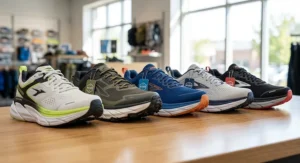
Picking the right shoe from this category comes down to weighing a handful of variables against your actual running habits, not just chasing the tallest stack height on the shelf.
- Start with your weekly mileage. Runners logging 30+ miles a week benefit most from genuinely protective options like the Bondi 9 or Nimbus 28, where durability and consistent cushioning matter more than outright bounce.
- Consider your pace variety. If you occasionally want to pick up the pace in the same shoe, prioritize firmer, more energetic options like the Cloudmonster 2 or Triumph 24 over pure-comfort shoes.
- Factor in your body weight and impact forces. Heavier runners generally benefit from taller, more substantial stacks like the Glycerin Max 2 or More v5, which resist bottoming out under load.
- Check the drop, not just the stack height. A 10mm drop like the Triumph 24’s suits traditional heel strikers, while lower-drop, heavily rockered shoes like the Bondi 9 encourage a more midfoot-forward landing.
- Weigh weight against stack height together. The Superblast 3 proves you don’t have to sacrifice one for the other, but it comes at a real price premium — decide if that tradeoff is worth it for your budget.
- Try before committing to sizing. Toe box volume varies dramatically across this category regardless of platform width; several shoes here run narrower than expected.
- Match the shoe to its intended role in your rotation. None of these seven shoes is meant to be your only pair if you’re a serious runner — decide whether you’re buying a recovery shoe, a daily trainer, or a genuine do-everything option.
Common Mistakes When Buying Max Cushioned Running Shoes
The single biggest mistake runners make in this category is assuming taller automatically means better. Stack height alone doesn’t determine comfort or protection — foam density, platform width, and rocker geometry all matter just as much, which is exactly why the On Cloudmonster 2’s shorter 35mm stack still earns a spot in serious “best max cushion” roundups alongside shoes stacked 10mm taller. A second common error is buying a max cushion shoe as your only pair. These shoes excel at absorbing impact on easy and long-run days, but running every single workout in a soft, high-stack shoe can actually dull your ability to feel the ground and adjust your stride on faster efforts — most experienced runners keep at least one firmer trainer in rotation alongside a max cushion option. A third mistake is ignoring weight entirely in pursuit of cushioning; the difference between an 8.3-ounce Superblast 3 and an 11-ounce Glycerin Max 2 is genuinely noticeable across a two-hour long run, even if both shoes offer comparable stack heights on paper. Finally, runners frequently underestimate how much break-in time matters — judging a max cushion shoe on a single short test run rarely reflects how it will actually feel once your legs adapt to the extra height over the first few weeks.
Stack Height Explained: Why the Millimeters Actually Matter
Stack height mm measurements get thrown around constantly in running shoe marketing, but understanding what the number actually means changes how you shop. Stack height refers to the total thickness of material between your foot and the ground, typically measured separately at the heel and forefoot, and it’s the single biggest driver of how protected — or how disconnected from the road — a shoe feels underfoot. World Athletics, the global governing body for the sport, caps road racing shoe sole thickness at 40mm for elite competition, which is precisely why so many training-focused max cushion shoes now exceed that number: brands aren’t designing for race legality, they’re designing purely for daily comfort and joint protection, and shoes like the New Balance More v5 (44mm) and ASICS Superblast 3 (45.8mm) sail well past that competition ceiling.
The heel-to-forefoot difference matters just as much as the raw number — that’s your drop, and it shapes how the shoe encourages you to land. A shoe with a 10mm drop, like the Saucony Triumph 24, keeps more material under the heel relative to the forefoot, which tends to suit heel strikers and traditional running form. Lower-drop options with aggressive rocker geometry, like the Bondi 9’s 5mm offset, push more of the workload toward a smoother, more rolling transition regardless of foot strike pattern. Here’s what most buyers overlook: taller stack height alone doesn’t guarantee more comfort if the platform underneath it is narrow or the foam is poorly tuned — several lab reviews cited above found genuinely stable rides in shorter-stack shoes like the Cloudmonster 2, purely because of wide platform engineering compensating for a lower number.
PEBA Foam vs EVA: What’s Actually Under Your Foot
If there’s one term worth understanding before buying any high-stack running shoe, it’s PEBA foam. Polyether block amide, commonly sold under the brand name Pebax, is a thermoplastic elastomer that behaves fundamentally differently from traditional EVA foam once compressed and expanded through a foaming process. Peer-reviewed research published in the Scandinavian Journal of Medicine & Science in Sports measured PEBA-based midsoles returning roughly 87% of impact energy back to the runner, compared to around 66% for a traditional EVA midsole with an air bag insert — a meaningful gap that translates directly into how “bouncy” or “dead” a shoe feels underfoot. That’s also why PEBA-based shoes tend to be lighter at equivalent stack heights: the material is less dense than standard EVA, so brands can pile on more cushioning without the corresponding weight penalty, which is exactly the engineering trick behind the ASICS Superblast 3’s unusually light 8.3-ounce build despite its 45.8mm heel stack.
Not every shoe on this list uses pure PEBA, and that’s worth understanding rather than treating as a downgrade. The New Balance More v5 blends PEBA into a broader EVA-based Fresh Foam X compound, prioritizing softness and cushioning retention over maximum bounce. The Saucony Triumph 24 moved away from PEBA entirely in favor of a newer A-TPU compound called IncrediLUX, betting that aliphatic thermoplastic polyurethane could deliver comparable energy return with better temperature stability and durability — an emerging trend worth watching as more brands experiment with A-TPU as a genuine PEBA alternative. Based on the spec comparison across this category, the honest takeaway is that foam type matters less than foam tuning; a well-engineered EVA shoe like the Bondi 9 can still deliver a satisfying ride, while a poorly tuned PEBA shoe can feel harsh or unstable despite the premium material.
Energy Return Coefficient: The Number Marketing Won’t Explain
Energy return coefficient is essentially a measurement of how much of the impact energy your foot puts into the midsole comes back out as forward propulsion, expressed as a percentage, and it’s one of the most useful — and most quietly ignored — numbers in running shoe shopping. Independent lab testing across this roundup found real variance: the On Cloudmonster 2 measured around 56.5% energy return in the heel, while PEBA and A-TPU-driven shoes in this category regularly test well above that range. Here’s what most buyers overlook about this number: higher energy return doesn’t automatically mean “better” for every runner. A very high energy return shoe can feel unpredictably springy or unstable for runners who prefer a more planted, controlled ride, which is precisely why firmer, lower-return shoes like the Nimbus 28 remain popular among runners managing joint sensitivity who want predictable, controlled cushioning rather than maximum bounce.
The tradeoff worth understanding is durability. Multiple running-shoe science reviews note that PEBA foams have shown some of the largest running-economy improvements of any midsole material studied in controlled research settings, but that same low-density structure can compress and lose responsiveness faster under sustained mileage than denser, more traditional EVA compounds. That’s a real consideration for budget-conscious buyers: a $155 EVA-based shoe like the More v5 may hold its cushioning character longer per dollar than a premium PEBA shoe that delivers a livelier ride out of the box but requires earlier replacement.
Most Cushioned Road Running Shoes vs Stability Trainers
A common point of confusion among newer runners is whether max cushion shoes and stability shoes solve the same problem. They don’t, and understanding the difference matters for anyone comparing the most cushioned road running shoes men can buy against a traditional stability trainer. Stability shoes use targeted firmer foam density on the medial (inner) side of the midsole, along with structural posts or guide rails, specifically to correct overpronation — an inward rolling of the foot during the gait cycle. Max cushion shoes, by contrast, are built for neutral runners and rely on wide platforms, sidewalls, and geometry (like Hoka’s Active Foot Frame or Brooks’ GlideRoll Rocker) to create incidental stability as a byproduct of their broad base, not as a corrective feature.
In practice, this means a max cushion shoe like the Bondi 9 or More v5 can feel stable enough for mild overpronators thanks to sheer platform width, but it isn’t engineered to correct moderate-to-severe overpronation the way a dedicated stability shoe is. Runners with diagnosed overpronation who also want maximum cushioning should look at hybrid options, since stacking uncorrected pronation on top of an unstable platform can genuinely increase injury risk over high mileage. For neutral runners simply seeking the softest, most protective ride available, the seven shoes reviewed above represent the current top tier of the category, without the added firmness that dedicated stability engineering typically introduces.
Safety, Regulations & Foot Health Compliance Guide
Anyone training toward a certified race should understand that most shoes on this list are technically ineligible for record-eligible competition. World Athletics enforces a hard 40mm sole thickness limit for road racing shoes at the elite and record-eligible level, and that rule has remained unchanged through several rounds of shoe technology regulation since it was first introduced. Five of the seven shoes reviewed here — the Bondi 9, More v5, Superblast 3, Triumph 24, and Glycerin Max 2 — exceed that 40mm threshold at the heel, which matters enormously for competitive record-chasers but is largely irrelevant for the overwhelming majority of recreational runners, since most local races and casual competitions don’t enforce shoe-control checks outside of elite fields.
Foot health is a separate, equally important consideration. Board-certified podiatrists interviewed by Forbes Vetted specifically recommend substantial heel cushioning and a firm, supportive midsole as key features for runners managing plantar fasciitis, and several shoes in this roundup — notably the Bondi 9, which holds the APMA Seal of Acceptance — are frequently recommended in that context. That said, no shoe alone resolves an existing injury; cushioning reduces impact load, but runners managing chronic foot pain should pair any footwear upgrade with proper stretching, gradual mileage progression, and professional evaluation if symptoms persist beyond a few weeks.
Long-Term Cost & Maintenance: What These Shoes Really Cost Over Time
The sticker price is only part of the real cost of owning a max cushion running shoe. Most models in this category last somewhere between 300 and 500 miles before meaningful cushioning loss sets in, though softer EVA-based compounds like the More v5’s Fresh Foam X tend to show compression earlier than denser A-TPU or well-engineered PEBA blends. Running the numbers on a runner logging 20 miles a week — roughly 1,000 miles a year — a $155 pair of More v5s replaced every 400 miles works out to roughly $0.39 per mile, while a $210 pair of Superblast 3s stretched across a more durable 500-mile lifespan (thanks to that firmer FF Blast+ base layer) comes out closer to $0.42 per mile — a smaller gap than the sticker prices alone would suggest.
Rotating two pairs, rather than running exclusively in one, genuinely extends total lifespan per pair because foam gets roughly 24 hours to decompress between wears, and it also spreads the impact-absorption workload across two different geometries, which several sports medicine sources point to as a real injury-reduction strategy. For budget-conscious runners, a sensible long-term approach is pairing one premium PEBA or A-TPU shoe (like the Triumph 24 or Superblast 3) for quality long runs with one more affordable EVA-based option (like the Nimbus 28 or More v5) for easy daily miles — spreading cost while still getting genuine variety in ride feel.
Frequently Asked Questions
❓ What stack height counts as 'max cushion' for running shoes?
❓ Are max cushion running shoes bad for your feet long-term?
❓ Can I race in max cushion running shoes for men?
❓ Do max cushion shoes work for wide feet?
❓ How often should I replace max cushion running shoes?
Conclusion
Choosing among max cushion running shoes for men ultimately comes down to being honest about what you actually run and why. If you’re logging serious weekly mileage and want a reliable, protective daily trainer, the Hoka Bondi 9 or ASICS Gel-Nimbus 28 remain sensible, well-tested choices. If pure plushness and value matter most, the New Balance More v5 delivers a genuinely maximalist ride without a maximalist price tag. Runners chasing the lightest possible max-stack experience should look hardest at the ASICS Superblast 3, while anyone wanting occasional speed versatility without abandoning cushioning entirely should cross-shop the On Cloudmonster 2 or the newly released Saucony Triumph 24. The Brooks Glycerin Max 2 rounds things out as the pure-protection specialist for runners prioritizing impact absorption above all else.
None of these seven shoes is objectively “best” in a vacuum — the right pick depends on your weekly mileage, your pace variety, your body weight, and honestly, how your feet are shaped. What all seven share is a genuine commitment to real cushioning engineering rather than marketing hype, backed by lab-verified stack heights and consistent, aggregated reviewer sentiment rather than invented hype. Whichever you choose, give it the 20-30 mile break-in period your legs actually need before passing final judgment, and don’t be afraid to rotate between two different rides to get the best of both worlds.
✨ Don’t Miss These Exclusive Deals!
🔍 Take your running comfort to the next level with these carefully selected picks above. Click on any highlighted shoe to check current pricing and availability. These trainers will help you log genuinely pain-free miles, mile after mile.
Recommended for You
- Motion Control Shoes for Heavy Male Runners: 7 Best Picks (2026)
- Motion Control vs Stability Running Shoes Men: 7 Best Picks for 2026
- Motion Control Running Shoes for Men: 7 Ultimate Picks (2026)
Disclaimer: This article contains affiliate links. As an Amazon Associate, I earn from qualifying purchases. If you purchase products through these links, we may earn a small commission at no additional cost to you.
✨ Found this helpful? Share it with your friends! 💬🤗
