In This Article
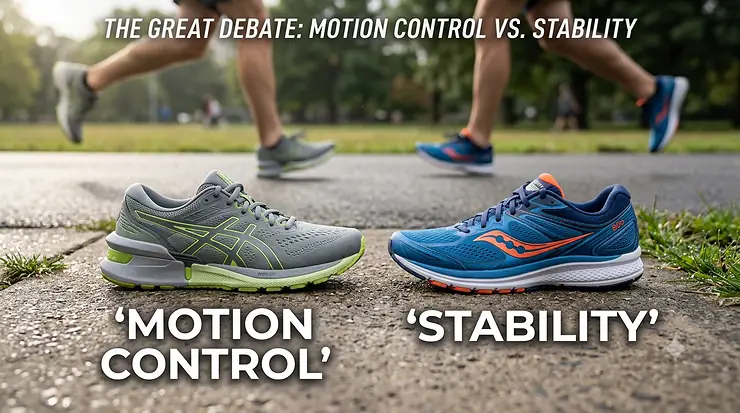
Somewhere between your third blown-out insole and your second trip to a physical therapist, you probably started asking the question everyone eventually asks: what’s actually different between motion control vs stability running shoes men keep arguing about in forums? It’s a fair question, and the honest answer is that most runners have never been told the real distinction — they’ve just been handed a shoe by a salesperson and sent on their way.
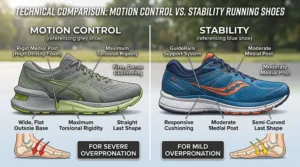
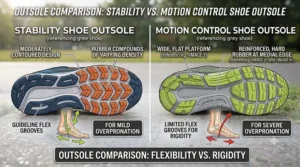
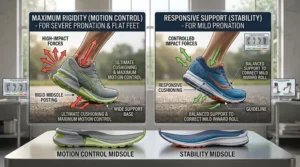
Here’s the 50-word version: motion control shoes use a firm, wide platform and dense medial material to physically limit how far your foot rolls inward, built for moderate-to-severe overpronation. Stability shoes offer lighter, more adaptive guidance for mild-to-moderate overpronators who still want a natural-feeling ride.
That distinction matters more than marketing copy suggests. Based on the spec comparisons and aggregated review sentiment across dozens of 2026 models, the right category can be the difference between a shoe that quietly disappears on your foot and one that leaves your shins aching by mile four. The wrong category, meanwhile, can either overcorrect a mild pronator into new aches or under-support a severe one right into a stress reaction.
This guide walks through seven real, current shoes — from the moderately priced Brooks Adrenaline GTS 25 up through the true motion control New Balance Fresh Foam X 1540v4 — plus the biomechanics behind why they’re built the way they are. According to the American Podiatric Medical Association, the right running shoe should be matched to your specific arch type and gait, not chosen off a shelf display. That’s exactly the approach we’re taking here: real specs, real trade-offs, and honest guidance on which shoe earns a place in your rotation.
Quick Comparison Table
Before diving into the full breakdown, here’s a snapshot of where each shoe sits on the support spectrum, plus who each one suits best.
| Shoe | Category | Weight (men’s) | Drop | Best For |
|---|---|---|---|---|
| Brooks Beast GTS 26 | Max stability / near motion control | 11.5–11.9 oz | 12mm | Heavier runners, severe overpronators |
| New Balance 1540v4 | True motion control | ~12–13 oz | 4mm | Severe overpronation, orthotic users |
| Asics Gel-Kayano 32 | Premium stability | 10.4–10.8 oz | 8mm | Moderate-severe overpronation, long miles |
| Hoka Gaviota 6 | Premium stability | 10–10.25 oz | 6mm | Wide feet, all-day wear, moderate support |
| Saucony Hurricane 25 | Max-cushion stability | 9.2–10 oz | 6mm | Recovery days, plush daily miles |
| New Balance 860v15 | Moderate stability | 11.8 oz | 6–8mm | Mild-moderate overpronation, varus feet |
| Brooks Adrenaline GTS 25 | Moderate stability (budget) | 10.6 oz | 10mm | First-time stability buyers, budget-conscious |
Looking at the table, the pattern is clear: as weight and structure climb, so does the corrective power, and the New Balance 1540v4 stands apart as the only shoe here that still uses a true rigid ROLLBAR post rather than the softer guidance systems everyone else has shifted to. Meanwhile, the Brooks Adrenaline GTS 25 proves you don’t need max stack or a triple-digit price tag to get dependable, everyday guidance. If your priority is long-mileage comfort over aggressive correction, the Saucony Hurricane 25 and Hoka Gaviota 6 are worth a closer look before you commit to anything heavier.
💬 Already leaning toward one of these? Tap through to check current pricing and see if it’s the right fit for your stride!
💬 Just one click — help others make better buying decisions too!😊
Top 7 Motion Control and Stability Running Shoes: Expert Analysis
Below are seven real, currently available shoes spanning budget to premium, arranged from maximum support down to moderate. Every product mention keeps the name in bold so you can scan the section at a glance.
1. Brooks Beast GTS 26 — the closest thing to motion control from a mainstream stability brand
The Brooks Beast GTS 26 has been Brooks’ flagship max-support shoe since 2002, and the newest version leans into comfort more than any prior Beast. It runs a 38mm heel stack with a 12mm drop, and the redesigned GuideRails system is now molded directly into the DNA Loft v3 midsole instead of glued on separately. In practice, this means the firm foam wedges that steer your foot back toward neutral sit closer to the center of the platform, which is a smart engineering call, but reviewers who owned earlier Beasts note it also softens the corrective bite a touch compared to previous generations. The Brooks Beast GTS 26 is best suited to heavier runners, those recovering from injury, or anyone who needs a dependable everyday trainer with room for thick orthotics — it carries PDAC A5500 diabetic-shoe certification, a detail regular stability shoes rarely mention. Aggregated reviewer sentiment consistently praises the roomy, accommodating fit and plush step-in feel, while some longtime Beast wearers mention the shoe now behaves more like a soft daily trainer than a true corrective device. At around $170, it’s priced right alongside the Kayano and Hurricane, making it a genuine head-to-head decision rather than an automatic pick.
Pros:
- ✅ Deep, PDAC-certified interior fits thick orthotics easily
- ✅ Wide base and available widths suit larger or flatter feet
- ✅ Plush DNA Loft v3 midsole softens long-mileage impact
Cons:
- ❌ Heavier than most stability rivals in this price range
- ❌ Less aggressively corrective than older Beast generations
At around $170, the Brooks Beast GTS 26 delivers strong value for runners who specifically need maximum structure and orthotic room, though lighter overpronators will find better everyday value elsewhere on this list.
2. New Balance Fresh Foam X 1540v4 — true motion control with a rigid ROLLBAR post
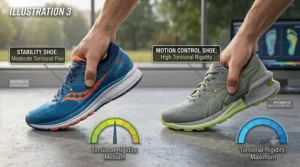
If you want the closest thing on the market to old-school motion control, the New Balance Fresh Foam X 1540v4 is it. Where nearly every other shoe here has moved toward “invisible,” geometry-based guidance, the 1540v4 keeps New Balance’s ROLLBAR technology — a genuinely firm medial and lateral TPU post embedded in the rear midsole — paired with Fresh Foam X cushioning and a 4mm drop. What that means practically: this shoe physically resists rearfoot roll rather than gently nudging it, which is exactly the mechanism moderate-to-severe overpronators with flat feet often need, especially if you’ve been told by a professional you require rigid rearfoot control rather than adaptive support. Aggregated user sentiment is genuinely split — some long-time wearers rate it above even the New Balance 990 series for orthopedic support, while others feel the newest version’s added cushioning has diluted some of the firm, stable ride the older v3 was known for, and a few mention the toe box runs tighter than expected. This is not a shoe for someone chasing a lively, springy ride; it’s a tool built specifically for a biomechanical problem.
Pros:
- ✅ True rigid ROLLBAR post for genuine motion control
- ✅ Roomy rear-foot structure accommodates orthotic braces well
- ✅ Adjustable lacing helps dial in heel lockdown
Cons:
- ❌ Toe box runs narrower than previous version for some feet
- ❌ Firmer, heavier ride than nearly everything else on this list
Around $200, the New Balance 1540v4 is priced at a premium, but for the narrow slice of runners who need true motion control rather than modern stability, no other shoe here matches its corrective mechanism.
3. Asics Gel-Kayano 32 — three decades of stability refined into a smoother, lower-drop ride
The Asics Gel-Kayano 32 just marked its 32nd version, and the biggest change is a drop shift from 10mm down to 8mm, alongside a taller 40mm heel stack built from FF Blast Plus foam. The shoe’s 4D Guidance System uses a dynamic pod under the arch that responds to load in real time rather than relying on a static medial post, which reviewers describe as a smoother, less “corrective-feeling” style of stability than older Kayanos. What that means for you: this is a shoe engineered to fade into the background during easy and long runs, offering support without ever feeling like a piece of medical equipment. It’s earned the APMA Seal of Acceptance, which is a genuinely useful signal if you have diagnosed foot issues, not just marketing language. Aggregated reviewer sentiment is strongly positive on comfort and durability but consistently flags two things: the shoe runs warm due to a dense, low-breathability upper, and it lacks lively energy return compared to newer super-foam competitors. At $165, it competes directly with the Hurricane 25 and sits just below the Beast GTS 26.
Pros:
- ✅ Adaptive 4D Guidance System feels natural, not forceful
- ✅ APMA Seal of Acceptance backs its foot-health credentials
- ✅ Available in narrow, standard, and wide widths
Cons:
- ❌ Runs noticeably warm on hot-weather runs
- ❌ Firm, low-energy-return foam limits faster-paced sessions
The Asics Gel-Kayano 32 earns its price at $165 for runners prioritizing dependable daily-mileage support over lively responsiveness, particularly those managing knee or shin sensitivity on long runs.
4. Hoka Gaviota 6 — the widest-fitting stability shoe built around Hoka’s H-Frame
The Hoka Gaviota 6 finally received a long-awaited update after three years, and it keeps the firmer H-Frame support structure introduced in version 5 while softening the surrounding CMEVA foam. At a 39mm heel stack with only a 6mm drop, and weighing roughly 10 oz, it’s genuinely one of the lighter shoes in the max-stability category despite its size. The H-Frame embeds a denser foam layer in an H-shape through the forefoot, midfoot, and heel, which reviewers note delivers full-length medial stability that borders on motion control territory — a meaningful distinction if you’re choosing between this and the Kayano. Reviewers consistently highlight the unusually roomy, wide-fitting last (rare among Hoka models, which typically run narrow) as a standout benefit for wide-footed runners who’ve struggled to find stable shoes that don’t pinch. The most common critique in aggregated feedback is underwhelming energy return from the older CMEVA foam formulation, and some runners note the midfoot lockdown feels slightly loose despite the internal ghillie lacing system. Around $180, it’s the priciest shoe on this list among the “stability” (not motion control) category.
Pros:
- ✅ Genuinely wide, roomy fit — rare for a Hoka model
- ✅ Full-length H-Frame delivers near-motion-control stability
- ✅ Surprisingly lightweight for its stack height and structure
Cons:
- ❌ CMEVA foam feels dated with limited energy return
- ❌ Midfoot lockdown can feel loose for narrower feet
At roughly $180, the Hoka Gaviota 6 justifies its premium price mainly for wide-footed runners and all-day standers who prioritize a planted, roomy ride over lively responsiveness.
5. Saucony Hurricane 25 — maximum cushioning with lighter-touch guidance
The Saucony Hurricane 25 takes a different philosophy than the others on this list: rather than a firm medial post, it uses a full-length PWRRUN PB superfoam core wrapped in a firmer PWRRUN “frame” along the edges, plus redesigned CenterPath geometry to gently guide alignment. Weighing around 9.2–10 oz depending on the source measured, with a 6mm drop and a towering 38/32mm stack, it’s technically marketed by Saucony as an “aligning” shoe rather than a strict stability model — worth noting if you need firm medial correction rather than gentle guidance. What that distinction means in practice: reviewers consistently describe it as feeling like a plush daily trainer that happens to be stable, rather than a corrective device, with genuinely impressive energy return for this category. Aggregated sentiment is highly positive on comfort for long runs and all-day wear, but multiple reviewers flag poor breathability from the dense, multi-layer upper, plus a straight-lasted platform that feels slightly less forgiving on uneven surfaces. At roughly $170 (frequently discounted toward $135), it’s a strong pick for runners who want cushioned comfort first and structural support second.
Pros:
- ✅ Excellent energy return for a max-cushion stability shoe
- ✅ Wide, stable platform feels reassuring on long runs
- ✅ Available in wide sizing for men and women
Cons:
- ❌ Poor breathability; runs warm in hot conditions
- ❌ Lighter guidance than true stability or motion control shoes
Priced in the $135-$175 range depending on promotions, the Saucony Hurricane 25 delivers strong value for runners who want plush comfort with a side of stability, rather than aggressive correction.
6. New Balance Fresh Foam X 860v15 — a medial-wedge stability shoe built for varus feet
The New Balance Fresh Foam X 860v15 replaces the traditional firm medial post with New Balance’s Stability Plane technology — a full-length medial wedge integrated between two layers of Fresh Foam X — and drops the offset from 8mm to 6mm in this generation. At 43mm heel stack and roughly 11.8 oz, it’s a genuinely tall, well-cushioned daily trainer aimed specifically at runners whose feet tilt inward (varus alignment) rather than blanket overpronation. Reviewers who specialize in biomechanical shoe analysis note this wedge design creates a centered heel with a laterally biased midfoot and forefoot, which in plain terms means it corrects a specific type of foot collapse rather than generalized rolling. Aggregated feedback consistently praises the wider fit and the fact that it runs lighter than its listed weight suggests, though the stiff heel counter draws repeated complaints from runners with sensitive Achilles insertions or Haglund’s deformities, and the lower-volume forefoot has caused blistering for some wide-toed runners. At around $150, it sits comfortably in the middle of this list’s price range.
Pros:
- ✅ Full-length medial wedge specifically targets varus foot collapse
- ✅ Wide fit accommodates broader feet comfortably
- ✅ Runs lighter on-foot than its listed weight suggests
Cons:
- ❌ Stiff heel counter irritates sensitive Achilles insertions
- ❌ Lower-volume forefoot can cause blistering for wide toes
Around $150, the New Balance Fresh Foam X 860v15 offers solid mid-tier value, particularly for runners whose gait analysis specifically points to varus alignment rather than general overpronation.
7. Brooks Adrenaline GTS 25 — the most accessible entry point into moderate stability
The Brooks Adrenaline GTS 25 has been a training-shoe staple for more than two decades, and it remains the most budget-friendly, approachable shoe on this list. It uses Brooks’ GuideRails system — firmer foam strips flanking the medial and lateral midsole rather than a traditional post — paired with a 37mm heel stack, 10mm drop, and softer DNA Loft v3 foam than the previous generation. What that means practically: rather than intervening only at the arch, GuideRails engage when your knee or ankle drifts outside its natural path, which reviewers describe as noticeably less “corrective-feeling” than older medial-post designs while still catching excess motion during fatigue. It’s a smart entry point for runners newly diagnosed with mild-to-moderate overpronation who aren’t ready to commit to a heavier max-support shoe. Aggregated reviewer sentiment is largely positive on the smoother, more cushioned ride versus prior versions, though several reviewers note the shoe now runs a bit warmer and heavier than the previous GTS 24, and the firmer forefoot section still stiffens up on longer runs. At roughly $140–155, it’s the most accessible shoe in this entire roundup.
Pros:
- ✅ Most affordable stability option in this roundup
- ✅ GuideRails feel less intrusive than traditional medial posts
- ✅ Reliable for both running and all-day walking
Cons:
- ❌ Forefoot firms up noticeably on longer mileage
- ❌ Runs a touch warmer and heavier than the prior version
At $140–155, the Brooks Adrenaline GTS 25 remains the smartest starting point for budget-conscious runners who want dependable, proven stability without committing to premium pricing.
How to Test Your Pronation Type at Home
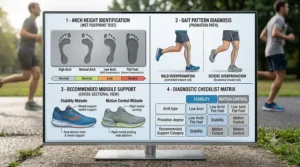
Before you buy any shoe on this list, it helps to get a rough read on your own gait — you don’t need a lab to start. First, check your current shoes’ wear pattern: heavy wear concentrated on the inner edge of the heel and forefoot is a classic overpronation signal, while even wear across the sole often points to a more neutral gait. Second, try the “wet foot test”: step out of a shallow puddle onto a paper bag or dark pavement and look at your footprint — a print showing nearly your whole arch suggests flatter, more pronation-prone feet, while a print with a thin connecting strip suggests a higher, more rigid arch. Third, if you can, film your calves and ankles from behind while running slowly on a treadmill; a visible inward collapse of the ankle during landing is a stronger real-world signal than either test alone. None of these home checks replace a professional gait analysis, especially if you’ve had recurring shin, knee, or plantar fasciitis pain, but they’re a reasonable starting point for narrowing down whether you belong in the moderate-stability camp (Adrenaline GTS 25, 860v15) or the max-support/motion-control camp (Beast GTS 26, 1540v4). One common first-30-days mistake: buying based on a single wear-pattern glance and then ignoring persistent new aches, which usually means the category, not the specific model, needs adjusting.
✨ Not sure which category fits your stride? These podiatrist-informed picks take the guesswork out of your next pair!
Real-World Runner Profiles: Which Shoe Fits Your Stride
Picture three different runners lining up for the same 6am group run. The first is a college student training for her first half marathon, running 15 miles a week on a tight budget with mild inward ankle roll noticed by her coach — she’s the ideal candidate for the Brooks Adrenaline GTS 25, which offers proven guidance without asking her to spend beyond a student budget. The second is a 190-pound recreational runner in his forties, three months removed from a stress reaction in his tibia, logging slow, easy 5-mile recovery runs and needing forgiving, structured cushioning that won’t punish his frame — the Brooks Beast GTS 26 or Asics Gel-Kayano 32 both fit that brief, offering a wide platform and generous stack to absorb repeated impact. The third is a nurse who’s on her feet for twelve-hour hospital shifts and only runs occasionally, but needs all-day structural support with room for a custom orthotic prescribed after years of plantar fasciitis — here, the New Balance 1540v4 or the PDAC-certified Brooks Beast GTS 26 make more sense than a lighter daily trainer, since both accommodate orthotic inserts without cramming her foot. None of these three runners needs the same shoe, and that’s the entire point: environment, mileage, body weight, and injury history should drive the choice far more than which shoe is currently trending online.
Stability vs Motion Control Shoes: What’s the Real Difference?
The stability vs motion control shoes difference comes down to mechanism and intended severity, not just marketing labels. Stability shoes — think the Adrenaline GTS 25, 860v15, Kayano 32, Gaviota 6, and Hurricane 25 in this roundup — use lighter-touch tools: guide rails, medial wedges, dual-density foam, or firmer foam frames that gently discourage excessive inward roll while still letting the foot move somewhat naturally. Motion control shoes, historically defined by a rigid TPU or plastic post embedded in the midsole, are built for moderate-to-severe overpronators and physically resist rearfoot collapse rather than merely guiding it. The New Balance 1540v4 in this list is one of the few current models that still fits the traditional motion control definition, while shoes like the Beast GTS 26 and Gaviota 6 sit in a gray zone — heavy, structured, and borderline motion control in feel, without a true rigid post. According to industry-wide testing from outlets like RunRepeat’s stability shoe guide, the category has broadly shifted away from traditional posting toward geometry-based support, since newer research suggests overpronation itself is less predictive of injury than once assumed — meaning most runners today are better served by stability shoes, and true motion control is now reserved for a smaller, more specific group.
When to Use Motion Control Shoes for Men
So when should you actually reach for motion control shoes men specifically need, rather than settling for a stability model? The clearest signal is a professional gait assessment or podiatrist confirming moderate-to-severe overpronation combined with a flat or collapsed arch — not just a hunch from watching your shoe wear. Body weight matters too: heavier runners generate more ground-reaction force with each stride, meaning their pronation, even if moderate, places more absolute stress on the foot and ankle than the same pronation angle would in a lighter runner. A history of specific injuries also points toward motion control: recurring posterior tibial tendon irritation, medial shin splints, or plantar fasciitis that hasn’t responded to a standard stability shoe are all reasons a firmer post might help where guide rails haven’t. Finally, orthotic use is a practical trigger — if you’ve been fitted for custom orthotics, you generally want a motion control shoe with a removable insole and deep interior volume, exactly what the 1540v4 and Beast GTS 26 both offer. If none of those apply and you’re simply a mild-to-moderate overpronator without injury history, a stability shoe is very likely the better starting point.
✨ Ready for Serious Support? Don’t Miss These Picks!
🔍 Whether you need max structure or gentle guidance, these seven shoes cover every level of overpronation. Click through to check current pricing before your next pair wears out!
Motion Control Shoes for Men with Severe Overpronation
Severe overpronation is its own category, distinct from the mild-to-moderate rolling most runners experience, and it typically shows up as a visible, significant inward collapse of the rearfoot combined with flattening through the midfoot arch during stance phase. For men managing motion control shoes men overpronation severe cases specifically, the priority shifts from comfort-first to correction-first: a rigid or semi-rigid medial post, a wide base for a stable platform, and a straighter, less curved last that resists rolling. The New Balance 1540v4’s ROLLBAR technology is purpose-built for exactly this scenario, since its dual-density TPU post is firm enough to physically interrupt the rolling motion rather than merely slow it. The Brooks Beast GTS 26 is the next-best option if the 1540v4’s narrower toe box doesn’t fit your foot, offering a wider platform and deep, orthotic-friendly volume even though its GuideRails system is comparatively less rigid than a true post. What most buyers overlook here is that severe overpronation often benefits from professional orthotics working in tandem with the shoe, not the shoe alone — a motion control shoe compensates for structural issues, but it’s rarely a complete substitute for addressing the underlying biomechanical cause with a podiatrist or physical therapist.
Foot Biomechanics 101: How Your Gait Shapes Shoe Choice
Foot biomechanics starts with three basic gait patterns: neutral (the foot rolls inward a moderate, healthy amount to absorb shock), overpronation (excessive inward roll, often linked to flatter or more flexible arches), and supination or underpronation (insufficient inward roll, often linked to higher, more rigid arches). Pronation itself isn’t inherently bad — it’s actually the foot’s natural shock-absorption mechanism — the problem arises when the degree or timing of that roll places abnormal stress on the ankle, knee, or hip during the gait cycle. A large-scale systematic review of running-related biomechanical risk factors, published via the National Library of Medicine, found that overuse running injuries stem from a complex interplay of training load alongside individual biomechanical patterns, rather than any single factor acting alone — which is exactly why shoe choice should be paired with sensible training progression, not treated as a standalone fix. Practically, this means your foot type, body weight, running surface, and mileage all interact with your shoe’s support level; a mild overpronator running low mileage on soft trails has very different needs than the same overpronator training for a road marathon at high weekly volume. Understanding this interplay is why “just buy a stability shoe” is often incomplete advice — the right shoe accounts for your specific combination of gait, load, and history.
The Shoe Category Spectrum: From Neutral to Max Motion Control
Rather than a binary “stability or neutral” choice, running shoes actually sit along a shoe category spectrum, and understanding where each model falls helps explain why two “stability” shoes can feel completely different underfoot. At one end sits neutral cushioned trainers with zero corrective structure. Moving along the spectrum, you hit light stability shoes (like the Brooks Adrenaline GTS 25) that offer subtle, guide-rail-style correction. Next comes moderate stability (New Balance 860v15, Asics Gel-Kayano 32), often using medial wedges or adaptive guidance pods rather than firm posts. Premium/max stability follows (Hoka Gaviota 6, Saucony Hurricane 25), typically adding structure through geometry, wider platforms, and firmer foam frames rather than traditional posting. At the far end sits true motion control (New Balance 1540v4), built around a genuinely rigid post, with the Brooks Beast GTS 26 occupying a gray zone that leans heavily toward that end without fully committing to a hard post. This gradual, rather than binary, structure is a relatively recent shift in the industry — reviewers at outlets like Outside Online’s stability shoe roundup have documented that even Brooks and On now build “dynamic stability” using sole geometry, midsole hardness, and upper structure collectively, rather than relying on a single posted component the way brands did a decade ago.
What Podiatrists Recommend for Overpronators
Podiatrist recommendation guidance tends to be more nuanced than internet forums suggest, and it starts with matching arch type to support level rather than defaulting straight to the firmest shoe available. The American Podiatric Medical Association’s own guidance states that low-arched feet generally benefit from supportive shoes designed for stability and motion control specifically to help correct overpronation, while normal arches do best with a balance of stability and cushioning, and high arches typically need a softer, more flexible neutral shoe to compensate for naturally poor shock absorption. This is precisely why the APMA Seal of Acceptance matters as a signal — shoes like the Asics Gel-Kayano 32 and multiple Brooks models carrying that seal have been reviewed and wear-tested by a committee of podiatrists specifically for foot-health benefit, not just marketed as supportive. Podiatrists also tend to emphasize that shoe choice should follow, not precede, an actual assessment: if you’ve had recurring pain, a proper gait analysis (in-store or clinical) beats guessing based on arch height alone, since factors like weight, stride length, and training surface all interact with pronation severity in ways a quick look at your foot can’t fully capture.
Common Mistakes When Buying Motion Control or Stability Shoes
The most common mistake is self-diagnosing severity: assuming mild pronation is “severe” after one bad run, then buying a heavy motion control shoe that ends up feeling clunky and unnecessary for actual daily training. The opposite mistake is just as common — sticking with a neutral shoe out of brand loyalty despite a podiatrist or physical therapist recommending stability, which can prolong nagging injuries. A third mistake is ignoring weight and mileage context: a lighter runner doing short, easy runs rarely needs the same structure as a 200-pound runner training for a marathon, yet both often end up in the same shoe based on generic “best of” lists rather than their actual profile. Fourth, many buyers skip trying shoes with their actual running socks and orthotics (if applicable), which can meaningfully change fit, particularly in narrower models like the 1540v4. Finally, holding onto a stability or motion control shoe well past its structural lifespan is a widespread mistake — the corrective foam and posting break down faster under repeated compression than neutral cushioning does, meaning “it still looks fine” isn’t a reliable signal that the support is still doing its job.
Long-Term Cost and Maintenance for Stability Running Shoes
Thinking about total cost of ownership changes the math on these seven shoes considerably. A $140 Brooks Adrenaline GTS 25 replaced every 350-400 miles works out to roughly 35-40 cents per mile, while a $200 New Balance 1540v4 that lasts a similar distance runs closer to 50-57 cents per mile — but if that motion control shoe prevents a recurring injury that would otherwise cost physical therapy copays, the math shifts heavily in its favor for the runner who genuinely needs it. Heavier shoes like the Beast GTS 26 and Gaviota 6 tend to hold their structural cushioning slightly longer under high body-weight loads thanks to denser midsole compounds, while lighter stability shoes like the Hurricane 25’s PWRRUN PB foam can compress faster under heavier runners despite feeling plush initially. Basic maintenance extends any of these shoes’ usable life: rotating between two pairs so foam has time to decompress between runs, avoiding machine drying (which breaks down foam bonding), and replacing insoles before the midsole itself has visibly compressed. For anyone using custom orthotics with the Beast GTS 26 or 1540v4, periodically checking that the removable sockliner hasn’t compacted around the orthotic is a simple, often-skipped step that preserves the shoe’s intended support geometry.
Frequently Asked Questions
❓ What is the difference between stability and motion control shoes?
❓ Do I need motion control shoes if I overpronate?
❓ Can neutral runners wear stability shoes?
❓ How long do motion control running shoes last?
❓ Are motion control shoes good for walking?
Conclusion
Choosing between motion control vs stability running shoes men are weighing really comes down to an honest read of your own gait, weight, mileage, and injury history — not which shoe has the most Amazon reviews. If you’re a first-time stability buyer with mild pronation and a tight budget, the Brooks Adrenaline GTS 25 remains the smartest, most proven entry point. If you’re managing moderate overpronation on long, easy mileage, the Asics Gel-Kayano 32, Hoka Gaviota 6, or Saucony Hurricane 25 each bring a slightly different flavor of comfort-forward support. And if you’ve been told by a professional that you need genuine motion control — particularly with orthotics, a flat arch, or a history of related injury — the New Balance 1540v4 and Brooks Beast GTS 26 are the two shoes on this list actually built for that job. None of these seven shoes is objectively “best”; they’re built for different points along the same spectrum, and matching your specific needs to that spectrum is the whole game.
✨ Found Your Match? Grab Your Pair Today!
🔍 Take the guesswork out of your next training cycle with a shoe genuinely matched to your stride. Click through on any pick above to check current availability and pricing before your size sells out!
Recommended for You
- Motion Control Running Shoes for Men: 7 Ultimate Picks (2026)
- Stability Running Shoes Men Wide Feet: 7 Picks for 2026
- Stability running shoes men plantar fasciitis: 7 Picks That Actually Help (2026)
Disclaimer: This article contains affiliate links. As an Amazon Associate, I earn from qualifying purchases. If you purchase products through these links, we may earn a small commission at no additional cost to you.
✨ Found this helpful? Share it with your friends! 💬🤗
