
In This Article
If you’ve ever finished a run and felt like your ankles rolled inward with every single stride, you already know why motion control running shoes women flat feet searches spike every training season. Flat feet aren’t a flaw — they’re a foot shape, and roughly one in four adults lives with some degree of it. But when your arch collapses too far, too fast, your knees and hips end up absorbing stress they were never built to handle. That’s where a genuinely supportive shoe earns its keep.
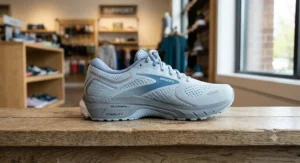
This guide skips the marketing fluff and gets into what actually matters: real specs, real support technologies, and honest analysis of who each shoe is built for. We researched seven current motion control and maximum-stability shoes, matched them to different severities of flat feet, and broke down exactly what the tech under your foot is doing while you run. Whether you have a flexible arch that collapses under load or a rigid, severely flat foot that needs serious correction, there’s a shoe here that fits the bill — and a plan for choosing it with confidence.
Quick Comparison Table
| Shoe | Support Level | Drop | Weight (Women’s) | Best For |
|---|---|---|---|---|
| Brooks Ariel 20 | Max Motion Control | 12mm | 10.7 oz | Severe flat feet, maximum correction |
| New Balance 1540v3 | True Motion Control | 10mm | 11.2 oz | Rigid overpronation, made in USA |
| Asics Gel-Kayano 32 | Adaptive Stability | 8mm | 9.0 oz | Daily miles, modern smooth ride |
| Hoka Gaviota 6 | Max Stability | 6mm | 8.6-8.9 oz | Wide feet, low-drop cushioning |
| Mizuno Wave Horizon 7 | Stability | 8mm | 9.9 oz | Cushion-forward overpronators |
| Saucony Omni 21 | Moderate Stability | 8mm | 9.7 oz | Lightweight daily support |
| Brooks Adrenaline GTS 25 | Mild-Moderate Stability | 10mm | 9.5 oz | Beginners, mild flat feet |
Looking at the numbers, there’s a clear split between true motion control (Brooks Ariel 20 and New Balance 1540v3), which use dense medial posts to physically block excess inward roll, and the newer “guidance” shoes like the Asics Gel-Kayano 32 and Hoka Gaviota 6, which lean on wider platforms and structured foam instead of a hard post. Heavier weight generally tracks with more aggressive correction — the two true motion control shoes are also the two heaviest pairs on this list, which is a trade-off worth understanding before you buy. If you’re newer to structured shoes or your overpronation is mild, the lighter Brooks Adrenaline GTS 25 is a gentler starting point than jumping straight to maximum control.
💬 Just one click — help others make better buying decisions too!😊
Top 7 Motion Control Running Shoes for Women with Flat Feet: Expert Analysis
1. Brooks Ariel 20 — maximum correction for severe overpronation
The Brooks Ariel 20 is built for one job: stopping your arch from collapsing further than it already does, and it does that job about as thoroughly as any shoe on the market. That 12mm heel-to-toe drop isn’t an afterthought — it’s one of the highest offsets available in a motion control shoe, which shifts load away from an already-stressed forefoot and toward the heel, where flat-footed runners typically tolerate impact better. Paired with Brooks’ GuideRails system running along both sides of the heel and midfoot, the shoe intervenes only when your stride drifts too far off-center, rather than locking your foot into a single path the way old-school medial posts did. Based on the spec sheet, this makes the Ariel 20 the pick for runners with genuinely flat, low arches who need the ceiling of support rather than the average amount. Reviewers consistently note that podiatrists recommend this exact model for plantar fasciitis and fallen arches, and the recurring theme in aggregated feedback is relief from ankle and knee strain after switching from a neutral shoe. The trade-off is weight and a firmer ride that some runners describe as “a lot of shoe.”
Pros:
- ✅ Highest support ceiling of any shoe on this list
- ✅ GuideRails reduce knee strain without locking the stride rigid
- ✅ Frequently podiatrist-recommended for plantar fasciitis relief
Cons:
- ❌ Heaviest ride in the lineup at 10.7 oz
- ❌ Firm underfoot feel isn’t ideal for speed days
At around $140-$160 depending on colorway and retailer, check current price before buying — the Brooks Ariel 20 earns its price tag for anyone whose flat feet cause real discomfort on standard trainers.
2. New Balance 1540v3 — true motion control, made in the USA
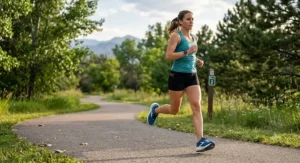
Where a lot of “stability” shoes have quietly moved toward softer, guidance-based systems, the New Balance 1540v3 still uses the old-school approach: a firm ROLLBAR with medial and lateral TPU posts sitting directly under the arch. What that means in practice is a shoe that mechanically resists inward roll rather than gently nudging you back toward center, which matters if your flat feet are rigid rather than flexible. The ENCAP midsole wraps a durable polyurethane rim around a softer EVA core, so you get some give without sacrificing the structural backbone that motion control depends on. Here’s what to weigh: this is a shoe designed for runners who’ve already tried lighter stability shoes and found them insufficient. Aggregated customer sentiment repeatedly credits the polyurethane insert with accommodating custom orthotics comfortably, a detail that matters if you’re already working with a podiatrist. What most buyers overlook is that the 1540 line has had limited domestic production runs in recent years, so availability and colorways can be inconsistent — worth checking stock before you commit to a specific size.
Pros:
- ✅ True medial-lateral TPU post motion control, not just guidance foam
- ✅ Accommodates orthotic inserts without crowding the foot
- ✅ Durable ENCAP midsole holds up over high mileage
Cons:
- ❌ Availability and colorways can be limited
- ❌ Stiffer ride than modern guidance-style stability shoes
In the $160-$190 range at the time of research, the New Balance 1540v3 is a niche but genuinely effective pick for rigid, severely flat feet.
3. Asics Gel-Kayano 32 — adaptive stability for daily distance
The Asics Gel-Kayano 32 represents where stability shoe design has been heading for the past few years: away from a hard medial post and toward a system that reads your gait in real time. Asics’ 4D Guidance System uses a dynamic foam pod under the arch that firms up under heavier loading and softens when you’re not overpronating, and the redesigned 8mm drop (down from 10mm in prior versions) shifts more work to the forefoot for a livelier transition. On paper this means less of the “cinderblock” feeling older Kayanos were known for, while still offering the wider sole and internal sidewalls that create passive stability throughout the gait cycle. What the spec sheet won’t tell you, but reviewer feedback consistently notes, is that the shoe “disappears” underfoot during easy miles — a sign the guidance system is working with your stride instead of fighting it. This is the shoe for flat-footed runners who want daily-trainer versatility without feeling over-corrected.
Pros:
- ✅ 4D Guidance System adapts stability to your actual gait
- ✅ Lower 8mm drop creates a smoother, more modern transition
- ✅ Reviewers describe the ride as natural, not restrictive
Cons:
- ❌ Less aggressive correction than true motion control shoes
- ❌ Premium price point compared to older Kayano generations
Priced around $160-$170, the Asics Gel-Kayano 32 delivers strong value for moderate overpronators who log serious weekly mileage.
4. Hoka Gaviota 6 — wide-fit stability with maximum cushioning
The Hoka Gaviota 6 takes a completely different structural approach than a traditional motion control shoe, and that’s exactly its appeal. Instead of a dense medial post, Hoka’s H-Frame technology wraps a firmer foam structure around the midsole’s perimeter, guiding the foot through its natural gait cycle rather than physically blocking excess roll. Independent lab testing found the H-Frame measures notably firmer than the plush primary foam surrounding it, which explains why the shoe manages to feel both cushioned and structurally stiff at the same time — a combination that’s genuinely hard to pull off. The low 6mm drop and rockered geometry create a smooth, rolling transition that reviewers frequently compare favorably to older, harsher stability shoes. Based on the spec comparison, this is the shoe for flat-footed runners who also deal with wider forefoot splay, since Hoka built the Gaviota line with generous width from the outset — something worth noting given that flat feet are frequently associated with wider footprints.
Pros:
- ✅ Naturally wide fit accommodates forefoot splay
- ✅ H-Frame stabilizes without feeling rigid or overbuilt
- ✅ Surprisingly light for a maximal-cushion stability shoe
Cons:
- ❌ Softer primary foam may feel underfoot-mushy to firm-ride fans
- ❌ Among the pricier options in this roundup
Expect to pay in the $170-$190 range for the Hoka Gaviota 6, which positions it as a premium pick for comfort-focused overpronators.
5. Mizuno Wave Horizon 7 — dual-density cushioning built for overpronation
The Mizuno Wave Horizon 7 leans on a genuinely unique stability mechanism: an asymmetrical Wave plate sandwiched between a firmer U4icX base layer and a softer Mizuno Enerzy top layer, with a reinforced rubber wall running along the medial side. What this means in practice is that the firmness gradient itself does the stabilizing work, rather than a single dense post — the foot sinks into softness until it reaches the firmer wave structure, which resists further collapse. Reviewers consistently flag this shoe as excelling in raw stability scores, with the most common critique being its above-average weight rather than any lack of support. Here’s what to weigh: aggregated feedback suggests it suits runners with normal-to-wide feet who prioritize plush comfort over a snappy, race-day feel, and it’s frequently recommended more for daily training and walking than for tempo work. The added 2mm of stack height over the prior version gives it a noticeably “floating” sensation that flat-footed runners with sensitive joints tend to appreciate.
Pros:
- ✅ Dual-density Wave design stabilizes without a hard plastic post
- ✅ Extra stack height cushions joints on high-mileage weeks
- ✅ Reinforced medial wall specifically targets overpronation
Cons:
- ❌ Noticeably heavier than most shoes in this category
- ❌ Runs better for walking and easy miles than speed work
At roughly $160-$180, the Mizuno Wave Horizon 7 is worth the investment if comfort and stability matter more to you than shoe weight.
6. Saucony Omni 21 — lightweight everyday stability
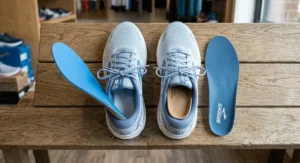
The Saucony Omni 21 carved out its niche by proving stability shoes don’t have to feel like ankle weights. Its dual-density PWRRUN midsole compound, paired with SpeedRoll-inspired geometry, delivers what aggregated reviews repeatedly describe as a “smooth, controlled ride no matter the pace” — a phrase you don’t often see attached to a support shoe. What most buyers overlook is that Saucony earned APMA Seal of Acceptance certification for this model, meaning a panel of podiatrists reviewed it for genuine foot-health benefit, not just marketing claims. The 8mm drop and reinforced heel limit inefficient torsional movement right where overpronation typically begins, which practically translates into less side-to-side wobble during your final miles when form starts to break down. One recurring theme in customer feedback is fit: several reviewers note the toe box runs narrower than older Omni generations, so runners with wider forefeet or those pairing the shoe with orthotics may want to size up or choose the wide option.
Pros:
- ✅ APMA Seal of Acceptance for verified foot-health benefit
- ✅ Noticeably lighter than most stability competitors
- ✅ Strong heel support minimizes late-run wobble
Cons:
- ❌ Toe box runs narrower than earlier Omni versions
- ❌ Less cushioned than max-support options like the Ariel or Gaviota
Typically found in the $110-$140 range, the Saucony Omni 21 is a smart mid-tier pick for runners who want support without extra bulk.
7. Brooks Adrenaline GTS 25 — the accessible starting point for mild flat feet
Not every flat foot needs a maximum-correction shoe, and the Brooks Adrenaline GTS 25 exists for exactly that reason. Rather than a firm medial post, it uses the same GuideRails system found in the Ariel, just tuned to intervene more subtly — Brooks itself compares it to “training wheels” for your stride, only kicking in when your gait drifts noticeably off-center. The nitrogen-infused DNA LOFT v3 midsole adds 3mm of extra forefoot cushioning and 1mm at the heel compared to the previous version, softening the ride without compromising the stiffer heel counter that keeps rearfoot motion in check. Based on the spec comparison, this is the shoe for flexible flat feet — arches that only collapse under load — rather than rigid, severely flat feet that need a harder correction. Reviewers consistently describe it as the “safe first stability shoe,” and its quarter-century track record backs that reputation up. It’s also PDAC A5500 approved and carries the APMA Seal of Acceptance, two credentials that matter if you’re managing diabetes-related foot sensitivity alongside flat feet.
Pros:
- ✅ Gentle GuideRails support suits flexible, mild flat feet
- ✅ APMA Seal of Acceptance and PDAC A5500 certified
- ✅ Widely available in narrow through extra-wide widths
Cons:
- ❌ Not enough correction for rigid or severe overpronation
- ❌ Lower drop than prior generations may not suit everyone
Priced around $130-$150, the Brooks Adrenaline GTS 25 is the most beginner-friendly, widely-stocked entry point on this list.
Top 7 Motion Control Shoes: Specs & Value at a Glance
| Shoe | Support Tech | Price Range | Cushion Level |
|---|---|---|---|
| Brooks Ariel 20 | GuideRails + BioMoGo DNA | $140-$160 | Max Cushion |
| New Balance 1540v3 | ROLLBAR TPU posts | $160-$190 | Moderate |
| Asics Gel-Kayano 32 | 4D Guidance System | $160-$170 | High |
| Hoka Gaviota 6 | H-Frame | $170-$190 | Max Cushion |
| Mizuno Wave Horizon 7 | Dual-density Foam Wave | $160-$180 | High |
| Saucony Omni 21 | Dual-density PWRRUN | $110-$140 | Moderate |
| Brooks Adrenaline GTS 25 | GuideRails (mild) | $130-$150 | Moderate |
Stacking the seven side by side, the value story becomes clearer: the Saucony Omni 21 and Brooks Adrenaline GTS 25 deliver certified, podiatrist-vetted support at the lowest price points, while the New Balance 1540v3 and Hoka Gaviota 6 sit at the premium end for runners who need either true mechanical correction or extra-wide accommodation. Cushion level and price don’t move in lockstep here, which is worth noting — the budget-friendly Omni 21 actually offers less plush cushioning than the pricier Gaviota 6, so your decision should weigh comfort priorities against your actual pronation severity rather than price alone.
What Is Pes Planus? Understanding Flat Feet
Pes planus, the clinical term for flat feet, is a foot condition defined by the loss or collapse of the medial longitudinal arch, to the point where the arch makes contact or nearly makes contact with the ground during standing. According to clinical research summarized on the NIH’s StatPearls platform, pes planus can be flexible (an arch is visible when the foot isn’t bearing weight but disappears on standing) or rigid, and it can be congenital or acquired later in life through factors like tendon dysfunction, tight calf muscles, or ligament laxity.
For runners, the practical distinction that matters most is flexibility. A flexible flat foot that collapses only under load typically responds well to moderate stability shoes like the Brooks Adrenaline GTS 25 or Asics Gel-Kayano 32, since the goal is guiding a foot that’s still adaptable. A rigid flat foot, where the arch stays flattened regardless of weight-bearing, generally needs the firmer, more mechanical correction found in shoes like the Brooks Ariel 20 or New Balance 1540v3. Buying too much shoe for a flexible arch can feel overbuilt and clunky; buying too little shoe for a rigid arch won’t provide the correction your gait actually needs.
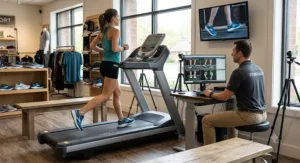
Motion Control Shoes for Women with Fallen Arches: What Actually Helps
“Fallen arches” is the everyday term most people use for acquired flat feet — arches that used to have a visible curve but have flattened over time, often due to weight changes, pregnancy, aging, or tendon strain. The distinction from congenital flat feet matters because fallen arches are frequently accompanied by inflammation or tenderness along the posterior tibial tendon, which runs along the inside of the ankle and does much of the work holding the arch up.
What most buyers overlook is that motion control shoes women fallen arches searches often lead people straight to the stiffest, most corrective shoe available — but if your arch collapse is recent and tendon-related, a gentler stability shoe combined with targeted strengthening may serve you better than maximum correction. The Mizuno Wave Horizon 7‘s dual-density cushioning is a reasonable middle ground here: enough structure to limit further collapse, without the rigidity that can aggravate an already-irritated tendon. If pain persists, that’s a signal worth taking to a podiatrist rather than solving with shoe shopping alone — fallen arches with tenderness are a different clinical picture than lifelong flexible flat feet, and the two don’t always respond to the same footwear strategy.
How to Choose Women’s Flat Feet Running Shoes
Picking the right pair comes down to matching shoe technology to your actual foot behavior, not just your shoe size. Here’s a practical framework:
- Get a wet foot test or gait analysis first. A specialty running store or podiatrist can show you exactly how much your arch collapses and whether it’s flexible or rigid — this single data point narrows your shortlist immediately.
- Match support level to severity. Mild, flexible flat feet do well in moderate stability shoes like the Brooks Adrenaline GTS 25; severe or rigid flat feet need true motion control like the Brooks Ariel 20 or New Balance 1540v3.
- Prioritize a secure heel counter. Overpronation typically begins at heel strike, so a firm, well-molded heel cup matters as much as arch support.
- Check the width options. Flat feet often splay wider under load, so styles like the Hoka Gaviota 6 that run naturally wide can prevent forefoot pressure.
- Test the torsional rigidity. A supportive shoe shouldn’t twist easily along its midfoot — if you can wring it out like a towel, it likely won’t offer enough structure.
- Consider your weekly mileage. Heavier motion control shoes like the Mizuno Wave Horizon 7 suit steady, moderate-pace training better than speed sessions.
- Break in gradually. Even the right shoe needs an adjustment period — the APMA’s guidance on running shoe selection recommends easing into new footwear rather than jumping straight into long runs.
Best Shoes for Women with Pes Planus: Matching Severity to Support
Not every pes planus diagnosis calls for the same shoe, which is the biggest myth in this category. Clinically, pes planus exists on a spectrum, and matching your shoe to where you sit on that spectrum is what actually prevents injury rather than just masking discomfort.
For mild, flexible pes planus, the goal is gentle guidance rather than heavy correction — the Brooks Adrenaline GTS 25 and Saucony Omni 21 both fit this brief, offering enough structure to limit excess roll without feeling like you’re fighting the shoe on every stride. For moderate pes planus, where overpronation is consistent but not extreme, the Asics Gel-Kayano 32 and Mizuno Wave Horizon 7 strike a workable balance between cushioning and correction. For severe or rigid pes planus, where the arch essentially doesn’t reform under any condition, the Brooks Ariel 20 and New Balance 1540v3 provide the firm, mechanical intervention that softer guidance systems simply can’t match. If you’re unsure which category you fall into, that uncertainty itself is useful information — it usually means a professional gait assessment will save you more money and discomfort than guessing through trial and error.
The Arch Taping Technique: A Practical Tool for Race Week and Recovery
Shoes aren’t the only tool available for managing flat feet, and arch taping technique searches spike for good reason — it’s a legitimate, low-cost bridge strategy that supportive shoes can’t fully replace on their own. The most widely used method is low-Dye taping, developed decades ago and still referenced in clinical literature today. According to a study published via the NIH’s PMC database, low-Dye taping is applied by pulling rigid tape from the lateral to the medial side of the foot several times, overlapping each pass to actively support the medial longitudinal arch and reduce plantar fascia strain.
Here’s what to weigh before relying on it: taping is a short-term intervention, typically lasting three to five days per application, and it’s best used alongside — not instead of — a properly fitted motion control shoe. Runners managing plantar fasciitis flare-ups or preparing for a race where their usual shoe feels insufficient often use taping as a temporary boost. A common first-30-days mistake is applying tape too loosely, which does little more than a bandage would; the tape needs enough tension to genuinely lift and support the arch without cutting off circulation. If you’re new to taping, ask a physical therapist or athletic trainer for a hands-on demonstration before attempting it solo — technique matters more than most tutorials let on.
Understanding Orthopedic Shoe Last Construction
The “last” is the foot-shaped mold a shoe is built around, and it’s one of the most overlooked factors in choosing footwear for flat feet — most shoppers focus entirely on cushioning and skip right past it. Orthopedic shoe last design falls into three broad categories: straight, semi-curved, and curved. A straight last has minimal curvature from heel to toe and a broader base, which creates a stable platform that resists the inward roll associated with overpronation. A curved last, by contrast, mimics the natural inward curve of a high arch and is more common in racing flats built for supination-prone runners — exactly the opposite of what a flat-footed runner needs.
What most buyers overlook is that motion control shoes are almost always built on straight or semi-curved lasts by design, which is part of why the Brooks Ariel 20 and New Balance 1540v3 feel structurally different underfoot compared to a curved-last neutral trainer, even before you factor in medial posts or guidance systems. This also matters for orthotics: a straight-lasted shoe with a removable insole, like the ones on this list, generally accommodates custom orthotic inserts more easily than a snugly curved last, since there’s more usable volume across the midfoot. If you’re already using orthotics, checking the last shape before buying can save you a frustrating return.
Practical Usage Guide: Breaking In and Maintaining Motion Control Shoes
Motion control shoes reward a little patience during the first 30 days. Here’s how to get the most out of yours without common early mistakes derailing the process.
Start by wearing the shoe on shorter, easier runs for the first one to two weeks rather than jumping straight into your longest weekly mileage — the firmer midsole and structured heel counter take time to feel natural, and your stabilizing muscles need to adapt too. A common mistake is assuming a motion control shoe should feel identical to a neutral trainer right out of the box; it won’t, and that’s by design. If you notice new soreness in your shins or hips in the first week, that’s often a sign the correction is working differently than your previous shoe, not necessarily a bad fit — give it a few more runs before judging.
For maintenance, rotate your motion control shoes with a second pair if you’re running five or more days a week, since compressed midsole foam loses stabilizing capacity faster under daily repetitive load than most runners expect. Check the medial side of the outsole every few weeks; uneven wear concentrated there is normal for overpronators, but excessive wear reaching the midsole foam itself is a signal to start shopping for a replacement, generally somewhere between 300 and 500 miles depending on your weight and stride.
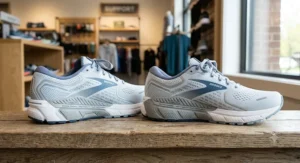
Real-World Scenarios: Which Shoe Fits Your Life
The new runner with mild, flexible flat feet: If you’re just starting out and a gait analysis showed moderate overpronation without pain, the Brooks Adrenaline GTS 25 is the logical starting point — gentle guidance, wide availability, and a lower price point mean you’re not overcommitting to maximum correction before you know if you need it.
The marathon trainer with rigid, severe flat feet: Someone logging 40+ weekly miles with a rigid arch that never reforms needs the mechanical backbone of the Brooks Ariel 20 or New Balance 1540v3. At this mileage, under-supporting a rigid flat foot compounds injury risk with every additional long run.
The all-day-on-your-feet professional who also runs: If you’re a nurse, teacher, or retail worker logging miles standing before you even lace up for a run, the Hoka Gaviota 6‘s wide fit and max cushioning double as comfortable daily wear, not just a training shoe — a practical two-for-one for a budget-conscious buyer.
Common Mistakes When Buying Motion Control Running Shoes
The single most common mistake is buying based on category label alone rather than matching support level to actual arch flexibility — grabbing the most aggressive motion control shoe available when a moderate stability shoe would have served better, or vice versa. Another frequent misstep is ignoring width; flat feet often splay under load, and research on symptomatic flexible flat feet, documented in a peer-reviewed review hosted on the NIH’s PMC database, notes that flat feet are commonly associated with broader footprints and altered load distribution — a narrow shoe can worsen forefoot discomfort even if the arch support itself is excellent.
Shoppers also frequently underestimate break-in time, expecting a firmer motion control shoe to feel as immediately plush as a neutral daily trainer, then returning a perfectly good shoe after one uncomfortable run. Finally, many buyers skip checking the last shape and heel counter rigidity entirely, focusing purely on cushioning marketing language — a mistake this guide’s earlier sections should help you avoid going forward.
Motion Control vs Stability Shoes: What’s the Real Difference
| Feature | Motion Control | Stability |
|---|---|---|
| Correction Level | Maximum, firm medial post | Moderate, guided support |
| Best For | Severe/rigid overpronation | Mild-moderate overpronation |
| Typical Weight | Heavier (10-11+ oz) | Lighter (8.5-9.5 oz) |
| Example | Brooks Ariel 20 | Brooks Adrenaline GTS 25 |
The core difference isn’t marketing — it’s mechanics. Motion control shoes like the Brooks Ariel 20 use dense, unyielding materials specifically positioned to physically resist inward roll, while stability shoes like the Asics Gel-Kayano 32 guide the foot through a more natural gait cycle without hard intervention. Choosing between them comes down to honestly assessing your pronation severity rather than assuming more support is always better; over-correcting a flexible foot can create its own compensatory strain patterns over time.
✨ Don’t Miss These Exclusive Deals!
🔍 Take your running comfort to the next level with these carefully selected motion control shoes. Click on any highlighted pair to check current pricing and availability. These picks are built to help you build pain-free mileage your knees and hips will thank you for!
Long-Term Cost & Maintenance
Motion control shoes typically cost more upfront than neutral trainers, but the real cost comparison should include injury prevention, not just sticker price. A single physical therapy session for pronation-related knee pain often costs more than an entire pair of premium motion control shoes, which reframes the $150-$190 price range on shoes like the Hoka Gaviota 6 or New Balance 1540v3 as preventive spending rather than a splurge.
Total cost of ownership also depends on mileage-per-dollar. At roughly 300-500 miles of usable life, a $140 pair of Brooks Ariel 20 shoes costs somewhere between 28 and 47 cents per mile — reasonable compared to many recreational hobbies, and considerably cheaper than recurring orthopedic visits for untreated overpronation injuries. Buying two pairs to rotate, while a larger upfront cost, tends to extend the usable life of each pair and spreads out replacement cycles more predictably across a training year.
Benefits vs Traditional Alternatives
| Approach | Ongoing Cost | Correction Level | Convenience |
|---|---|---|---|
| Motion control shoes | Moderate (replace every 300-500 mi) | High, built-in | High — wear and go |
| Custom orthotics + neutral shoes | High (custom fitting fees) | Very high, tailored | Moderate — insert swaps |
| Arch taping only | Low (tape rolls) | Moderate, short-term | Low — reapply every few days |
Compared to custom orthotics, motion control shoes like the Asics Gel-Kayano 32 offer a lower-friction, lower-cost entry point without sacrificing meaningful support, though orthotics remain the more precise option for complex or asymmetrical foot conditions. Arch taping, covered earlier in this guide, is best treated as a short-term supplement rather than a long-term substitute for either approach, since its support fades with sweat and wear within days.
Frequently Asked Questions
❓ What is the best motion control running shoe for women with flat feet?
❓ How do I know if I need motion control shoes for fallen arches?
❓ Are motion control shoes good for pes planus?
❓ Can arch taping replace motion control shoes?
❓ How often should I replace motion control running shoes?
Conclusion
Flat feet don’t have to mean sidelined training plans or nagging knee pain. The seven shoes covered here — from the maximum correction of the Brooks Ariel 20 and New Balance 1540v3 to the beginner-friendly Brooks Adrenaline GTS 25 — cover the full spectrum of pes planus severity, so the real work now is matching one to your actual foot rather than the most heavily marketed option.
Start with an honest assessment of whether your flat feet are flexible or rigid, mild or severe, and let that drive your shortlist rather than price or brand loyalty alone. Pair the right shoe with smart habits — a gradual break-in period, regular outsole checks, and arch taping as a short-term supplement when needed — and you’ve got a genuinely sustainable approach to training on flat feet, not just a one-time purchase.
Recommended for You
- 7 Best Motion Control Running Shoes for Women in 2026
- 7 Best Stability Running Shoes for Women With Plantar Fasciitis (2026)
- Stability running shoes women overpronation: 7 Top 2026 Picks That Actually Help
Disclaimer: This article contains affiliate links. As an Amazon Associate, I earn from qualifying purchases. If you purchase products through these links, we may earn a small commission at no additional cost to you.
✨ Found this helpful? Share it with your friends! 💬🤗
