
In This Article
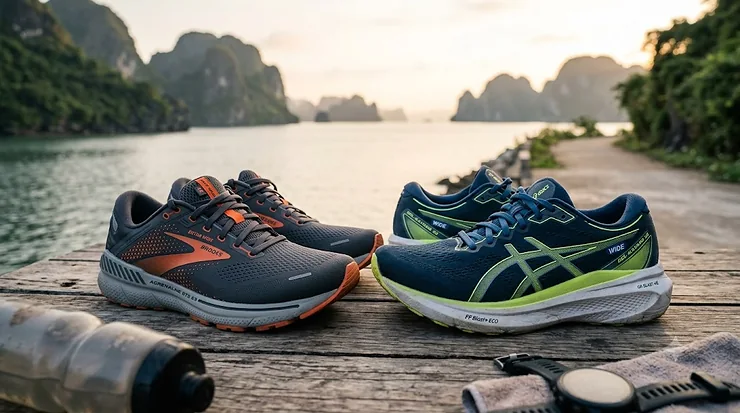
If you’ve ever pulled a “stability” running shoe out of the box and felt your baby toe scream in protest within the first ten steps, you already know the problem this article is here to solve. Stability running shoes men wide feet actually fit are shockingly hard to find, mostly because most stability shoes were engineered around a narrow, tapered last that assumes your foot looks like a wedge instead of, well, a foot. Add in the fact that overpronation and wide, high-volume feet frequently show up in the same person — flatter arches tend to spread the forefoot under load — and you’ve got a genuinely underserved niche.
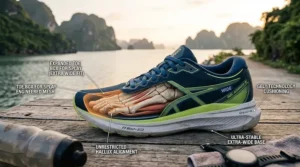
This guide cuts through the marketing fluff. We researched seven real, currently available shoes built specifically to handle both problems at once: guidance systems that control excess inward rolling and last shapes that actually leave room for your toes to splay. You’ll see honest analysis of what each shoe’s specs mean on the road, not just a copy-pasted list of foam names. We’ll also cover toe box volume, wide last construction, and what “4E” actually means on the tag, so you’re shopping with real information instead of guesswork. This article contains affiliate links, and as an Amazon Associate, we may earn from qualifying purchases at no extra cost to you.
Quick Comparison Table: Stability Shoes for Wide Feet at a Glance
| Shoe | Widths Available | Stability Type | Price Range | Best For |
|---|---|---|---|---|
| Brooks Adrenaline GTS 25 | B–4E | GuideRails (mild-moderate) | $130-$150 range | All-around daily trainer |
| New Balance Fresh Foam X 860v15 | D–4E | Stability Plane | $140-$160 range | Long, easy miles |
| ASICS Gel-Kayano 32 | Narrow-Wide | 4D Guidance System | $155-$175 range | Premium plush support |
| Saucony Guide 18 | D–Extra Wide | CenterPath | $135-$155 range | Mild support, roomy toe box |
| Altra Paradigm 8 | Standard-Wide | GuideRail + zero-drop | $150-$170 range | Bunion-prone, natural stride |
| Topo Athletic Aura | Anatomic (wide fit) | Y-Frame Guidance | $160-$180 range | Max cushion + wide toe box |
| New Balance 1540v4 | D–6E | ROLLBAR | $140-$165 range | Widest feet, orthotics |
Looking at this lineup, the widest available options — the New Balance 1540v4’s 6E and the Brooks Adrenaline’s 4E — solve the pure length-and-girth problem, while shoes like the Altra Paradigm 8 and Topo Aura solve a related but different issue: toe box shape, not just size. If your discomfort is specifically at the big toe joint rather than across the whole forefoot, an anatomically shaped last may matter more than the width letter on the box.
💬 Just one click — help others make better buying decisions too!😊
Top 7 Stability Running Shoes for Men With Wide Feet: Expert Analysis
1. Brooks Adrenaline GTS 25 — most widely available true-4E stability shoe
The Adrenaline’s biggest advantage isn’t a single spec, it’s availability: Brooks stocks this model in narrow, standard, wide, and extra-wide in mainstream retail, which is rarer than it should be in this category. The GTS 25 pairs GuideRails support — plastic-reinforced sidewalls at the heel that engage only when your ankle or knee drifts out of its natural path — with nitrogen-infused DNA Loft v3 cushioning that adds a noticeably taller stack than older Adrenalines. In practice, that means the shoe corrects excess motion without feeling like it’s forcing your foot into a mold, which is exactly what makes GuideRails a “dynamic” rather than a rigid stability system.
Based on the spec comparison with rivals in this price bracket, the Adrenaline earns its reputation less from raw cushioning and more from consistency: it’s been Brooks’ best-selling support shoe for two decades running. Reviewers consistently report that even the standard width fits a touch generously through the forefoot, and that the true 4E option is genuinely wide rather than a marketing label slapped on a barely-modified last. It’s a strong fit for heel-strikers who overpronate and want one dependable shoe for everything from a 5K to an 8-hour retail shift.
Aggregated customer sentiment skews heavily positive on fit versatility, with many wide-footed buyers specifically citing the Adrenaline as the first stability shoe that didn’t require sizing up just to escape toe pinch. A recurring complaint in user reviews is that the shoe runs on the heavier side and needs a short break-in period before the upper stops feeling stiff at the eyelets.
Pros:
- ✅ True 4E extra-wide option, not a marketing gimmick
- ✅ GuideRails adjust dynamically instead of locking the foot rigidly
- ✅ Widely available at mainstream retailers for easy returns/exchanges
Cons:
- ❌ Heavier than most competitors in its class
- ❌ Firmer ride than plush max-cushion rivals like the Kayano
At around $140, the Adrenaline GTS 25 offers strong value as a everyday, do-it-all pick if you don’t yet know exactly which stability features you need long-term.
2. New Balance Fresh Foam X 860v15 — widest platform for long, easy miles
The 860v15’s defining feature is its Stability Plane: a thin, rigid EVA film embedded asymmetrically in the midsole, with more firm foam on the medial (inner) side than the lateral side. What that means in practice is that the shoe nudges your foot toward a straighter path without a traditional hard plastic post digging into your arch. New Balance widened the platform significantly for v15 — the heel stack jumped several millimeters over the v14 — which directly benefits wide-footed runners because a broader base gives the foot more surface area to land on before it needs sidewall support at all.
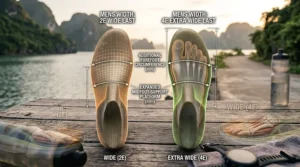
Here’s what most buyers overlook about the 860 line: it isn’t meant to be fast. What most buyers overlook about the 860v15 specifically is that its extra size and weight make it a poor choice for tempo work, but an excellent choice for the exact demographic asking about stability shoes for wide feet — people prioritizing comfort and support over racing splits. New Balance offers this model in Wide (2E) and X-Wide (4E), and reviewers with genuinely wide, high-volume feet note the roomier last translates into fewer hot spots on runs past six or seven miles.
Reviewer sentiment is somewhat divided on the v15 specifically: some praise the added cushioning as a meaningful upgrade for long-run comfort, while others who loved the nimbler v13 model note the newer version feels notably bigger, heavier, and less suited to faster days. If you’re coming from the 860v14 or earlier and prioritize speed alongside support, that’s worth weighing before you buy.
Pros:
- ✅ Widened platform gives wide feet more landing surface
- ✅ Asymmetrical Stability Plane guides without a rigid post
- ✅ Available in both 2E wide and true 4E extra-wide
Cons:
- ❌ Noticeably heavier and bulkier than the previous v14 version
- ❌ Not well suited to faster-paced training runs
In the $140-$160 range, the 860v15 delivers strong value for anyone whose weekly mileage is dominated by long, easy-paced runs or all-day walking rather than speedwork.
3. ASICS Gel-Kayano 32 — best premium plush stability for wide, high-volume feet
The Kayano 32 dropped its heel-to-toe offset to 8mm for the first time in the model’s history, adding two extra millimeters of forefoot foam in the process. Based on the spec comparison, that’s a meaningful shift: a lower drop combined with more forefoot cushioning tends to smooth out the transition for midfoot and forefoot strikers who previously found older Kayanos too heel-dominant. ASICS also ditched the traditional rigid medial post generations ago in favor of the 4D Guidance System, a springier foam insert that “bounces” the foot back toward neutral instead of physically blocking pronation.
What the spec sheet won’t tell you, but reviewers note, is that the current Kayano’s base has grown noticeably wider and more rectangular than older, more tapered versions — a deliberate industry-wide shift toward accommodating a broader range of foot shapes without needing to size up. The shoe is offered in narrow, standard, and wide widths, and testers with genuinely wide feet describe a roomy, secure forefoot with enough splay room for long runs, though a few note the wide-width version ships with laces that run slightly short.
Aggregated reviewer sentiment is largely positive on comfort and durability, with the outsole rubber earning consistent praise for standing up to high mileage. A common complaint in user reviews is the shoe’s substantial weight, which several testers say limits its usefulness for anything faster than an easy or recovery pace. The Kayano 32 also carries the APMA Seal of Acceptance, a detail that matters if you’re choosing a shoe partly on a podiatrist’s recommendation.
Pros:
- ✅ Lower 8mm drop smooths transitions for midfoot strikers
- ✅ Wider, more rectangular base accommodates broader feet
- ✅ APMA Seal of Acceptance for those seeking podiatrist-backed options
Cons:
- ❌ One of the heavier shoes in the premium stability category
- ❌ Wide-width version ships with shorter laces per some buyer reports
Around $165-$175, this is a premium price, but the value case holds up if you log serious weekly mileage and want a shoe engineered to survive it.
4. Saucony Guide 18 — roomiest standard-width toe box for mild support needs
The Guide 18 takes a different approach to stability than shoes with hard posts or firm plates: Saucony’s CenterPath system relies on raised foam sidewalls, a genuinely wide platform, and an asymmetrical foam density that’s slightly firmer on the medial side. Here’s what most buyers overlook about “mild stability” shoes like this one: the support is more about guiding your foot back toward center after it rolls than physically stopping the roll in the first place, which makes for a smoother, less intrusive ride than max-stability options.
Independent lab measurements found the Guide 18’s toe box height increased substantially over the prior version, and testers repeatedly single out the roomy standard-width forefoot as a standout feature — several reviewers specifically recommend sizing into the wide or extra-wide only if you need width beyond what the standard already offers, since the standard width already runs generously in the toe area. That’s a genuinely useful data point for men whose feet are wide primarily at the toes rather than through the whole foot.
Reviewer sentiment is consistent on comfort and versatility for daily training and all-day wear, with the PWRRUN midsole earning steady praise for its balanced, non-fatiguing ride. A recurring complaint in user reviews is limited energy return compared to more responsive foams, and a few buyers note durability concerns with the exposed midsole area wearing faster than expected under high mileage.
Pros:
- ✅ Standard width already runs roomy through the forefoot
- ✅ Available in wide and extra-wide for those needing more room
- ✅ Smooth, non-intrusive support suited to mild overpronation
Cons:
- ❌ Limited energy return compared to more responsive competitors
- ❌ Exposed midsole shows wear faster than fully-covered outsoles
At roughly $140-$150, the Guide 18 is a strong pick if your stability needs are mild and your priority is all-day forefoot comfort rather than aggressive motion control.
5. Altra Paradigm 8 — best wide, foot-shaped toe box for bunion-prone feet
Altra takes an entirely different philosophy here: instead of widening a traditional tapered last, the Paradigm 8 uses Altra’s signature FootShape toe box, which is genuinely foot-shaped rather than shoe-shaped — wider at the toes than at the ball of the foot, mimicking how toes actually splay under load. Paired with a true zero-drop platform (heel and forefoot sit at the same height), the design encourages a more natural landing pattern, and Altra layers its GuideRail system on top for runners who need pronation support without giving up that anatomical fit.
Based on the spec comparison with more traditional stability shoes, the tradeoff is clear: you get unmatched big-toe room, but zero-drop shoes place additional demand on the calves and Achilles tendon during the transition period, since there’s no elevated heel to reduce that load the way there is in a 10-12mm-drop shoe. This is not a shoe to jump into for a marathon next weekend; it’s a shoe to build into gradually. Podiatrists interviewed by outdoor and running publications have specifically pointed to the anatomical toe box as beneficial for conditions like bunions and Morton’s neuroma, since it removes the lateral pressure that a tapered toe box places directly on the joint. For more on how that biomechanical link between pronation, footwear, and bunion development actually works, Cleveland Clinic’s overview of overpronation is a useful starting point.
Aggregated review sentiment is notably strong from buyers managing pre-existing foot pain, several of whom specifically describe long searches through “arthritis-friendly” and orthopedic shoe brands before landing on the Paradigm’s wide fit as the first shoe that reduced their daily pain. A common complaint in user reviews is that the midsole runs firmer and stiffer than a plush max-cushion shoe, and a handful of long-time Altra fans feel recent versions run larger in volume than they’d prefer.
Pros:
- ✅ Genuinely foot-shaped toe box, not just a wider version of a tapered last
- ✅ Zero-drop platform encourages natural, midfoot-forward landing
- ✅ Frequently recommended by podiatrists for bunion and neuroma relief
Cons:
- ❌ Zero-drop transition requires gradual adaptation for new users
- ❌ Firmer, stiffer ride than comparable max-cushion stability shoes
In the $150-$170 range, this is a highly specific but highly effective option if bunion pain, not just general width, is your central problem.
6. Topo Athletic Aura — best max-cushioned stability with a genuinely wide anatomic fit
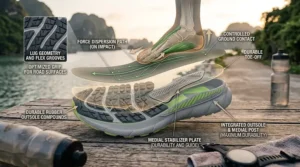
Topo built the Aura specifically to compete with shoes like the Kayano and Hoka Gaviota, but layered its long-standing anatomical toe box on top of a max-cushion 38mm stack height. The stability comes from what Topo calls a Y-Frame Guidance System: a firmer foam component running from both sides of the heel into the medial midfoot, functioning similarly to a traditional medial post but integrated more subtly into the midsole’s overall shape. Reviewers frequently compare the ride to the Hoka Gaviota or ASICS Kayano, noting the Aura’s 5mm drop sits between Altra’s zero-drop philosophy and a traditional stability shoe’s steeper offset.
What most buyers overlook about anatomical toe boxes is that the width gain is concentrated at the front of the shoe — the Aura’s midfoot and heel actually narrow slightly compared to the forefoot, which secures the foot while still leaving generous toe splay room. That’s a meaningfully different fit profile than a shoe that’s uniformly wide from heel to toe, and it matters most if your width issue is specifically at the toes rather than across the entire foot.
Reviewer sentiment is largely favorable, with several testers specifically highlighting the wide toe box and smooth Y-Frame transition as standout features, and noting the shoe held up comfortably even for runners over 200 pounds. A common complaint in user reviews is that the higher instep can feel snug initially before breaking in, occasionally causing early discomfort for narrower-heeled testers, and the shoe runs on the heavier side for a daily trainer.
Pros:
- ✅ Anatomical wide toe box paired with true max-cushion stability
- ✅ Y-Frame system provides guidance without an intrusive rigid post
- ✅ Comfortable for higher body weights over long distances
Cons:
- ❌ Higher instep can feel tight before the shoe breaks in
- ❌ Heavier than most daily-trainer stability competitors
At around $170-$180, the Aura sits at the premium end, but it fills a genuine gap for runners who want both maximum cushioning and true anatomical toe room in one shoe.
7. New Balance 1540v4 — widest available fit for the most extreme wide-foot and orthotic needs
When 2E and 4E aren’t enough, the 1540v4 is one of the only running-adjacent shoes on the market offered up to 6E extra-extra-wide, alongside standard and 4E options. The shoe uses New Balance’s ROLLBAR technology — a firmer-density foam wedge on the medial midsole — to control rearfoot motion, paired with a Fresh Foam X midsole that trades some of the plush, modern feel of newer foams for a more traditional, motion-control-focused ride. New Balance also builds this model with a dual-insert system, letting you swap footbeds to fine-tune volume, which matters enormously if you’re also accommodating a custom orthotic or a foot brace.
Based on the spec comparison with the rest of this list, the 1540v4 isn’t chasing modern super-foam trends; it’s a purpose-built motion-control shoe for people whose overpronation, flat feet, or orthotic needs are severe enough that a “mild support” shoe won’t cut it. Reviewers overwhelmingly describe it as effective for people managing serious foot pain, plantar fasciitis recovery, or a need for orthotic-compatible volume, and it carries the APMA Seal of Acceptance as well.
Aggregated sentiment is genuinely split by use case: buyers using the wide or extra-wide sizes specifically for orthopedic needs frequently call it one of the best shoes they’ve found for that purpose, while a subset of long-time 1540 loyalists report the newest version’s toe box actually runs tighter than the v3 despite the wide-width label, with a few noting their toes felt crowded even after ordering a wide size. That inconsistency is worth flagging honestly rather than glossing over, since it’s the kind of detail a rewritten Amazon listing would never mention.
Pros:
- ✅ Available up to 6E, the widest option on this list by far
- ✅ Dual-insert system accommodates custom orthotics and braces
- ✅ APMA Seal of Acceptance for medically-oriented buyers
Cons:
- ❌ Mixed reports on toe box fit versus previous 1540 versions
- ❌ Firmer, more traditional ride than modern max-cushion competitors
In the $140-$165 range depending on width and colorway, this is the shoe to reach for specifically when standard 4E options still aren’t wide enough.
Practical Usage Guide: Breaking In and Maintaining Your Wide-Fit Stability Shoes
Getting the fit right on day one matters more with stability shoes than neutral ones, because a GuideRail, ROLLBAR post, or Y-Frame that’s positioned even slightly wrong against your foot can create pressure points that a plain cushioned trainer wouldn’t. Try shoes on late in the day, after your feet have naturally swollen from hours of standing or walking, and always wear the socks you’ll actually run in. For the first 20-30 miles, alternate them with an older pair rather than diving straight into a long run, since stability elements like medial posts and guidance frames typically need a short adaptation period before they stop feeling noticeable underfoot.
A common first-30-days mistake is assuming “wide” automatically means “long enough.” Width sizing and length sizing are independent, and several shoes on this list — particularly the New Balance 1540v4 — have generated reviewer complaints specifically about toe box crowding despite a wide-width label, so always check the specific model’s true-to-size reputation rather than assuming the width letter solves everything. Rotate between two pairs if your budget allows; alternating cushioning compounds gives each pair’s foam time to fully recover its rebound between wears, which measurably extends usable lifespan. Replace stability shoes every 300-500 miles, watching for uneven wear on the medial (inner) edge of the outsole, which is the first visible sign that the guidance system has compressed past its effective range. If bunion pain is part of what sent you searching for wide stability shoes in the first place, it’s worth understanding the footwear-and-biomechanics link in more depth — Runners Connect’s research review on footwear and bunion development is a solid, practical breakdown of what’s actually been studied versus assumed.
Real-World Scenarios: Matching the Shoe to the Runner
Consider three common profiles. A 45-year-old office worker logging 15-20 miles a week who’s on his feet all day and dealing with early bunion discomfort is a strong match for the Altra Paradigm 8 or Topo Aura — both prioritize toe box room and all-day comfort over racing performance. A former college athlete now training for his first marathon, moderately overpronating with a mid-weight budget around $150, fits well with the Brooks Adrenaline GTS 25 or Saucony Guide 18, both of which balance support with enough responsiveness for tempo-adjacent training. A heavier runner or walker, 220+ pounds, managing plantar fasciitis and requiring custom orthotics, is the textbook case for the New Balance 1540v4’s 6E option or the more cushioned ASICS Gel-Kayano 32, since both prioritize structural support and volume over racing weight.
Buyer’s Decision Framework: A Simple Checklist
If your pain is concentrated specifically at the big toe joint, prioritize an anatomically-shaped toe box (Altra Paradigm 8, Topo Aura) over a simple width upgrade. If your feet are uniformly wide from heel to forefoot, look first at true 4E or 6E sizing (Brooks Adrenaline GTS 25, New Balance 1540v4, New Balance 860v15). If you also need room for a custom orthotic, prioritize a removable, dual-density insole and check for a 4E or 6E option before anything else. If your weekly mileage exceeds 25 miles, weigh durability and outsole rubber coverage as heavily as initial comfort, since a plush but thin outsole will wear out well before its stated mileage window.
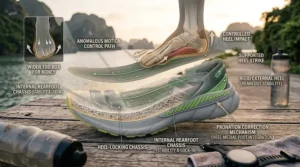
How to Choose Stability Shoes Men Wide Feet Can Actually Wear
- Start with your pronation type, not the width. A gait analysis at a specialty running store tells you whether you need mild guidance (Saucony Guide 18) or firm motion control (New Balance 1540v4) before width even enters the conversation.
- Separate “wide” from “anatomic.” A 4E label widens the whole shoe proportionally; an anatomical last like Altra’s or Topo’s specifically reshapes the toe box. Choose based on where your discomfort actually lives.
- Check the return policy before you check the price. Because fit varies so much between brands’ width systems, buying from a retailer with free returns protects you from guessing wrong on a $150-$180 shoe.
- Weigh drop and stack height together. A lower-drop, higher-stack shoe like the Kayano 32 rides differently from a zero-drop model like the Paradigm 8, even at similar price points.
- Prioritize outsole coverage if you’re a heavier runner. More rubber coverage under high-wear zones extends usable mileage significantly for runners carrying more body weight.
- Don’t ignore lacing technique. A simple runner’s loop (lacing through the top eyelet) can add secure lockdown in the midfoot without needing to tighten the forefoot, preserving toe box room.
- Budget for two pairs if you run often. Rotating shoes lets cushioning foam fully recover between runs and roughly doubles the useful life of each pair.
Common Mistakes When Buying Wide-Width Stability Shoes
The single most common mistake is buying width without checking length separately — sizing up half a size can sometimes solve a width problem better than jumping straight to the widest available option, since some brands’ “wide” versions only add girth, not additional volume through the instep. Another frequent misstep is ignoring stack height and drop entirely and focusing only on the width label; a high-drop, low-stack shoe and a zero-drop, max-stack shoe can both come in a 4E width but feel completely different underfoot. Buyers also commonly skip trying shoes on with their actual running socks, which can shift fit by half a size in either direction. Finally, many buyers replace a broken-in stability shoe with a brand-new pair of the same model and are surprised when it feels different for the first two weeks — that’s normal break-in, not a defect.
Stability Shoes vs. Neutral Shoes for Wide Feet
Neutral shoes are built for runners with a naturally efficient gait who don’t need correction, and they’re typically lighter and more flexible as a result. Stability shoes add guidance elements — sidewalls, medial posts, or firmer foam density on the inner half of the midsole — specifically for runners who overpronate, a group that includes a large share of people with flatter arches and wider forefeet. The overlap between wide feet and overpronation isn’t universal, but flatter arches do tend to spread the midfoot and forefoot under load, which is part of why so many stability-shoe buyers also need extra width. If you’re unsure which category you fall into, a wet foot-test or an in-store gait analysis is a more reliable starting point than guessing from shoe reviews alone. A 2019 biomechanics study published via the National Institutes of Health found that shoes with medial support measurably reduced rearfoot motion compared to softer, unsupported midsoles, lending some quantitative backing to what stability shoes are actually designed to do.
What to Expect: Real-World Performance on Wide Feet
In practice, a properly fitted wide stability shoe should feel secure through the heel and midfoot while leaving your toes room to splay naturally at toe-off — you shouldn’t feel your pinky toe pressing against the upper, and you shouldn’t need to loosen the laces dramatically just to escape forefoot pressure. Most of the shoes on this list take between 10 and 20 miles to fully break in, after which the guidance elements should recede into the background rather than remaining constantly noticeable. Expect firmer stability shoes (Guide 18, Paradigm 8) to feel more connected to the road, while max-cushion options (Kayano 32, Topo Aura) prioritize plush comfort at the cost of some added weight.
Features That Actually Matter (And Those That Don’t)
A true, independently-verified wide last construction matters enormously; a “wide” label slapped onto an unmodified standard shoe does not, which is why checking reviewer-reported measurements rather than marketing copy pays off. Removable insoles matter if you use orthotics; flashy colorways do not affect performance at all. Outsole rubber coverage matters for durability; a high-tech-sounding foam name matters far less than its actual measured softness and energy return, which vary by brand rather than by marketing term. A wide toe box with genuine volume — not just width — matters for anyone managing bunions or hammertoes; a taller stack height alone does not guarantee more toe box volume, since stack height refers to cushioning underfoot, not space above or around the toes.
Long-Term Cost & Maintenance for Wide-Fit Stability Shoes
At an average price of roughly $150 per pair and a realistic lifespan of 300-500 miles depending on body weight and running surface, a runner logging 20 miles per week can expect to replace stability shoes every four to six months, or two to three pairs annually. Rotating two pairs, while requiring a larger upfront investment, typically extends the combined lifespan of both pairs by allowing midsole foam to fully decompress between wears, which can reduce your effective annual cost per mile. Factor in that specialty wide-width and anatomic-fit shoes often sit $10-$30 above their standard-width counterparts, and budgeting an extra $50-$100 annually for true wide-fit options is a realistic expectation rather than a worst-case scenario.
FAQ
❓ What width is considered wide for men's running shoes?
❓ Do stability running shoes help with bunions?
❓ How do I know if I need a stability shoe versus a neutral shoe?
❓ Are wide stability running shoes more expensive than regular width?
❓ How often should I replace stability running shoes with wide feet?
Conclusion
The good news is that “stability shoe” and “wide feet” no longer have to feel like a contradiction. Between true 4E and 6E width options from Brooks and New Balance, anatomically-shaped alternatives from Altra and Topo, and premium plush picks from ASICS, there’s now a genuinely broad range of shoes built around real foot shapes rather than a one-size-fits-most last. The right choice ultimately comes down to where your discomfort actually lives — at the toe joint, across the whole forefoot, or in the need for orthotic-compatible volume — and matching that specific problem to the shoe engineered to solve it, rather than grabbing whatever “wide” label appears first in a search result.
Whichever model you land on, give it a genuine break-in period before judging it, check the return policy before you buy, and remember that price alone doesn’t predict fit; some of the most effective options on this list sit solidly in the mid-range rather than at the premium end.
✨ Don’t Miss These Exclusive Deals!
🔍 Take your running comfort to the next level with these carefully selected wide-fit stability shoes. Click on any highlighted item to check current pricing and availability. These picks will help you build a pain-free training routine your feet will thank you for!
Recommended for You
- Stability running shoes men plantar fasciitis: 7 Picks That Actually Help (2026)
- 7 Best Stability Running Shoes for Men With Overpronation (2026)
- 7 Best Stability Running Shoes for Men in 2026
Disclaimer: This article contains affiliate links. As an Amazon Associate, I earn from qualifying purchases. If you purchase products through these links, we may earn a small commission at no additional cost to you.
✨ Found this helpful? Share it with your friends! 💬🤗
