

In This Article
Your alarm goes off, you swing your feet onto the floor, and there it is — that first-step stab under your heel that makes you question every life choice that led to this moment. If that sounds familiar, you already know that stability running shoes men plantar fasciitis sufferers reach for aren’t a luxury. They’re damage control. In plain terms, plantar fasciitis is inflammation and micro-tearing of the plantar fascia, the thick band of tissue connecting your heel to your toes, and it’s the single most common cause of heel pain in runners and walkers alike, according to Mayo Clinic.
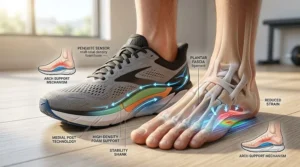
The right stability shoe won’t cure plantar fasciitis on its own — no shoe will — but it can meaningfully reduce the mechanical stress that keeps aggravating the tissue while it heals. That’s the entire premise of this guide. We dug through real spec sheets, real lab measurements, and real aggregated reviewer sentiment on seven current stability trainers, then broke down exactly who each one is built for, from budget-conscious beginners to heavy-mileage marathoners with stubborn overpronation. Along the way we’ll cover support shoes men plantar fasciitis specifically benefit from, what actually counts as arch support versus marketing fluff, and how orthotics compatibility factors into your decision. Whether you’re chasing your first pain-free 5K or just trying to survive an 8-hour retail shift, there’s a shoe on this list built for your specific flavor of foot pain. Let’s get into it.
Quick Comparison Table
Before the deep dive, here’s the express-lane version for anyone who wants the highlights without scrolling through seven full write-ups.
| Shoe | Stability Tech | Drop | Best For |
|---|---|---|---|
| ASICS GT-2000 13 | 3D Guidance System | 8mm | Best budget pick |
| Altra Provision 8 | GuideRail (zero-drop) | 0mm | Wide toe box, natural gait |
| Brooks Adrenaline GTS 25 | GuideRails | 10mm | All-day comfort, classic support |
| HOKA Arahi 8 | H-Frame | 8mm | Lightest true stability shoe |
| New Balance 860v15 | Stability Plane | 6mm | Max cushion + support combo |
| Saucony Hurricane 24 | PWRRUN+ platform | 8mm | Long runs, orthotics-friendly |
| ASICS Gel-Kayano 32 | 4D Guidance System | 10mm | Premium all-rounder |
Looking at the spread, there’s a clear pattern: lower-priced options like the GT-2000 13 lean on geometry-based guidance rather than heavy foam wedges, while the Kayano 32 and Hurricane 24 stack more cushioning on top of their support systems, which adds comfort but also weight. If your plantar fasciitis flares mostly on long runs or long shifts on your feet, prioritize the cushioned end of this table. If you’re newer to stability shoes and skeptical of that “corrective” feeling, the Arahi 8 and GT-2000 13 offer support that’s genuinely hard to notice mid-stride.
💬 Just one click — help others make better buying decisions too!😊
💬 Found a shoe that matches your foot type? Save this table and come back to it before you check out.
Top 7 Stability Running Shoes for Men With Plantar Fasciitis: Expert Analysis
1. ASICS GT-2000 13 — best budget stability shoe for daily miles
The GT-2000 13 is proof that you don’t need a premium price tag to get legitimate support. ASICS ditched the old rigid Trusstic plate years ago in favor of a wider platform and beveled heel that guide your stride without a hard stop under your arch. At 9.4-9.5 oz with a 36.5mm/28.5mm stack and an 8mm drop, it sits in that sweet spot where cushioning feels substantial but the shoe never feels like a brick. Based on the spec comparison against pricier rivals, the rearfoot PureGEL insert is doing real work here — it’s roughly 65% softer than older visible-gel setups, which matters a lot for heel-strikers whose plantar fascia is already inflamed and touchy on impact. This is the shoe for runners easing into their first stability trainer, or anyone managing mild-to-moderate overpronation who doesn’t want to pay Kayano money to get relief. Reviewers consistently describe the fit as narrow through the forefoot, so if you have a wider foot, sizing up half a size or grabbing the wide (2E) version is worth doing before your first run, not after mile three.
Pros:
✅ Excellent stability-to-price ratio in the category
✅ Lightweight for a supportive daily trainer
✅ Durable outsole rated for 350-500+ miles
Cons:
❌ Narrow forefoot fit runs small for wide feet
❌ Traction struggles noticeably on wet or icy pavement
The GT-2000 13 typically lands in the $130-$150 range depending on retailer, and check current price before buying since ASICS shoes fluctuate with sales cycles. For the support it delivers, this is one of the strongest value plays on this entire list.
2. Altra Provision 8 — most accommodating toe box for natural gait
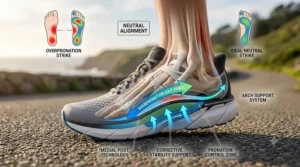
The Provision 8 is the odd one out on this list, and that’s exactly why it earns a spot. It’s Altra’s only true stability shoe, built with a zero-drop platform and the brand’s signature FootShape toe box that lets your toes splay instead of getting squeezed into a tapered point. What most buyers overlook about zero-drop shoes and plantar fasciitis is that the relationship is genuinely more complicated than “flat is bad” — some podiatric guidance actually favors a slight heel elevation to offload Achilles and fascia tension, so this shoe is a more specialized pick than a default choice. At 28mm stack height and roughly 10.2 oz, the Provision 8 uses a medial GuideRail for subtle overpronation control plus Altra’s EGO foam for a moderately soft, responsive ride. This shoe works best for midfoot or forefoot strikers who’ve already built some calf and fascia resilience, not brand-new sufferers coming straight out of a flare-up. Aggregated reviewer sentiment is consistently positive on comfort and roominess, with testers noting the guide rails feel present but never intrusive, more of a gentle nudge than a correction.
Pros:
✅ Roomiest toe box of any shoe on this list
✅ Zero-drop design promotes natural forefoot strike
✅ GuideRail support without a stiff, obtrusive feel
Cons:
❌ Not ideal for runners new to low-drop shoes
❌ Less heel cushioning than max-stack competitors
Pricing sits around $140, in line with most mid-tier stability trainers, and Altra frequently runs seasonal promotions worth checking before you buy. If your plantar fasciitis coexists with bunions or a wide forefoot, this is likely your best-fitting option on the list.
3. Brooks Adrenaline GTS 25 — best all-day comfort with classic guiderail support
Twenty-five versions in, the Adrenaline GTS remains the shoe most podiatrists reach for by default, and the “Go-To-Support” branding isn’t just marketing. The GuideRails system flanks the medial and lateral edges of the midsole, only engaging when your knee or heel drifts outside its natural path, which means the support activates dynamically instead of forcing a fixed alignment the whole run. Here’s what to weigh: the GTS 25 dropped from a 12mm to a 10mm heel-to-toe drop this version, which smooths the heel-to-toe transition but means longtime wearers accustomed to more elevation may need an adjustment period. At 10.6 oz with a 37mm/27mm stack, this isn’t the lightest shoe here, but the nitrogen-infused DNA LOFT v3 midsole delivers genuinely plush landings that heel-strikers with plantar fasciitis tend to appreciate immediately. Brooks also holds the APMA Seal of Acceptance across several franchises including this one, which reflects biomechanical review by practicing podiatrists rather than just a brand claim.
Pros:
✅ Dynamic GuideRails support without a rigid feel
✅ Plush nitrogen-infused cushioning for daily comfort
✅ APMA Seal of Acceptance for foot health
Cons:
❌ Heavier than most current stability competitors
❌ Midsole firms up and feels less lively on longer runs
Expect to pay in the $145-$155 range, and prices may vary by colorway and retailer, so it’s worth comparing a couple of listings before you commit. This is the safest first purchase for a runner who’s never tried a stability shoe and doesn’t want surprises.
4. HOKA Arahi 8 — lightest true stability shoe on the market
If your hesitation about stability shoes is the “wearing ankle weights” feeling, the Arahi 8 was built specifically to kill that objection. At roughly 9.3-9.8 oz, it’s genuinely one of the lightest dedicated stability trainers available at any price point, achieved through HOKA’s H-Frame geometry rather than a heavy foam wedge bolted onto the midsole. The Arahi 8 is a significant redesign from the 7: stack height jumped from 33mm to 39mm and drop increased from 5mm to 8mm, both changes that specifically help heel-strikers by adding cushioning exactly where impact forces peak. Reviewers consistently note the H-Frame provides both medial and lateral guidance, catching pronation in either direction rather than just the classic inward roll, which is useful for runners whose gait shifts as they fatigue late in a run. On paper this means less corrective bulk and more genuine shock absorption, and the numbers back it up: heel shock absorption jumped from 106 SA in the previous version to 138 SA here, a meaningful upgrade for anyone whose plantar fascia flares specifically from repeated heel impact.
Pros:
✅ Lightest stability shoe in its category by a wide margin
✅ H-Frame corrects both inward and outward pronation
✅ Roomy toe box accommodates bunions and wider feet
Cons:
❌ Breathability suffers noticeably in hot weather
❌ Outsole traction is underwhelming on wet surfaces
Pricing runs around $150 at HOKA.com and major retailers, with occasional discounts on previous colorways. If weight is your main objection to stability shoes, this is the one to try before writing off the entire category.
5. New Balance Fresh Foam X 860v15 — maximum cushion paired with genuine stability
The 860v15 represents New Balance leaning hard into “more is more,” and for plantar fasciitis sufferers who need serious impact absorption, that’s a feature, not a flaw. The dual-layer Fresh Foam X midsole pairs a plush top layer for landings with a firmer, denser bottom layer that forms a medial wedge, all reinforced by a Stability Plane, a thin EVA structural plate replacing the old-school rigid medial post. What the spec sheet won’t tell you, but reviewers note, is that this newer wedge-and-plate approach behaves more like a custom orthotic than traditional posting, gently repositioning the foot rather than just slowing pronation down mechanically. Stack height climbed to 40mm heel/34mm forefoot with the drop reduced to 6mm, and while that’s a heavier shoe at 11.6-11.8 oz, the tradeoff is a rocker-assisted ride that several independent testers describe as ideal for long training days, recovery runs, and extended time on your feet at work. The 860 line has long been a go-to recommendation from podiatrists for plantar fasciitis, flat arches, and post-surgical recovery specifically.
Pros:
✅ Tallest, most protective stack height on this list
✅ Stability Plane guides gait without feeling corrective
✅ Available in four widths for a dialed-in fit
Cons:
❌ Noticeably heavier than the v14 and most rivals
❌ Not suited to faster-paced training or tempo work
The 860v15 retails for around $150 at New Balance and major running retailers, consistent with its stability-daily-trainer competitors. If your job keeps you on concrete floors for eight-plus hours, this shoe’s cushioning stack alone may justify the switch.
6. Saucony Hurricane 24 — built for long runs and orthotics compatibility
The Hurricane sits at the top of Saucony’s stability lineup, and it shows in both the price and the philosophy: this is a max-support shoe engineered specifically to hold up over high-mileage marathon training without the support degrading late in a run. Built on Saucony’s PWRRUN+ cushioning platform with an 8mm heel drop and a 36mm stack, the Hurricane 24 pairs a structured midfoot and reinforced heel counter with rocker geometry that reduces the workload demanded from your plantar fascia over the course of a long effort. Based on the spec comparison with lighter stability shoes on this list, the Hurricane 24 trades some nimbleness for something plantar fasciitis sufferers with existing orthotics genuinely need: a roomy, removable-insole platform that accommodates custom inserts without crowding the foot. Reviewers consistently flag the accommodating fit as a standout feature, alongside the shoe’s excellent shock absorption for tired legs late in a long training block, when form breaks down and PF flare-ups are most likely.
Pros:
✅ Excellent orthotics compatibility with removable insole
✅ Therapeutic 8mm drop reduces arch strain
✅ Holds support and cushioning through high-mileage training
Cons:
❌ Heavier and less responsive than daily-trainer rivals
❌ Premium pricing compared to moderate-stability options
Expect a premium price point, typically in the $160-$170 range — always check current price since Saucony adjusts pricing seasonally. This is the shoe to reach for if you’re training for a half or full marathon while managing a stubborn, chronic case of plantar fasciitis.
7. ASICS Gel-Kayano 32 — premium all-rounder with the most refined support system
The Kayano has been ASICS’s stability flagship for decades, and the 32nd version leans into comfort more than any generation before it. Its 4D Guidance System uses a softer foam specifically placed under the arch for custom-feeling support, paired with an unusually wide landing base — 119.8mm forefoot and 97.2mm heel — that keeps footstrikes steady even when fatigue sets in. At a tall 39.9mm/30.6mm stack with a 10mm drop, this is a moderately soft, well-cushioned ride rather than a firm corrective platform, and reviewers with plantar fasciitis specifically praised the shoe’s ability to relieve arch pressure without feeling stiff or medicinal. Here’s what to weigh: at roughly 10.5 oz, it’s a full ounce heavier than lighter rivals like the Arahi 8, so this isn’t the shoe for runners chasing PRs. It is, however, the shoe most frequently recommended by reviewers who’ve tried nearly everything else in this category and settled on the Kayano specifically for its balance of stability, comfort, and refinement over 300-400+ mile lifespans.
Pros:
✅ 4D Guidance System delivers custom-feeling arch support
✅ Extra-wide landing base improves stability under fatigue
✅ Tall, protective cushioning stack for long-term comfort
Cons:
❌ Heaviest shoe on this list at roughly 10.5 oz
❌ Premium price compared to most stability competitors
Pricing typically runs in the $160-$180 range depending on colorway and retailer, so comparing a couple of current listings before buying is worth the five minutes. For plantar fasciitis sufferers who’ve cycled through cheaper stability shoes without lasting relief, the Kayano 32 is frequently the shoe that finally sticks.
What Causes Plantar Fasciitis and Fascia Inflammation?
Plantar fasciitis develops when the plantar fascia — the thick, rubber-band-like tissue connecting your heel to your toes — gets stretched or stressed beyond what it can comfortably absorb, leading to microscopic tears and, in many cases, a degenerative rather than purely inflammatory response over time. A recent comprehensive review notes that the condition affects more than 10% of the world’s population and disproportionately impacts runners, people who stand for long periods, and anyone wearing unsupportive footwear. Fascia inflammation itself isn’t always the whole story — Mayo Clinic researchers have pointed out that chronic cases often reflect fascia degeneration rather than active inflammation, which is part of why anti-inflammatory approaches alone don’t always resolve stubborn cases.
Contributing factors compound quickly: sudden mileage increases, tight calves and Achilles tendons, high BMI, flat feet or unusually high arches, and — critically for this article — shoes that don’t manage impact force or control excess pronation. None of these factors act alone. A runner with a naturally high arch wearing a worn-out neutral shoe on concrete sidewalks is stacking three risk factors before they’ve even laced up. This is exactly why stability shoes matter here: they don’t treat the tissue directly, but they reduce the daily mechanical insult that keeps re-aggravating it while your body tries to heal.
How Heel Strike Load Affects Plantar Fascia Pain
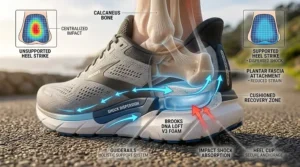
Every time your heel lands, ground reaction force travels up through your foot, and how that heel strike load gets absorbed and distributed has a direct relationship to fascia strain. Heavy heel-strikers generate sharper, more concentrated impact spikes than midfoot or forefoot strikers, and repeated over thousands of steps per run, that impact accumulates as micro-stress on a fascia that’s already inflamed or degenerating. This is precisely why heel cushioning specs — PureGEL inserts, dual-layer Fresh Foam X, PWRRUN+ platforms — aren’t just comfort marketing; they’re doing measurable mechanical work to blunt that load before it reaches your fascia.
Rocker geometry factors in too, and the science here is more nuanced than most marketing copy suggests. A gait-lab study published through the National Institutes of Health found that rocker shoes with a stiff sole reduce peak toe dorsiflexion and plantar flexion moments, but the same research found that a proximal rocker apex position and stiff insole affect plantar fascia strain independently, at different points in the stance phase, rather than compounding together the way many buyers assume. In practice, that means rocker geometry helps with the mechanics of toe-off, not necessarily as a blanket fix for every phase of your stride — which is part of why the shoes on this list combine rocker profiles with dedicated heel cushioning and structural support rather than relying on the rocker shape alone.
💬 Want to see how each shoe’s drop and stack height stack up side by side? Scroll back up to the Quick Comparison Table.
How to Choose Stability Running Shoes for Plantar Fasciitis
Picking the right shoe isn’t about grabbing the most expensive option on the shelf. Work through these criteria in order, and you’ll land on the right pick faster than trial-and-erroring your way through five returned pairs.
- Confirm you actually overpronate. Check the wear pattern on your current shoes — excessive inner-heel wear signals overpronation, which is what stability shoes are built to address. If your wear is centered or lateral, a max-cushion neutral shoe might serve you better.
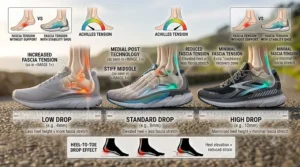
- Prioritize heel drop based on your pain location. Higher drops (8-10mm) generally reduce Achilles and fascia strain for heel-based pain, while very low or zero-drop shoes suit stronger, already-adapted feet.
- Don’t skip stack height. Anything below roughly 40mm keeps the platform stable underfoot; taller stacks add cushioning but can slightly reduce ground feel and stability if the shoe isn’t engineered well.
- Match cushioning density to your body weight and mileage. Heavier runners and higher weekly mileage both benefit from firmer, more supportive platforms like the Hurricane 24 or Kayano 32 rather than ultra-soft foams that compress too fast.
- Check removable insole compatibility if you use orthotics. Not every shoe accommodates a custom insert without crowding the toe box — flag this early if it applies to you.
- Try the shoe at the end of the day. Feet swell throughout daily activity, and testing a shoe first thing in the morning can lead to a fit that feels tight by evening.
- Give it 20-40 miles before judging. Several of the shoes above specifically note a break-in period where the support system settles into a more natural feel.
Support Shoes Men Plantar Fasciitis Sufferers Need vs. Neutral Running Shoes
| Feature | Stability/Support Shoes | Neutral Running Shoes |
|---|---|---|
| Pronation control | Built-in guidance (GuideRails, H-Frame, Stability Plane) | None — foot moves freely |
| Best for | Flat feet, overpronation, PF from mechanical causes | Normal-to-high arches, PF from impact overload |
| Typical weight | Slightly heavier due to support structures | Often lighter |
| Orthotics fit | Generally roomier, removable insoles common | Varies widely by model |
The core distinction comes down to what’s actually driving your plantar fasciitis. If your pain traces back to overpronation — your arch collapsing inward with every step, placing chronic tensile stress on the fascia — support shoes men plantar fasciitis specialists recommend correct the mechanical cause rather than just cushioning the symptom. If instead your pain is more about raw impact overload from high mileage or hard surfaces, and your arch mechanics are otherwise fine, a max-cushion neutral shoe may actually serve you better than forcing pronation control you don’t need. Neither category is universally superior; the right choice depends entirely on which mechanism is driving your specific case, which is exactly why a gait check (in-store or via video analysis) is worth doing before you commit to either camp.
Best Arch Support Running Shoes for Men: What Actually Matters
“Arch support” gets thrown around loosely in shoe marketing, so it’s worth being precise about what’s actually happening under your foot. Genuine arch support comes from three things working together: a structural element (like a medial post, guidance plate, or stability plane) that resists arch collapse, a midsole density that’s firm enough not to compress flat under load, and a footbed shape that actually contacts and supports the arch rather than leaving a gap underneath it. The best arch support running shoes for men in this category, like the Kayano 32 and 860v15, use dual-density foam specifically to create a firmer medial zone without sacrificing overall comfort — that’s arch support engineered into the midsole itself rather than bolted on as an afterthought.
What doesn’t count as real arch support: a slightly higher-profile insole, marketing language like “orthopedic,” or a shoe that simply looks like it has a raised arch shape when you’re not standing in it under load. If you have a diagnosed structural issue — very flat feet, very high arches — a shoe’s built-in arch support is a good baseline, but it may not fully replace a custom orthotic prescribed by a podiatrist. Think of the shoe’s arch support and your orthotic (if you use one) as complementary layers, not competing solutions.
Men’s Stability Shoes for Heel Pain: A Buyer’s Decision Framework
Use this simple framework to cut through decision paralysis:
- If you’re new to stability shoes and want the gentlest introduction, choose the ASICS GT-2000 13 or HOKA Arahi 8, because both use geometry-based guidance that’s genuinely hard to feel mid-run.
- If your heel pain is worst first thing in the morning and during long runs, choose the New Balance 860v15 or Saucony Hurricane 24, because their taller stacks and dense cushioning directly target heel-strike impact.
- If you’re training for a half or full marathon, choose the Hurricane 24 or Kayano 32, because both are built to maintain support integrity over high weekly mileage without the structure breaking down.
- If you need a wide toe box for bunions or general forefoot room, choose the Altra Provision 8 or Arahi 8, both praised specifically for roomy, non-restrictive forefoot fits.
- If budget is the deciding factor, choose the GT-2000 13 or Adrenaline GTS 25, since both deliver genuine stability tech well below flagship pricing.
Orthotics Compatibility: Choosing Shoes That Work With Your Inserts
If you’re already using custom or over-the-counter orthotics, shoe selection changes slightly. First, confirm the shoe has a removable stock insole — several models on this list, including the Hurricane 24 and 860v15, are specifically built with this in mind, while others prioritize a snugger factory fit that can feel crowded once you swap in a rigid orthotic. Second, pay attention to toe box volume. A custom orthotic effectively raises the floor of the shoe, which can push your toes closer to the front of the toe box than you’re used to; roomier options like the Provision 8 or GT-2000 13’s wide version handle this better than narrower race-oriented builds.
Third, don’t assume a max-stability shoe and a corrective orthotic should always be paired together — doubling up on aggressive support can sometimes overcorrect your gait rather than help it. A podiatrist or fitted running-store staffer can assess whether your orthotic needs a more neutral shoe underneath it or benefits from additional built-in stability. Finally, break in the shoe-and-orthotic combination gradually over a week or two of shorter runs before trusting it for longer mileage; the interaction between insert and midsole geometry sometimes reveals pressure points that neither component shows on its own.
Practical Usage Guide: Breaking In Your New Stability Shoes
Getting the most out of a new stability shoe — and avoiding a fresh PF flare-up in the process — comes down to a deliberate first 30 days rather than jumping straight into your old mileage.
Week 1: Wear the shoes for short walks and errands before your first run. This lets the upper mold to your foot and lets you catch any hot spots or pinching before you’re committing to a 5-mile effort in them.
Weeks 2-3: Introduce the shoe into your rotation for easy-paced runs only, capped around 30-40% of your normal weekly mileage in the new pair. Several models on this list, including the Adrenaline GTS 25 and Kayano 32, specifically note a break-in period where GuideRails or guidance systems feel more pronounced initially and soften into a more natural feel after 30-40 miles.
Week 4 and beyond: Gradually increase mileage in the shoe while continuing calf and plantar fascia stretches, ideally both before and after runs. A common first-30-days mistake is skipping stretching because “the shoe is handling it” — the shoe reduces mechanical stress, but it doesn’t replace the soft-tissue work your fascia and calves still need.
Maintenance: Rotate between two pairs if you’re running more than 20 miles a week; this lets each pair’s midsole foam fully decompress between runs, which meaningfully extends usable cushioning life. Replace stability shoes every 300-500 miles, since the guidance structures degrade well before the outsole rubber wears through, even if the shoe still looks fine externally.
Real-World Scenarios: Which Shoe Fits Your Life
The office worker on his feet all day: A 45-year-old warehouse supervisor standing on concrete for 9-hour shifts, with plantar fasciitis that flares by early afternoon, doesn’t need a race-day shoe — he needs maximum cushioning and all-day stability. The New Balance 860v15 or Brooks Adrenaline GTS 25 fit this scenario well, since both prioritize sustained comfort and support over responsiveness.
The marathon-training runner: A 30-something training for his first full marathon, logging 35-40 miles a week, with PF that’s manageable but flares under high mileage, needs a shoe built to hold its support structure over hundreds of training miles. The Saucony Hurricane 24 or ASICS Gel-Kayano 32 are engineered specifically for this kind of sustained, high-volume load.
The budget-conscious beginner: A college student just starting to run for fitness, with mild PF likely tied to old, unsupportive sneakers and a sudden activity increase, doesn’t need premium tech yet — he needs reliable, affordable support while he builds a base. The ASICS GT-2000 13 covers this need without the premium price tag, leaving room in the budget for a second pair to rotate into once he’s logging consistent mileage.
Common Mistakes When Buying Stability Running Shoes for Plantar Fasciitis
The most frequent mistake is buying based on stability level alone without checking whether the shoe’s drop and stack height actually suit your specific pain pattern — a shoe can have excellent guidance tech and still be the wrong drop for your Achilles tolerance. A close second is skipping the half-size-up recommendation on narrower-fitting models like the GT-2000 13, then blaming the shoe for toe pain that’s actually a sizing issue. Buyers also frequently judge a stability shoe on a single short test run in-store, missing the 20-40 mile break-in window that several models on this list specifically require before their guidance systems settle into a natural feel.
Another overlooked error: assuming heavier automatically means more supportive. Weight and stability tech aren’t the same thing — the Arahi 8 proves a shoe can be both lightweight and genuinely stable through smart geometry rather than added foam mass. Finally, many buyers replace their running shoes far too infrequently, continuing to log miles in a pair whose midsole cushioning and guidance structures have already broken down internally, even though the shoe still looks wearable from the outside.
Long-Term Cost & Maintenance for Stability Running Shoes
Thinking in cost-per-mile rather than sticker price changes the math considerably. A $140 shoe good for 350 miles costs roughly 40 cents per mile, while a $170 shoe that holds its support structure for 500 miles works out closer to 34 cents per mile — the pricier shoe can actually be the better long-term value if its durability claims hold up, which is exactly why the Hurricane 24 and Kayano 32’s reputation for maintaining support over high mileage matters more than their upfront price tag suggests.
Rotating two pairs extends usable life further by letting EVA and foam-based midsoles fully rebound between runs rather than compressing daily without recovery time. Budget-wise, plan on replacing stability running shoes roughly every 4-6 months if you’re running 20+ miles a week, sooner if you’re heavier or logging higher mileage. Skipping replacement to save money short-term is a common false economy — worn-out guidance structures can quietly reintroduce the exact overpronation and impact issues you bought a stability shoe to prevent in the first place.
Safety, Regulations, and When to See a Specialist
No shoe on this list is a substitute for medical care if your plantar fasciitis is severe, sudden, or not improving. Cleveland Clinic recommends seeing a healthcare provider if heel or foot pain persists for more than a week without improvement, since plantar fasciitis can sometimes mimic other conditions like a stress fracture or nerve entrapment that require different treatment entirely. Warning signs that warrant a professional evaluation rather than another shoe purchase include pain that worsens despite rest, swelling or bruising, numbness or tingling, or pain that starts appearing at rest rather than just during activity.
For most runners, footwear is one piece of a broader management plan that typically also includes calf and plantar fascia stretching, gradual mileage progression, and sometimes physical therapy or, in stubborn cases, more advanced nonsurgical interventions. Shoes marketed with the APMA Seal of Acceptance, like several models on this list, have been independently reviewed by practicing podiatrists for biomechanical benefit, which is a genuinely useful signal amid a marketplace full of unverified “orthopedic” claims.
FAQ
❓ What is the best shoe for plantar fasciitis for men who overpronate?
❓ Do stability running shoes actually help plantar fasciitis?
❓ What heel-to-toe drop is best for plantar fasciitis?
❓ Can I use orthotics inside stability running shoes?
❓ How often should I replace stability running shoes for plantar fasciitis?
Conclusion
Plantar fasciitis is stubborn, and no single shoe on this list is a magic fix — but the right stability shoe genuinely reduces the daily mechanical stress that keeps re-aggravating an already-inflamed fascia, which gives your body a real shot at healing instead of constantly fighting an uphill battle. If you’re just starting out and want the gentlest introduction to stability tech, the ASICS GT-2000 13 or HOKA Arahi 8 are excellent, low-risk entry points. If your case is more chronic or mileage-driven, the Saucony Hurricane 24 and ASICS Gel-Kayano 32 are built specifically to hold their support over long-term training loads. And if you’re managing orthotics or a wider foot alongside your PF, the Altra Provision 8 deserves a serious look.
Whatever you choose, remember that footwear is one lever among several — pairing the right shoe with consistent stretching, sensible mileage progression, and professional guidance when pain persists gives you the best realistic shot at getting back to pain-free miles. Start with the shoe that matches your specific pain pattern and gait, give it the 20-40 mile break-in window it likely needs, and reassess from there.
✨ Ready to Take the Next Step Toward Pain-Free Miles?
🔍 Compare the seven picks above side by side, click through to check current pricing and availability, and find the stability shoe that finally lets you stop thinking about your feet mid-run. Your morning steps out of bed will thank you.
Recommended for You
- 7 Best Stability Running Shoes for Men With Overpronation (2026)
- 7 Best Stability Running Shoes for Men in 2026
- 7 Best Men’s Neutral Shoes for Half Marathon in 2026
Disclaimer: This article contains affiliate links. As an Amazon Associate, I earn from qualifying purchases. If you purchase products through these links, we may earn a small commission at no additional cost to you.
✨ Found this helpful? Share it with your friends! 💬🤗
