

In This Article
Here’s a fun fact that might make you feel better about your flat arches: somewhere between 20 and 30 percent of the population shares your foot type, according to Mayo Clinic’s overview of the condition. You are not broken, and you are definitely not alone — you’re just built a little differently below the ankle, and that changes what you need from a shoe. Running shoes for flat feet aren’t a gimmick or a marketing category invented to sell more sneakers; they’re built around a real biomechanical difference: a low or collapsed arch tends to let the foot roll inward more than a neutral arch does, a motion runners call overpronation. Left unmanaged, that extra roll can nag at your knees, your shins, and the soft tissue along the bottom of your foot.

What is running shoes for flat feet, exactly? In short, they’re stability or motion-control trainers built with a medial post, firmer foam along the inner midsole, or a structural frame that resists excessive inward roll, paired with cushioning dense enough to support a foot that lacks its own natural shock-absorbing arch.
This guide skips the fluff and gets straight to what actually matters: real shoes, real specs, and honest analysis of who each pair is actually built for — whether you’re logging your first 5K or grinding through marathon training blocks.
Quick Comparison Table: Top Picks at a Glance
Before we get into the weeds, here’s a snapshot to orient you. Full specs and pricing context come later, but this table gets you pointed in the right direction fast.
| Shoe | Category | Standout Feature | Best For |
|---|---|---|---|
| Brooks Adrenaline GTS 25 | Stability | GuideRails holistic support | Most flat-footed runners |
| ASICS Gel-Kayano 31 | Premium stability | 4D Guidance System | Heavier runners, long miles |
| Hoka Gaviota 6 | Max-cushion stability | J-Frame dual-density support | All-day comfort + long runs |
| New Balance Fresh Foam X 860 v15 | Stability | Multi-Point Stability system | Wide feet, budget-conscious |
| Saucony Tempus 2 | Performance stability | High-rebound PWRRUN foam | Tempo days, faster stability runners |
| Hoka Arahi 8 | Lightweight stability | Light J-Frame build | Budget shoppers, shorter runs |
| New Balance Vongo v6 | Max-cushion stability | Firm medial support | Severe overpronators |
Looking at the table, the Brooks Adrenaline GTS 25 is the safest starting point for most flat-footed runners because it balances correction with a ride that doesn’t feel punishing. If you’re heavier or logging serious weekly mileage, the ASICS Gel-Kayano 31 and New Balance Vongo v6 offer firmer, more assertive support systems. Runners chasing a quicker turnover without abandoning stability should look hardest at the Saucony Tempus 2, since it posted genuinely strong energy-return numbers in independent lab testing.
Just one click — help others make better buying decisions too!😊
Top 7 Running Shoes for Flat Feet: Expert Analysis
We picked these seven with one goal: real variety across budget, brand, and support style, so there’s an honest match here no matter your mileage or your bank account.
1. Brooks Adrenaline GTS 25 — best all-around stability shoe
The GuideRails holistic support system on the Brooks Adrenaline GTS 25 is the headline feature, and it earns the hype by working with your whole leg rather than just cramming a wedge of firm foam under your arch. Instead of a traditional medial post, GuideRails lets your foot move naturally until it starts to over-rotate, then gently guides the knee, ankle, and hip back into alignment. The DNA LOFT v3 midsole is soft underfoot without turning mushy at push-off, and a 12mm heel-to-toe drop suits the majority of heel-strikers, which describes most recreational runners with flat feet.
Based on the spec comparison against its rivals, this is the shoe that best splits the difference between correction and comfort — it doesn’t feel like you’re running in a cast, but it also doesn’t let your ankle collapse inward on tired miles.
Reviewers consistently report that the fit runs true to size with a roomy-enough toe box to accommodate a thin orthotic, and the shoe is offered in multiple width options, which matters enormously for flat-footed runners whose feet often splay wider under load.
Pros:
- ✅ GuideRails support without a rigid, corrective feel
- ✅ Available in multiple widths for wider flat feet
- ✅ Durable outsole holds up past 400 miles
Cons:
- ❌ Heavier than neutral trainers in the same price range
- ❌ Firm ride may feel dull to runners wanting more bounce
Expect to find the Brooks Adrenaline GTS 25 in the mid-$100s range at the time of research — check current price before buying, since availability shifts. For the money, it’s one of the best value-per-dollar stability shoes on the market right now.
2. ASICS Gel-Kayano 31 — most cushioned premium support
The ASICS Gel-Kayano 31 leans into its “4D Guidance System,” a set of engineered midsole surfaces that adapt to how your foot loads through the gait cycle rather than resisting it with one fixed post. Underneath, the FF BLAST PLUS ECO foam is noticeably softer than older Kayano generations, while PureGEL cushioning sits in the rearfoot for shock absorption on heel strike. What most buyers overlook about this model is that ASICS widened the base slightly compared to earlier Kayano versions, which quietly improves stability for heavier runners without ASICS ever calling it a “motion control” shoe on the box.
Here’s what to weigh: this is a genuinely plush ride, so if you’re chasing a snappy, responsive feel for speed work, this isn’t it — the Kayano line has always been a long-run, easy-day workhorse.
Aggregated review sentiment across major retailers points to strong marks for comfort and durability, with a recurring theme that the shoe runs slightly heavier than competitors in its price tier, a trade-off buyers make peace with once they log a 15-miler in it.
Pros:
- ✅ Wider platform improves stability for bigger runners
- ✅ Plush FF BLAST PLUS ECO foam smooths out long runs
- ✅ Reinforced heel counter locks the foot in place
Cons:
- ❌ Heavier build than most stability competitors
- ❌ Premium price point compared to the Adrenaline or 860
The ASICS Gel-Kayano 31 typically lands in the $160-$180 range — pricier than most on this list, but reviewers repeatedly cite this as the pair they reach for on their highest-mileage weeks.
3. Hoka Gaviota 6 — best for all-day comfort and long runs
The Hoka Gaviota 6 swaps the classic rigid medial post for Hoka’s J-Frame technology, essentially a firmer strip of foam wrapped around the outside and heel of a softer core, so support comes from the shoe’s structure rather than a single dense wedge. On paper this means you get correction without the “stepping on a brick” feeling some traditional motion-control shoes are known for. The CMEVA midsole gives you that unmistakable Hoka maximalist stack, and the wider platform underfoot noticeably improves ground contact stability, which is exactly what a collapsing arch needs on tired late-run miles.
Based on the spec comparison, this is less shoe for a 5K and more shoe for people on their feet all day who also happen to run — nurses, teachers, and marathon-block runners gravitate toward it for that reason.
Reviewers consistently note that the rocker geometry takes a run or two to adjust to, but once it clicks, it noticeably reduces the work your calves and arch do on each stride.
Pros:
- ✅ J-Frame support without a stiff, corrective feel
- ✅ High stack cushioning ideal for standing and running all day
- ✅ Wide platform improves stability on tired miles
Cons:
- ❌ Rocker geometry has a break-in learning curve
- ❌ Bulky look and feel compared to lower-stack rivals
Expect the Hoka Gaviota 6 to sit around $170 at the time of research. It’s a premium price, but for runners who spend more hours standing than sprinting, the comfort dividend is real.
4. New Balance Fresh Foam X 860 v15 — best for wide, flat feet on a budget
The New Balance Fresh Foam X 860 v15 carries New Balance’s long-running reputation for accommodating wider feet, and that matters more than most buyers realize, since flat feet frequently splay wider under load than a neutral arch does. Its Multi-Point Stability system spreads support across several zones of the midsole instead of one dense post, while a reinforced heel counter keeps the rearfoot locked down through toe-off. What the spec sheet won’t tell you, but reviewers note, is that this shoe fits noticeably true to size and pairs well with a custom orthotic thanks to a removable, low-profile stock insole.
This is the shoe we’d point a budget-conscious daily trainer toward first — it isn’t flashy, but it consistently shows up as a “go-to” pick across independent buyer’s guides for exactly that unglamorous reliability.
Aggregated customer sentiment skews heavily toward durability and all-day comfort, with a recurring note that the toe box runs roomier than most competitors, a relief for anyone whose flat feet come paired with bunions or wider forefeet.
Pros:
- ✅ Genuinely wide-foot friendly with extra width options
- ✅ Multi-Point Stability system spreads support evenly
- ✅ Removable insole accommodates custom orthotics easily
Cons:
- ❌ Less plush than the Kayano or Gaviota at speed
- ❌ Colorways are more conservative than rival brands
At roughly $140-$150, the New Balance Fresh Foam X 860 v15 is one of the smarter value plays on this list, especially for runners who already know they need extra width.
5. Saucony Tempus 2 — best for faster stability runs
The Saucony Tempus 2 is the shoe on this list built for runners who refuse to feel slow just because they need stability, and independent lab testing backs that up — recorded energy return scores of 69.9 percent in the heel and 72.2 percent in the forefoot rank among the best in the entire flat-foot shoe category. Under the hood, PWRRUN foam forms the base while a PWRRUN+ sockliner adds a springier top layer, and a firm frame runs through a wide midsole to resist the inward roll without a traditional rigid post.
Here’s what to weigh: independent torsional rigidity testing scored this shoe 4 out of 5 for resistance to twisting, which translates directly into fewer wobbles when your tired arch starts to give out late in a tempo run.
Based on the spec comparison, this is the pick for runners who’ve outgrown a purely corrective shoe and want stability that disappears once you’re moving fast, rather than one that fights you with every stride.
Pros:
- ✅ Top-tier energy return for a stability shoe
- ✅ High torsional rigidity keeps the ride locked-in
- ✅ Lightweight build despite the substantial support
Cons:
- ❌ Firmer ride than max-cushion rivals like the Gaviota
- ❌ Oversized platform feels bulky to some narrow-footed runners
Pricing generally runs in the $160-$170 range. If tempo days and stability aren’t supposed to be mutually exclusive in your training plan, the Saucony Tempus 2 is the strongest argument for that on this list.

6. Hoka Arahi 8 — lightest stability shoe on this list
The Hoka Arahi 8 proves that stability doesn’t have to mean heavy, and that’s the whole pitch here — it uses the same J-Frame philosophy as its bigger sibling, the Gaviota, but built on a noticeably lighter, lower-profile chassis. The result is a shoe that surprises a lot of first-time wearers with how little it feels like a “corrective” shoe once it’s laced up. What most buyers overlook about this model is that its roomy toe box and available wide-width option make it a strong contender even for runners who don’t strictly need heavy-duty correction but want a little insurance against fatigue-driven overpronation on longer runs.
Reviewers consistently describe it as the shoe they reach for on easier days when they still want some support but don’t want to feel like they’re running in a boot.
This is genuinely one of the more approachable entry points into stability running for someone newly diagnosed with a low arch and unsure how much shoe they actually need.
Pros:
- ✅ One of the lightest true stability shoes available
- ✅ Roomy toe box works well with orthotics
- ✅ Approachable support for stability-shoe beginners
Cons:
- ❌ Less correction than max-support options like the Vongo
- ❌ Narrower heel fit than some competitors
At around $140, the Hoka Arahi 8 delivers strong value, particularly for newer runners easing into their first stability shoe.
7. New Balance Vongo v6 — best for severe overpronators
The New Balance Vongo v6 is the closest thing on this list to a true motion-control shoe, built for runners whose overpronation is significant enough that a standard stability post doesn’t feel like enough. Its firm medial support sits deeper into the midsole than the 860’s Multi-Point Stability system, prioritizing correction over plush cushioning, though New Balance still layers in enough Fresh Foam X to keep the ride from feeling punishing.
Based on the spec comparison against lighter stability options like the Arahi 8, this shoe trades a bit of agility for meaningfully more inward-roll resistance, which matters most for heavier runners or anyone whose flat feet come with a diagnosed history of shin splints or plantar fasciitis.
Reviewers consistently note this as a “set it and forget it” daily trainer rather than a shoe built for variety in your rotation — it does one job, and does it firmly and reliably, mile after mile.
Pros:
- ✅ Firmest correction of any shoe on this list
- ✅ Reliable daily trainer for high-mileage overpronators
- ✅ Fresh Foam X keeps the firm support from feeling harsh
Cons:
- ❌ Less versatile for faster-paced training days
- ❌ Bulkier silhouette than the Tempus 2 or Arahi 8
Expect a price point in the $150-$165 range. If your overpronation is genuinely severe, the New Balance Vongo v6 is worth trying before you jump to a true motion-control shoe.
Practical Usage Guide: Breaking In Your New Shoes the Right Way
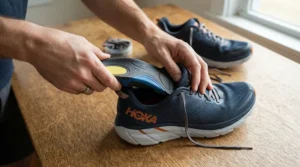
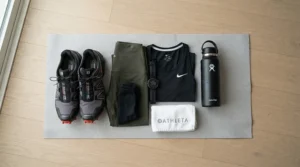
Buying the right shoe is half the job — breaking it in correctly is the other half, and this is exactly the part Amazon product listings never cover. Start with a 20-30 minute walk or easy jog on day one, not a long run, so you can feel how the medial support interacts with your actual stride before committing serious mileage to it. During the first two weeks, alternate the new shoe with your old pair every other run; this lets your calves and stabilizing muscles adjust gradually rather than getting overwhelmed by an unfamiliar level of correction all at once. If you’re transitioning from a neutral shoe into something like the New Balance Vongo v6 or ASICS Gel-Kayano 31, expect mild new-shoe soreness along the outer shin for the first week — that’s your muscles adapting to a different guidance pattern, not a red flag, though pain that sharpens or lingers past two weeks deserves a second look. A common first-30-days mistake is lacing too tightly across the midfoot in an attempt to “add support,” which actually restricts natural foot splay and can create pressure points; instead, use a runner’s loop lacing technique for a secure heel lock without midfoot compression. Finally, rotate in a light stretching routine for your calves and plantar fascia after every run — flat feet place extra strain on both, and five minutes of stretching does more for injury prevention than any shoe feature alone.
Real-World Scenarios: Which Shoe Actually Fits Your Life
Sometimes it’s easier to see yourself in a scenario than in a spec sheet, so here are three realistic profiles matched to specific picks from our list. If you’re a college student logging 3-4 easy miles a few times a week between classes, on a tight budget, the Hoka Arahi 8 makes the most sense — it’s light, forgiving, and won’t punish your wallet if your schedule (or motivation) shifts. If you’re training for your first marathon with a history of shin splints and you weigh on the heavier side of average, the ASICS Gel-Kayano 31 or New Balance Vongo v6 are the safer long-mileage bets, since both prioritize consistent correction over speed. And if you’re a masters-age runner who’s on your feet all day at work and squeezes in runs during lunch breaks, the Hoka Gaviota 6 solves two problems at once — it’s genuinely comfortable for standing for hours and still holds up for a 6-mile lunchtime loop. Matching the shoe to your actual week, not your aspirational one, is the single most underrated piece of advice in this entire guide.
Problem → Solution: Fixing Common Flat-Foot Running Pain
Flat feet tend to generate a predictable handful of complaints, so let’s solve them directly. If you’re dealing with arch pain that flares up mid-run, the fix usually isn’t a softer shoe — it’s a firmer one paired with an arch support insole, since a collapsing arch needs structure, not more cushioning. If your knees ache on the inside after longer runs, that’s a classic overpronation symptom, and moving from a neutral shoe into a stability option like the Brooks Adrenaline GTS 25 typically brings noticeable relief within a few weeks. If you notice uneven wear on the inside edge of your outsole, that confirms significant inward roll, and it’s worth sizing up your support level — from the Arahi 8 toward the Vongo v6, for example. If your feet feel fatigued and sore by evening even on non-running days, that points toward needing daily arch support beyond just your running shoes, which is where dedicated arch support insoles for your regular footwear come in. And if you’ve tried a stability shoe and pain persists past a month, that’s the point to stop guessing and see a podiatrist — shoes solve a lot, but they aren’t a substitute for a professional gait assessment when something isn’t resolving.
How to Choose Running Shoes for Flat Feet
Here’s a practical, step-by-step framework for narrowing down your options without overthinking it.
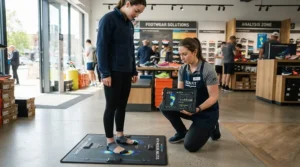
- Confirm your arch type first. Do the wet-foot test (step out of water onto paper and look at the footprint) or get a gait analysis at a specialty running store — guessing wastes money.
- Decide between stability and motion control. Mild-to-moderate flat feet usually do fine in a stability shoe; severe, structural flat feet or heavier body weight often warrant motion control.
- Prioritize width before cushioning. Flat feet frequently splay wider under load, so a true-to-width fit matters more than chasing the plushest foam.
- Match drop to your strike pattern. Heel strikers generally do well with a 10-12mm drop; if you’re a midfoot striker, look for something closer to 4-8mm.
- Weigh weight against support. Heavier shoes generally mean more correction; decide how much speed you’re willing to trade for stability.
- Test the press test before buying. Squeeze the midsole at the arch — motion-control shoes should resist firmly, while stability shoes offer moderate give.
- Budget for a break-in period. Give any new stability shoe at least two weeks before judging it; your body needs time to adapt to the guidance pattern.
Running Shoes for Flat Feet Overpronation: What’s Actually Happening
It’s worth untangling two terms that get used interchangeably but aren’t quite the same thing. Flat feet describes your foot’s structure — a low or absent arch, whether standing still or moving. Overpronation describes a motion — the inward roll of the foot during the gait cycle. Most people with flat feet do overpronate, since a collapsed arch offers less structural resistance to that inward roll, but the two don’t always travel together; some flat-footed runners have a naturally efficient gait that limits excess pronation, while some people with normal arches overpronate anyway due to weak stabilizing muscles or old injuries. This distinction matters for shoe shopping because running shoes for flat feet overpronation are specifically engineered to interrupt that inward-roll motion at the exact moment it happens, through a medial post, a guidance frame, or a firmer density zone along the inner midsole. The honest caveat here, and it’s an important one: pronation control is a genuinely contested area of sports science. A large systematic review published on the Cochrane Library found the evidence that motion-control or stability shoes reduce injury risk compared to neutral shoes is of very low to low certainty, and that prescribing shoes based on foot posture alone made little measurable difference to injury rates in the study populations reviewed. That doesn’t mean stability shoes are useless — plenty of runners report real comfort and symptom relief in them — it just means “this shoe will prevent your injury” is a stronger claim than the current research fully supports, and comfort should stay your north star alongside support.
Arch Support Insoles: Do You Still Need Them With a Stability Shoe?
This is one of the most common points of confusion in flat-foot shoe shopping, and the honest answer is: it depends on how much correction your stock shoe already provides. A shoe like the New Balance Vongo v6 or ASICS Gel-Kayano 31 already builds substantial arch and midfoot support into the midsole itself, so adding an aggressive orthotic on top can sometimes over-correct or crowd the toe box. Lighter stability shoes like the Hoka Arahi 8, on the other hand, leave more room and more benefit for a dedicated arch support insole layered in on top, especially for runners with a diagnosed, structural low arch rather than a purely gait-related overpronation pattern.
| Approach | Support Style | Best For | Trade-Off |
|---|---|---|---|
| Stability shoe alone | Built-in medial post/frame | Mild-moderate flat feet | Less customizable |
| Stability shoe + arch support insole | Layered, adjustable | Structural low arches, orthotic users | Needs roomier toe box |
| Neutral shoe + aftermarket insole | Fully customizable | Runners who’ve tried and disliked built-in posts | Requires trial and error |
The takeaway from this comparison is that stability shoes and arch support insoles aren’t competing solutions, they’re complementary ones — the shoe handles gait-level correction while the insole handles static, standing arch support, and the right combination depends on whether your flat feet are structural, gait-driven, or both. If you already wear a podiatrist-prescribed orthotic, always size your shoe up half a size and check the removable insole depth before assuming any pair on this list will fit one comfortably.
✨ Don’t Miss These Exclusive Deals!
🔍 Take your running comfort to the next level with these carefully selected picks. Click on any highlighted shoe to check current pricing and availability. The right pair can genuinely change how your flat feet feel on every run.
Motion Control Running Shoes vs. Stability Shoes
The line between these two categories gets blurry in marketing copy, so let’s draw it clearly. Stability shoes offer moderate correction — a guidance frame, a softer medial post, or a multi-density midsole designed to gently resist excess inward roll without feeling rigid. Motion control running shoes go further: stiffer midsoles, more substantial and more rigid heel counters, and a firmer, denser build overall, aimed specifically at runners with severe, structural flat feet or higher body weight, where a standard stability post simply isn’t enough resistance.
| Feature | Stability Shoes | Motion Control Shoes |
|---|---|---|
| Midsole firmness | Moderate | Very firm |
| Best for | Mild-moderate overpronation | Severe overpronation, heavier runners |
| Ride feel | Balanced, versatile | Corrective, more rigid |
| Examples on this list | Brooks Adrenaline GTS 25, Hoka Arahi 8 | New Balance Vongo v6 (closest fit) |
What the table above doesn’t fully capture is nuance in how firm is “firm enough” — a runner with mild flat feet can genuinely feel overcorrected and uncomfortable in a true motion-control shoe, while a severe overpronator can feel like a stability shoe barely does anything. For runners who need more correction than anything on this list provides, dedicated motion control shoes like the Brooks Beast/Ariel line remain worth researching separately, though they trade agility and weight for that extra structure. As the physiotherapy resource Running Physio points out, shoe prescription based purely on foot type fell out of favor once research complicated the simple “flat foot equals motion control” rule, which is exactly why comfort and gradual trial remain your best guides alongside the specs.
Low Arch Foot Type: How to Confirm Yours at Home
Before you commit to any shoe on this list, it’s worth confirming your low arch foot type rather than assuming based on how your feet look standing still. The simplest version of the classic wet-foot test: wet the sole of your foot, step firmly onto a piece of brown paper or a dark tile floor, and look at the resulting footprint. A neutral arch leaves a footprint with a moderate inward curve along the middle. A high arch leaves only a thin sliver connecting the heel and forefoot. A low arch, or flat foot, leaves almost the entire sole visible, with little to no curve along the inner edge. A second confirming check: look at an old pair of running shoes and check the wear pattern on the outsole — heavy wear concentrated on the inner edge of the heel and forefoot is a strong sign of overpronation typically associated with a low arch. For a more precise read, especially if you’ve had recurring pain, a specialty running store’s gait analysis or a podiatrist’s assessment goes further than any at-home test, since it captures your arch behavior while actually moving rather than just standing still. According to the American Academy of Orthopaedic Surgeons’ resource on adult acquired flatfoot, distinguishing a flexible low arch from a rigid, structural one materially changes the right treatment path, which is exactly why an at-home test is a useful starting point but not the final word.
Common Mistakes When Buying Running Shoes for Flat Feet
The most common mistake is buying based on arch type alone without ever trying the shoe on for at least a short jog — comfort in the store doesn’t always match comfort at mile six. A close second is assuming “more support always means better,” which leads plenty of mild overpronators into overly rigid motion-control shoes that feel unnatural and can actually cause new aches elsewhere as the body compensates. Another frequent slip is ignoring width; flat feet often splay more under load, and a shoe that’s the right length but too narrow will create hot spots and blisters regardless of how good its arch support is. Runners also commonly skip the break-in period entirely, jumping straight into a long run in a brand-new stability shoe and blaming the shoe for soreness that’s really just adjustment. Finally, a lot of shoppers layer an aggressive orthotic into a shoe that already has substantial built-in support, effectively double-correcting and crowding the fit — check your insole depth and toe box room before assuming you need to add anything.
Long-Term Cost & Maintenance
Running shoes for flat feet generally cost a bit more upfront than neutral trainers, but the real cost conversation is about mileage, not sticker price. Most stability and motion-control midsoles compress and lose their supportive properties between 300 and 500 miles, a bit earlier than some neutral shoes, because the denser foam and structural frames doing the correction work also break down under repeated compression. If you run three times a week averaging 5 miles per run, that’s roughly 15 miles weekly, putting you at the 400-mile mark in about six to seven months — a useful mental calendar reminder for replacement rather than waiting for visible tread wear, which often lags behind midsole breakdown. Cost-per-use math actually favors the pricier options more than shoppers expect: a $170 pair of Saucony Tempus 2 shoes lasting a full 450 miles works out to roughly 38 cents per mile, while a $140 pair only reaching 350 miles before feeling dead runs closer to 40 cents per mile — the gap narrows once you account for how support actually degrades, not just the number on the price tag. Rotating two pairs, even within the same stability category, is one of the more underrated ways to extend total footwear lifespan, since each pair gets a full day to decompress between wears rather than compressing further with zero recovery time.
Features That Actually Matter (And Those That Don’t)
Cutting through the marketing noise: width options and removable, orthotic-friendly insoles matter enormously for flat feet and are worth prioritizing over almost anything else on a spec sheet. A structural guidance frame or medial post that resists your specific pronation pattern matters — but the “amount” of stability marketed isn’t always proportional to how correctly it fits your actual gait, which is why trying before buying, or at minimum buying from a retailer with a generous return window, beats chasing the highest support rating on paper. What matters less than marketing suggests: flashy colorways, carbon-plate marketing crossover into stability shoes (genuinely useful for racing, largely unnecessary for a flat-foot daily trainer), and “corrective” language implying a shoe will fix your gait permanently. It’s also worth being upfront about the research here: a comprehensive Cochrane systematic review on running shoes and injury prevention found the certainty of evidence linking any specific shoe category to reduced injury rates ranges from low to very low across the studies reviewed. That’s a meaningful, honest caveat — it means the smartest approach isn’t chasing the shoe with the most aggressive support claims, it’s finding the one that feels genuinely comfortable, fits your actual gait, and holds up over your typical weekly mileage.

Frequently Asked Questions
❓ What's the best running shoes for flat feet overpronation in 2026?
❓ Do arch support insoles work with running shoes for flat feet?
❓ Are motion control running shoes only for severe overpronators?
❓ How do I know if I have a low arch foot type?
❓ How often should I replace running shoes for flat feet?
Conclusion
Flat feet aren’t a flaw to fix so much as a foot type to understand and support properly, and the right shoe genuinely changes how your runs feel — less arch fatigue, less nagging knee ache, more miles you actually look forward to. Across this list, the Brooks Adrenaline GTS 25 remains the safest first pick for most runners, the ASICS Gel-Kayano 31 and New Balance Vongo v6 step up for heavier mileage and more severe overpronation, and the Hoka Arahi 8 offers the lightest, most approachable entry point if you’re newer to stability shoes altogether. Whichever pair you land on, give it a genuine break-in period, pair it thoughtfully with arch support insoles only if your fit actually calls for it, and remember that comfort — not the most aggressive support claim on the box — is still the single best signal that you’ve found the right shoe. Your arches don’t need to be “fixed.” They just need the right amount of help.
Recommended for You
- 7 Best Cross Country Spikes Of 2026: Mud-Ready Traction Picks
- 7 Best Distance Spikes For 5000m In 2026 (Tested & Ranked)
- Sprint Spikes For 100m: 7 Fast Picks That Actually Work In 2026
Disclaimer: This article contains affiliate links. As an Amazon Associate, I earn from qualifying purchases. If you purchase products through these links, we may earn a small commission at no additional cost to you.
✨ Found this helpful? Share it with your friends! 💬🤗
