In This Article
Running shoes for knee pain are cushioned, stable trainers built to soften landing forces and keep your kneecap tracking smoothly. They usually combine strong shock absorption, a moderate-to-low heel drop, and a wide, steady platform. They won’t cure an injury, but they can make every mile hurt less while you fix the root cause.

Knee pain is the runner’s most common complaint. It hits weekend joggers, marathon veterans, and people who just bought their first pair of trainers. Yet the science is kinder than the folklore. A meta-analysis of 17 studies on PubMed Central found that running may actually protect against generalized knee pain. So your knees probably aren’t “bad.” They’re overloaded, and the shoe is one of the few overload factors you can change this afternoon.
This guide covers seven real shoes, chosen from independent lab data on shock absorption, heel drop, and stability. It also explains what those numbers mean in plain English. If you’ve been hunting for cushioned running shoes for knee pain, or you want joint-friendly footwear that won’t turn your long run into a negotiation, you’re in the right place. I’ll also explain how impact absorption technology works, and what patellofemoral pain running really involves.
One caveat before we lace up. Shoes are a tool, not a treatment. If pain is persistent or severe, get a proper diagnosis. Now, the lineup.
Quick Comparison: The 7 Best Running Shoes for Knee Pain at a Glance
| Shoe | Standout Trait | Price Range* | Best For |
|---|---|---|---|
| adidas Supernova Rise 3 | Balanced cushioning and stability | $130-$150 | Everyday miles, first-time fixers |
| New Balance Fresh Foam X More v6 | Record-level forefoot shock absorption | $150-$170 | Max-cushion seekers, forefoot strikers |
| HOKA Gaviota 6 | H-Frame stability | $160-$180 | Overpronators, slow steady miles |
| Saucony Endorphin Azura | Bouncy foam, stable ride | $140-$170 | Tempo days without harsh landings |
| On Cloudboom Strike | Carbon-plated race shoe | $230-$270 | Race day, experienced forefoot strikers |
| Topo Specter 2 | Spacious toebox | $140-$170 | Wide feet, midfoot strikers |
| Saucony Peregrine 16 | Grippy Vibram trail outsole | $140-$160 | Gravel and moderate trails |
*Price ranges are approximate at the time of research. Prices vary by retailer and change often, so check current price before buying.
Here is how to read the table. The New Balance Fresh Foam X More v6 is the plushest option, but its low drop and narrow interior won’t suit everyone. The adidas Supernova Rise 3 is the safest all-rounder for most people, and its price sits comfortably in the middle of the pack. The On Cloudboom Strike costs roughly double the budget picks, so it only makes sense if you race. For daily knee-friendly mileage, the money is better spent elsewhere.
💬 Just one click — help others make better buying decisions too!😊
Top 7 Running Shoes for Knee Pain: Expert Analysis
A quick note on method. I have not worn any of these shoes, and this article makes no hands-on claims. What follows is analysis built on published lab measurements (mainly RunRepeat’s shock absorption, drop, and stability tests) and on themes from independent reviewers. I could not verify aggregated Amazon star ratings for these shoes, so the “reviewer sentiment” line in each entry reflects published tester feedback, not invented review counts.
1. adidas Supernova Rise 3 — best all-rounder for cautious knees
If a shoe could be the calm friend at a loud party, this would be it. RunRepeat’s lab named the adidas Supernova Rise 3 its best overall pick for knee pain because it does several unglamorous things well at once.
Forefoot shock absorption measured 112 SA, comfortably above the 80 SA threshold RunRepeat cites for runners with knee pain. The 7.8 mm drop is a smart middle ground. It’s low enough to nudge you toward a midfoot landing, yet not so low that someone coming from 11-12 mm trainers gets ambushed by the change. The 116.4/93.3 mm platform and a bend test 7% stiffer than average mean the shoe resists wobble, which matters when a wandering kneecap is your problem.
Based on the spec comparison, this is the safest starting point for most people. Just don’t expect fireworks. Energy return is average, so it’s a workhorse, not a speedster.
Reviewers consistently praise the plush heel, grip, and roomy fit. Doctors of Running flags short laces and limited forefoot volume, and RunRepeat readers lean toward the shoe fitting slightly small.
Pros:
- ✅ Strong forefoot shock absorption without feeling mushy
- ✅ Wide, stable platform for steady landings
- ✅ Excellent grip and roomy overall fit
Cons:
- ❌ Heel padding durability is a weak spot
- ❌ Energy return is lower than the previous version
Expect a price in the $130-$150 range. That’s strong value for a shoe with this much protection.
2. New Balance Fresh Foam X More v6 — plushest landing in the lineup
Some shoes cushion. The New Balance Fresh Foam X More v6 practically upholsters your stride. RunRepeat measured a towering 41.8/38.5 mm stack and a forefoot shock absorption of 144 SA, the highest of any shoe here.
The drop is only 3.3 mm, which shifts effort from the knee toward the calves and feet. That’s helpful for a forefoot striker but an aggressive change for a habitual heel striker. Add a 122.5/102.0 mm base, and you get a shoe that’s soft without being tippy. The trade-off is heft: 10.7 oz (302 g) isn’t nimble.
What most buyers overlook is the interior. Tester feedback describes a narrow, low-volume fit, so wide-footed runners should look at the Topo Specter 2 instead. Airflow is also weak, which matters in summer.
For anyone shopping specifically for cushioned running shoes for knee pain, this is the benchmark. It’s best for slow, protective miles, and worst for anything resembling a workout.
Pros:
- ✅ Highest forefoot shock absorption of the seven
- ✅ Wide platform keeps landings steady
- ✅ Plush foam with solid durability
Cons:
- ❌ Narrow, low-volume interior fit
- ❌ Heavy and low-drop, so it isn’t for everyone
Expect roughly $150-$170. It’s fair value if plushness is your priority.
3. HOKA Gaviota 6 — best stability for overpronating knees
Some knee pain travels upward from the arch. If your foot collapses inward with each step, the knee twists to compensate. The HOKA Gaviota 6 answers that with an H-Frame embedded in the midsole.
RunRepeat’s torsional rigidity reading of 17.7 Nm is 19% above average. The 120.0/105.6 mm base is enormous, and a 36.0/28.7 mm stack with a 7.3 mm drop keeps it cushioned without feeling stilted. Forefoot shock absorption is a solid 111 SA, and traction scored 30% above average, which helps on wet pavement.
Here’s what the spec sheet won’t tell you, but testers note: the foam is older CMEVA technology and energy return is underwhelming. This is a “slow and steady” shoe, not a “surprise myself today” shoe. Reviewers do appreciate that it’s roomier than most HOKA models and that the newest version is softer than the last one.
Choose it if your knee pain comes with overpronation, or if you want a structured shoe for recovery miles.
Pros:
- ✅ Excellent stability from the H-Frame design
- ✅ Improved traction and good all-round durability
- ✅ Roomier than most HOKA models
Cons:
- ❌ Dated foam with low energy return
- ❌ High price for the performance offered
Expect roughly $160-$180. Value is fair, but not a bargain.
4. Saucony Endorphin Azura — bouncy speed without the pounding
Fast shoes and sensitive knees rarely get along. The Saucony Endorphin Azura is the exception. RunRepeat’s lab scored it 91, the highest of the seven, and named it best for tempo running with knee pain.
The PWRRUN PB foam returns 70.6% of energy in the heel and 74.6% in the forefoot. The 40.7/32.7 mm stack is huge, and forefoot shock absorption is 122 SA. Most max-cushion shoes feel like paddling a barge, but this one weighs only 8.5 oz (241 g) and is just 7% stiffer than average. On paper, that means you get protection and pace in the same package.
The 8.0 mm drop is moderate, so it’s forgiving for heel strikers stepping down from higher-drop trainers. The catch is the SpeedRoll rocker. Some runners love it, while others find it intrusive. Testers also call the ride firm, which is worth knowing if you assume “max stack” means “marshmallow.”
Pros:
- ✅ Excellent energy return from PWRRUN PB foam
- ✅ Stable, lightweight, and versatile across paces
- ✅ Fantastic outsole durability
Cons:
- ❌ Firm ride won’t suit everyone
- ❌ Rocker geometry can feel intrusive
Expect roughly $140-$170. Reviewers call the value unusually high for the performance.
5. On Cloudboom Strike — race-day speed with knee-friendly landings
Racing with knee pain is a bit like driving a sports car with a sore wrist. The On Cloudboom Strike tries to make it possible. It’s a carbon-plated racer that still absorbs plenty of impact: 127 SA in the forefoot, from 34.9 mm of Helion HF foam.
The 3.2 mm drop pulls your landing toward the front of the foot, moving load away from the knee and onto the calves. Energy return of 72.1% (heel) and 73.4% (forefoot) is off-the-charts bouncy, and at 7.1 oz (201 g) it’s light. It’s built for 5K to marathon.
The honest caveat is stability. There isn’t much, so if your knee pain comes with overpronation, look at the HOKA Gaviota 6 instead. It’s also unsuitable for heel strikers, because a 3 mm drop will punish an unprepared Achilles.
Reviewers highlight the roomier fit versus the last version and the premium materials. They also mention potential heel slippage and the price.
Pros:
- ✅ Exceptional energy return and impact absorption
- ✅ Very light for its stack height
- ✅ Excellent traction and roomier fit
Cons:
- ❌ Limited stability for overpronators
- ❌ Expensive, with possible heel slippage
Expect roughly $230-$270. It’s a specialist purchase, so only buy it if you race.

6. Topo Specter 2 — roomiest toebox for wide feet
Wide feet often get squeezed into narrow shoes, which changes how the foot lands and how the knee reacts. The Topo Specter 2 starts from anatomy. RunRepeat’s gel-mold measurements exceeded averages everywhere: 97.6 mm maximum width, an 80.2 mm toebox, and 31.8 mm of vertical clearance.
The 6.8 mm drop (versus an 8.5 mm average) favors midfoot and forefoot landings. Forefoot shock absorption reads 102 SA with 29.2 mm of foam underneath, just above RunRepeat’s 100 SA minimum for forefoot strikers with knee pain. Translation: protective, but not plush. If you want a pillow, choose the New Balance Fresh Foam X More v6.
Reviewers like the agile, nimble ride and generous toe splay. They dislike the non-gusseted tongue, which can compromise lockdown, so lace carefully. Narrow-footed runners should skip it.
Pros:
- ✅ Excellent room for toe splay and height
- ✅ Lightweight, versatile, and nimble
- ✅ Reasonable price for its features
Cons:
- ❌ Midsole feel may be too firm for some
- ❌ Non-gusseted tongue and modest heel padding durability
Expect roughly $140-$170. It’s good value for wide feet, and the best in this list for that job.
7. Saucony Peregrine 16 — sure-footed on gravel and rough paths
Trail runners with knee pain face a double problem: cushioning and balance. A slip on loose gravel sends a jolt straight to the joint. The Saucony Peregrine 16 attacks the balance half with Vibram Megagrip rubber that scored 0.72 in RunRepeat’s traction test, 38% grippier than average, plus 3.5 mm lugs.
The 4.8 mm drop keeps you ground-connected. A broad 118.4 mm forefoot and secure lockdown make a stumble less likely. Forefoot shock absorption is 106 SA, and energy return is 64.5%. It’s protective enough for moderate terrain, though not as plush as the road picks above.
Note the limits. It’s designed for gravel roads and moderate trails, not deep mud or technical rock. The toebox is tapered, so wide-footed runners will feel squeezed, and the low drop limits appeal.
Reviewers describe it as a dependable workhorse with a stable, confidence-inspiring fit.
Pros:
- ✅ Vibram Megagrip traction is superb
- ✅ Stable, secure ride on uneven paths
- ✅ Comfortable foam at a reasonable price
Cons:
- ❌ Tapered toebox limits wide feet
- ❌ Slight weight gain over the last version
Expect roughly $140-$160. It’s solid value for a trail specialist.
Impact Absorption Technology: What the Lab Numbers Actually Mean
Marketing loves the phrase impact absorption technology. It sounds scientific, and sometimes it is. Here’s the plain-English version: a shoe’s foam either dampens the force of each landing or passes it upward to your shins and knees. RunRepeat quantifies this as a “shock absorption” (SA) score. Higher means the midsole does more of the dampening.
Their guidance for knee pain is concrete. Aim for at least 122 SA at the heel if you’re a heel striker, or at least 100 SA at the forefoot if you land on the front of your foot. Look back at the lineup with that yardstick. The New Balance Fresh Foam X More v6 (144 SA) and On Cloudboom Strike (127 SA) dominate. The Saucony Endorphin Azura (122 SA), adidas Supernova Rise 3 (112 SA), and HOKA Gaviota 6 (111 SA) all clear the bar. The Topo Specter 2 (102 SA) barely squeaks past it.
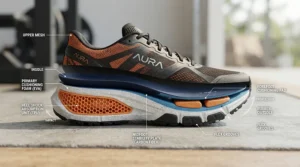
Here’s the twist. Softer isn’t automatically better. A shoe can be so soft that your foot sinks and has to work to bounce back, and very soft foams are often less stable. That’s why the best impact absorption technology pairs foam with geometry: wide bases, stiff heel counters, and midsole frames like the H-Frame in the HOKA Gaviota 6.
| Shoe | Forefoot SA | Drop (mm) | Energy Return (forefoot) | Best For |
|---|---|---|---|---|
| New Balance Fresh Foam X More v6 | 144 | 3.3 | Improved (n/a) | Plush protection |
| On Cloudboom Strike | 127 | 3.2 | 73.4% | Race day |
| Saucony Endorphin Azura | 122 | 8.0 | 74.6% | Tempo and long runs |
| adidas Supernova Rise 3 | 112 | 7.8 | ~63% | Daily training |
| HOKA Gaviota 6 | 111 | 7.3 | Low (n/a) | Stability |
| Saucony Peregrine 16 | 106 | 4.8 | 64.5% | Trails |
| Topo Specter 2 | 102 | 6.8 | 66.0% | Wide feet |
Notice that shock absorption and energy return aren’t the same thing. The HOKA Gaviota 6 protects well but returns little, while the Saucony Endorphin Azura does both. If your runs are gentle recovery jogs, prioritize SA. If you’re doing intervals, look for a bouncy foam too. Where a figure is marked “n/a,” the sources I used didn’t publish a precise number.
How to Choose Running Shoes for Knee Pain
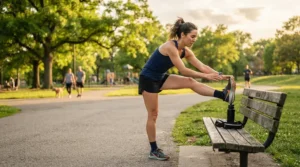
Choosing the right pair takes five decisions. Work through them in order.
- Check the heel drop. Aim for 8 mm or lower, but change gradually. A drop about 3-4 mm lower than your current shoe is the safest step, because jumping straight to zero can injure your Achilles.
- Verify shock absorption. Target 122 SA at the heel or 100 SA at the forefoot, depending on where you land. The number matters more than stack height alone.
- Look for a stable platform. Wide bases and stiff heel counters keep the kneecap aligned. This is non-negotiable if you overpronate.
- Match the toebox to your foot. A cramped forefoot alters landing mechanics. Wide feet need a shoe like the Topo Specter 2, while narrow feet suit the Saucony Endorphin Azura better.
- Consider your terrain and pace. Road, gravel, and race day call for different tools. The Saucony Peregrine 16 and On Cloudboom Strike exist for a reason.
If you follow those steps, you’ll have narrowed the field to two or three shoes. A last practical tip: shop late in the day, when your feet are at their largest, and wear your usual running socks.
Cushioned Running Shoes for Knee Pain: How Much Is Too Much?
Cushioned running shoes for knee pain are the obvious first move, and they’re usually right. RunRepeat advises against minimalist shoes for runners with painful knees unless they’re very experienced with them. Skimpy midsoles pass more force upward.
But “maximum” isn’t a synonym for “best.” One orthopedic voice quoted in a specialist roundup cautions runners with knee pain to avoid maximalist, high-stack shoes unless properly evaluated. The logic is that tall, soft stacks can feel unstable, and instability can shift stress onto the joint.
So how do you find the sweet spot? Use stability as your tiebreaker. A 40 mm stack on a wide, stiff base, like the New Balance Fresh Foam X More v6, is a different animal from a 40 mm stack on a narrow, squishy one. The adidas Supernova Rise 3 shows the moderate approach: a 35.0/27.2 mm stack that still posts 112 SA, plus a firm heel counter.
Rule of thumb: buy the least shoe that clears the shock absorption bar and feels planted. Add more cushion only if pain persists after you’ve fixed load management. Otherwise, you’re paying for softness your knees don’t need.
Patellofemoral Pain Running: What’s Actually Happening
Patellofemoral pain running is the medical name for what most people call runner’s knee. The pain sits at the front of the knee, around or behind the kneecap. The kneecap slides in a groove at the end of your thigh bone, and when it tracks off-center, the cartilage behind it gets irritated.
It’s common. RunRepeat cites research suggesting patellofemoral pain accounts for roughly a quarter of running injuries, and that women are about 2.2 times more likely to experience knee pain.
Footwear enters through heel drop. In one study of 18 runners, shoes with a 10 mm or 15 mm drop raised peak patellofemoral joint stress by more than 15% compared with zero-drop shoes. That’s a meaningful jump, and it explains why so many patellofemoral pain running guides push toward lower drops.
Remember the caution, though. Low drop shifts load to your calves and Achilles, and it takes weeks of adaptation. Strength work matters just as much: weak hip and quad muscles let the kneecap drift. Shoes lower the stress, but strengthening changes the cause. If your pain sits on the outer knee or below the kneecap, you may be dealing with a different problem, like IT band syndrome or patellar tendinopathy, and diagnosis becomes essential.
Joint-Friendly Footwear: Features That Actually Matter (And Those That Don’t)
Shoe brands are wonderfully creative with adjectives. Here’s a filter for joint-friendly footwear that separates function from flourish.
Features that matter:
- Shock absorption you can verify. Look for lab-measured SA, not just adjectives like “cloud-like.”
- A stable base. Width and heel counter stiffness matter more than most people expect.
- A fit that suits your foot shape. A toebox that doesn’t squeeze protects your landing mechanics.
- A moderate-to-low drop. Roughly 3-8 mm for most runners with knee pain.
Features that matter less:
- Carbon plates for daily runs. They’re expensive and don’t last as long. Save them for racing.
- Aggressive rockers. Some runners love them, but the Saucony Endorphin Azura‘s SpeedRoll shows they’re a matter of taste.
- Style and colorway. Adorable, irrelevant.
- Super-soft feel in the store. Foam that’s plush in a shop can feel unstable at mile 10.
The takeaway is practical. Joint-friendly footwear should be judged by what it does to force, not by how it looks on a shelf. If a shoe can’t tell you its shock absorption and drop, treat that as a yellow flag.
Running Shoes for Knee Pain vs Other Shoe Types
Not every knee needs the same shoe. Here’s how the main categories compare.
| Shoe Type | Knee-Pain Benefit | Drawback | Best For |
|---|---|---|---|
| Cushioned neutral trainers (e.g., adidas Supernova Rise 3) | Balanced shock absorption and stability | Average energy return | Most runners |
| Stability shoes (e.g., HOKA Gaviota 6) | Controls inward collapse | Heavier, firmer feel | Overpronators |
| Max-cushion low-drop (e.g., New Balance Fresh Foam X More v6) | Best impact dampening | Heavy, narrow fit | Forefoot strikers |
| Carbon racers (e.g., On Cloudboom Strike) | Bounce plus low drop | Costly, less stable | Race day |
| Minimalist shoes | Reduced patellofemoral stress in one study | Too little cushioning for most | Very experienced runners |
Read that table as a menu of trade-offs, not a ranking. Stability shoes solve a specific problem: if your arch collapses, the HOKA Gaviota 6 is the logical answer. Max-cushion shoes solve another: brute-force impact reduction. Minimalist shoes can lower joint stress in research settings, but RunRepeat still discourages them for most people with sore knees because the cushioning is too thin.
The simplest path is to start with a cushioned neutral trainer. Move to stability only if overpronation is a clear factor, and move to max-cushion if you still feel the ground too much.
✨ Ready to Give Your Knees a Break?
🔍 Compare the shoes above, click any highlighted name to check current pricing and availability, and pick the option that fits your foot and your mileage. A better landing could be one purchase away! 🏃♀️
Price Range and Value Analysis: What Your Money Actually Buys
Price doesn’t map neatly onto knee protection. The best value is often in the middle.
| Tier | Shoes | Price Range* | Value Verdict | Best For |
|---|---|---|---|---|
| Budget-friendly | adidas Supernova Rise 3, Saucony Peregrine 16 | $130-$160 | Excellent | Daily training and trails |
| Mid-range | Topo Specter 2, Saucony Endorphin Azura, New Balance Fresh Foam X More v6, HOKA Gaviota 6 | $140-$180 | Strong to fair | Wide feet, tempo, plush, stability |
| Premium | On Cloudboom Strike | $230-$270 | Specialist | Racing |
*Approximate at the time of research. Check current price.
The Saucony Endorphin Azura stands out because reviewers describe its value as unusually strong for a shoe that combines speed and protection. The HOKA Gaviota 6, by contrast, gets marked down for pricing that sits high relative to its aging foam. And the On Cloudboom Strike is a precision instrument you only buy when racing justifies it.
Think in cost-per-mile, not sticker price. A $150 shoe that lasts 400 miles costs less per run than a $110 shoe that goes flat at 250. Because worn-out shoes can raise knee load, a mid-priced pair you replace on time often beats a cheap pair you keep too long.
Common Mistakes When Buying Running Shoes for Knee Pain
Even careful shoppers stumble. Watch for these.
Mistake 1: Jumping to zero drop overnight. Research on drop transitions shows big, sudden changes are risky, especially for heel strikers. Step down gradually.
Mistake 2: Buying the softest shoe you can find. Softness without stability can make the problem worse. Judge the platform, not just the squish.
Mistake 3: Ignoring foot shape. A gorgeous shoe that pinches your forefoot will change your gait. This is why the Topo Specter 2 exists for wide feet.
Mistake 4: Hanging on to worn-out shoes. A specialist source suggests that worn shoes can raise knee load noticeably. If your trainers are past 300-500 miles, they’re probably done.
Mistake 5: Expecting shoes to fix everything. Roughly the same source advice applies everywhere: shoes reduce stress but don’t cure injuries. Strength work and smart mileage progression do the heavy lifting.
Mistake 6: Skipping the diagnosis. Front-knee pain, outer-knee pain, and swelling all imply different problems. Guessing wastes weeks.
Practical Usage Guide: Your First 30 Days in New Running Shoes
A new shoe is a change in loading, so treat it as one. This is a simple, cautious plan.
Week 1: Short and easy. Wear them for walking and two short, easy runs, 20-30 minutes each. If you’ve switched from a high-drop shoe to a lower one like the New Balance Fresh Foam X More v6, keep runs even shorter. Research on forefoot landing, including a biomechanics review on PubMed Central, shows that a forefoot strike moves stress from the knee to the ankle joint and Achilles. Your calves need time.
Week 2: Build gently. Add a third run and stretch one run by about 10%. Don’t add speed. Keep your cadence a touch quicker, since shorter, lighter steps reduce overstriding.
Week 3: Watch the signals. Calf tightness is normal at first. Sharp or worsening knee pain isn’t. If you feel it, back off and reassess.
Week 4: Return to normal. Resume regular mileage only if the previous weeks felt comfortable.
Maintenance tips:
- Rotate two pairs if you can, since foam recovers between runs.
- Keep a mileage log, and retire shoes around the 300-500 mile range.
- Try a heel-lock lacing pattern if you experience slippage, especially in the On Cloudboom Strike.
Real-World Scenarios: Matching the Shoe to Your Life
Numbers become useful when they meet real lives. Here are three sample profiles.
Scenario 1: The returning runner. You’re 42, back after a five-year break, and the front of your knee complains after 3 miles. You run about 15 miles a week on pavement, and your budget is around $150. Based on the specs, the adidas Supernova Rise 3 is the sensible pick. It has a moderate 7.8 mm drop, strong shock absorption, and a stable base, so you’re not forced into a big mechanical change.
Scenario 2: The wide-footed weekend racer. You run 25 miles a week, your feet spread wide, and you’re eyeing a fall half marathon. The Topo Specter 2 gives your toes room for daily miles, and the Saucony Endorphin Azura can handle tempo days. Together they cover training without the price of a full carbon racer.
Scenario 3: The gravel-path commuter-runner. Your route crosses park trails and gravel roads, and you’ve had an ankle roll that jarred your knee. The Saucony Peregrine 16, with its Vibram Megagrip outsole and 4.8 mm drop, prioritizes grip and balance over plushness. If your knees need more cushion, you could keep the New Balance Fresh Foam X More v6 for road days.
The pattern: pick for your terrain, your foot shape, and your risk of instability. Don’t buy for a hypothetical runner you’re not.
Problem to Solution: Fixing Common Knee-Pain Running Frustrations
Even in the right shoes, things can go sideways. Here are five common problems and what to try.
Problem: Pain returns after a few weeks in a low-drop shoe. A study of zero-drop shoes found knee strain dropped at first but returned to previous levels after eight weeks as runners adapted. Solution: don’t assume the shoe “wears off.” Add strength work and vary your shoes.
Problem: The shoe feels too firm. Some firm-riding models, like the Saucony Endorphin Azura and Topo Specter 2, aren’t marshmallows. Solution: try a softer option like the New Balance Fresh Foam X More v6, or swap in a fresh insole.
Problem: Your foot slides or your heel slips. This is a known theme with the On Cloudboom Strike. Solution: use a runner’s-loop lacing pattern and test with your race socks.
Problem: Your arch collapses and your knee tracks inward. Solution: consider a stability model like the HOKA Gaviota 6, and ask a physical therapist about hip strengthening.
Problem: The shoe feels great, but your toes numb out. Solution: check your toebox. The adidas Supernova Rise 3 has a roomy fit for high-volume feet but limited forefoot volume per one reviewer, so try both sizes.
Safety Guide: When Shoes Aren’t Enough
Shoes are a help, not a hospital. Road Runner Sports puts it plainly: running shoes can reduce the impact your joints absorb, but they are not a medical treatment and cannot cure knee problems.
See a doctor or physical therapist if you notice:
- Pain that persists for more than a couple of weeks despite reduced mileage
- Swelling, warmth, or redness around the knee
- Locking, catching, or giving way
- Pain at night or at rest
- Sharp pain that worsens with every run
Also consider that not all knee pain is patellofemoral. IT band syndrome shows up on the outer knee, and jumper’s knee appears below the kneecap. Knee bursitis can cause swelling and sometimes needs medical attention. A proper diagnosis lets you match both the rehab plan and the shoe to the actual problem.
Finally, remember the safety basics: increase mileage gradually, strengthen your hips and quads, and replace shoes on schedule. Those three habits protect your knees more reliably than any single purchase.
FAQ: Running Shoes for Knee Pain
❓ What heel drop is best for running shoes for knee pain?
❓ Are max-cushion shoes always better for sore knees?
❓ Can running shoes cure patellofemoral pain?
❓ How often should I replace shoes if my knees hurt?
❓ Should I buy stability shoes for knee pain?
Conclusion
Knee pain doesn’t have to end your running. The research is reassuring: recreational runners show lower rates of osteoarthritis than sedentary people, at roughly 3.5% versus 10.2%. The right shoe helps you keep moving while you strengthen the muscles that protect the joint.
If you want one recommendation, start with the adidas Supernova Rise 3. It’s balanced, stable, and reasonably priced. Choose the New Balance Fresh Foam X More v6 when you want maximum cushioning, and the HOKA Gaviota 6 when overpronation is part of the story. The Saucony Endorphin Azura is the pick for runners who want speed without harsh landings. The Topo Specter 2 is built for wide feet, the Saucony Peregrine 16 handles gravel and trails, and the On Cloudboom Strike is a race-day indulgence.
Whichever you choose, ease in slowly, replace shoes on schedule, and don’t skip strength work. Impact absorption technology and joint-friendly footwear can lower the load, but consistency does the rest. Your knees will notice the difference long before your friends do.
Recommended for You
- Running Shoes For Plantar Fasciitis: 7 Proven Picks 2026
- 7 Best Running Shoes For Supination In 2026
- Running Shoes For Overpronation: 7 Picks That Actually Work (2026)
Disclaimer: This article contains affiliate links. As an Amazon Associate, I earn from qualifying purchases. If you purchase products through these links, we may earn a small commission at no additional cost to you.
✨ Found this helpful? Share it with your friends! 💬
