

In This Article
If your calves ache after every long run and the outside edge of your sneakers looks chewed up before the inside even shows a scuff, you’re probably shopping for running shoes for supination — even if you didn’t know there was a name for it. Supination, also called underpronation, happens when your foot rolls outward instead of rolling inward enough to soak up impact. It’s less common than overpronation, but it’s arguably rougher on the body, because the outside edge of the foot is a small, bony landing pad that was never built to absorb the full brunt of your stride.
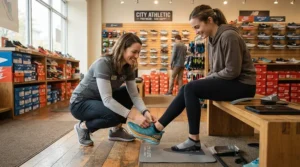
What is supination? In plain terms, it’s when your ankle rolls outward on landing instead of settling into a neutral position, concentrating force along the pinky-toe side of the foot and the outer heel. Runners with high, rigid arches see this most often, though old ankle injuries and tight calves can cause it too. According to supination can be minimized — though usually not fully stopped — by wearing stable, well-cushioned neutral running shoes, which is exactly the approach this guide takes.
We spent hours cross-referencing lab data, retailer specs, and aggregated runner feedback to land on seven real, currently available shoes that handle supination gracefully. You’ll find a $100 beginner pick, a couple of springy mid-range trainers, and a few plush, premium daily drivers — all neutral, all genuinely cushioned, and all chosen because they spread impact instead of fighting your natural stride.
Quick Comparison Table
| Shoe | Best For | Drop | Cushioning Feel |
|---|---|---|---|
| Brooks Revel 9 | Budget beginners | 8mm | Medium, stable |
| ASICS Novablast 5 | Bouncy value pick | 8mm | High, energetic |
| Brooks Ghost 18 | Wide-foot daily training | 10mm | Medium-firm, traditional |
| New Balance 1080v15 | Lightweight long runs | 6-8mm | High, soft |
| ASICS Gel-Nimbus 28 | Stable max cushion | 8mm | High, controlled |
| HOKA Bondi 9 | Maximum protection | 5mm | Ultra-high, plush |
| Brooks Glycerin 23 | Best overall plush ride | 8mm | High, balanced |
Looking at the spread above, there’s a clear pattern: every shoe here skews toward higher stack heights and moderate-to-low drops, which keeps the landing soft without pushing the foot further outward the way a rigid stability post would. Budget shouldn’t scare you off — the Brooks Revel 9 proves you can get genuine neutral cushioning for around $100, while the HOKA Bondi 9 sits at the opposite end for runners who want maximum shock absorption on every mile. If you’re deciding between the middle-ground options, weight and drop matter more than price; a lighter, lower-drop shoe like the New Balance 1080v15 will feel completely different underfoot than the higher-drop, traditional Brooks Ghost 18, even though they’re priced similarly.
Found a shoe that looks promising already? Bookmark this page and keep scrolling — the deep-dive breakdown below explains exactly why each one made the cut.
Top 7 Running Shoes for Supination: Expert Analysis
1. Brooks Revel 9 — best budget pick for beginners
The standout here is price-to-comfort ratio: this is one of the few genuinely well-cushioned trainers you’ll find under $110. Brooks builds the Brooks Revel 9 around a DNA Loft v2 midsole with an 8mm drop and a stack of roughly 33mm heel / 25mm forefoot, weighing in around 9.3 oz for men’s — numbers that translate into a shoe soft enough to blunt the jarring impact supinators tend to feel on the outside heel, without being so plush that it feels unstable.
Based on the spec comparison with pricier daily trainers, what you’re really trading away at this price point is refinement in the upper and cushioning longevity, not basic shock absorption. This makes the Brooks Revel 9 a smart call for new runners who aren’t sure yet how many miles a week they’ll actually log, or for anyone who wants a true neutral shoe as a backup pair without spending premium-trainer money.
Reviewers consistently note that the wider platform on this generation makes it more stable underfoot than previous versions, though a few mention it runs slightly heavier than its predecessor. Aggregated feedback also flags the traction and durability as better than expected for the price tier.
Pros:
- ✅ Exceptional value for a genuinely cushioned neutral shoe
- ✅ Wider platform adds stability for outer-foot landers
- ✅ Durable outsole rubber holds up well over time
Cons:
- ❌ Heavier than the previous Revel generation
- ❌ Less versatile for faster-paced training days
Priced in the $95-$110 range, the Brooks Revel 9 delivers outsized value for anyone who wants to test whether a proper neutral shoe solves their supination discomfort before committing to a pricier pair.
2. ASICS Novablast 5 — most energetic bounce for the money
What jumps out immediately is the ride quality: this shoe is built to feel like a trampoline, and for once, the marketing isn’t exaggerating. The ASICS Novablast 5 uses ASICS’ newer FF Blast Max foam on an 8mm drop with a tall stack around 41.5mm heel / 33.5mm forefoot, weighing about 8.9-9 oz for men’s — a genuinely lightweight package for that much cushioning.
What most buyers overlook about this model is that its trampoline-shaped outsole geometry does double duty: it adds bounce, but it also encourages a smoother, more centered toe-off, which matters for supinators who tend to push off hard on the outer forefoot. This is a strong match for runners who want one shoe that handles both easy jogs and faster tempo work without feeling sluggish.
Reviewers consistently describe the ride as noticeably softer and springier than the previous version, while a smaller group flags the outsole traction as mediocre on wet pavement.
Pros:
- ✅ Lightweight for its high stack height
- ✅ Energetic, bouncy ride suited to varied paces
- ✅ Comfortable jacquard mesh upper wraps the foot securely
Cons:
- ❌ Traction on wet surfaces trails the category average
- ❌ Some durability concerns reported around the forefoot lugs
Expect to pay in the $135-$150 range for the ASICS Novablast 5, and given how much cushioning and rebound you get for that money, it’s one of the strongest value plays on this entire list.
3. Brooks Ghost 18 — best for wide or hard-to-fit feet
The headline feature is width availability: the Brooks Ghost 18 comes in narrow, standard, wide, and extra-wide options, which matters enormously for supinators whose feet get pushed toward the outer edge of a standard-width shoe. Built on nitrogen-infused DNA Loft v3 foam with a 10mm drop (independent lab measurements put it closer to 12mm) and a 36mm heel stack, it weighs around 10.2-10.6 oz for men’s.
Here’s what to weigh: that higher drop is a double-edged sword — it reduces strain on the Achilles and calves for heel-strikers, but it also means less forefoot cushioning relative to shoes like the HOKA Bondi 9. This makes the Brooks Ghost 18 the better choice for heel-striking supinators who want a dependable daily trainer rather than a max-cushion recovery shoe.
Reviewers consistently praise its durability, often citing 400-500 miles of wear before the ride noticeably degrades, and several noted the refreshed upper breathes better than prior versions.
Pros:
- ✅ Widest range of fit options in this roundup
- ✅ Reliable, predictable ride for daily training
- ✅ Strong durability reputation across review sources
Cons:
- ❌ Not the most versatile shoe for faster workouts
- ❌ Higher drop means less forefoot cushioning than rivals
At around $150, the Brooks Ghost 18 earns its keep as a workhorse — the widths alone justify the price if standard shoes have ever pinched your outer foot.
4. New Balance 1080v15 — lightest premium daily trainer
The big news with this release is the weight drop: New Balance shaved nearly 1.4 oz off the previous version by switching to a new supercritical Infinion foam. The New Balance 1080v15 now weighs about 8.8 oz for men’s on essentially the same tall stack height (roughly 40mm heel / 34mm forefoot), with a drop reported between 6mm and 8mm depending on the source.
On paper this means a shoe that finally feels as light as it looks, which matters for supinators worried that a soft, protective shoe will also feel like running in bricks. What most buyers overlook is that the firmer rear outsole under all that soft foam is intentional — it’s there to add just enough lateral stability so the plush midsole doesn’t feel wobbly on the outer edge of a supinated landing.
Reviewers consistently call this the most dramatic single-generation improvement in the 1080 line’s history, though a handful note the softer forefoot doesn’t feel as composed at slower, walking-adjacent paces.
Pros:
- ✅ Dramatically lighter than the previous generation
- ✅ Soft, energetic ride without sacrificing stack height
- ✅ Well-padded tongue and collar for daily comfort
Cons:
- ❌ Less composed at slower paces than at faster ones
- ❌ Firmer rear outsole may feel less plush than expected
Priced around $170, the New Balance 1080v15 is worth the premium if lightness paired with tall cushioning is your priority for long, easy mileage.
5. ASICS Gel-Nimbus 28 — most stable max-cushion option
The defining trait of this shoe is control: rather than feeling like a soft pillow, the ASICS Gel-Nimbus 28 rides firmer than most shoes in its cushioning class. It uses FF Blast Plus foam with a PureGEL insert, an 8mm drop, and a tall 43.5mm heel stack, while weighing about 9.9 oz for men’s — roughly 20 grams lighter than the prior version.
Here’s what the spec sheet won’t tell you: that extra firmness is actually a feature for supinators, since overly soft, squishy foam can amplify the lateral rocking motion that already happens with an outward-rolling landing. This makes the ASICS Gel-Nimbus 28 a strong fit for runners who want serious impact protection on long runs but don’t want the ride to feel unstable or mushy underfoot.
Reviewers consistently highlight the smooth heel-to-toe transition and comfortable knit upper, while a recurring complaint centers on lace-bite from a thin tongue and traction that struggles in wet conditions.
Pros:
- ✅ High-impact protection without a mushy, unstable feel
- ✅ Noticeably lighter than the previous Nimbus generation
- ✅ Smooth, controlled transitions praised across reviews
Cons:
- ❌ Wet-weather traction is a recurring complaint
- ❌ Thin tongue causes lace-bite for some wearers
At roughly $170, the ASICS Gel-Nimbus 28 competes directly with the Brooks Glycerin 23 and New Balance 1080v15 — pick this one specifically if a firmer, more controlled ride appeals to you over a plush one.

6. HOKA Bondi 9 — maximum cushioning for long runs
There’s no subtlety to this shoe’s selling point: it is the tallest, softest, most protective option on this list. The HOKA Bondi 9 runs a 43mm heel / 38mm forefoot stack with a low 4-5mm drop and weighs around 10.5 oz for men’s, using HOKA’s Meta-Rocker geometry to keep such a tall shoe rolling smoothly through the gait cycle.
Based on the spec comparison, that low drop combined with a rockered sole is particularly useful for supinators, because it nudges the foot through a more centered transition instead of letting it hang out on the lateral edge during toe-off. This shoe is best suited to runners logging long, easy mileage, recovery days, or anyone on their feet all day who wants maximum cushioning underfoot for walking as well as running.
Reviewers consistently describe the Bondi line as HOKA’s most cushioned model, praising the plush landing feel, while some note the wide (2E) fit runs noticeably roomier than the standard width.
Pros:
- ✅ Tallest, most protective stack height in this roundup
- ✅ Meta-Rocker geometry smooths out heavy cushioning
- ✅ Structured heel adds stability many max-cushion shoes lack
Cons:
- ❌ Heaviest shoe on this list at over 10.5 oz
- ❌ Overkill for faster-paced or shorter training runs
Expect prices in the $160-$180 range for the HOKA Bondi 9 — a fair ask for a shoe built specifically to feel like a cushioned recovery couch for your feet.
7. Brooks Glycerin 23 — best overall plush neutral ride
The single best word for this shoe is “balanced.” Unlike the ultra-firm ASICS Gel-Nimbus 28 or the max-plush HOKA Bondi 9, the Brooks Glycerin 23 sits right in the middle, using nitrogen-infused DNA Tuned foam on an 8mm drop and weighing about 10.6 oz for men’s.
One independent review guide named it their top overall pick for supination specifically because it offers plush cushioning, a broad neutral platform, and a secure upper for comfortable everyday mileage. What most buyers overlook is that “broad platform” detail — a wider base under the foot gives supinators more margin for error on landing than a narrow, tapered midsole would.
This makes the Brooks Glycerin 23 the safest single recommendation on this list for someone who wants one do-everything neutral shoe rather than shopping by pace or run type. Reviewers consistently rate its comfort and durability highly, though several mention it’s pricier than the outgoing Glycerin 22 and slightly heavier.
Pros:
- ✅ Broad, stable platform ideal for outer-foot landings
- ✅ Balanced cushioning that isn’t too firm or too soft
- ✅ Strong reputation for comfort across multiple review sources
Cons:
- ❌ Priced higher than the previous generation
- ❌ Heavier than some competing premium trainers
At around $175-$180, the Brooks Glycerin 23 costs more than most shoes here, but as the consensus top pick for supination, it’s a justified splurge for runners who want the safest bet.
Practical Usage Guide: Transitioning Into a Neutral Shoe Safely
Switching into a properly cushioned neutral shoe after years of whatever you happened to grab off the shelf can feel surprisingly different underfoot, so ease into it. For your first two weeks, alternate the new shoe with your old pair rather than retiring the old ones cold turkey — this gives your calves and outer ankle stabilizers time to adapt to a different stack height and drop. Break-in mistakes are common: runners often go straight into a long run in a taller, softer shoe like the HOKA Bondi 9 and end up with unfamiliar calf tightness simply because the geometry is new, not because anything is wrong with the shoe.
Once you’re fully transitioned, rotate two pairs if your budget allows — pairing something firmer like the ASICS Gel-Nimbus 28 with something plusher like the Brooks Glycerin 23 spreads the load differently across runs and can reduce repetitive-stress issues. Keep an eye on your outsole wear pattern every few weeks (more on reading that below); a sudden shift toward heavier lateral wear can be an early signal that a shoe has broken down and needs replacing before the usual mileage cutoff. Finally, resist the urge to size down — supinators often benefit from a half-size up to allow the foot to splay slightly and avoid crowding the smaller outer toes during toe-off.
Real-World Scenarios: Which Supinator Are You?
The new runner on a budget: If you’re logging 10-15 miles a week, testing whether running is a habit that sticks, and don’t want to drop $170 before you know for sure, the Brooks Revel 9 gives you genuine neutral cushioning without the premium price tag.
The high-mileage marathoner with wide feet: If your training block includes 40+ mile weeks and standard-width shoes have always felt tight along the outer forefoot, the Brooks Ghost 18 in a wide or extra-wide fit solves two problems — supination-friendly cushioning and room to spread out — at once.
The recovery-day runner nursing achy joints: If your knees or shins complain after long runs and you want maximum shock absorption on easy days, the HOKA Bondi 9 or Brooks Glycerin 23 both prioritize protection over speed, which is exactly the trade-off you want on a recovery day.
Ready to stop guessing and start running pain-free? 🏃♀️ Check current pricing on any of these picks above before your next long run.
How to Choose Running Shoes for Supination
- Prioritize a neutral platform, not a stability shoe. Stability shoes with rigid medial posts are built to correct overpronation and can actually push a supinated foot further outward — the opposite of what you need.
- Look for moderate-to-high cushioning, not extreme softness. Very soft, squishy foam can amplify lateral rocking; a moderately firm midsole like the one in the ASICS Gel-Nimbus 28 often feels more controlled.
- Check the drop, but don’t obsess over one number. Lower-drop shoes like the HOKA Bondi 9 encourage a more centered gait, while higher-drop shoes like the Brooks Ghost 18 reduce calf and Achilles strain for heel-strikers — both are valid depending on your stride.
- Consider width options if your foot feels cramped. Supinators frequently need more room along the outer edge; the Brooks Ghost 18‘s narrow-to-extra-wide range is built for exactly this.
- Weigh flexibility over rigidity. A flexible forefoot lets the foot move naturally instead of forcing it into an unnatural path, which matters more for supinators than for overpronators.
- Factor in your typical run type. Daily trainers, bouncy performance shoes, and max-cushion recovery shoes solve different problems — match the shoe to what you actually run most often.
- Budget for replacement, not just the initial purchase. A cheaper shoe that wears out in 250 miles may cost more per mile than a pricier shoe that lasts 500.
Neutral Running Shoes for Supination vs Stability Shoes
It’s a common and understandable mix-up: shoppers searching for supination relief sometimes land on stability shoes because the word “stability” sounds protective. In reality, stability and motion-control shoes exist to slow down excessive inward rolling (overpronation) using a firmer foam wedge or plastic post on the inner side of the midsole. For a supinator, whose foot already rolls outward rather than inward, that same medial post does nothing useful and can actually feel awkward or overly stiff underfoot, since it’s fighting a problem you don’t have.
Neutral running shoes for supination, by contrast, skip the corrective posting entirely and focus on even, generous cushioning across the whole platform — which is precisely why every shoe on this list, from the budget Brooks Revel 9 to the premium Brooks Glycerin 23, is built on a neutral chassis. The practical difference shows up on the run: a neutral shoe lets the foot move through its natural (if slightly excessive) outward roll while the midsole absorbs the shock, whereas a stability shoe tries to physically prevent a rolling motion that a supinator’s foot isn’t doing in the first place. If you’ve ever bought a stability shoe hoping it would “fix” your supination and found it uncomfortable, that discomfort was the shoe working against your gait, not for it.
| Feature | Neutral Shoe (for supination) | Stability Shoe (for overpronation) |
|---|---|---|
| Midsole design | Even cushioning throughout | Firmer medial post or wedge |
| Best for | Outward-rolling gait (supination) | Inward-rolling gait (overpronation) |
| Best For | Brooks Glycerin 23, HOKA Bondi 9 | Motion-control models (not covered here) |
| Feel underfoot | Soft, flexible, even | Firmer on the inner edge |
The takeaway from this comparison is straightforward: buying “supportive” shoes without knowing your gait type can backfire, and a proper gait check — even a simple video of yourself running on a treadmill — is worth the ten minutes before you spend $150 on the wrong category entirely.
Underpronation Cushioning Needs: What Your Feet Actually Require
Underpronation cushioning needs differ from what most shoe marketing assumes, because the standard advice (“get more cushioning”) is only half the story. What supinators actually need is cushioning distributed evenly across a wider platform, not simply a taller stack in the heel. A tall but narrow shoe can still feel unstable on an outward-rolling landing, which is why models like the Brooks Glycerin 23 specifically emphasize platform width alongside stack height.
The other underappreciated factor is midsole firmness. Reviewers consistently note that the ASICS Gel-Nimbus 28 rides firmer than expected for a max-cushion shoe, and that firmness is arguably a feature, not a flaw, for supinators — extremely soft foam can compress unevenly under a lateral landing and exaggerate the very rolling motion you’re trying to cushion against. In practice, this means underpronation cushioning needs are best met by shoes in the moderate-to-firm range of the soft-firm spectrum, paired with generous stack height, rather than chasing the single softest shoe on the shelf. Runners with high, rigid arches (common among supinators) also benefit from added forefoot flexibility, since a stiff sole limits the natural splay the foot needs at toe-off.

Outer Sole Wear Pattern: How to Read Your Shoes
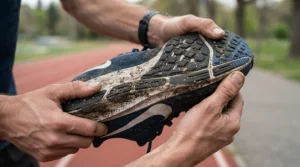
Flip over any pair of running shoes you’ve logged real miles in, and the outsole will tell you more about your gait than any online quiz. According to excessive lateral forefoot wear is a fairly common thing to see, and it usually means someone is supinating or inverting excessively during toe-off. If you check your current shoes and notice the rubber worn down heavily along the outer edge — both at the heel and again near the smaller toes — that outer sole wear pattern is a strong, low-tech confirmation that supination is affecting how you run, even before any formal gait analysis.
This matters practically for two reasons. First, an outer sole wear pattern that’s dramatically uneven (heavy wear on one side, minimal on the other) often means it’s time to replace the shoe even if the midsole doesn’t feel “dead” yet, since worn tread changes how your foot contacts the ground. Second, tracking this pattern across shoe generations can help you confirm whether a new pair is actually helping — if your Brooks Ghost 18 shows a more even wear pattern after a few hundred miles than your old shoes did, that’s a good sign the neutral platform and wider base are doing their job. Keep an old, worn-out pair around specifically as a visual reference; it’s the cheapest gait-analysis tool you’ll ever own.
Neutral Gait Runners vs Supinators: What’s the Difference
It helps to understand where you sit on the spectrum, because “neutral gait runners” and supinators aren’t as different as the terminology suggests. A neutral gait runner lands on the outside of the heel, rolls inward just enough to absorb shock efficiently, and pushes off evenly across the front of the foot — pronation, in other words, working exactly as designed. A supinator goes through a similar motion but simply doesn’t roll inward enough, so more of that landing force stays concentrated on the outer edge of the foot throughout the stride.
The reason this distinction matters for shoe shopping is that neutral gait runners and supinators actually want the same category of shoe — a neutral running shoe with no corrective posting — even though their underlying biomechanics aren’t identical. This is partly why neutral trainers dominate the market: they work well for the majority of neutral gait runners and they’re also the correct choice for supinators, leaving only the smaller group of overpronators who need something different. If you’re unsure which camp you fall into, the outer sole wear pattern discussed above is your best free diagnostic, and a specialty running store’s treadmill gait analysis is the next step up if you want more certainty.
Common Mistakes When Buying Running Shoes for Supination
The most frequent mistake is buying a stability shoe out of an instinct that “support” must mean “corrective support,” when neutral is almost always the right call for supinators, as covered above. A close second is chasing the softest, squishiest shoe available under the assumption that more cushioning always equals more protection — as the ASICS Gel-Nimbus 28 demonstrates, a moderately firmer ride can actually feel more stable and controlled for an outward-rolling gait. Sizing is another common trap: sticking with your usual size when a half-size up would give the foot more room to splay naturally, especially in narrower shoes.
Runners also frequently ignore width entirely, assuming standard width fits everyone, when a wide or extra-wide option in a shoe like the Brooks Ghost 18 can eliminate outer-foot pinching that’s easy to mistake for a cushioning problem. Finally, many shoppers replace shoes purely by feel rather than mileage or wear pattern, running well past the point where the midsole has lost its rebound — by the time a shoe “feels dead,” you may have already logged weeks of reduced shock absorption without realizing it.
Long-Term Cost & Maintenance for Supination-Friendly Shoes
| Shoe | Price Range | Typical Lifespan | Cost Per 100 Miles |
|---|---|---|---|
| Brooks Revel 9 | $95-$110 | 300-400 miles | ~$27 |
| ASICS Novablast 5 | $135-$150 | 350-450 miles | ~$34 |
| Brooks Ghost 18 | $145-$155 | 400-500 miles | ~$32 |
| HOKA Bondi 9 | $160-$180 | 350-450 miles | ~$40 |
| Brooks Glycerin 23 | $170-$180 | 400-500 miles | ~$38 |
The numbers above tell a more nuanced value story than sticker price alone. The Brooks Revel 9 looks cheapest upfront, but its shorter expected lifespan means the cost-per-mile gap between it and a pricier shoe like the Brooks Ghost 18 narrows considerably over a full year of training. Most running shoes hold up for roughly 300-500 miles before the midsole loses meaningful bounce and support, and heavier runners or those putting in high weekly mileage will land toward the lower end of that range regardless of which shoe they choose. Budgeting for two pairs a year if you’re running 20+ miles a week is a realistic baseline, and rotating between a firmer and a softer pair — say, the ASICS Gel-Nimbus 28 alongside the HOKA Bondi 9 — can actually extend the useful life of both by giving each pair recovery time between runs.
Frequently Asked Questions
❓ What running shoes are best for supination?
❓ Can supination be fixed with the right shoes?
❓ Do supinators need stability shoes?
❓ How do I know if I supinate when running?
❓ How often should supinators replace running shoes?
Conclusion
Supination doesn’t have a single “correct” shoe, but it does have a clear set of rules: stay neutral, prioritize even and generous cushioning over extreme softness, and pay attention to width and drop based on how you actually run. Whether you land on the budget-friendly Brooks Revel 9, the bouncy ASICS Novablast 5, or the widely praised Brooks Glycerin 23, every shoe on this list shares the same underlying philosophy — support the foot’s natural motion instead of fighting it.
If you’re still unsure which pick fits your stride, start with your outer sole wear pattern on your current shoes, or visit a specialty running store for a quick gait check. From there, matching your typical run type — recovery miles, daily training, or faster-paced work — to the right shoe on this list should take the guesswork out of your next purchase.
Recommended for You
- Running Shoes For Overpronation: 7 Picks That Actually Work (2026)
- Running Shoes For Wide Feet Women: 7 Comfortable Picks (2026)
- Running Shoes For Wide Feet Men: 7 Best 2E-4E Picks (2026)
Disclaimer: This article contains affiliate links. As an Amazon Associate, I earn from qualifying purchases. If you purchase products through these links, we may earn a small commission at no additional cost to you.
✨ Found this helpful? Share it with your friends! 💬🤗
