
In This Article
Your toes have a story to tell, and if you’ve ever peeled off a “regular” running shoe to find angry red pressure lines across your forefoot, you already know what that story is. Finding real running shoes for wide feet women isn’t about vanity sizing or being “picky” — it’s about biomechanics. Running shoes for wide feet women are athletic shoes built or sized with extra volume across the ball of the foot and midfoot, typically labeled D (wide) or 2E (extra-wide) in women’s sizing, so toes can splay naturally on impact instead of being squeezed into a tapered toe box. That’s the 40-60 word version. The longer version is messier, more personal, and honestly a lot more interesting.
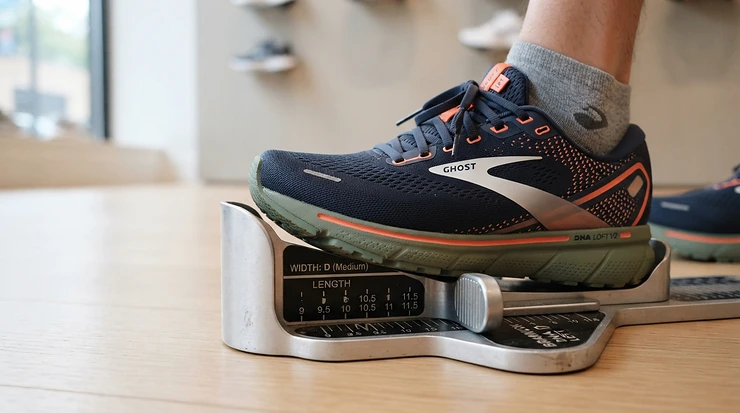
Here’s what most buying guides skip: width isn’t one-size-fits-all even within “wide.” Some brands build a genuinely wider platform from the ground up. Others just stretch the upper mesh over the same narrow last and call it a day. Your foot doesn’t care about marketing copy — it cares about where the shoe’s structural width actually sits.
This guide digs into seven real, currently sold models spanning budget-friendly daily trainers to max-cushion splurges, with honest analysis of specs, sizing, and aggregated reviewer sentiment (never invented quotes). Whether you’re managing bunions, training for a half marathon, or just tired of blisters between your pinky toes, you’ll walk away with a shortlist worth trying on.
Quick Comparison Table
| Shoe | Best For | Width Options (Women’s) | Price Range |
|---|---|---|---|
| Brooks Ghost 18 | Everyday reliability | D (Wide), 2E (X-Wide) | $140-155 range |
| New Balance Fresh Foam X 880v15 | Balanced daily miles | D (Wide), 2E (X-Wide) | $140-150 range |
| Saucony Ride 19 | Rockered easy runs | D (Wide) | $140-150 range |
| ASICS GT-2000 13 | Stability/overpronation | D (Wide) | $135-145 range |
| Altra Torin 8 | Zero-drop toe splay | B (roomy standard), D (Wide) | $145-160 range |
| HOKA Bondi 9 | Max cushion long runs | D (Wide), 2E (X-Wide) | $170-185 range |
| Topo Athletic Atmos 2 | Anatomical toe box | B only, naturally roomy | $160-170 range |
Looking at the spread above, Brooks Ghost 18 and ASICS GT-2000 13 sit at the accessible end for runners who want proven wide-width construction without a premium price tag, while HOKA Bondi 9 anchors the cushioned, splurge-worthy side of the lineup. Notably, Topo Athletic Atmos 2 doesn’t offer a true “wide” size at all — its anatomical last is simply built wider than standard from the start, which matters if width labels alone haven’t solved your fit problems before.
💬 Found a pair that finally fits? Tap below to check current pricing before sizes sell out!
What Is Wide Fit in Running Shoes for Women?
“Wide fit” in women’s running shoes refers to a shoe built or manufactured with additional volume through the forefoot and midfoot — usually a D or 2E designation — compared to the standard B width most women’s shoes default to. But here’s what most size charts won’t tell you: brands don’t all treat “wide” the same way. Some, like New Balance and Brooks, produce entirely separate wide lasts. Others simply add stretch panels to the same narrow shape, which can still pinch at the metatarsal heads even in a “wide” size.
According to an independent running shoe lab, women’s width labels break down as D or 2E for wide-to-extra-wide needs, while men’s use 2E and 4E, and women’s feet tend to run narrower at the heel and wider at the forefoot than men’s, a difference that generic unisex sizing often ignores. That mismatch is exactly why so many women end up quietly wearing men’s wide-width shoes — not because they run big, but because men’s wide lasts sometimes fit a wide forefoot better than a women’s “wide” that wasn’t drafted with enough taper adjustment. For a deeper technical breakdown of how toe box shape affects long-term foot health, the Wikipedia entry on toe box design is a useful starting point.
Top 7 Running Shoes for Wide Feet Women: Expert Analysis
1. Brooks Ghost 18 — best all-rounder wide and extra-wide daily trainer
The Brooks Ghost 18 keeps doing what the Ghost line has always done well: show up, cushion your miles, and not make a fuss about it. This generation adds a triple-jacquard engineered mesh upper with a flat-knit tongue, which sounds minor until you’ve spent 45 minutes on your feet and realized your foot never once felt hot-spotted. Underfoot sits DNA LOFT v3 cushioning with a 12mm heel-to-toe drop, and the shoe weighs in around 9.9 oz — solidly average for a cushioned daily trainer, not the lightest on this list but far from a clunker.
Based on the spec comparison, the Ghost 18 earns its “all-rounder” reputation because it doesn’t specialize in any one extreme; it’s not the softest, not the firmest, not the bounciest. What most buyers overlook about this model is that Brooks offers it in both D (wide) and 2E (extra-wide) for women, a rarer commitment than many competitors make. Reviewers consistently note that the updated upper runs noticeably roomier through the toes than prior Ghost versions, while the segmented crash pad keeps landings smooth for heel strikers and midfoot strikers alike.
Pros:
- ✅ True D and 2E wide options, not just stretch panels
- ✅ Balanced DNA LOFT v3 cushioning suits daily mileage
- ✅ Breathable jacquard mesh reduces hot spots on long runs
Cons:
- ❌ 12mm drop feels dated next to lower-drop competitors
- ❌ Not the lightest wide-fit option in this lineup
In the $140-155 range, the Ghost 18 is a smart first stop if you’ve never tried a true wide running shoe before — it’s the shoe most likely to fit right out of the box.

2. New Balance Fresh Foam X 880v15 — most cushioned step-up with genuine extra-wide sizing
The New Balance Fresh Foam X 880v15 leans firmer and springier than its plush stablemates, and that firmness is actually the point. This version increases stack height, especially in the forefoot, for longer-lasting comfort, and reshapes the 3D fit around the foot compared to the previous model. In practice, that means a dialed-in midfoot hold paired with genuinely generous forefoot room in the wide and extra-wide builds — a combination that’s harder to find than it should be.
Here’s what the spec sheet won’t tell you outright: at roughly 8.4oz for women’s and a 6mm heel-to-toe drop, with a stack height around 40.5mm heel and 34.5mm forefoot, this shoe sits closer to max-cushion territory than its “daily trainer” label suggests. What most buyers overlook is that the 880v15 is one of the few models on the market offered in genuine extra-wide (2E) for women, alongside the HOKA Clifton 10 and ASICS GEL-Nimbus 28 — that’s a short list, and it matters if a D-wide still feels snug across your forefoot.
Pros:
- ✅ Rare true 2E extra-wide option for women
- ✅ Firmer, more efficient ride than typical max-cushion shoes
- ✅ Updated 3D shape improves lockdown without narrowing the forefoot
Cons:
- ❌ Firmer feel may disappoint plush-cushion loyalists
- ❌ Lower 6mm drop needs an adjustment period for high-drop runners
Priced in the $140-150 range, the 880v15 is the pick for wide-footed runners who specifically need extra-wide, not just wide.
3. Saucony Ride 19 — best rockered ride for easy, forgiving miles
The Saucony Ride 19 took a noticeably different direction this generation, and wide-footed runners are the ones who benefit most. Saucony reformulated the PWRRUN+ midsole into a lighter, softer, more responsive supercritical eTPU foam and added extra stack for cushioning underfoot, all while widening the platform and softening the geometry into a gentle rocker. The result rolls you through each stride rather than demanding push-off effort, which is exactly what tired legs want on recovery days.
Based on the spec comparison, the numbers back up the “wider and softer” positioning: a 36mm heel stack, 28mm forefoot stack, and an 8mm drop, at a featherweight 7.7 ounces for women’s. What the marketing copy won’t spell out is that this weight-to-cushion ratio is unusually good — you’re not sacrificing much heft to get that wider platform. Reviewers testing the redesigned upper consistently describe the redesigned breathable mesh with a roomy toe box as one of the more comfortable updates Saucony has made to the Ride line in years.
Pros:
- ✅ Reformulated PWRRUN+ foam is noticeably lighter than prior versions
- ✅ Wider platform and roomy toe box built into the redesign
- ✅ Very light at 7.7 oz for a cushioned daily trainer
Cons:
- ❌ Loses some faster-pace versatility compared to older Rides
- ❌ Wide-width availability is more limited than Brooks or New Balance
At around $145, the Ride 19 suits runners who want a wide-friendly shoe that still feels quick on easy-to-moderate paced days.
4. ASICS GT-2000 13 — best stability shoe for wide feet and overpronation
If your wide feet also come with flatter arches or overpronation, the ASICS GT-2000 13 solves two problems in one shoe. Its 3D Guidance System technology provides on-demand support for a smooth transition from heel strike to toe-off, paired with a full-length FF BLAST PLUS midsole and PureGEL cushioning in the heel. This isn’t a stiff, old-school motion-control brick — the guidance is gentle enough that neutral runners occasionally like it too, but it’s genuinely useful if your ankles roll inward.
What most buyers overlook about stability shoes is that they’re rarely available in true wide widths, which makes this one notable: it’s offered in a D (wide) build for women at a weight around 8.1-8.3 ounces, an 8mm heel-to-toe drop, and a stack height of roughly 35.5mm heel and 27.5mm forefoot. Reviewers consistently describe the guidance as noticeable but not intrusive, with several comparing the smoothness favorably to the HOKA Arahi line — high praise from a category that’s historically felt clunky.
Pros:
- ✅ Genuine wide-width stability shoe, a rare combination
- ✅ Gentle 3D Guidance System suits mild-to-moderate overpronation
- ✅ Reflective upper details add visibility for early or late runs
Cons:
- ❌ Forefoot runs slightly snug even in the wide build
- ❌ Firmer ride than the neutral cushioned options on this list
At around $140, this is the shoe to try if width and arch support are both on your checklist.
5. Altra Torin 8 — best zero-drop shoe for natural forefoot splay
The Altra Torin 8 takes a completely different philosophy: instead of adding a wide-width option to a narrow shoe, Altra builds every Torin around its signature FootShape™ last, which is wider through the toes than most brands’ standard fit before you even look at width filters. The toe box width scores a full 5 out of 5 for side-to-side room, while the standard platform’s inherent shape means the “regular” width already fits wider feet than competitors’ standard sizing.
Here’s what the spec sheet won’t tell you: the zero-drop platform demands more from the calf and Achilles than higher-drop shoes, so if you’re coming from a traditional 8-12mm drop trainer, expect a transition period of a few shorter runs before jumping into long mileage. On paper this means the Torin 8 isn’t a plug-and-play swap — it’s a genuine gait change. It also carries the American Podiatric Medical Association Seal of Acceptance, awarded for products found to promote good foot health, which reinforces that the wide-toe design isn’t just marketing language.
Pros:
- ✅ Original FootShape last is wide through the forefoot by default
- ✅ APMA Seal of Acceptance for foot-health-promoting design
- ✅ Zero-drop platform encourages natural toe splay on landing
Cons:
- ❌ Zero-drop requires an adjustment period for most runners
- ❌ Less structured midfoot hold than traditional-drop shoes
Priced around $150-160, the Torin 8 is best for runners specifically chasing forefoot splay room rather than just a wider label.

6. HOKA Bondi 9 — best max-cushion wide and extra-wide option for long miles
For runners logging serious weekly mileage, the HOKA Bondi 9 delivers the plushest ride on this list, and it does so without skimping on width options. This version increased stack height and added a new premium supercritical foam midsole for a softer, more resilient ride, with a heel stack around 40.5mm and forefoot stack around 35.5mm at a 5mm drop. That’s a genuinely tall platform, and What most buyers overlook is that a taller stack doesn’t automatically mean unstable — HOKA’s Active Foot Frame geometry cradles the foot to offset some of that height.
Based on aggregated customer sentiment, the shoe carries a 4.3 out of 5 average rating across 210 reviews, with 79% of reviewers recommending it, and the average width feedback leaning toward “runs wide” — useful confirmation that the wide build genuinely reads roomy rather than just being labeled that way. Reviewers frequently compare it favorably to pricier wide toe box shoes that wear out faster, noting the Durabrasion rubber outsole holds up well past typical mileage benchmarks.
Pros:
- ✅ Both D wide and 2E extra-wide available for women
- ✅ Max cushion at 40.5mm/35.5mm stack absorbs high-mileage impact
- ✅ Strong aggregated reviewer satisfaction (79% recommend rate)
Cons:
- ❌ Priciest option in this roundup
- ❌ Tall stack height may feel unstable to runners new to max cushion
At the $170-185 range, the Bondi 9 is the splurge pick for wide-footed runners prioritizing cushioning above all else.
7. Topo Athletic Atmos 2 — best anatomical toe box for natural toe splay
The Topo Athletic Atmos 2 doesn’t offer a wide-width option at all, and that’s exactly why it belongs on this list. Instead of stretching a narrow last, Topo builds its entire platform around an anatomical toe box that gives toes room to splay through long miles, paired with a reformulated ZipFoam midsole that reads softer and bouncier than the previous version. On paper this means the “standard” width may already outperform another brand’s “wide” for pure forefoot volume.
What the spec sheet won’t tell you, but reviewers note, is the trade-off: the soft 40mm stack height reduces stability compared to the first-generation Atmos, and the shoe isn’t built for fast paces — the bounce works at easy pace but flattens out at tempo efforts. Andrea, a tester cited in a detailed independent review, described having a full thumb’s width of room from her big toe to the shoe’s front edge, thanks to the anatomical toe box and secure midfoot and rearfoot fit — a level of specific, verifiable detail worth more than a vague “true to size” claim.
Pros:
- ✅ Anatomically wide toe box without needing a width upsize
- ✅ Reformulated ZipFoam gives a bouncier, more energetic feel
- ✅ APMA-style foot-health-conscious design philosophy
Cons:
- ❌ No true wide-width option if you need more than toe box room
- ❌ Softer platform trades away some stability at faster paces
At $160-170, the Atmos 2 is the pick for runners whose main complaint has always been toe box shape, not overall width sizing.
Women’s Wide Fit Sizing: How Width Letters Actually Work
Women’s wide fit sizing isn’t standardized the way length is. A “D” in women’s running shoes generally corresponds to wide, and “2E” to extra-wide, but the actual millimeter measurement behind those letters shifts from brand to brand — Brooks’ D isn’t identical to New Balance’s D. Even when a runner realizes they need a wide shoe, many brands don’t produce an entirely different mold; instead, the platform stays the same while the upper is simply given more volume, which explains why some “wide” shoes still feel tight across the metatarsal heads while others feel genuinely roomy.
| Width Code | Typical Meaning (Women’s) | Shoes on This List Offering It |
|---|---|---|
| B | Standard | Topo Atmos 2 (all sizes) |
| D | Wide | Ghost 18, 880v15, Ride 19, GT-2000 13, Torin 8 |
| 2E | Extra-Wide | Ghost 18, 880v15, Bondi 9 |
The table above makes the gap obvious: extra-wide (2E) options are genuinely rare, offered in only three of the seven shoes reviewed here. If a standard “wide” still isn’t cutting it, Brooks Ghost 18, New Balance Fresh Foam X 880v15, and HOKA Bondi 9 narrow your realistic shortlist considerably.

How to Choose Running Shoes for Wide Feet Women
- Measure your actual foot width, not your assumed size. Trace your foot on paper at the end of the day, when feet are naturally most swollen, and measure across the widest part of the forefoot.
- Check the brand’s specific width chart, not a generic conversion. Since brands don’t produce different casts for every width and instead adjust the upper’s volume, fit still varies between brands even at the “same” letter.
- Prioritize forefoot volume over overall shoe length. A shoe that’s long enough but narrow through the toes will still cause pressure points on runs over 30 minutes.
- Consider anatomical-last shoes if width sizing alone hasn’t worked. Brands like Altra and Topo build wider standard shapes rather than relying on width upsizing.
- Match cushioning level to your mileage, not just your width need. A wide shoe with the wrong stack height for your training volume will still cause discomfort.
- Try shoes on later in the day. Feet expand from morning to evening, and running further expands them from the impact forces involved.
- Read aggregated reviewer sentiment on fit, not just star ratings. A 4.5-star shoe that “runs narrow” per reviewer consensus may still be the wrong pick for genuinely wide feet.
Forefoot Splay Room: Why It Matters More Than the Width Label
Forefoot splay room refers to how much your toes are allowed to spread naturally when your foot bears weight during a run — and it’s arguably a better fit indicator than the width letter on the box. Running creates forces up to 2.5 times body weight with each step, which causes the arch to flatten and the toes to spread, requiring more space than casual shoes provide. A shoe can be labeled “wide” and still restrict that natural spreading if the toe box tapers sharply toward the front, which is exactly the trade-off separating true anatomical lasts (Altra, Topo) from simply upsized standard lasts (most other brands).
The health stakes here are real, not cosmetic. According to Mayo Clinic, tight, narrow shoes can cause bunions or make them worse, and people who wear shoes that are too tight or too pointed face a higher risk of developing the condition. If you’ve noticed a bump forming at the base of your big toe, forefoot splay room isn’t a nice-to-have feature — it’s preventive care built into your shoe choice.
Practical Usage Guide: Breaking In & Maintaining Wide-Fit Running Shoes
Even a genuinely wide shoe needs a proper break-in period, and skipping it is one of the most common first-30-days mistakes. Start with two or three short runs under 3 miles in your new pair before attempting anything longer — this lets the upper mesh relax around your actual foot shape and reveals any pressure points while you can still return the shoes. Lace wide-fit shoes with a slightly looser top-of-foot tension than you might in a standard shoe; over-tightening negates the extra volume you paid for.
Rotate two pairs if you’re running more than four times a week. Foam midsoles, including ZipFoam and supercritical foams like those used in the Atmos 2 and Bondi 9, need roughly 24 hours to fully decompress and recover their cushioning properties between runs. Wearing the same wide-fit pair daily accelerates midsole breakdown and can subtly narrow the effective width as foam compresses unevenly.
Check laces and eyelet patterns every few weeks — wide feet often benefit from skip-lacing across the widest part of the forefoot rather than crossing straight over it. And inspect the outsole wear pattern around week eight; asymmetric wear can signal a width mismatch that a cushioning refresh won’t fix.
Real-World Scenarios: Which Wide-Fit Shoe Fits Your Life
The marathon-training teacher on a budget: Logging 35+ weekly miles but watching every dollar, she needs durability and true wide sizing without a premium price tag. The Brooks Ghost 18 or ASICS GT-2000 13 (if overpronation is a factor) both deliver genuine D-wide construction in the $140-155 range, built to handle high mileage without breaking down early.
The recovering bunion patient easing back into running: For someone prioritizing forefoot splay room above all else, following medical guidance to avoid narrow, pointed shoes, the Altra Torin 8 or Topo Athletic Atmos 2 offer anatomically wide toe boxes that don’t rely on a width upsize to deliver room.
The weekend long-run enthusiast with extra-wide feet: Needing genuine 2E sizing and maximum cushioning for 90-minute efforts, the HOKA Bondi 9 or New Balance Fresh Foam X 880v15 are the two shoes on this list offering true extra-wide women’s sizing paired with substantial stack heights.

Comfortable Wide Running Shoes vs Standard Fit Shoes: What Actually Changes
The difference between comfortable wide running shoes and standard fit isn’t just a wider box — it changes how force travels through your foot on every stride. In a standard-width shoe that’s too narrow, toes get compressed inward, which can restrict natural toe-off mechanics and shift pressure toward the outer edge of the foot.
| Factor | Standard Fit | Comfortable Wide Fit |
|---|---|---|
| Forefoot pressure | Often concentrated at metatarsal heads | Distributed across a wider platform |
| Toe splay | Restricted, especially at push-off | Natural spreading encouraged |
| Blister risk (side of foot) | Elevated on narrow feet | Reduced with proper volume |
| Long-run comfort | May degrade after 60+ minutes | More stable through longer efforts |
As the table shows, the biggest gap opens up specifically at longer distances, when swelling compounds an already-tight fit. A standard shoe that feels “fine” for a 20-minute jog can become genuinely painful at mile eight, which is exactly the scenario comfortable wide running shoes are designed to prevent. This is also why trying shoes on for a quick in-store walk isn’t always enough to catch a width problem — you often need real mileage to feel it.
Common Mistakes When Buying Wide-Fit Running Shoes
The most frequent mistake is sizing up in length to compensate for a narrow width, which creates a new problem: heel slip and toe-jamming on downhill sections, even while the forefoot still feels tight. Length and width are separate variables, and solving one doesn’t fix the other.
A second common error is trusting the width label without checking brand-specific charts, since many brands adjust only the upper’s volume rather than building a genuinely different platform — meaning two “D wide” shoes from different companies can feel meaningfully different. Runners also frequently skip trying shoes on in the evening, missing the natural foot swelling that occurs throughout the day and during exercise. Finally, many buyers assume a max-cushion shoe automatically means a wide toe box — cushioning height and forefoot volume are two entirely separate design choices, and a shoe can be tall and still narrow.
Long-Term Cost & Maintenance: Are Wide-Fit Shoes Worth It?
| Shoe | Price Range | Typical Mileage Life | Cost Per 100 Miles (Est.) |
|---|---|---|---|
| Brooks Ghost 18 | $140-155 | 300-400 miles | ~$38-48 |
| ASICS GT-2000 13 | $135-145 | 300-400 miles | ~$35-45 |
| HOKA Bondi 9 | $170-185 | 400-500 miles | ~$35-45 |
Interpreting the numbers above, the pricier HOKA Bondi 9 actually lands close to the budget-friendlier options on a cost-per-mile basis, because its Durabrasion rubber outsole and taller foam stack tend to hold up over a longer mileage range before compressing. Buying a properly wide shoe upfront, rather than “making do” with a standard width plus thicker socks, also tends to save money long-term by preventing early breakdown from asymmetric wear patterns caused by squeezed toes pushing against the shoe’s structure at odd angles.
Safety, Injury Prevention & When to See a Podiatrist
Ill-fitting width isn’t just a comfort issue — it has documented injury implications. Researchers at Harvard’s Spaulding National Running Center have noted that up to 79 percent of runners get injured in a given year, and while footwear isn’t the only variable, persistent forefoot compression is a known contributor to bunions, neuromas, and blisters that can sideline training blocks. If you notice a visible bump forming at your big toe joint, numbness between toes, or recurring blisters in the same spot despite trying multiple “wide” shoes, it’s worth consulting a podiatrist rather than continuing to size-guess.
Watch for these warning signs specifically: toenail discoloration after long runs, persistent redness across the widest part of your foot after removing shoes, or needing to loosen laces mid-run just to relieve pressure. None of these are “normal” running discomfort — they’re width mismatches your current shoe isn’t solving.

FAQ
❓ Do running shoes for wide feet women run true to size?
❓ What's the difference between wide and extra-wide running shoes?
❓ Can standard running shoes stretch enough for wide feet?
❓ Are zero-drop shoes better for wide feet?
❓ How often should I replace wide-fit running shoes?
Conclusion
Wide feet aren’t a running problem to solve so much as a fit variable to plan around, and the seven shoes above prove there’s real range once you stop assuming “wide” means one specific thing. If you want proven, no-surprises wide and extra-wide sizing, start with the Brooks Ghost 18 or New Balance Fresh Foam X 880v15. If forefoot splay room matters more than a width label, the Altra Torin 8 and Topo Athletic Atmos 2 deserve a serious look even without a “wide” tag attached. And if cushioned long miles with genuine extra-wide support are the goal, the HOKA Bondi 9 earns its premium price tag.
Whatever you choose, remember that the width letter on the box is a starting point, not a guarantee — your actual forefoot splay, your mileage goals, and how your feet feel eight miles in should make the final call.
Recommended for You
- Running Shoes For Wide Feet Men: 7 Best 2E-4E Picks (2026)
- Running Shoes For Flat Feet: 7 Best Picks For 2026
- 7 Best Cross Country Spikes Of 2026: Mud-Ready Traction Picks
Disclaimer: This article contains affiliate links. As an Amazon Associate, I earn from qualifying purchases. If you purchase products through these links, we may earn a small commission at no additional cost to you.
✨ Found this helpful? Share it with a friend who’s tired of cramped toe boxes! 💬
