In This Article
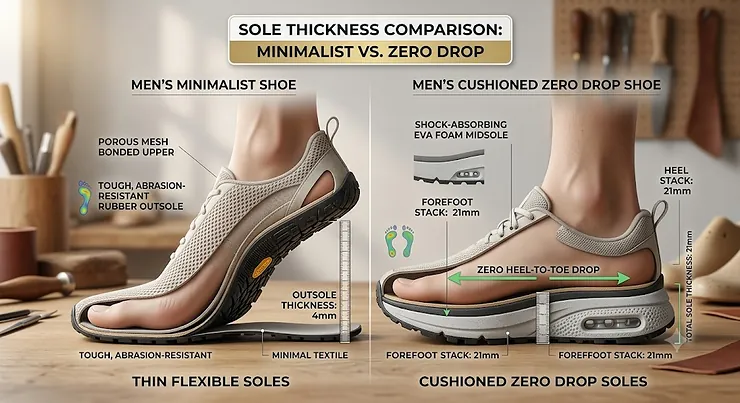
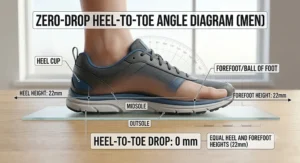
Somewhere between “my knees ache after every run” and “I read one Reddit thread about barefoot running,” most guys land on the same confusing crossroads: minimalist vs zero drop shoes men’s forums argue about endlessly, without ever agreeing on what the terms actually mean. Here’s the short version. A zero drop shoe simply has no height difference between the heel and the forefoot — the platform is flat, whether it’s got two inches of foam or two millimeters. A minimalist shoe goes further, stripping away cushioning, structure, and weight so your foot does more of the work it evolved to do. Every minimalist shoe is zero drop, but not every zero drop shoe is minimalist — Altra’s plush daily trainers prove that split every day.
This distinction matters because picking wrong can mean six weeks of calf soreness or, worse, a stress reaction in a metatarsal. Based on real specs, aggregated review sentiment, and the actual biomechanics research behind the trend, this guide breaks down seven real shoes — from six-millimeter barefoot slippers to a 4mm-drop daily trainer that eases you in — so you can match the platform to your feet, not just your Instagram feed.
Quick Comparison Table
| Shoe | Drop | Stack Height | Weight (M9) | Price Range | Best For |
|---|---|---|---|---|---|
| Xero HFS II | 0mm | 9mm | ~8.3 oz | $115-$125 | Road-running beginners |
| Merrell Vapor Glove 6 | 0mm | 6mm | ~5.2-6.2 oz | $80-$95 | True barefoot feel on a budget |
| Topo Athletic ST-5 | 0mm | 14mm | ~6.6 oz | $110-$120 | Gym + short runs hybrid |
| Vivobarefoot Primus Lite IV | 0mm | ~2-3mm sole | ~7-8 oz | $115-$150 | Urban everyday barefoot |
| Altra Escalante 4 | 0mm | 24mm | ~9.5 oz | $125-$140 | Cushioned zero-drop daily miles |
| New Balance Minimus TR | 0mm | ~14mm | ~9-10 oz | $70-$95 | Gym / CrossFit stability |
| Saucony Kinvara 14 | 4mm | 31/27mm | ~7 oz | $115-$125 | Low-drop transition trainer |
Looking at the spread above, the split isn’t really minimalist vs zero drop shoes men debate over which “side” wins — it’s about how much structure you still want under your foot. The Merrell Vapor Glove 6 and Vivobarefoot Primus Lite IV sit at the barefoot extreme, while the Altra Escalante 4 proves a zero-drop platform can still carry real cushioning. The Saucony Kinvara 14 is the outlier here, and deliberately so — its 4mm drop makes it the bridge shoe for guys who want low-drop mechanics without committing to a dead-flat ride.
💬 Just one click — help others make better buying decisions too!😊
Top 7 Minimalist and Zero Drop Shoes for Men: Expert Analysis
1. Xero HFS II — most approachable zero drop for road beginners
The HFS II earns its “Highly Flexible Shoe” name honestly, bending almost in half without resistance. Its 9mm stack height and zero-drop platform give you real ground feel while still separating your sole from broken glass and hot asphalt — a meaningful step up from true barefoot models for someone easing in. Based on the spec comparison, the layered EVA plus BareFoam construction is what pushes weight to roughly 8.3 ounces, heavier than some purists want, but that extra material buys a 5,000-mile outsole warranty most minimalist shoes simply don’t offer.
Reviewers consistently report the HFS II fits true to size and handles everything from grocery runs to gym sessions to actual road miles without complaint. A common thread in aggregated feedback is that the weight feels like a fair trade for durability, though a few testers wish Xero would shave grams in future versions. What most buyers overlook about this model is that the lugged, tire-inspired outsole isn’t just for looks — it adds legitimate traction on wet pavement and light trail, something flatter minimalist soles struggle with.
Pros:
- ✅ True zero-drop platform ideal for first-time transitioners
- ✅ 5,000-mile sole warranty backs up long-term durability
- ✅ Versatile enough for road runs, gym, and daily wear
Cons:
- ❌ Heavier than several competitors in this category
- ❌ Minimal arch support means slow adaptation is essential
Check current price on Amazon — in the $115-$125 range, the HFS II delivers strong value for a shoe built to last several thousand miles.
2. Merrell Vapor Glove 6 — lightest true barefoot feel for the money
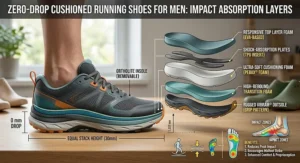
At just 6mm of total stack height and a weight hovering around 5-6 ounces, the Vapor Glove 6 is about as close to bare skin on pavement as a shoe can get while still legally counting as footwear. The Vibram Ecostep outsole, built with 30% recycled rubber, is the only thing standing between your forefoot and a stray pebble — and on smooth trails or gym floors, that’s plenty.
Here’s what to weigh: this is a shoe for runners who’ve already built tolerance, not a starter pair. Reviewers consistently note the semi-gusseted tongue keeps debris out well for such a minimal design, but aggregated sentiment also flags durability concerns with the thin outsole on abrasive surfaces. Based on the spec comparison, the near-total absence of a midsole means every bit of shock absorption comes from your own foot and calf muscles, so this shoe rewards runners who’ve already done the conditioning work.
Pros:
- ✅ Among the lightest barefoot shoes currently available
- ✅ Vibram outsole grips well on dry roads and gym floors
- ✅ Budget-friendly entry into true barefoot running
Cons:
- ❌ Sole durability lags behind thicker minimalist models
- ❌ Almost no protection against sharp debris underfoot
At a price range typically between $80 and $95, the Vapor Glove 6 is the most affordable way to test true barefoot running before committing to pricier gear.
3. Topo Athletic ST-5 — best hybrid for gym days and short runs
The ST-5 splits the difference nicely: a 14mm ZipFoam stack gives it noticeably more cushioning than the Merrell or Xero above, while the zero-drop geometry keeps the natural foot position intact. Reviewers consistently note the wide, foot-shaped toe box as a standout, letting toes splay the way they’re built to during push-off.
What most buyers overlook about this model is that its flexibility numbers are exceptional even within the minimalist category — independent lab testing found it needs shockingly little force to bend, which translates to a genuinely natural stride on shorter efforts. On paper this means the ST-5 is engineered for versatility, and aggregated review sentiment backs that up: testers like it for lifting, agility drills, and easy runs, but several note the low cushioning becomes fatiguing on runs beyond about an hour.
Pros:
- ✅ Roomy foot-shaped toe box supports natural toe splay
- ✅ Genuinely flexible — feels like an extension of the foot
- ✅ Doubles well as a gym shoe and a short-run trainer
Cons:
- ❌ Cushioning gets tiring on runs past roughly 60 minutes
- ❌ Narrower fit through the midfoot than some Altra-style shoes
Priced in the $110-$120 range, the ST-5 rewards runners who split their week between the gym and short road efforts rather than committing to one activity.
4. Vivobarefoot Primus Lite IV — best premium barefoot shoe for city life
Vivobarefoot built its reputation on making the thinnest sole that still survives daily wear, and the Primus Lite IV continues that mission with an ultra-thin, puncture-resistant sole that reviewers describe as one of the most sensitive on the market. The wide, stable platform is what most buyers overlook here — it isn’t just about ground feel, it’s genuinely useful for weightlifting, where a stable base under a loaded barbell matters more than most people expect.
Reviewers consistently note the breathable mesh upper keeps feet cool in warm weather and works well for indoor training, though aggregated feedback also flags the mesh as vulnerable on rougher, thorn-heavy trails. Based on the spec comparison, this is a shoe built for pavement, gym floors, and light hiking — not technical trail work. What the spec sheet won’t tell you, but user reports suggest, is that the shoe’s stability shines specifically during static lifts like deadlifts, where testers have used it for serious personal-record attempts without complaint.
Pros:
- ✅ Ultra-thin, highly sensitive sole for maximum ground feel
- ✅ Stable, wide platform excels for weightlifting
- ✅ Breathable mesh upper suited to warm-weather city wear
Cons:
- ❌ Mesh upper wears faster on abrasive outdoor trails
- ❌ Premium pricing compared to other barefoot options here
Expect a price range in the $115-$150 area depending on colorway and materials — a premium ask, but one aimed squarely at buyers who want their barefoot shoe to also look sharp outside the gym.
5. Altra Escalante 4 — best cushioned zero-drop daily trainer
The Escalante 4 is proof that zero drop and minimalist are not synonyms. Its 24mm stack height of Altra’s EGO foam delivers real daily-trainer cushioning while keeping the heel and forefoot at the same level — so you get the natural foot position without sacrificing every bit of shock absorption. Based on the spec comparison, this is the shoe on our list built for guys logging serious weekly mileage who still want the biomechanical benefits of a flat platform.
Reviewers consistently praise the roomy FootShape toe box, and the model carries the APMA Seal of Acceptance, a signal that a committee of podiatrists reviewed it for foot-health benefits. What most buyers overlook about this model is the fit change in version 4 — the toe box runs slightly narrower than earlier Escalante generations, so aggregated feedback suggests trying a half-size up if you’ve loved past versions. Here’s what to weigh: the forefoot flex is excellent, but a handful of testers report firmer, less forgiving impact absorption than the stack height alone would suggest.
Pros:
- ✅ 24mm stack delivers real cushioning at true zero drop
- ✅ Roomy FootShape toe box backed by APMA acceptance
- ✅ Flexible midsole supports a natural, connected stride
Cons:
- ❌ Version 4’s toe box runs narrower than prior generations
- ❌ Some testers report a firmer ride than expected for the stack height
In the $125-$140 range, the Escalante 4 is the pick for runners who want zero-drop mechanics without giving up daily-trainer comfort.
6. New Balance Minimus TR — best zero-drop cross-trainer for the gym
Built specifically for lifting days rather than road miles, the Minimus TR keeps a genuinely flat, zero-drop platform with a noticeably lower stack than most training shoes on the market. Reviewers consistently note this is one of the most stable options for squats and deadlifts precisely because there’s so little foam compressing under load — your foot sits close to the floor, which matters when you’re moving real weight.
What the spec sheet won’t tell you, but user reports suggest, is that the snug, narrow last runs small for wider feet, so aggregated sentiment leans toward sizing up or trying a wide-width version if available. Based on the spec comparison, the shoe’s stiffer sole blunts some natural ground feel compared to the true barefoot options on this list, which is actually a feature here — a bit more structure underfoot is welcome when you’re loading a barbell rather than running.
Pros:
- ✅ Genuinely low-to-ground stability for heavy lifting
- ✅ Wide toe box allows natural splay during squats
- ✅ Secure, snug heel cup prevents slipping mid-lift
Cons:
- ❌ Narrow overall fit frustrates wider-footed lifters
- ❌ Stiffer sole reduces natural ground feel versus barefoot models
Typically found in the $70-$95 range, the Minimus TR remains one of the more affordable ways into zero-drop training footwear.
7. Saucony Kinvara 14 — best low-drop bridge for cautious transitioners
Not every runner needs — or wants — a completely flat platform, and that’s exactly where the Kinvara 14 earns its spot. Its 4mm drop and 31mm/27mm stack height place it firmly in low-drop territory rather than true zero drop, giving you a gentler introduction to reduced heel elevation without the abrupt calf-and-Achilles demands of a dead-flat shoe. Reviewers consistently describe the ride as smooth, light, and notably more cushioned than previous Kinvara generations, thanks to three added millimeters of PWRRUN foam.
Here’s what to weigh: the added cushioning makes this the least “minimalist” shoe on this list by spec, yet its 4mm drop still delivers meaningfully different loading mechanics than an 8-12mm traditional trainer. What most buyers overlook about this model is that it remains one of the lightest shoes in its cushioned-trainer category, at roughly 7 ounces, so you get low-drop benefits without carrying extra weight. Aggregated feedback suggests it suits faster training paces better than long recovery runs, where some testers feel slightly more impact than the stack height implies.
Pros:
- ✅ Gentle 4mm drop bridges traditional and zero-drop shoes
- ✅ Remarkably lightweight for its cushioning level
- ✅ Versatile enough for tempo work and daily training
Cons:
- ❌ Less true “ground feel” than the barefoot shoes on this list
- ❌ Exposed midsole rubber wears faster than fuller outsoles
Priced around $115-$125, the Kinvara 14 is the shoe to reach for if minimalist vs zero drop shoes men debates have you intrigued but not ready to commit to a flat platform outright.
Shoe Drop Categories Explained
What is heel-to-toe drop? Heel-to-toe drop is the height difference, in millimeters, between the heel and forefoot of a shoe. It’s the single number most useful for comparing footwear, since it determines how much your ankle and calf compensate for elevation at every stride.
Shoe drop categories generally break down like this:
- Traditional (8-12mm): Most mainstream trainers sit here, cushioning the heel and encouraging a heel-strike landing pattern.
- Moderate (5-7mm): A middle ground that reduces heel elevation without demanding major gait changes.
- Low drop (1-4mm): Shoes like the Saucony Kinvara 14 live here — enough flatness to shift loading patterns, gentle enough to avoid shocking untrained calves.
- Zero drop (0mm): The Xero HFS II, Topo Athletic ST-5, Altra Escalante 4, New Balance Minimus TR, Merrell Vapor Glove 6, and Vivobarefoot Primus Lite IV all fall here — a perfectly flat platform regardless of stack height.
- Minimalist/barefoot: A subset of zero drop defined by minimal stack height and cushioning, not just flatness — think the Merrell Vapor Glove 6 or Vivobarefoot Primus Lite IV.
Understanding shoe drop categories matters because two zero-drop shoes can feel completely different depending on stack height — the 6mm Merrell Vapor Glove 6 and the 24mm Altra Escalante 4 share a drop number but deliver wildly different rides.
Low Drop Running Shoes Men Difference: Where the Two Camps Split
The core low drop running shoes men difference from zero drop comes down to degree, not category. A low-drop shoe like the Saucony Kinvara 14 still elevates the heel slightly — 4mm in this case — which means your Achilles and calf complex absorb less sudden strain than jumping straight into a flat sole. Based on the spec comparison, that small cushion of elevation is precisely why running coaches often recommend low-drop shoes as a stepping stone rather than skipping straight to zero drop.
What most buyers overlook is that a lower drop doesn’t automatically mean less cushioning — the Kinvara 14’s 31mm heel stack proves a shoe can be low-drop and still plush. Zero-drop shoes, by contrast, force the heel and forefoot to share identical loading regardless of how much foam sits underneath. Reviewers consistently note that runners moving from traditional 10-12mm trainers straight to zero drop face a steeper adaptation curve — sore calves, tight Achilles tendons, and sometimes forefoot fatigue — than those who spend a few months in a low-drop shoe first.
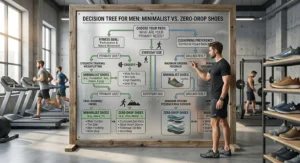
The practical takeaway: if you’ve spent years in standard trainers, a low-drop shoe is the more honest first move, while athletes already comfortable with a forefoot or midfoot strike can often skip straight to zero drop without issue.
The Barefoot Running Science Behind the Trend
Barefoot running science took off largely thanks to evolutionary biology research showing that runners who land on their forefeet experience far less collision force and greater efficiency than heel-striking counterparts, even though modern cushioned shoes are marketed as reducing that same impact. This research, detailed in a Harvard Magazine feature on the evolutionary biology of running, reframed how the industry thinks about cushioning altogether — more foam under the heel doesn’t necessarily mean less shock reaching your joints if you’re still landing on your heel.
On paper this means minimalist and zero-drop shoes work by encouraging a shift toward forefoot or midfoot striking, which changes how force travels through your legs. Reviewers consistently note this is why shoes like the Merrell Vapor Glove 6 feel almost uncomfortable with a heel-first landing but smooth and natural once your stride adapts. What the spec sheet won’t tell you, but the underlying science suggests, is that this adaptation isn’t instant — tendons, the plantar fascia, and small intrinsic foot muscles all need weeks to months of gradual loading before they’re ready for regular minimalist mileage.
Minimalist Shoes Men Forefoot Strikers Should Consider First
If you already land on your midfoot or forefoot rather than heel-striking, minimalist shoes men forefoot strikers gravitate toward tend to reward that habit immediately rather than fighting it. The Merrell Vapor Glove 6 and Vivobarefoot Primus Lite IV both shine here — with almost no heel cushioning to speak of, a forefoot strike distributes load the way these shoes were designed for, while a heel-first landing in the same pair would feel jarring fast.
Based on the spec comparison, forefoot strikers can typically skip the extended low-drop transition phase that heel strikers need, since their gait pattern already matches what a flat, thin platform rewards. What most buyers overlook about this group is that even confirmed forefoot strikers benefit from starting with a shoe like the Xero HFS II or Topo Athletic ST-5 rather than jumping straight to the thinnest options — added mileage volume, not just strike pattern, is what determines injury risk during any footwear change. Reviewers consistently note that forefoot strikers who add distance too quickly in barefoot shoes report calf and Achilles tightness regardless of how “ready” their stride looks.
Men’s Natural Running Shoes Comparison: Benefits vs Traditional Trainers
| Factor | Minimalist/Zero Drop | Traditional Trainers |
|---|---|---|
| Heel-to-toe drop | 0-4mm | 8-12mm |
| Ground feel | High to moderate | Low |
| Foot muscle engagement | Higher, builds strength over time | Lower, more external support |
| Weight | Often lighter (5-9 oz) | Often heavier (9-12 oz) |
| Adaptation period | Weeks to months required | Minimal to none |
| Best For | See table above | Beginners, high-mileage heel strikers |
This men’s natural running shoes comparison shows the trade-off clearly: traditional trainers ask less of your feet in the short term, while minimalist and low-drop shoes ask your feet to do more work now in exchange for potentially stronger, more resilient mechanics later. Based on the spec comparison, the Altra Escalante 4 and Saucony Kinvara 14 both prove you don’t have to choose between structure and natural mechanics — cushioning and a flatter platform aren’t mutually exclusive. Reviewers consistently note that runners who switch cold-turkey from heavily cushioned trainers to minimalist shoes are the ones most likely to report early discomfort, reinforcing why a gradual approach matters more than the shoe itself.
✨ Don’t Miss These Exclusive Deals!
🔍 Take your running rotation to the next level with these carefully selected shoes. Click on any highlighted pair to check current pricing and availability. These picks help you build the natural stride your feet were designed for!
Practical Usage Guide: Your First 30 Days in Minimalist Shoes
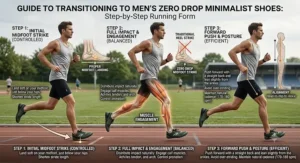
Getting this transition right prevents most of the injuries that give minimalist shoes a bad reputation. Start with walking, not running — wear your new pair around the house and on short errands for the first week before adding any running volume at all. When you do start running, cap sessions at 10-15 minutes on soft surfaces like grass or a track, resisting the urge to match your old mileage in a completely different shoe.
A common mistake in the first 30 days is running through calf or Achilles soreness instead of resting through it — that soreness is a signal, not an obstacle to push past. Rotate your minimalist shoe with your old trainers for at least the first month, using the new pair for two to three short sessions per week while your traditional shoes cover the rest. By week three or four, most runners following this pacing can extend runs modestly, but a genuine full transition typically takes eight to twelve weeks, not thirty days, for anyone coming from years in cushioned trainers.
Cadence Increase: The Fastest Way to Adapt Safely
If there’s one technique that makes minimalist and zero-drop shoes dramatically safer to adapt to, it’s a cadence increase. Typical cadence values in recreational runners range from about 150 to 170 steps per minute, while elite runners often exceed 180, and stride length tends to shorten as cadence rises — which matters enormously in a flat, unpadded shoe, since shorter strides reduce the braking force that would otherwise slam through your heel.
A systematic review published via the National Library of Medicine reinforces that lower cadence correlates with higher peak braking force and greater injury risk, regardless of footwear. Based on the spec comparison of stride mechanics, most runners transitioning into shoes like the Xero HFS II or Saucony Kinvara 14 benefit from nudging cadence up by roughly 5-10% using a metronome app, rather than trying to consciously “land softer,” which is harder to control and easier to abandon under fatigue. What most buyers overlook is that this single adjustment often matters more for injury prevention than the specific shoe model chosen.
Real-World Scenarios: Who Should Buy What
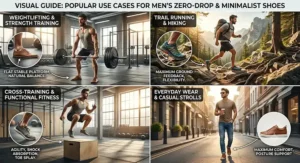
The desk-bound beginner easing into natural running: Someone who sits most of the day and wants to strengthen weak feet without diving into extremes should start with the Xero HFS II or Saucony Kinvara 14, both of which offer forgiving transitions with real protection underfoot.
The CrossFit regular chasing better lift stability: A lifter who spends four gym days a week squatting and deadlifting is better served by the New Balance Minimus TR or Vivobarefoot Primus Lite IV, where a stable, flat platform under load matters more than running mileage.
The experienced minimalist runner logging real weekly miles: Someone already comfortable with zero drop who wants daily-trainer cushioning without giving up flat mechanics should look straight at the Altra Escalante 4, which balances 24mm of foam with a genuinely zero-drop ride.
Common Mistakes When Buying Minimalist or Zero Drop Shoes
The most frequent mistake is buying based on stack height alone without checking drop — a 14mm shoe can be zero drop (like the Topo Athletic ST-5) or traditional (many standard trainers), and those two shoes will feel nothing alike on foot. A second common error is skipping the width and toe box check; minimalist shoes are built around natural toe splay, so a narrow fit defeats much of the point, which is why aggregated reviews of the New Balance Minimus TR repeatedly mention sizing up.
A third mistake is treating all “barefoot” branding as equivalent — the Merrell Vapor Glove 6 and Xero HFS II are both zero drop, but a 6mm and 9mm stack height produce meaningfully different ground feel and protection levels. Finally, many buyers skip a gradual mileage ramp entirely, assuming a well-reviewed shoe removes the need for adaptation — it doesn’t, no matter how many pros a review lists.
Safety, Injury Risk & Transition Guidelines
A systematic review on transitioning to minimal footwear found that the studies reviewed increased minimal footwear exposure up to an average of 60% by completion, and notably, injury incidence during the transition period ran slightly higher than in matched runners who stayed in conventional shoes. That’s not a reason to avoid minimalist shoes — it’s a reason to respect the transition period rather than rushing it.
Based on this research, a sensible transition plan includes: limiting minimalist mileage to a small fraction of total weekly volume at first, prioritizing soft surfaces early on, watching for midfoot or metatarsal pain specifically (a common site for stress reactions during rushed transitions), and incorporating calf and intrinsic foot-strengthening exercises alongside the mileage increase. Runners with a history of Achilles tendinitis, plantar fasciitis, or diabetes-related neuropathy should talk with a podiatrist before starting, since reduced cushioning changes load in ways that can aggravate those specific conditions.
✨ Don’t Miss These Exclusive Deals!
🚴♂️ Ready to build a stronger, more natural stride? Check current pricing on the picks above and start your transition the smart way — gradually, and with the right shoe for where you are today.
FAQ
❓ What's the actual difference between minimalist and zero drop shoes?
❓ How long does it take to transition to zero drop running shoes?
❓ Can zero drop shoes cause plantar fasciitis?
❓ Are minimalist shoes good for flat feet?
❓ What drop is best for beginners switching from traditional running shoes?
Conclusion
The minimalist vs zero drop shoes men question doesn’t really have a universal winner — it has seven honest answers depending on what your feet, mileage, and goals actually look like. If you’re new to this entirely, the Saucony Kinvara 14 or Xero HFS II offer the gentlest on-ramp. If you’re chasing that true barefoot connection, the Merrell Vapor Glove 6 and Vivobarefoot Primus Lite IV deliver it in different price tiers. And if you want zero-drop mechanics without giving up cushioning, the Altra Escalante 4 remains the standout.
Whatever you choose, the shoe is only half the equation — cadence, patience, and a genuinely gradual mileage ramp matter just as much as any spec sheet. Treat the transition seriously, and your feet will likely thank you for years of stronger, more natural strides to come.
✨ Ready to Find Your Pair?
🔍 Compare current prices on any of the seven shoes above and start your transition with the model that actually fits your stride — not just the trend.
Recommended for You
- 7 Best Zero Drop Running Shoes for Men in 2026
- Minimalist Running Shoes for Men: 7 Proven Picks (2026)
- Max Cushion Shoes Men Long Distance: 7 Picks That Survive 50 Miles
Disclaimer: This article contains affiliate links. As an Amazon Associate, I earn from qualifying purchases. If you purchase products through these links, we may earn a small commission at no additional cost to you.
✨ Found this helpful? Share it with your friends! 💬🤗
