
In This Article
Somewhere between your third blister and your second pair of orthotic inserts, you start to suspect the problem isn’t your feet. It’s the shoes. Specifically, it’s neutral running shoes for women that were never actually built around a woman’s foot in the first place — just a men’s shoe, shrunk down and recolored. That’s not a conspiracy theory. It’s a documented industry habit, and it’s why so many runners quietly retire perfectly good-looking shoes after eight weeks because their heel won’t stop sliding.

Here’s the good news: 2026 is shaping up to be the best year yet for women-specific running shoe design, and neutral shoes — the category built for runners whose feet don’t need corrective stability posts — are leading that shift. If you have a normal arch and a gait that doesn’t roll excessively inward or outward, neutral is your lane. This guide breaks down seven real, currently available models across budget, mid-range, and premium price points, with honest analysis of who each one actually fits — not just what the spec sheet claims.
We’ll cover cushioning feel, weight, forefoot flexibility, and the fit quirks (hello, narrower heel) that actually determine whether a shoe becomes your daily trainer or your donation-bin filler. Let’s get into it.
Quick Comparison Table: 7 Neutral Running Shoes for Women at a Glance
| Shoe | Weight (women’s) | Best For | Price Range |
|---|---|---|---|
| HOKA Clifton 11 | 8.3 oz | Max cushion, joint protection | mid-$140s |
| Brooks Ghost 18 | ~9 oz | All-around daily mileage | around $140 |
| ASICS Novablast 5 | ~7.9 oz | Bouncy, energetic tempo runs | $140-$150 range |
| Saucony Ride 19 | ~8.3 oz | Durable daily workhorse | around $140 |
| Nike Pegasus 41 | ~8.7 oz | Versatile, everyday reliability | $130-$140 range |
| Altra Torin 8 | ~8 oz | Wide toe box, low-drop feel | around $150 |
| New Balance Fresh Foam Arishi v4 | ~7.6 oz | Budget-friendly comfort | under $75 |
At a glance, the spread here tells its own story: you don’t need to spend $150 to get a genuinely good neutral shoe, but the shoes north of $140 tend to bring more advanced midsole foams and better durability testing. The New Balance Fresh Foam Arishi v4 proves budget and “good enough for daily miles” aren’t mutually exclusive, while the HOKA Clifton 11 and Altra Torin 8 justify their higher price with foam technology and fit engineering you can actually feel underfoot within the first mile.
💬 Bookmark this comparison — you’ll want to reference it while you read the deeper breakdowns below!
Top 7 Neutral Running Shoes for Women: Expert Analysis
1. HOKA Clifton 11 — plush cushioning built for joint protection
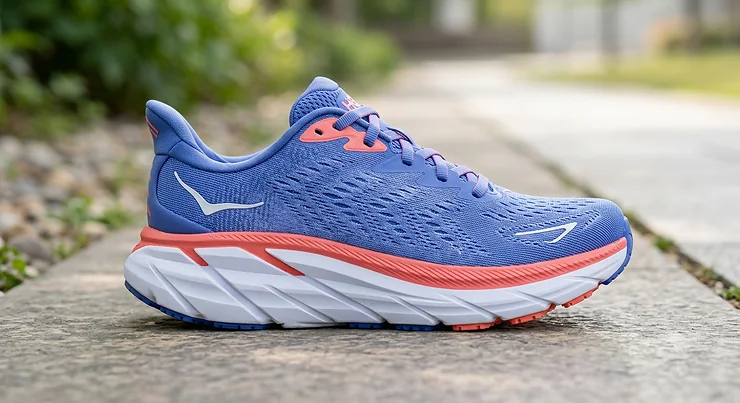
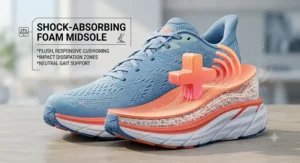
The standout here is obvious within the first ten steps: this is a shoe that seems to erase pavement. Weighing in at 8.3 oz for the women’s version, the HOKA Clifton 11 carries HOKA’s signature Active Foot Frame — a cupped midsole design that cradles your foot rather than just sitting under it — paired with a pronounced rocker geometry that rolls your stride forward instead of asking your calves to do the work. In practice, that means less end-of-run fatigue in your Achilles and lower back, especially on longer efforts.
Based on the spec comparison, this shoe is aimed squarely at runners who prioritize comfort and joint protection over ground feel — think marathon training blocks, recovery days, or anyone coming back from injury. Reviewers consistently note that the abundant EVA foam feels almost pillow-like, though a few mention the shoe runs slightly heavier than its predecessor because of that extra cushioning. It’s worth knowing HOKA has said it builds the Clifton 11 on a unisex last rather than a female-specific one, so runners with a notably narrow heel may want to try a half-size down or add a heel lock lacing technique to combat slip.
Pros:
- ✅ Exceptional shock absorption for high-mileage weeks
- ✅ Wide toe box lets toes splay naturally
- ✅ Rocker geometry smooths out tired-leg transitions
Cons:
- ❌ Runs heavier than most shoes in this category
- ❌ Unisex last may not suit narrower heels
Priced in the mid-$140s at the time of research, the HOKA Clifton 11 earns its spot as a genuine daily-trainer investment rather than an impulse buy — check current price before purchasing since availability shifts by size and colorway.
2. Brooks Ghost 18 — smooth, dependable mileage-eater
The Brooks Ghost 18 has been a category staple for over a decade, and the 2026 update finally modernizes its midsole with compression-molded DNA Loft v3 foam — lighter and softer than the DNA Loft compound used in earlier Ghost models. That single change ripples through the whole ride: transitions from heel to toe feel noticeably smoother, and the foam doesn’t pack out as quickly over a long training cycle.
What most buyers overlook about this model is that its real strength isn’t peak cushioning — it’s consistency. This is the shoe for runners who log 20-40 miles a week and want something that won’t develop a “dead spot” in the midsole after 200 miles. Reviewers highlight its durability and smooth ride as reasons they keep re-buying it, even as the ounces have crept up slightly with each redesign. If you’re a first-time neutral-shoe buyer unsure what “daily trainer” even means, this is close to the platonic ideal of the category.
Pros:
- ✅ Durable outsole rubber holds up over hundreds of miles
- ✅ Smooth, predictable ride for every pace
- ✅ Reliable sizing — fewer surprises than newer models
Cons:
- ❌ Slightly heavier than some 2026 competitors
- ❌ Less exciting “pop” than foam-forward rivals
At around $140 during our research window, the Brooks Ghost 18 sits squarely in the mid-range — a fair trade for a shoe built to outlast a full training block.
3. ASICS Novablast 5 — the bounciest ride in a neutral shoe
If the Brooks Ghost 18 is the reliable sedan, the ASICS Novablast 5 is the shoe that makes easy runs feel like a treat. Lab and hands-on testing point to a massive stack height — reportedly around 40.9mm at the heel and 33.5mm at the forefoot — combined with a midsole roughly 17% softer than the average road shoe, yet with enough underlying spring to keep faster efforts feeling snappy rather than mushy.
Here’s what to weigh: that ultra-soft, ultra-bouncy feel is fantastic for tempo runs and easy recovery jogs alike, but runners who prefer a firmer, more “connected” ride to the road may find it a touch marshmallowy at first. ASICS is also one of the few major brands that has confirmed using a female-specific last for at least some of its women’s running shoes, which shows up as a slightly more accommodating instep and a heel that hugs rather than gaps. Aggregated reviewer sentiment repeatedly calls out the shoe’s energetic feel across varied workouts as a highlight.
Pros:
- ✅ Exceptionally soft yet responsive foam compound
- ✅ Female-informed last improves midfoot lockdown
- ✅ Versatile across easy runs and faster efforts
Cons:
- ❌ Softness may feel unstable to some narrow-footed runners
- ❌ Premium foam comes with a premium price tag
Expect to pay in the $140-$150 range for the ASICS Novablast 5 — steep for a “daily” shoe, but the foam technology inside makes a real case for the price.
4. Saucony Ride 19 — the durable workhorse for daily mileage
Now in its 19th iteration, the Saucony Ride 19 has quietly become one of the most trusted names in the neutral daily trainer category, and the durable XT-900 rubber outsole is a big reason why. This is a compound built to survive years of iteration and abuse — training blocks, the occasional off-road detour, wet pavement — without chunking apart at the heel the way softer rubber blends often do.
Based on the spec comparison, the Ride 19 isn’t chasing maximum cushioning or maximum bounce; it’s chasing reliability, and that’s exactly why testers repeatedly single it out as the front-runner for runners who just want one shoe that handles everything without complaint. What most buyers overlook is how much outsole durability actually matters for cost-per-mile value — a shoe that lasts 500 miles instead of 350 is quietly the better financial decision even at a similar sticker price. Reviewers describe it as a comfortable, no-drama daily option rather than an exciting one, which for many runners is exactly the point.
Pros:
- ✅ Outstanding outsole durability for daily mileage
- ✅ Balanced, predictable ride with no learning curve
- ✅ Handles light off-road terrain without hesitation
Cons:
- ❌ Less “exciting” underfoot feel than foam-forward rivals
- ❌ Limited standout features beyond core reliability
Around $140 at the time of research, the Saucony Ride 19 is arguably the safest first purchase for a new neutral-shoe buyer who isn’t sure yet what they like.
5. Nike Pegasus 41 — the iconic all-rounder with four decades of proof
With more than 40 years in continuous production, the Nike Pegasus 41 carries a track record most shoes in this list simply can’t match. It’s Nike’s flagship daily trainer, and the current iteration leans into that legacy rather than chasing a radical redesign — which, depending on your perspective, is either comforting consistency or a missed opportunity for innovation.
Here’s what the spec sheet won’t tell you, but longtime wearers note: the Pegasus 41‘s appeal is its predictability across a huge range of paces and distances. It’s not the plushest, not the bounciest, and not the lightest shoe here — but it rarely disappoints anyone, which is precisely why it remains a go-to recommendation from running store staff nationwide. For runners who value a shoe that “just works” without requiring a break-in adjustment period, that consistency is a genuine selling point, not a lack of ambition.
Pros:
- ✅ Proven, consistent ride across decades of iteration
- ✅ Versatile enough for easy runs and workouts alike
- ✅ Widely available in stores for in-person fit checks
Cons:
- ❌ Less cushioned than HOKA or ASICS rivals here
- ❌ Design updates are evolutionary, not revolutionary
Priced in the $130-$140 range, the Nike Pegasus 41 delivers dependable value backed by one of the longest track records in running.

6. Altra Torin 8 — wide toe box with a low-to-the-ground feel
Runners transitioning away from stiff, narrow toe boxes tend to gravitate toward the Altra Torin 8, and for good reason: Altra built its entire brand identity around a foot-shaped toe box that lets toes splay naturally instead of being squeezed into a point. Altra has also confirmed it develops its women’s lasts from female foot data rather than simply scaling down a men’s mold — a meaningful difference if you’ve ever felt like a “women’s” shoe was really just a smaller men’s shoe in a different color.
What most buyers overlook about Altra’s low-drop platform is that it changes how your calves and Achilles absorb impact, shifting some of the workload away from the knees and hips. That’s a genuine benefit for some runners and an adjustment period for others — if you’re coming from a traditional 8-12mm drop shoe, ease in gradually rather than jumping straight into long runs. Reviewers highlight the roomy fit and plush cushioning as highlights, while noting the shoe feels distinctly different from mainstream models until your legs adapt.
Pros:
- ✅ Foot-shaped toe box reduces forefoot pinching
- ✅ Female-specific last improves overall fit accuracy
- ✅ Available in regular, wide, and extra-wide options
Cons:
- ❌ Low-drop platform requires a gradual adjustment period
- ❌ Less cushioned underfoot than some rival premium picks
At around $150, the Altra Torin 8 is a premium pick best suited to runners specifically seeking a wider toe box and a more natural-feeling stride.
7. New Balance Fresh Foam Arishi v4 — the budget pick that doesn’t feel like one
Not every runner needs — or wants — to spend $140 on a daily trainer, and that’s exactly the gap the New Balance Fresh Foam Arishi v4 fills. It shares a naming lineage with New Balance’s more expensive Fresh Foam line, and while it doesn’t carry the same premium foam blend as the brand’s flagship models, it delivers genuinely comfortable cushioning for a fraction of the price.
Based on the spec comparison, this is the shoe for new runners testing whether they’ll stick with the habit, budget-conscious buyers replacing shoes more frequently, or anyone who wants a reliable backup pair without a premium price tag. Reviewers frequently mention it alongside pricier neutral shoes like the Brooks Ghost 18 as a comfortable, durable option for everyday training, which says a lot given the price gap between the two. Just don’t expect the same plushness or advanced rocker geometry you’d get from the shoes higher up this list — this is a “does the job well” shoe, not a technical showcase.
Pros:
- ✅ Genuinely comfortable cushioning at a low price
- ✅ Lightweight feel suitable for daily wear
- ✅ Great low-risk option for new runners
Cons:
- ❌ Less advanced foam than premium competitors
- ❌ Shorter expected lifespan under high mileage
At under $75 in most research checks, the New Balance Fresh Foam Arishi v4 delivers outsized value for anyone easing into a regular running habit.
Practical Usage Guide: Breaking In and Maintaining Your New Trainers
A new neutral running shoe isn’t plug-and-play, whatever the marketing copy implies. Give any of these seven models — but especially higher-stack shoes like the HOKA Clifton 11 or ASICS Novablast 5 — a break-in period of 15-20 miles before judging the fit completely. Foam compresses and molds slightly to your stride in that window, and a shoe that feels a touch stiff on day one often smooths out by week two.
In the first 30 days, the most common mistake is jumping straight into long runs in a brand-new pair. Rotate your old shoes in for at least half your mileage during that adjustment period, especially if you’re switching from a firmer ride to something like the Altra Torin 8‘s low-drop platform. Lace lock techniques — running the lace through the top eyelet in a loop before tying — solve most heel-slip complaints instantly and cost you nothing.
For maintenance, plan to replace neutral running shoes every 300-500 miles depending on your weight, stride, and the terrain you run on; watch for compressed, permanently wrinkled midsole foam as your visual cue rather than relying on a fixed mileage number. Rotating two pairs — say, a Saucony Ride 19 for daily miles and a Brooks Ghost 18 as a backup — extends the lifespan of both by giving the foam time to fully decompress between runs.
Real-World Scenarios: Which Shoe Actually Fits Your Running Life
If you’re a college student commuting three miles to campus and squeezing in runs between classes, durability and value matter more than marginal foam gains — the New Balance Fresh Foam Arishi v4 or Saucony Ride 19 both handle that frequency without draining your budget every two months.
If you’re training for your first half marathon and logging 25-30 weekly miles on mostly pavement, joint protection becomes the priority. The HOKA Clifton 11 and Brooks Ghost 18 are both built for exactly this scenario, cushioning repetitive impact over long, slow-building mileage weeks.
If you’re a returning runner in your 40s or 50s dealing with wider feet, previous injuries, or heel-slip frustration from past pairs, the Altra Torin 8‘s roomy toe box and available wide sizing, or the ASICS Novablast 5‘s female-informed last, directly address the fit complaints that send so many women back to the store. And if you simply want the most enjoyable easy-run feel for weekend 5Ks with friends, the bouncy ASICS Novablast 5 turns “getting the miles in” into something you’d choose to do anyway.
How to Choose Neutral Running Shoes for Women
Choosing the right pair comes down to a handful of decision points, in roughly this order of importance:
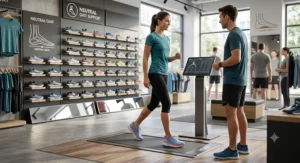
- Confirm you’re actually a neutral runner. A wet foot-test or a gait analysis at a specialty running store confirms whether your arch and pronation pattern call for neutral cushioning rather than stability features.
- Prioritize heel fit over headline foam claims. A shoe with a narrower heel cup prevents blisters far more reliably than an extra millimeter of stack height.
- Check the toe box width against your foot shape. Wider forefeet need models like the Altra Torin 8, while narrower feet may prefer the Nike Pegasus 41‘s more tapered fit.
- Match cushioning level to your typical mileage. High-mileage weeks benefit from max-cushion options; shorter, faster sessions can handle firmer, lighter builds.
- Factor in your budget honestly. A $70 shoe replaced every four months can outperform a $150 shoe you resent buying and therefore delay replacing.
- Test drive before committing to bulk purchases. Buy one pair, run in it for two weeks, then decide whether to stock up.
- Reassess every 300-500 miles. Your ideal shoe at month one may need swapping as foam compresses or your training volume changes.
Women’s Neutral Road Running Shoes vs Trail and Treadmill Picks
It’s worth separating road-specific design from trail or treadmill-oriented shoes, because the differences genuinely change performance outcomes. Women’s neutral road running shoes are built around smooth, low-tread outsoles optimized for pavement grip and repetitive-impact cushioning — think the rubber compounds in the Saucony Ride 19 or Brooks Ghost 18, engineered for consistent, predictable surfaces.
Trail shoes, by contrast, prioritize aggressive lugs and rock plates for uneven terrain — features that would actually feel clunky and unnecessary on pavement. Treadmill running sits somewhere in between; because belts offer more cushioning give than asphalt, some runners size a half-size down or choose a slightly firmer road shoe like the Nike Pegasus 41 to avoid a mushy, disconnected feel indoors. If your training genuinely mixes road and light trail, a hybrid-tread road shoe is a smarter single purchase than trying to force a dedicated trail shoe into daily road duty.
Neutral Daily Trainer Women Need for Everyday Mileage
A neutral daily trainer women can log 4-6 days a week without breaking down looks different from a race-day shoe, and that distinction matters more than most first-time buyers realize. Daily trainers prioritize durability and forgiving cushioning over minimal weight — you’re not shaving seconds, you’re protecting joints across hundreds of cumulative miles.
The Brooks Ghost 18 and Saucony Ride 19 exemplify this category precisely: neither is the lightest or bounciest shoe on the market, and that’s intentional. Durability-focused rubber compounds and moderate, well-tested foam blends outlast flashier race-day foams by a wide margin. If you only own one running shoe, it should be a daily trainer built for this kind of everyday consistency, not a specialty shoe optimized for a single use case.
Best Women’s Neutral Shoes Lightweight: When Grams Actually Matter
Weight matters more than most casual runners assume, but less than marketing copy implies. The difference between a 7.6 oz shoe like the New Balance Fresh Foam Arishi v4 and a 9 oz shoe like the Brooks Ghost 18 is roughly the weight of a few coins per foot — negligible for a 5K, but it compounds meaningfully across a marathon’s 26.2 miles of repetitive strides.
If lightweight best women’s neutral shoes are genuinely your priority — say, for tempo workouts or race simulations — the ASICS Novablast 5 at roughly 7.9 oz strikes a rare balance of low weight and high cushioning that heavier max-cushion shoes can’t match. Just don’t chase weight savings at the expense of durability for your everyday miles; a featherlight shoe that breaks down after 200 miles isn’t actually lighter on your wallet.
Women’s Specific Last: Does It Actually Matter?
A “last” is the foot-shaped mold a shoe is built around, and here’s the uncomfortable industry secret: for years, many brands used the same last for men’s and women’s shoes, simply scaling it down and changing the colorway — an approach insiders call “shrink it and pink it.” On average, women’s feet run narrower through the heel relative to the forefoot, with a more curved inner arch and a shallower big toe than a typical male foot shape, which means a shoe built on a male-shaped mold genuinely doesn’t align with a lot of women’s foot contours.
A 2025 peer-reviewed study published in BMJ Open Sport & Exercise Medicine surveyed recreational and competitive women runners across a wide age range and found consistent, specific requests: a wider forefoot, a narrower heel, and more cushioning, needs that also shift across different life stages. Among the shoes in this guide, ASICS and Altra have both confirmed using female-based lasts for some models, while HOKA and Saucony use unisex lasts. That doesn’t automatically make one better than the other — plenty of runners fit fine into unisex-last shoes — but it’s a genuinely useful data point when narrowing your shortlist, especially if you’ve struggled with heel slip in the past.
Narrower Heel Fit: Solving the Slip-and-Blister Problem
If you’ve ever finished a run with a fresh blister at the back of your ankle despite a shoe that felt fine in the store, a heel that’s too wide relative to your foot is almost always the culprit. Women’s heels tend to run narrower relative to the forefoot than men’s, and a loose heel cup lets your foot shift with every stride — friction adds up fast over a 6-mile run.
The fix starts with lacing before it starts with buying a new pair: a runner’s loop (thread the lace through the top eyelet, then back through the loop before tying) locks the heel down without over-tightening the midfoot. If that still doesn’t solve it, prioritize shoes reviewers describe as offering strong heel lockdown — the ASICS Novablast 5‘s female-informed last and the Altra Torin 8‘s structured heel counter are both worth trying first. Thin, moisture-wicking socks also reduce the friction that turns minor heel movement into an actual blister.
Forefoot Flexibility: The Spec Nobody Explains
Forefoot flexibility determines how naturally a shoe bends where your foot actually bends — at the ball of the foot, roughly two-thirds of the way forward — and it’s one of the least-discussed specs despite being one of the most important for natural gait. Too stiff, and your foot fights the shoe on every toe-off; too flexible, and you lose the structural support that protects tired feet late in a long run.
Shoes built with a more foot-shaped design, like the Altra Torin 8, tend to flex more generously through the forefoot, which pairs naturally with their wider toe box philosophy. Meanwhile, max-cushion shoes like the HOKA Clifton 11 compensate for a stiffer midsole with rocker geometry that does some of that bending work for you mechanically. Ongoing academic interest in this exact tradeoff — cushioning stiffness versus flexibility and injury outcomes — is reflected in recent bibliometric research into running shoe design trends, which underscores how much the industry is still actively studying the relationship between midsole engineering and injury prevention.
Common Mistakes When Buying Neutral Running Shoes for Women
The single biggest mistake is buying based on a friend’s recommendation rather than your own foot shape and gait — what works beautifully for someone with a wide forefoot can be a poor match for a narrower one. A close second: buying your regular street-shoe size instead of accounting for foot swelling during longer runs, which is why most runners size a half-size up from casual footwear.
Another frequent misstep is assuming “neutral” and “minimal” are the same thing; neutral simply means no corrective stability posts, not necessarily less cushioning. Shoppers also tend to underestimate how much a narrow heel cup or a cramped toe box will matter three miles in, focusing instead on flashy foam marketing that sounds impressive in a store but says nothing about how the shoe fits your specific foot.
Long-Term Cost & Maintenance: What a Trainer Really Costs You
Sticker price tells an incomplete story. A New Balance Fresh Foam Arishi v4 at under $75 that needs replacing every 300 miles works out to a comparable per-mile cost as a Saucony Ride 19 priced around $140 that reliably lasts 500 miles or more — the math evens out more than the price tags suggest.
Regular practices that stretch shoe life across the board: rotating two pairs to let foam fully decompress between runs, avoiding tossing running shoes in the washing machine (hand-clean instead to protect midsole adhesives), and storing shoes away from direct heat, which accelerates foam breakdown. Over a typical training year, a runner logging 20 miles weekly will burn through two to three pairs regardless of brand, so factoring replacement cost into your annual running budget from the start avoids sticker shock down the line.
FAQ
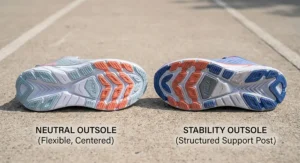
❓ What's the difference between neutral and stability running shoes?
❓ How do I know if I need a women's specific last?
❓ How often should I replace my neutral running shoes?
❓ Are lightweight neutral running shoes less durable?
❓ Can I run trails in women's neutral road running shoes?
Conclusion
The right neutral running shoe genuinely does change how running feels, not just how it looks in a race photo. Whether you land on the plush, joint-protecting HOKA Clifton 11, the dependable everyday Brooks Ghost 18, the energetic ASICS Novablast 5, the durable Saucony Ride 19, the iconic Nike Pegasus 41, the roomy Altra Torin 8, or the budget-savvy New Balance Fresh Foam Arishi v4, the best choice is the one that actually fits your specific foot shape, weekly mileage, and running goals — not the one with the flashiest marketing claims.
Pay attention to heel fit and forefoot flexibility as much as you pay attention to stack height and foam names. Those unglamorous details are usually what separates a shoe you love from one quietly gathering dust in your closet by month two. Give any new pair a proper break-in period, rotate two pairs if your budget allows, and reassess every few hundred miles rather than assuming this year’s pick is a lifetime commitment.
✨ Ready to find your perfect pair? Check current pricing and availability on today’s top picks before your next long run! 💪👟
Recommended for You
- Minimalist vs Zero Drop Shoes Men: 7 Top Picks for 2026
- 7 Best Zero Drop Running Shoes for Men in 2026
- Minimalist Running Shoes for Men: 7 Proven Picks (2026)
Disclaimer: This article contains affiliate links. As an Amazon Associate, I earn from qualifying purchases. If you purchase products through these links, we may earn a small commission at no additional cost to you.
✨ Found this helpful? Share it with your friends! 💬🤗
