

In This Article
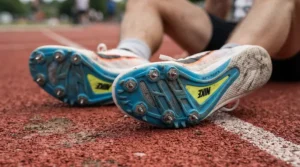
Ten seconds. Maybe less if you’re good, maybe a lot less if you’re one of the freaks of nature this sport occasionally produces. That’s roughly how long a 100m race actually lasts, and somehow an entire industry has decided that what’s strapped to your feet during those ten seconds deserves a small novel’s worth of engineering. Sprint spikes for 100m are lightweight racing shoes built with a rigid plate and metal pins in the forefoot, designed to maximize traction and energy transfer during short, all-out sprints on a synthetic track. No cushioned heel to speak of, no forgiveness for a lazy toe-off — just a stripped-down tool for one very specific job.

If you’ve ever raced in trainers by accident (we’ve all been there, usually because a spike bag got left in someone’s trunk), you already know the difference isn’t subtle. A good spike doesn’t just feel faster — it changes how your foot interacts with the ground during acceleration, which is arguably the single most technical phase of the entire race. And a bad one? It’ll remind you with every step, usually via a blister you’ll be nursing for a week.
This guide walks through seven real sprint spikes for 100m currently available, spanning entry-level options for your first varsity meet up through the carbon-plated superspikes elite sprinters chase records in. We’ll also get into pin types, start mechanics, and the gear that actually belongs in your spike bag — because a $200 shoe won’t save a race if the rest of your kit is an afterthought. For a broader look at how the event itself is structured and contested worldwide, Wikipedia’s overview of the 100 metres is a solid starting point before we get into footwear specifics.
Quick Comparison: Best Sprint Spikes for 100m at a Glance
Before the deep dive, here’s the short version for anyone standing in a store aisle right now with a coach texting them to hurry up.
| Category | Spike | Price Range | Best For |
|---|---|---|---|
| Best Overall | Nike Air Zoom Maxfly 2 | $150–$210 range | Advanced sprinters chasing PRs |
| Best Value | Puma evoSPEED Sprint 14.5 | $110–$140 range | Multi-event athletes on a mid budget |
| Best for Beginners | Nike Zoom Rival Sprint | $65–$85 range | First-time spike buyers |
| Best for Wide Feet | ASICS Hypersprint 8 | $55–$75 range | Comfort-first newcomers |
| Best Premium Pick | adidas adizero Prime SP 4 | $190–$240 range | Multi-round meet days |
The pattern here matters more than any single row: price tracks pretty closely with plate stiffness and pin count, not with “how fast the shoe looks.” The Nike Zoom Rival Sprint and ASICS Hypersprint 8 both use flexible plastic plates that are genuinely kinder on undertrained ankles, while the Nike Air Zoom Maxfly 2 and adidas adizero Prime SP 4 trade that forgiveness for raw propulsion that only pays off once your body can actually load a stiff plate properly. If you’re not sure which category you fall into yet, the buyer’s framework further down will sort that out fast.
💬 Found a pick that fits your budget already? Bookmark this page and come back before race day — your future self will thank you.
Top 7 Sprint Spikes for 100m: Expert Analysis
We pulled together seven real, currently available models spanning budget, mid-range, and premium tiers — including variants built specifically for narrower and wider feet. Every product name below stays bolded throughout the article so you can scan back to it later without re-reading paragraphs.
1. Nike Air Zoom Maxfly 2 — full-length carbon plate built for pure propulsion
The Nike Air Zoom Maxfly 2 wears its ambition on its sleeve: a full-length carbon fiber plate that’s less about cushioning and more about launching you forward with minimal energy lost to flex. At roughly 5.3 oz (151g) in a men’s US 9, it’s built for events from 60m through 400m, including relays, using a lightweight synthetic knit upper with reinforcements around the high-wear zones. The plate houses six non-removable titanium pins — a permanent setup that trades pin-swap flexibility for a slightly stiffer, more consistent ride meet after meet.
Based on the spec comparison against its plastic-plated competitors, the payoff here is toe-off speed: less plate flex means less energy dissipated into bending the shoe instead of driving you forward. That said, this is a spike for sprinters who’ve already built the calf and ankle strength to control a rigid plate — a beginner loading it improperly can actually run slower, fighting the shoe instead of using it. Aggregated review sentiment consistently flags a narrow, race-day fit that runs snug through the midfoot, along with praise for how quickly the shoe “wakes up” once broken in, though several reviewers note the break-in window is shorter than expected for a plate this stiff.
Pros:
- ✅ Full carbon plate maximizes toe-off energy return
- ✅ Lightweight build keeps swing weight minimal
- ✅ Versatile across 60m, 100m, 200m, and relay legs
Cons:
- ❌ Narrow fit runs small for wider feet
- ❌ Non-removable pins limit surface-specific tuning
At the time of research, the Nike Air Zoom Maxfly 2 typically lands in the $150–$210 range depending on retailer and colorway — check current price before buying, since Amazon listings fluctuate. For a committed sprinter racing multiple meets a season, it’s a legitimate performance upgrade; for a first-year athlete, it’s overkill wrapped in an expensive box.
2. adidas adizero Prime SP 4 — thick Lightstrike Pro foam for stored energy
Where the Maxfly 2 leans stiff and stripped-down, the adidas adizero Prime SP 4 takes a different bet: a genuinely thick stack of Lightstrike Pro foam under the forefoot, paired with a full-length carbon-fiber-infused plate and a durable, lightweight mesh upper. That foam stack is the standout feature, and it changes the character of the shoe considerably.
Here’s what the spec sheet is really telling you — that extra foam under the plate stores and returns energy on each contact, which matters most across multiple rounds in a single meet day (think prelims into semis into finals) when your legs are quietly accumulating fatigue nobody’s timing. What most buyers overlook is that this cushioning doesn’t come at the cost of responsiveness the way older foam-heavy spikes did; it’s engineered specifically to complement the plate rather than sit passively underneath it. Reviewers consistently note standout energy return through the forefoot, alongside a recurring complaint that the toe box runs narrower than competing superspikes, which matters if you’ve got a wide or high-volume forefoot.
Pros:
- ✅ Lightstrike Pro foam adds real energy return
- ✅ Full carbon-fiber-infused plate for aggressive propulsion
- ✅ Durable mesh upper holds up across a full season
Cons:
- ❌ Narrow toe box unfriendly to wider feet
- ❌ Among the pricier options in this roundup
Price typically falls in the $190–$240 range at the time of research, prices may vary by size and colorway. This is a strong pick for anyone racing multiple rounds in a day, where the extra cushioning under the plate pays dividends late in a meet — less so if you only ever run a single flat-out attempt per event.
3. New Balance FuelCell SuperComp SD-X — ULTRAWEAVE Elite upper with an 8-pin PWRPLATE
The New Balance FuelCell SuperComp SD-X is built for the 60m-to-400m range, including hurdles and relay legs, and it leans hard into structural rigidity. The upper uses ULTRAWEAVE Elite woven material infused with carbon fiber threads — essentially weaving structure directly into the fabric instead of relying on separate overlays, which keeps the shoe locked down without piling on extra material weight. At roughly 6 oz (170g) in a men’s US 9, it’s not the lightest spike here, but that weight buys you something: a full-length Pebax PWRPLATE (a carbon fiber plate) paired with eight permanent pins, two more than most competitors in this category.
Based on the spec comparison, those extra two pins matter most in cooler or slightly damp conditions, where additional contact points reduce the odds of a slip mid-drive-phase — a small margin, but one that compounds over a season of early-spring meets on less-than-ideal tracks. What the spec sheet won’t tell you, but reviewers note, is that the stiffness takes real adaptation; aggregated feedback frequently describes the plate as demanding a proper wear-in period before it stops feeling like it’s fighting the wearer’s natural stride.
Pros:
- ✅ Eight-pin plate adds grip in variable conditions
- ✅ Woven carbon-thread upper is durable and locked-in
- ✅ Full-length PWRPLATE built for elite-level propulsion
Cons:
- ❌ Heavier than most spikes in this roundup
- ❌ Stiff plate demands a real adaptation period
At the time of research, the New Balance FuelCell SuperComp SD-X typically runs around $220–$260, positioning it firmly in superspike territory. It’s best suited to advanced-to-elite sprinters and hurdlers already training in a stiff-plate spike — not a shoe to hand a first-year athlete and expect immediate results.
4. Puma evoSPEED Sprint 14.5 — an 8-pin PEBAX plate at a genuinely mid-range price
The Puma evoSPEED Sprint 14.5 occupies a spot in the market that’s honestly a little underrated: real racing technology without the superspike price tag. It uses a ¾-length, 8-pin PEBAX spike plate with strategic cutouts — cuts that shave weight while keeping the plate rigid enough to actually transfer power, rather than just looking aggressive on a shelf. Weighing in around 170g in a UK 8, it’s built for events from 100m up through 800m, plus hurdles, which is a wider range than most dedicated 100m specialists will ever need but makes it a smart choice for multi-event high schoolers.
What most buyers overlook about this model is the EVA heel crash pad with a textured “shark skin” surface, which adds a touch of durable cushioning on impact — useful given that plenty of athletes wearing this shoe are still learning proper forefoot mechanics and occasionally land more on the heel than they’d like to admit. It’s also officially approved by World Athletics with a sub-20mm stack height, so there’s no compliance guesswork. Aggregated reviewer sentiment tends to praise the comfort-to-performance ratio for the price, with an occasional note that the outsole shows wear faster than the premium options above.
Pros:
- ✅ 8-pin PEBAX plate rivals pricier competitors
- ✅ Versatile across 100m through 800m and hurdles
- ✅ World Athletics approved with compliant stack height
Cons:
- ❌ Outsole wears faster than premium-tier spikes
- ❌ Less propulsive than full carbon-plated options
Price typically sits in the $110–$140 range, check current price before purchase. For a serious high school or club sprinter who isn’t ready to spend superspike money but wants more than an entry-level plate, this is arguably the smartest value play in the whole lineup.
5. Nike Zoom Rival Sprint — entry-level with a reinforced, race-ready fit
The Nike Zoom Rival Sprint is exactly what its name implies: an entry point into real racing spikes, covering 100m through 400m, built with a lightweight upper reinforced in the high-stress zones to hold a snug lockdown without adding much weight. Its ¾-length plastic plate houses six spikes and delivers a genuinely snappy feel at toe-off — closely mimicking the geometry of pricier performance spikes without the carbon price tag attached.
Here’s the practical read: a plastic plate can’t match carbon for pure energy return, but for a developing sprinter, that’s arguably a feature rather than a limitation. Reviewers consistently note that this spike rewards proper mechanics rather than punishing imperfect ones the way a stiffer plate would, which makes it a genuinely good teaching tool as much as a race-day shoe. Aggregated customer sentiment frequently mentions accurate, true-to-size fit and surprising durability for the price point, with a recurring complaint about minor toe-box rubbing during the first week or two before the upper relaxes.
Pros:
- ✅ Snappy toe-off despite an affordable plastic plate
- ✅ True-to-size fit reported across aggregated reviews
- ✅ Durable build that survives a full competitive season
Cons:
- ❌ Minor break-in rubbing near the toe box
- ❌ Less propulsive than carbon-plated superspikes
At the time of research, this spike typically runs $65–$85 — one of the more approachable price ranges in this whole roundup. For a first-time buyer, a JV athlete, or a parent hoping the shoe outlasts a growth spurt, it’s genuinely hard to argue with the value here.

6. Saucony Spitfire — lightweight build with a durable synthetic upper
The Saucony Spitfire is Saucony’s entry-level sprint spike, and it does the basics without cutting corners that actually matter. Its ¾-length plastic plate includes strategic cutouts to shave weight, while seven spike pins — one more than several competitors in this tier — provide extra grip for athletes who haven’t yet developed the confidence (or the drive-phase mechanics) to trust fewer contact points. The entire upper is a synthetic material chosen specifically for durability over a full season of practices and meets.
What stands out based on the spec comparison is that extra seventh pin: it’s a small addition, but on a slightly damp track or during an athlete’s first few meets in spikes, added grip translates directly into confidence, and confidence out of the blocks is worth more than people give it credit for. Aggregated review sentiment tends to highlight accurate sizing and stitching that holds up impressively well given the price, with an occasional gripe about limited width and colorway options compared to the bigger brands.
Pros:
- ✅ Seven-pin plate adds confidence-boosting grip
- ✅ Durable synthetic upper survives a full season
- ✅ Accurate sizing reported across aggregated reviews
Cons:
- ❌ Limited width and colorway selection
- ❌ Plastic plate lacks elite-level propulsion
Price typically falls in the $60–$80 range at the time of research. As a budget pick or a reliable backup pair sitting in a varsity athlete’s bag for meet-day emergencies, it punches noticeably above its price point.
7. ASICS Hypersprint 8 — a forgiving fit built for first-time spike wearers
The ASICS Hypersprint 8 solves a problem the rest of this list mostly ignores: not every foot is built for a narrow racing last. This model offers a relatively accommodating fit for wider feet, paired with a plastic plate for propulsion and five spikes for grip — a slightly less aggressive setup than its competitors, and that’s deliberate rather than a shortcoming.
Based on the spec comparison, fewer pins and a softer plate mean a gentler introduction to what sprinting in spikes actually feels like — because that first experience genuinely can feel like walking on stilts if the equipment is too aggressive too soon. What the spec sheet won’t tell you, but reviewers consistently note, is exactly that: this spike is a favorite recommendation among coaches introducing brand-new sprinters to the sport, specifically because it doesn’t overwhelm someone who’s never felt a rigid plate underfoot before. The trade-off, unsurprisingly, is that more experienced sprinters sometimes describe the feel as a touch “dulled” compared to stiffer competitors.
Pros:
- ✅ Accommodating fit for wider feet
- ✅ Gentle introduction for first-time spike wearers
- ✅ Reliable grip without an overwhelming plate feel
Cons:
- ❌ Feels underpowered for experienced sprinters
- ❌ Less aggressive propulsion than stiffer-plated rivals
At the time of research, this spike typically runs $55–$75, making it one of the most accessible entries here. If you’re buying a first pair for a middle schooler or an adult picking up track for the first time, this is the safest starting point on the list.
Recap: Top 7 Sprint Spikes for 100m Compared
| Spike | Weight | Plate & Pins | Price Range | Best For |
|---|---|---|---|---|
| Nike Air Zoom Maxfly 2 | ~151g | Full carbon, 6 fixed pins | $150–$210 | Advanced sprinters chasing PRs |
| adidas adizero Prime SP 4 | Mid-weight | Full carbon + foam stack | $190–$240 | Multi-round meet days |
| New Balance FuelCell SuperComp SD-X | ~170g | Full carbon, 8 pins | $220–$260 | Elite sprinters/hurdlers |
| Puma evoSPEED Sprint 14.5 | ~170g | PEBAX, 8 pins | $110–$140 | Value-focused multi-event athletes |
| Nike Zoom Rival Sprint | Lightweight | Plastic, 6 pins | $65–$85 | First-time spike buyers |
| Saucony Spitfire | Lightweight | Plastic, 7 pins | $60–$80 | Budget picks / backup pair |
| ASICS Hypersprint 8 | Lightweight | Plastic, 5 pins | $55–$75 | Wide feet / absolute beginners |
Lay the seven side by side and a clear line appears between the carbon-plated trio at the top and the plastic-plated group at the bottom, with the Puma evoSPEED Sprint 14.5 sitting almost perfectly in the gap between them. If your athlete is still developing drive-phase mechanics, the extra stiffness of the New Balance FuelCell SuperComp SD-X or Nike Air Zoom Maxfly 2 won’t show up as free speed — it’ll show up as fighting the shoe. Save the carbon plates for once the fundamentals are locked in.

Practical Usage Guide: Breaking In, Pin Swaps, and Race-Day Prep
Buying the right spike is maybe 60% of the equation — the rest is knowing what to actually do with it once it’s out of the box. Most of the disasters we hear about (blisters mid-race, a pin backing out on the runway, a plate that never quite “wakes up”) trace back to setup mistakes made in the first thirty days of ownership, not to a bad shoe.
Start by wearing new spikes for short, easy strides before your first real workout in them — ten to fifteen minutes is enough to let the upper start conforming to your foot without committing to a full session in a shoe that’s still stiff as cardboard. If your model uses removable pins, always carry the spike wrench that came in the box; pins loosen with use, and a pin that backs out mid-race is a genuinely avoidable embarrassment. Most models ship with standard ¼-inch pyramid pins already installed, which is what the overwhelming majority of tracks require — swap only if your specific facility posts different rules, and always check before a meet rather than assuming.
A quick maintenance habit worth building: wipe the upper down after wet or muddy sessions, and never toss spikes straight into a bag while still damp — synthetic uppers hold moisture and it accelerates wear on the stitching. On race day itself, put spikes on last, after your warm-up strides, and do at least two or three build-up accelerations in them before you’re called to the line; a cold plate feels noticeably different from one that’s had a few reps to loosen up.
Real-World Scenarios: Which 100m Sprinter Are You?
The freshman finding her legs. She’s fast, but she’s never raced in anything stiffer than a trainer, and her coach wants a spike that teaches good mechanics rather than punishing imperfect ones. Something like the Nike Zoom Rival Sprint or ASICS Hypersprint 8 makes far more sense here than a carbon plate she isn’t ready to load properly — the goal this season is building confidence and technique, not chasing the last half-percent of propulsion.
The multi-event club athlete on a real budget. He’s running the 100m, anchoring the 4x100m relay, and occasionally getting thrown into the 200m when the roster’s thin, all on gear money he’s mostly earning himself. The Puma evoSPEED Sprint 14.5 covers that range legitimately — 100m through 800m on paper — without asking for superspike money, which matters when one pair has to do everything.
The senior chasing a state-qualifying time. She’s logged three seasons in spikes already, her mechanics are dialed in, and she’s within a tenth of a second of a mark that would change her recruiting conversations. This is exactly the athlete a plate like the Nike Air Zoom Maxfly 2 or adidas adizero Prime SP 4 was built for — someone who can actually convert stiffness and foam into converted speed instead of fighting the equipment.
Explosive Start Technique: Getting the Most Out of Your Spikes
A spike can only do its job if the athlete inside it is doing theirs, and nowhere is that truer than the first 20 meters of a 100m race. Research on block starts consistently points to a few mechanical fundamentals that matter more than any piece of footwear: a medium block spacing (roughly 30–50cm between blocks), knee angles in the “set” position hovering near 90 degrees in front and 130 degrees in the rear, and a low projection angle out of the blocks — somewhere in the 40-to-45-degree range relative to the ground — rather than popping straight upright too early. For a deeper technical breakdown of what’s actually happening kinematically during those first steps, the peer-reviewed overview in Sports Medicine’s review of sprint start biomechanics is worth a read for coaches who want the full picture.
Here’s where the spike actually earns its keep: a stiff, well-fitted plate rewards a low, aggressive first-step angle by minimizing energy lost to plate flex during that critical drive phase, while a spike that’s too flexible or poorly fitted can actually undercut good technique by absorbing force the athlete worked hard to generate. If you’re coaching a young sprinter still learning to stay low out of the blocks, pair that technical work with a more forgiving plate like the ones on the Nike Zoom Rival Sprint — there’s little point loading a $200 carbon plate under a start pattern that isn’t ready to use it yet. As mechanics improve and the athlete starts driving out flat and low instead of popping up early, that’s the signal to graduate toward a stiffer plate that can actually convert the improved technique into measurable time.
Short Sprint Race Gear: The Rest of Your Race-Day Kit
Spikes get all the attention, but a 100m race-day bag that stops at footwear is missing pieces that genuinely affect performance. A compression-style sprint singlet and briefs reduce wind resistance and fabric flap compared to standard training gear — negligible over a mile, but a real factor at sprint speeds over a race this short. Starting blocks themselves are typically provided at meets, but frequent competitors often bring their own foot plates or a small towel for wiping down blocks on a wet morning.
Beyond that, the unglamorous essentials matter more than people expect: a spare set of pyramid pins and the correct wrench (never assume the meet will have one lying around), athletic tape for hot spots before they become blisters, and a lightweight warm-up layer you can strip off fast between check-in and your heat. Cold muscles are slower muscles, and the gap between “called to the blocks” and “gun goes off” is longer than most first-timers expect. Building this kit once and keeping it stocked in a dedicated spike bag saves the kind of race-morning scramble that’s cost more than a few athletes their focus before a race that’s over in ten seconds flat.
How to Choose Sprint Spikes for the 100m
Cutting through the marketing, here’s the actual decision-making process, broken into steps that build on each other.
- Identify your experience level honestly. A beginner loading a stiff carbon plate often runs slower, not faster, because the ankle and calf strength required to control that plate hasn’t developed yet — start with a flexible plastic plate instead.
- Match the spike to your primary event, not just “100m.” If you’re also running relays, the 200m, or hurdles, a slightly more versatile plate like the one on the Puma evoSPEED Sprint 14.5 avoids owning three separate pairs.
- Check your track’s pin rules before buying pins. Most facilities require standard ¼-inch pyramid pins; confirm with your coach rather than assuming your new spikes’ factory-installed pins are automatically legal everywhere.
- Weigh cushioning against ground feel. More foam under the plate (as on the adidas adizero Prime SP 4) helps across multiple rounds in a day but slightly dulls the raw responsiveness purists chase.
- Get the width right before the stiffness. A perfectly propulsive plate in a shoe that’s crushing your toes will actively slow you down — aggregated reviews are your best free resource for width feedback brands rarely advertise.
- Set a realistic budget band and stay in it. Spending $220 on a superspike as a first-year athlete usually means outgrowing the shoe, literally, before it’s earned back its value.
- Buy with enough runway before your first meet. A brand-new plate needs a short adaptation period — don’t debut untested spikes on race day.
Sprint Spikes for High School Track: What’s Different
High school sprinters occupy a strange middle ground: fast enough to genuinely benefit from real racing spikes, but often still developing the strength and mechanics that make a stiff carbon plate worth its price tag. The Minnesota State High School League and most similar state athletic associations cap outdoor pyramid spikes at a maximum of ¼ inch (6.35mm), with tighter limits indoors — rules that exist specifically to protect the synthetic surfaces these meets are run on, and that every athlete is expected to know before stepping to the line.
Budget realities matter more in this segment too — most families aren’t buying a $220 superspike for an athlete who might grow out of it in a single season, which is exactly why entry-level options like the Nike Zoom Rival Sprint, Saucony Spitfire, and ASICS Hypersprint 8 dominate high school locker rooms far more than the carbon-plated options at the top of this list. That’s not a compromise — it’s the right call for most developing athletes, and coaches consistently recommend saving the superspike upgrade for once a sprinter is training year-round and has the mechanics to actually use one.
Needle Spike Pins vs. Pyramid Pins: What’s Actually Legal
This is one of the most commonly misunderstood parts of buying spikes, so let’s be direct about it: needle spikes and so-called “Christmas tree” spikes are prohibited at the vast majority of school, club, and sanctioned competitions, precisely because their design is more likely to damage expensive synthetic track surfaces. Virtually every sprint spike sold today — including all seven models in this guide — ships from the factory with standard pyramid pins already installed, which is what nearly every facility actually permits.
Governing body rules reinforce this from multiple directions. Under official technical regulations, spikes generally must be able to fit through a small square gauge for at least half their length near the tip — a design constraint that pyramid pins satisfy and needle-style pins typically don’t. You can review the underlying technical rule language directly via World Athletics’ official shoe regulations if you want the primary source rather than a summary. Indoor tracks tighten things further, commonly restricting pin length to just 1/8 inch (3.18mm) to protect wooden or less durable surfaces. The practical takeaway: default to the ¼-inch pyramid pins your spikes already came with, confirm your specific facility’s posted rules before a meet, and treat needle pins as something to avoid rather than seek out.
Common Mistakes When Buying Sprint Spikes for the 100m
Buying a full size up “to be safe.” Spikes are meant to fit snugly, closer to a race-day glove than a daily trainer — extra room translates directly into lost energy transfer and a higher blister risk, not comfort.
Prioritizing brand hype over plate-to-athlete fit. A superspike on an athlete who can’t yet load a stiff plate properly isn’t an upgrade; aggregated coaching consensus consistently favors matching plate stiffness to actual strength and technique over chasing the newest carbon release.
Ignoring width entirely. Most buying guides talk endlessly about plates and foam and barely mention that racing lasts run notably narrow across most brands — models like the ASICS Hypersprint 8 exist specifically because this gets overlooked so often.
Skipping the break-in window. Debuting a brand-new spike on race day, with zero prior wear, is asking for an unpredictable fit under maximum pressure — never a good combination.
Forgetting to check facility pin rules. Assuming factory-installed pins are automatically legal everywhere is a small oversight that occasionally leads to real, avoidable disqualification conversations at check-in.
Sprint Spikes vs. Everyday Trainers and Distance Spikes
It’s worth spelling out exactly why a dedicated sprint spike earns its place in a bag that already has perfectly good running shoes in it.
| Feature | Sprint Spikes | Everyday Trainers | Distance Spikes | Best For |
|---|---|---|---|---|
| Weight | Very light (5–7 oz) | Heavier (8–11 oz) | Light-moderate | Sprint spikes for pure acceleration |
| Plate Stiffness | Rigid (carbon/plastic) | None/flexible | Moderate | Sprint spikes for explosive toe-off |
| Cushioning | Minimal to none | High | Moderate | Trainers for daily mileage and recovery |
| Pin Count | 5–8 pins | None | 4–6 pins | Sprint spikes for max grip |
| Legal for Distance Races | Not ideal (200-400m ok, less for 800m+) | Yes | Yes | Distance spikes for 800m and up |
The table makes the trade-off obvious: a sprint spike sacrifices essentially all cushioning to maximize traction and energy transfer over a race that’s over in ten seconds, while a trainer is built for the opposite goal — absorbing thousands of repetitive impacts across miles of easy running. Distance spikes split the difference, adding a touch more cushion because a 5,000m race punishes a completely unforgiving shoe in ways a 100m sprint never gets the chance to. Trying to use one category for another job — training daily mileage in sprint spikes, for instance — is a fast track to shin and forefoot overuse issues that simply aren’t worth the risk.
What to Expect: Real-World Performance on Race Day
Specs on a page don’t translate directly into feeling fast, so here’s what actually happens when the gun goes off. In the first two or three steps out of the blocks, a stiff-plated spike like the Nike Air Zoom Maxfly 2 or New Balance FuelCell SuperComp SD-X delivers a noticeably snappier, more “locked-in” sensation compared to a plastic-plated shoe — less like your foot is bending the shoe and more like the shoe is bending back into you.
By the 30-to-40 meter mark, once you’ve hit top-end mechanics and transitioned out of the drive phase, the differences narrow considerably; a well-fitted budget spike and a $220 superspike feel far more similar during max-velocity stride than most marketing implies. Where the gap reopens is fatigue management across multiple rounds — foam-cushioned options like the adidas adizero Prime SP 4 genuinely feel different running a final on tired legs after two earlier rounds than a bare-bones plate does. None of this replaces actual training, obviously — the shoe amplifies whatever mechanics you bring to it, for better or worse.
Long-Term Cost, Durability & When to Retire Your Spikes
| Tier | Typical Price Range | Expected Lifespan | Cost-Per-Season Value |
|---|---|---|---|
| Budget (Nike Zoom Rival Sprint, Saucony Spitfire, ASICS Hypersprint 8) | $55–$85 | 1–2 full seasons | High value for developing athletes |
| Mid-Range (Puma evoSPEED Sprint 14.5) | $110–$140 | 1–2 seasons, heavier use | Strong value for multi-event athletes |
| Premium (Nike Air Zoom Maxfly 2, adidas adizero Prime SP 4, New Balance FuelCell SuperComp SD-X) | $150–$260 | 1 competitive season at peak performance | Best value only with high race frequency |
Interpreting that table honestly: a budget spike often represents better cost-per-use for a developing athlete who’s likely to outgrow the shoe before wearing it out anyway, while a premium superspike only “earns back” its price tag through frequent competitive use where marginal propulsion gains actually compound across a season. Watch for the same wear signals regardless of tier — a plate that’s developed visible cracks, an upper separating from the sole, or pins that no longer sit flush are all signs it’s time to retire a pair rather than squeeze out one more meet.

Frequently Asked Questions
❓ What are the best sprint spikes for 100m in 2026?
❓ How much do sprint spikes for the 100m typically cost?
❓ Are needle spike pins legal in track meets?
❓ Can high schoolers wear elite sprint spikes like the Maxfly 2?
❓ How long do sprint spikes for the 100m usually last?
Conclusion
There’s no single “best” pair in this list — there’s a best pair for where a specific athlete actually stands right now. A first-year sprinter reaching for the Nike Air Zoom Maxfly 2 because it looks fast on a highlight reel is solving the wrong problem; a senior with three seasons of mechanics behind her leaving that same shoe on the shelf out of budget caution is leaving free time on the table.
What matters more than any single spec sheet is matching plate stiffness, pin count, and price honestly to experience level, event range, and how often an athlete is actually racing in a given season. Everything in this guide — from the ASICS Hypersprint 8‘s forgiving fit to the New Balance FuelCell SuperComp SD-X‘s eight-pin grip — exists to serve a specific point on that spectrum, not to be universally “the best.” Get that match right, get the fit dialed in during a real break-in window, and the shoe stops being the story on race day — your start, your drive phase, and your legs become the story instead, which is exactly how it should be.
Recommended for You
- Track Spikes for Beginners: 7 Picks to Nail Your First Season (2026)
- Racing Flats for Marathon: 7 Best Picks for 2026
- Racing Flats for Marathon: 7 Fast Picks to Try in 2026
Disclaimer: This article contains affiliate links. As an Amazon Associate, I earn from qualifying purchases. If you purchase products through these links, we may earn a small commission at no additional cost to you.
✨ Found this helpful? Share it with your friends! 💬🤗
