

In This Article
Somewhere around mile 20 of a marathon, your shoes stop being an accessory and start being a teammate. That’s the blunt truth nobody tells you when you’re scrolling reviews at midnight, half-convinced that the right pair of racing flats for marathon day will shave ten minutes off your time. They might help. They also might not, depending on your stride, your training, and whether you actually broke them in before race week. Racing flats for marathon distances are low-to-moderate weight performance shoes — often carbon-plated “super shoes,” sometimes true old-school flats — built to maximize energy return and minimize weight over 26.2 miles, trading some cushioning and durability for speed.

Here’s the thing: the market split wide open in the last few years. You’ve got featherweight zero-drop flats that feel like barely-there sandals, and you’ve got towering 40mm-stack super shoes stuffed with carbon plates and air pods that look more like spacecraft than sneakers. Somewhere between those two extremes is the right shoe for your foot, your pace, and your bank account. This guide breaks down seven real, currently available options — from a scrappy $140 minimalist flat to a $280 marathon-specific rocket — with honest analysis of what each one actually does for you on race day, not just what the spec sheet claims.
We’ll also dig into how racing flats stack up against your everyday trainers, where cushioning trades off against raw speed, how elite runners actually choose their race-day shoes, and a pacing framework you can use to pick the right pair for your own goal time. No fluff, no fabricated hands-on stories — just real specs, aggregated review sentiment, and the kind of analysis that should have been in the product description to begin with.
Quick Comparison Table
| Category | Shoe | Why It Wins Here |
|---|---|---|
| Best Overall Value | Saucony Endorphin Speed 4 | Versatile enough to train and race in, priced under $180 |
| Best Budget Pick | Altra Escalante Racer 2 | Zero-drop simplicity, no carbon-plate premium |
| Best for Marathon-Specific Cushioning | Nike Alphafly 3 | Built and tuned around the 26.2-mile distance |
| Lightest True Super Shoe | Puma Deviate Nitro Elite 4 | Around 6 oz with full carbon-plate propulsion |
| Best for Forefoot Strikers | ASICS Metaspeed Sky Paris | Low 5mm drop rewards a quick, high cadence |
Looking at the table, the split is really about where you land on the cushioning-to-weight spectrum: the Altra Escalante Racer 2 and Saucony Endorphin Speed 4 sit on the accessible, do-it-all end, while the Nike Alphafly 3 and ASICS Metaspeed Sky Paris are purpose-built race missiles you’ll want to save for goal-race day. The Puma Deviate Nitro Elite 4 splits the difference nicely if you want elite-level propulsion without the very top-tier price tag. None of these are automatically “better” — they’re tools calibrated for different jobs, which is exactly why the full breakdown below matters more than this snapshot.
💬 Just one click — help others make better buying decisions too!😊
Top 7 Racing Flats for Marathon: Expert Analysis
1. Altra Escalante Racer 2 — best budget zero-drop flat for ground feel
The Altra Escalante Racer 2 strips away almost everything the super-shoe era added, and for some runners, that’s the whole appeal. At a 22mm/22mm stack height with a true zero-drop platform, this shoe keeps your foot low and level, which forces your calves and Achilles to do more of the work your carbon plate would otherwise absorb. There’s no plate here at all — just Altra’s EGO foam and a wide “FootShape” toe box that lets your toes spread naturally under fatigue, something narrow racing shoes often punish late in a marathon.
Based on the spec comparison, this shoe is best suited to lighter, efficient runners with strong lower-leg strength who prefer feeling the road rather than floating above it; heavier heel-strikers or those chasing a specific carbon-plate PR will likely find it underwhelming.
Reviewers consistently note the wide, breathable upper and the durable, well-built outsole, while a recurring complaint is that the stiffer platform on this version can feel like you’re fighting the shoe at faster paces compared to the original Escalante Racer.
Pros:
- ✅ True zero-drop feel builds natural running mechanics over time
- ✅ Wide FootShape toe box reduces late-race toe pain
- ✅ Notably durable outsole for a minimalist racing shoe
Cons:
- ❌ No plate means less forgiving propulsion on tired legs
- ❌ Stiffer 2025 update feels less flexible at faster paces
The Altra Escalante Racer 2 typically runs in the $130-$150 range, and for runners who’ve been priced out of the $250+ super-shoe club, it’s a legitimately smart value pick, provided you understand you’re buying ground feel and simplicity, not a carbon-fiber energy boost.

2. Saucony Endorphin Speed 4 — most versatile do-it-all racer
If you only want to own one fast shoe, the Saucony Endorphin Speed 4 is the one most reviewers keep coming back to. Its 36mm/28mm stack with an 8mm drop and full-length PWRRUN PB midsole gives it a springy, forgiving ride, while the updated nylon plate (not carbon) adds torsional stiffness without the harsher snap of stiffer racing shoes.
What most buyers overlook about this model is that the nylon plate — rather than carbon — is precisely why it doubles as a daily tempo trainer; it’s more forgiving over easy miles while still delivering real pop at marathon pace. This is a shoe for the runner who wants one pair that handles long runs, workouts, and race day without demanding a second mortgage.
Aggregated reviewer sentiment is remarkably consistent: testers repeatedly describe it as their “go-to” shoe for everything from recovery jogs to full marathons, praising the balance between softness and responsiveness, though a smaller subset of reviewers with plantar fascia sensitivity have reported discomfort in earlier Endorphin Speed generations.
Pros:
- ✅ Handles everything from easy runs to marathon race pace
- ✅ Springy PWRRUN PB foam holds up over high mileage
- ✅ More affordable than true carbon-plated super shoes
Cons:
- ❌ Less explosive than dedicated carbon-plate racers at top speed
- ❌ Some runners with foot sensitivities report discomfort over time
Priced around $170, the Saucony Endorphin Speed 4 delivers most of the marathon-day benefit of pricier shoes at a noticeably friendlier price point, making it our pick for anyone building their first serious racing rotation.
3. New Balance FuelCell SC Pacer v2 — lightest low-stack racer for efficient strides
The New Balance FuelCell SC Pacer v2 was designed as a 5K/10K racer, but its feedback-rich, lower-to-the-ground ride has quietly become a favorite among lighter, efficient marathoners — including pros like Emily Sisson, who has raced the marathon distance in it despite its shorter-race branding. With a stack around 33mm/25mm (New Balance doesn’t publish exact figures, but independent lab testing confirms these ranges) and a full PEBA midsole wrapped around a carbon plate, it trades some of the cushioned isolation of taller super shoes for a snappier, more direct connection to the road.
Here’s what to weigh: at roughly 7.4 oz, it’s genuinely light, and its firmer ride rewards runners who don’t want a mushy, trampoline-like sensation underfoot — but that same firmness and lower stack height means less protection for heavier runners over the full 26.2-mile grind.
Real reviewer sentiment flags heel-area blistering as a recurring complaint tied to the shoe’s shallow heel cup, alongside consistently positive feedback about its snappy, secure ride for lighter frames.
Pros:
- ✅ Excellent value relative to full-height carbon super shoes
- ✅ Firmer, more feedback-rich ride than most modern racers
- ✅ Genuinely lightweight at roughly 7.4 ounces
Cons:
- ❌ Shallow heel cup has caused blistering for multiple testers
- ❌ Less cushioning protection for heavier or less-efficient runners
At around $200, the New Balance FuelCell SC Pacer v2 occupies a smart middle tier — it won’t out-cushion the flagship super shoes, but for the right runner, it’s one of the more honest values in the carbon-plate category.
4. Puma Deviate Nitro Elite 4 — lightest of the true super shoes
Puma’s fourth-generation racer finally delivers on the promise its predecessors chased: a genuinely light, genuinely stable full-stack super shoe. The Puma Deviate Nitro Elite 4 comes in around 6 ounces with a stack in the 38-40mm heel range and roughly 30-32mm forefoot, built on Puma’s Nitro Elite ATPU foam and a rigid carbon plate. On paper this means you’re getting near-maximum legal cushioning at a weight that undercuts several premium competitors — independent lab testing measured energy return in the high 70% range, putting it firmly among the best-performing foams on the market today.
What the spec sheet won’t tell you, but reviewer consensus makes clear, is that this shoe favors rear-and-midfoot strikers with solid technique; runners who land far forward on the shoe report an awkward, less natural transition.
Reviewers across multiple outlets independently describe it as more stable than its narrow platform would suggest, a notable turnaround from the wobblier early Deviate Elite generations.
Pros:
- ✅ Rare combination of very low weight and near-max stack height
- ✅ Lab-tested energy return among the best in its class
- ✅ Surprisingly stable ride for such a light, narrow shoe
Cons:
- ❌ Aggressive plate stiffness rewards only specific landing patterns
- ❌ Thin heel counter has irritated some testers over longer runs
The Puma Deviate Nitro Elite 4 generally sells in the $240-$260 range, undercutting some rival flagship racers by $20-$50 while matching their performance profile — arguably one of the stronger value arguments in the premium racing-flat tier.
5. ASICS Metaspeed Sky Paris — best for forefoot and midfoot strikers
ASICS built the ASICS Metaspeed Sky Paris around a simple bet: shave every possible gram without sacrificing the near-40mm stack height World Athletics allows. The result, at roughly 6.2-6.4 ounces, is widely reported as the lightest true super shoe currently on the market, built around a new FF Turbo+ PEBA midsole that independent labs measured as notably softer and bouncier than its predecessor.
The 5mm drop is unusually low for a carbon racer, meaning the heel and forefoot sit closer together than on almost any competitor — a geometry that specifically rewards midfoot and forefoot-striking “stride” runners who load the front of the shoe rather than crash down on the heel.
Based on the spec comparison, heel-strikers should think twice here: multiple independent testers flagged the narrow platform as feeling unstable once running form degrades late in a race, which matters a great deal at mile 24 of a marathon. Aggregated reviewer sentiment is glowing on responsiveness and weight, with the recurring caveat that the forefoot can feel firm and less forgiving over the longest efforts.
Pros:
- ✅ Among the lightest carbon super shoes available anywhere
- ✅ Elite-level propulsion validated by real race results and lab data
- ✅ Rewards efficient midfoot and forefoot running mechanics
Cons:
- ❌ Narrow platform can feel unstable when form breaks down late
- ❌ Firm forefoot feel may fatigue heel-dominant runners
At around $250, the ASICS Metaspeed Sky Paris sits at the top of the market on price, which is defensible if your gait genuinely matches its geometry — but it’s not a universal marathon shoe, and that specificity is exactly the point.
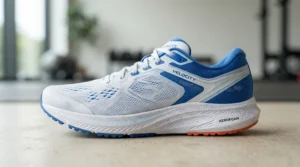
6. New Balance FuelCell SC Elite v5 — stiffest, most stable narrow-platform racer
New Balance took its flagship racer in an aggressive new direction with the New Balance FuelCell SC Elite v5, narrowing the platform by roughly 13-20mm at the heel and midfoot, dropping the forefoot stack from 36mm to 32mm, and increasing the heel-to-toe drop from 4mm to 8mm. On paper, that’s a shoe chasing raw speed over the plush, forgiving ride that made earlier SC Elite versions popular with newer marathoners.
In practice, independent multi-tester reviews found the narrower platform surprisingly stable, particularly for heel-strikers, even as the stiffer, more aggressive carbon plate makes the ride feel considerably firmer than prior generations. Here’s what to weigh: at roughly 7.3 ounces, it’s not the lightest option on this list, and reviewers note it now sits on the heavier side of the current top-tier racing field, but the tradeoff is a genuinely propulsive, race-worthy shoe after a few generations of softer, training-leaning updates.
Reviewer sentiment is consistently positive on comfort and secure lockdown, with some noting the redesigned upper still bunches slightly when fully cinched down.
Pros:
- ✅ Surprisingly stable despite an aggressively narrowed platform
- ✅ Stiffer, more propulsive plate than previous SC Elite versions
- ✅ Secure, comfortable upper lockdown for long efforts
Cons:
- ❌ Heavier than several rival flagship racers at this price
- ❌ Firmer ride sacrifices some of the earlier models’ friendly cushioning
Priced in the $250-$265 range, the New Balance FuelCell SC Elite v5 is a genuine step toward the front of the pack for New Balance, best suited to experienced marathoners who found earlier SC Elite versions too soft for a true race-day push.
7. Nike Alphafly 3 — built specifically for the marathon distance
Where most super shoes are adapted from shorter-distance racers, the Nike Alphafly 3 was designed from the outset as Nike’s marathon-specific flagship — the shoe that helped power Kelvin Kiptum’s world-record run in Chicago. Its roughly 39.5mm/31.5mm stack pairs full-length ZoomX foam with dual Air Zoom pods in the forefoot and a wide carbon plate, and the third generation shaved a meaningful amount of weight (down to roughly 7.0-7.6 ounces depending on size and testing source) compared to the notably heavier Alphafly 2.
What most buyers overlook about this model is that the redesigned continuous midsole — a first for the Alphafly line — specifically targets the stability complaints that dogged earlier versions, adding sidewalls and a guidance groove that help even mild overpronators stay on track late in a race.
Reviewer consensus, including Nike’s own large-scale wear-testing program with over 300 runners, points to real gains in comfort and transition smoothness, while a recurring critique is thinner rearfoot rubber coverage that some testers worry could wear faster for runners who land hard on their heels.
Pros:
- ✅ Purpose-engineered for the full marathon distance, not adapted from shorter racers
- ✅ Meaningfully lighter than the previous Alphafly generation
- ✅ Added stability features help runners hold form late in races
Cons:
- ❌ Highest price point of any shoe on this list
- ❌ Thinner rearfoot rubber may wear faster for heel-strikers
Expect to pay in the $270-$290 range for the Nike Alphafly 3, and given the marathon-specific engineering and the pedigree behind it, it’s arguably the most defensible splurge on this list for a serious goal-race attempt.
Top 7 Racing Flats for Marathon: Specs at a Glance
| Shoe | Stack (Heel/Forefoot) | Drop | Weight (approx.) | Price Range | Best For |
|---|---|---|---|---|---|
| Altra Escalante Racer 2 | 22mm / 22mm | 0mm | 8.8 oz | $130-$150 | Zero-drop minimalists |
| Saucony Endorphin Speed 4 | 36mm / 28mm | 8mm | 8.2 oz | $160-$180 | One do-it-all shoe |
| New Balance FuelCell SC Pacer v2 | ~33mm / 25mm | 8mm | 7.4 oz | $190-$210 | Light, efficient strides |
| Puma Deviate Nitro Elite 4 | ~38mm / 30mm | 8mm | 6.0 oz | $240-$260 | Rear/midfoot strikers |
| ASICS Metaspeed Sky Paris | 39mm / 34mm | 5mm | 6.2-6.4 oz | $245-$255 | Forefoot strikers |
| New Balance FuelCell SC Elite v5 | 40mm / 32mm | 8mm | 7.3 oz | $250-$265 | Stability-minded racers |
| Nike Alphafly 3 | 39.5mm / 31.5mm | 8mm | 7.0-7.6 oz | $270-$290 | Marathon-specific goal races |
The pattern across this table is worth calling out directly: as drop decreases and stack height climbs toward the 40mm ceiling, shoes increasingly demand a specific, efficient stride to unlock their benefits — which is exactly why the ASICS Metaspeed Sky Paris and New Balance FuelCell SC Pacer v2 carry the strongest gait caveats. Meanwhile, the Saucony Endorphin Speed 4 and Altra Escalante Racer 2 sit at the more forgiving end, trading some peak propulsion for a wider window of runners who can use them well. If your training has never included a carbon-plated shoe before, starting nearer the forgiving end of this table is the safer bet.

Racing Flats vs Regular Running Shoes: What Actually Changes on Race Day
The gap between racing flats vs regular running shoes isn’t just marketing — it shows up in measurable ways once you’re 20 miles into a marathon. Regular daily trainers prioritize durability and cushioned comfort across hundreds of miles, typically weighing 9-11 ounces with thicker, denser foam designed to survive 300-500 miles of wear. Racing flats and super shoes flip that priority: they sacrifice some durability (often lasting closer to 100-150 hard miles) in exchange for lighter, more resilient foams like PEBA that return more energy per stride.
| Attribute | Racing Flats / Super Shoes | Regular Running Shoes |
|---|---|---|
| Typical Weight | 6-9 oz | 9-11 oz |
| Midsole Foam | PEBA, ZoomX, or similar high-rebound foam | Denser EVA-based compounds |
| Plate | Often carbon or nylon | Rarely present |
| Expected Lifespan | 100-150 miles | 300-500 miles |
| Price Range | $140-$290 | $100-$180 |
This isn’t a case of one category being objectively better — it’s a case of the wrong tool for the job in either direction. Racing a marathon in a plush daily trainer typically costs you real energy efficiency over 26.2 miles, since heavier shoes measurably increase the metabolic cost of running at any given pace. On the other hand, training every single day in a racing flat accelerates wear on a shoe that’s already less durable, and can increase injury risk since these shoes offer less structural support for slower, high-mileage days. According to research on running economy referenced by Nike Vaporfly’s history, even modest reductions in shoe weight and increases in energy return have been linked to measurable improvements in running economy at race pace — which is the whole reason this shoe category exists in the first place.
How to Choose Racing Flats for a Marathon
Picking between racing flats for marathon day comes down to matching shoe geometry to your own biomechanics, not chasing whatever an elite athlete happens to wear. Here’s a practical framework:
- Identify your strike pattern first. Heel-strikers generally do better in higher-drop shoes like the Nike Alphafly 3 or New Balance FuelCell SC Elite v5; forefoot and midfoot strikers often prefer lower-drop options like the ASICS Metaspeed Sky Paris.
- Be honest about your goal pace. Carbon plates deliver the most benefit at faster paces where you’re actively loading and unloading the plate quickly; runners targeting a 4:30+ marathon may get more real-world value from a nylon-plated shoe like the Saucony Endorphin Speed 4.
- Weigh your body weight against stack height. Heavier runners typically benefit from more cushioning underfoot to manage impact forces over 26.2 miles, favoring taller-stack options over minimalist flats.
- Check your training mileage in the shoe category. If you’ve never run in a carbon-plated shoe, don’t debut one on race day — test it during at least two or three long runs first.
- Factor in weather and course profile. Hot, humid marathons reward lighter, more breathable uppers, while hilly courses can benefit from shoes with more midfoot stability.
- Consider your budget realistically. A well-fitted $170 shoe you’ve trained in beats a poorly-fitted $290 shoe you bought two weeks before race day.
- Always test before race day. Break in any new racing flat over at least 20-30 miles of varied-pace running before trusting it for 26.2.
Cushioning vs Speed Tradeoff: Finding Your Sweet Spot
Every shoe on this list sits somewhere on a spectrum between raw ground feel and maximum protective cushioning, and that cushioning vs speed tradeoff is really the central design question in this whole category. More foam under your foot generally means more shock absorption and less cumulative muscle fatigue late in a race — but it also usually means more weight and less direct feedback, which can translate to reduced neuromuscular efficiency for runners who prefer feeling the ground. The Altra Escalante Racer 2 sits at one extreme, prioritizing feel and minimal weight over protection, while the Nike Alphafly 3 sits near the opposite pole, using its nearly 40mm stack and dual air pods to protect your legs across the full marathon distance.
Here’s what most buyers overlook about this tradeoff: it isn’t purely about personal preference — it interacts directly with how long you’ll be on your feet. A 2:30 marathoner spends roughly half the time under load compared to a 5:00 marathoner, which means the accumulated benefit of extra cushioning scales up significantly for slower finish times, even though elite racers often prefer firmer, lower-stack shoes for the sharper feedback and control they provide at high speeds. If you’re newer to marathon racing and unsure which side of this tradeoff suits you, erring toward more cushioning (like the Puma Deviate Nitro Elite 4 or New Balance FuelCell SC Elite v5) is generally the safer default.
Common Mistakes When Buying Racing Flats for a Marathon
The single most common mistake runners make is buying a marathon racing shoe two weeks before race day and expecting it to perform like a broken-in trainer — carbon plates and stiff new foams typically need real adaptation time from your calves and Achilles. A close second is sizing incorrectly: many carbon racers, including the ASICS Metaspeed Sky Paris and New Balance FuelCell SC Pacer v2, run narrower or shorter than standard trainers, and runners who don’t size up half a size often report toenail damage after long races. A third recurring mistake is choosing a shoe based on which model an elite athlete wore in a headline-grabbing race, rather than matching the shoe’s geometry to your own strike pattern and pace — a shoe engineered for a 2:05 marathoner’s cadence doesn’t automatically transfer its benefits to a 4:15 finisher. Finally, plenty of runners skip verifying current availability and pricing before committing, so it’s always worth confirming stock and checking the current price before you buy, since running shoe releases and restocks shift throughout race season.
What to Expect: Real-World Marathon Performance
Specs only tell part of the story — what actually happens over 26.2 miles depends heavily on how a shoe behaves after mile 18, when glycogen stores drop and form starts to degrade. Reviewer data across multiple outlets consistently shows that shoes with wider, more stable platforms (like the Puma Deviate Nitro Elite 4) tend to maintain their propulsive benefit even as runners fatigue, while narrower, more aggressive shoes (like the ASICS Metaspeed Sky Paris and New Balance FuelCell SC Elite v5) can start to feel less secure once form breaks down. In practical terms, this means the “fastest” shoe on paper isn’t always the fastest shoe for you specifically in the back half of a marathon, when stability starts to matter as much as raw energy return. Reviewers who’ve tested these shoes across long tempo runs and race simulations consistently flag the transition from mile 20 to the finish as the real differentiator between shoes that merely feel fast in a 5K and shoes genuinely built to hold that feeling for the full distance.
Elite Runner Shoe Picks: What the Pros Actually Wear on Race Day
Elite runner shoe picks tend to surprise recreational runners, mostly because professional athletes don’t always choose the shoe with the tallest stack or the biggest marketing push. Emily Sisson’s use of the New Balance FuelCell SC Pacer v2 for marathon racing — a shoe technically branded for 5K/10K distances — is a good example: elites often prioritize a shoe’s match to their specific biomechanics over a shoe’s official distance label. According to the RunRepeat guide to the best marathon running shoes, individual comfort and gait compatibility consistently outweigh brand hype in determining which shoe actually performs best for a given runner, elite or otherwise. That said, shoes purpose-built for the marathon distance, like the Nike Alphafly 3, remain popular precisely because their extended stack and dual air-pod cushioning were engineered around the specific demands of 26.2 miles rather than adapted from a shorter-distance racer. The practical takeaway for recreational runners: what an elite wears matters less than why they wear it, and that “why” is almost always about individual gait fit, not universal superiority.

Long-Term Cost & Maintenance: The Real ROI of a Marathon Racer
Racing flats and super shoes typically have a shorter usable lifespan than daily trainers — often somewhere in the 100-150 mile range before the plate’s responsiveness and foam’s rebound noticeably degrade, compared to 300-500 miles for a standard trainer. That changes the real cost-per-use math considerably.
| Shoe | Price Range | Est. Useful Miles | Approx. Cost per Mile |
|---|---|---|---|
| Altra Escalante Racer 2 | $130-$150 | 150-200 | ~$0.80 |
| Saucony Endorphin Speed 4 | $160-$180 | 250-350 | ~$0.55 |
| Nike Alphafly 3 | $270-$290 | 100-150 | ~$2.10 |
Looking at the numbers, the Saucony Endorphin Speed 4 delivers the strongest long-term value because its durability profile leans closer to a daily trainer while still offering race-day performance, whereas the Nike Alphafly 3 carries a much steeper cost-per-mile precisely because its performance-focused construction wears faster. The practical implication is straightforward: if you plan to race multiple marathons a year, a rotation of one durable, versatile shoe and one race-day-only super shoe usually makes more financial sense than owning several premium racers you rarely put real mileage into. Reserving your most expensive pair strictly for race day, rather than tempo runs and workouts, is the single easiest way to protect that investment.
Safety, Regulations & Compliance: What World Athletics Says About Your Shoes
If you’re racing a certified marathon and care about your result being official, shoe compliance matters more than most recreational runners realize. Under current World Athletics shoe regulations, road racing shoes are capped at a 40mm sole thickness and are permitted only one rigid plate or comparable propulsion system — every shoe on this list falls within that limit, typically landing between 22mm and 40mm depending on the model. For recreational marathoners, this regulation mostly matters if you’re chasing a Boston-qualifying time or competing in an elite or semi-elite field where post-race shoe checks are more common; casual finishers are extremely unlikely to face any scrutiny. Beyond legality, safety in a practical sense also means respecting your own adaptation timeline: jumping straight into 26.2 miles in an unfamiliar carbon-plated shoe increases strain on your calves and Achilles tendon, since these shoes change your loading pattern compared to a traditional trainer. Runners recovering from prior Achilles or plantar fascia issues should be especially cautious about introducing a new plated shoe close to race day, regardless of how promising the reviews look.
Practical Usage Guide: Breaking In and Racing Your Flats
Getting the most out of any marathon racing shoe starts weeks before the starting gun, not the morning of. Begin by wearing your chosen shoe for two to three shorter runs at an easy pace, simply to let your foot adapt to the new geometry and plate stiffness — this is especially important for higher-drop or heavily-plated shoes like the Nike Alphafly 3. From there, work up to at least one tempo run and one long run of 10+ miles in the shoe, ideally including some marathon-pace segments so your legs know exactly what that specific ride feels like under fatigue. A common mistake in the first 30 days of owning a new racing flat is over-relying on it for every workout; because these shoes wear faster than daily trainers, save them primarily for quality sessions and save your regular trainer for easy mileage. On race morning itself, lace them slightly more snugly than usual to account for the higher-volume swelling your feet experience over 26.2 miles, and always confirm you’re wearing a pair with meaningful mileage on it already — never debut a completely fresh pair on race day.
Marathon Pacing Strategy: Matching Your Shoes to Your Splits
Your marathon pacing strategy and your shoe choice are more connected than most runners assume. Carbon-plated racing flats generally deliver their strongest propulsion benefit at the specific pace range they were tuned for; a shoe like the ASICS Metaspeed Sky Paris, built around a quick, efficient stride, tends to reward runners holding a consistent, faster cadence rather than those planning a slow-building negative split from a walk-run start. If your race plan involves a conservative first half followed by a strong closing surge, a more forgiving, versatile shoe like the Saucony Endorphin Speed 4 may serve you better across the full range of paces you’ll actually run, rather than a shoe optimized narrowly for goal pace alone. Runners targeting even, steady splits throughout — the classic “even pacing” strategy most coaches recommend — generally get the most consistent value from their shoe’s plate and foam, since they’re loading it similarly, mile after mile, without the dramatic pace swings that can make a narrowly-tuned shoe feel great in one segment and awkward in another.
Real-World Scenarios: Which Racing Flat Fits Your Marathon Journey
Consider three runners with three different goals. The first-time marathoner, aiming simply to finish comfortably around five hours, is generally better served by a durable, forgiving shoe like the Saucony Endorphin Speed 4 or even the Altra Escalante Racer 2, since the marathon distance itself is challenging enough without adapting to an unfamiliar aggressive plate. The experienced mid-pack racer chasing a Boston qualifier around 3:15-3:30 sits in the sweet spot for shoes like the Puma Deviate Nitro Elite 4 or New Balance FuelCell SC Elite v5, which reward consistent effort and structured training without demanding elite-level biomechanics. The competitive age-grouper targeting sub-2:45, meanwhile, is the runner most likely to extract full value from a marathon-specific flagship like the Nike Alphafly 3, given the tighter pace band and higher training volume that typically accompanies that goal. Notably, major races like the 2026 Chicago Marathon — known for its flat, fast course — tend to see a heavy concentration of top-tier super shoes among competitive fields chasing personal bests, precisely because flat courses let these shoes’ propulsion benefits show up most clearly in finishing times.
Buyer’s Decision Framework: If This, Choose That
If you’re a heel-striker training for your first marathon, choose a higher-drop, more cushioned shoe like the Nike Alphafly 3 or New Balance FuelCell SC Elite v5, because your landing pattern benefits more from stack height and structural stability than from a low-drop, aggressive plate. If you’re an efficient forefoot striker chasing a specific time goal, choose a lower-drop shoe like the ASICS Metaspeed Sky Paris, because your gait is already positioned to take advantage of its geometry. If budget is your primary constraint, choose the Altra Escalante Racer 2 or Saucony Endorphin Speed 4, because both deliver genuine race-day value without the premium pricing of flagship super shoes. If you plan to race multiple marathons per year, choose a durability-conscious option like the Saucony Endorphin Speed 4 for your general rotation and reserve a premium racer purely for your priority event, because spreading mileage this way protects your investment in the more expensive shoe.

Frequently Asked Questions
❓ Can beginners wear racing flats for their first marathon?
❓ How much do good racing flats for a marathon cost?
❓ Do racing flats really make you run a marathon faster?
❓ How many miles do racing flats for marathon last before replacing?
❓ Should I train in the same shoes I plan to race a marathon in?
Conclusion
Choosing racing flats for marathon day ultimately comes down to an honest assessment of your own stride, your goal pace, and how much you’re willing to spend for marginal gains that only really matter if you’ve put in the training to unlock them. The Altra Escalante Racer 2 and Saucony Endorphin Speed 4 remain smart, accessible entry points for runners newer to the category, while the Puma Deviate Nitro Elite 4, ASICS Metaspeed Sky Paris, New Balance FuelCell SC Elite v5, and Nike Alphafly 3 represent the current top tier for runners with the training and biomechanics to take advantage of them. The New Balance FuelCell SC Pacer v2 carves out its own niche for lighter, efficient runners looking for a firmer, more direct ride. None of these shoes will run the race for you — but matched correctly to your gait, your goal time, and your training block, the right pair genuinely can help you hold your best form deeper into the back half of 26.2 miles than you would otherwise. Do the research, break your shoes in properly, and trust the miles you’ve already put in more than any single piece of gear.
Recommended for You
- Racing Flats for 5K: 7 Fastest Picks to PR in 2026
- Carbon Plate Shoes for Beginners: 7 Safe Picks for 2026
- Carbon Plate Running Shoes: 7 Best Picks to PR in 2026
Disclaimer: This article contains affiliate links. As an Amazon Associate, I earn from qualifying purchases. If you purchase products through these links, we may earn a small commission at no additional cost to you.
✨ Found this helpful? Share it with your friends! 💬🤗
