
In This Article
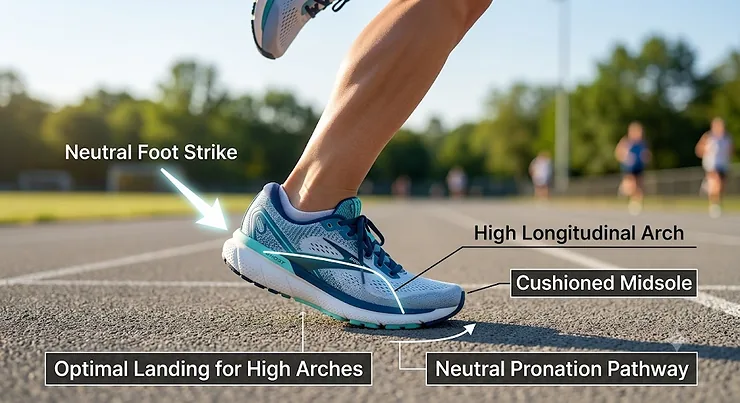
If you’ve ever pulled a “supportive” running shoe out of the box, laced it up, and felt like your foot was fighting the shoe instead of working with it, you already know the problem. High arches are stubborn. They don’t collapse inward the way a flatter foot does, so all that built-in arch support everyone keeps recommending? It often does nothing but crowd your instep and leave your heel begging for mercy by mile three. What you actually need is the opposite: neutral running shoes for women with high arches that let your foot do its own thing while a well-engineered midsole absorbs the shock your natural gait can’t.
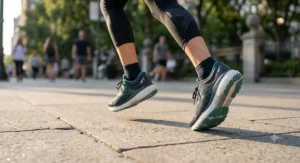
This guide skips the marketing fluff and gets into what actually matters — real stack heights, real cushioning chemistry, and honest analysis of seven shoes that consistently show up in podiatry-adjacent gear reviews and aggregated customer feedback for underpronators. According to MedlinePlus, high-arch feet place disproportionate stress on the metatarsals during walking and running, which is exactly why cushioning distribution — not arch support — is the variable that changes everything for this foot type. We’ll cover budget picks, premium daily trainers, and one under-the-radar brand most runners haven’t tried yet. By the end, you’ll know exactly which pair matches your mileage, your budget, and the way your foot actually moves.
Quick Comparison Table
Before diving into the full breakdowns, here’s a snapshot of how these seven neutral shoes for women with high arches stack up on the specs that matter most for underpronators: stack height, drop, and who each shoe is really built for.
| Shoe | Stack Height (Heel/Forefoot) | Drop | Best For |
|---|---|---|---|
| Brooks Ghost 17 | 37mm / 27mm | 10mm | Everyday all-rounder |
| Saucony Ride 19 | 36mm / 28mm | 8mm | Durability-focused daily miles |
| ASICS Novablast 5 | 41.5mm / 33.5mm | 8mm | Energetic tempo-friendly rides |
| New Balance Fresh Foam X 1080v15 | 40mm / 34mm | 6mm | Soft, wide-base comfort |
| ASICS Gel-Nimbus 27 | 41mm / 33mm | 8mm | Max plush long-distance comfort |
| HOKA Bondi 9 | 43mm / 38mm | 5mm | Maximum cushioning, low impact |
| Mount to Coast R1 | 38mm / 30mm | 8mm | High-volume feet, budget-conscious |
Notice a pattern? None of these shoes lean on rigid arch posts or medial support — every single one is a true neutral platform, which lines up with what most podiatry-adjacent sources recommend for pes cavus feet. The real differentiator here is stack height and how the cushioning is distributed underfoot, since a high arch typically means less foot-to-ground contact area and more concentrated pressure on the heel and forefoot. If you’re a heavier heel-striker, the taller stacks (Bondi 9, Gel-Nimbus 27) will feel noticeably more forgiving; if you like ground feel, the Ghost 17 and Ride 19 sit at the lower, more responsive end.
💬 Already leaning toward one? Scroll down for the full breakdown — or jump straight to current pricing and grab your pair before your size sells out!
Top 7 Neutral Running Shoes for Women with High Arches: Expert Analysis
1. Brooks Ghost 17 — most balanced everyday trainer
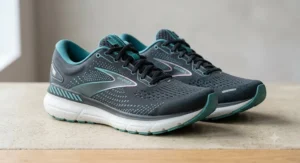
The standout here is balance — the Ghost 17 doesn’t try to be the softest or the bounciest shoe on this list, and that restraint is exactly why it works so well for high arches. Brooks bumped the stack height slightly in this version and dropped the heel-to-toe offset from 12mm down to 10mm, which smooths out the transition phase for underpronators who tend to land and roll along the outer edge of the foot. The nitrogen-infused DNA Loft v3 midsole foam gives a cushioned but not mushy ride, meaning your foot doesn’t get lost searching for stability.
Based on the spec comparison against the rest of this list, the Ghost 17 is the shoe to reach for if you want one trainer that handles everything from easy recovery jogs to a weekend long run without complaint. Reviewers consistently report that the partially recycled knit upper runs true to size with a touch of extra room in the toe box — a detail that matters because high-arched feet often need more vertical volume, not more length. Nurses, teachers, and anyone logging hours standing on hard floors tend to praise the Ghost line specifically for reducing end-of-day fatigue.
Pros:vhttps://amzn.to/4x7gJo9
- ✅ Smooth 10mm drop suits both heel and midfoot strikers
- ✅ Roomy toe box accommodates high-instep feet comfortably
- ✅ Versatile enough for daily training and light long runs
Cons:
- ❌ Less plush than max-cushion options like the Bondi 9
- ❌ Outsole rubber wears faster under high weekly mileage
At around $140–$150, the Ghost 17 delivers the best all-around value on this list — it’s the shoe most reviewers land on when they only want to own one pair.
2. Saucony Ride 19 — most durable daily grinder
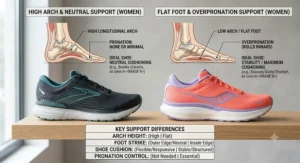
What stands out immediately is the XT-900 carbon rubber outsole, a compound Saucony has refined over nearly two decades of Ride iterations specifically to survive high-mileage training blocks. That durability matters more than people realize for high-arched runners, because uneven wear patterns from lateral loading can chew through a cheaper outsole in a fraction of the time.
The PWRRUN foam underfoot strikes a firmer, more responsive balance than the Ghost 17’s DNA Loft, which on paper means slightly less plush protection but noticeably better energy return on tempo days. What most buyers overlook about the Ride line is that its 8mm drop and moderate 36mm heel stack make it one of the more “ground-feel” options here, appealing to underpronators who don’t want to feel like they’re running on a pillow. Aggregated review sentiment consistently flags the Ride as a “no-drama” workhorse — not flashy, just reliable mile after mile, which is precisely the kind of praise a shoe earns when it does its job invisibly.
Pros:
- ✅ Exceptionally durable outsole for high weekly mileage
- ✅ Responsive PWRRUN foam suits tempo and easy runs alike
- ✅ Secure midfoot lockdown reduces lateral foot movement
Cons:
- ❌ Firmer ride than max-cushion competitors on this list
- ❌ Narrower fit may need a half-size up for wide feet
Priced in the $130–$140 range, the Ride 19 is the pick for runners who measure shoe value in miles logged, not plushness.
3. ASICS Novablast 5 — best energetic ride for daily speed
The new FF Blast Max midsole is the story here — ASICS claims roughly 8.5% more energy return compared to the previous Novablast generation, and the ride genuinely feels springier underfoot than its 41.5mm stack height would suggest. For a high-arched foot that already tends toward a stiffer, more rigid stride, that extra rebound helps compensate for the shock absorption a flatter foot naturally gets from arch flex.
Here’s what the spec sheet won’t tell you, but reviewers note repeatedly: the wide forefoot platform on the Novablast 5 gives it real stability credentials despite being a fully neutral shoe, which matters for underpronators who occasionally roll toward the outer edge on uneven pavement. This is a genuinely fun shoe to run fast in — it rewards a quicker cadence rather than a plodding one, making it the strongest pick on this list for runners who do interval work or tempo runs alongside easy mileage. Budget-conscious shoppers should note it sits mid-pack on price relative to its performance ceiling.
Pros:
- ✅ Springy FF Blast Max foam adds noticeable energy return
- ✅ Wide platform improves lateral stability for underpronators
- ✅ Versatile enough for both easy runs and faster workouts
Cons:
- ❌ Less protective cushioning than max-stack options here
- ❌ Sizing runs slightly small per aggregated customer feedback
Expect to pay somewhere in the $140–$150 range — solid value for a shoe that doubles as both a daily trainer and a light speed shoe.
4. New Balance Fresh Foam X 1080v15 — softest wide-base comfort
New Balance’s new Infinion foam is the headline upgrade in the 1080v15, and it delivers a noticeably softer, more flexible underfoot feel than the brand’s older Fresh Foam compounds. Paired with a 40mm heel stack and a wide, contoured base, this shoe is engineered to encourage a natural, unrestricted foot movement — which is the entire philosophy behind neutral shoes for high arches in the first place.
Based on the spec comparison, the wider platform here does double duty: it adds a layer of passive stability without introducing any actual medial post or arch support structure, which keeps the shoe technically and functionally neutral. Reviewers consistently highlight the classic, no-nonsense New Balance fit and note the shoe’s durability holds up well over hundreds of miles despite the plush feel. This is the shoe to recommend to someone transitioning from an old-school stability shoe who’s nervous about going fully neutral — the wide base offers reassurance while the Infinion foam does the actual cushioning work.
Pros:
- ✅ Infinion foam delivers standout softness without instability
- ✅ Wide base adds confidence for supination-prone runners
- ✅ Durable construction holds cushioning quality over time
Cons:
- ❌ Higher stack height feels less agile on technical terrain
- ❌ Heavier than lower-stack shoes like the Ride 19
Priced around $160–$170, the 1080v15 sits at the premium end but earns it with genuine longevity.
5. ASICS Gel-Nimbus 27 — best max-plush daily comfort
The Gel-Nimbus has been ASICS’s flagship plush neutral trainer for years, and the 27th version leans further into that identity with a wider toe box and a more secure midfoot wrap. What most buyers overlook about the Nimbus line is that “plush” doesn’t mean unstable — the accommodating fit combined with a moderate 8mm drop keeps the ride protective without feeling sloppy underfoot, which matters enormously for a high arch that needs shock absorption but not correction.
Aggregated review sentiment across major retailers is remarkably consistent: this is described again and again as a premium daily trainer for runners who log serious road miles and want their feet to feel fresh afterward. On paper, the trade-off is weight — this isn’t a shoe built for speedwork — but for the long, easy-paced runs that make up the bulk of most training plans, that trade-off barely registers. Runners transitioning out of injury or managing chronic foot fatigue frequently cite the Nimbus as the shoe that finally let them log consistent mileage again.
Pros:
- ✅ Exceptionally plush protection for high-mileage comfort
- ✅ Accommodating toe box suits high-instep, high-arch feet
- ✅ Secure midfoot fit prevents sliding despite soft cushioning
Cons:
- ❌ Heavier build makes it a poor choice for speed sessions
- ❌ Premium price point compared to the Ghost 17 or Ride 19
At around $160–$170, the Nimbus 27 is a genuine investment piece for runners prioritizing comfort over pace.
6. HOKA Bondi 9 — maximum cushioning, lowest impact
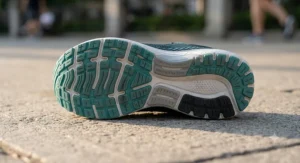
There’s no subtlety to the Bondi’s pitch: this is the tallest stack on this entire list at 43mm in the heel, and it’s built for one job — absorbing as much impact as physically possible before it reaches your joints. The redesigned super-critical EVA midsole is both lighter and more responsive than earlier Bondi generations, addressing the old complaint that the shoe felt like running in a marshmallow.
Here’s what matters for a high-arched foot specifically: because that foot type doesn’t naturally pronate to absorb shock the way a flatter foot does, more of that impact travels straight up through the ankle and knee. A stack this tall — combined with a low 5mm drop that reduces strain on the Achilles — directly compensates for that missing natural shock absorption. Reviewers with high insteps and existing joint issues consistently describe the Bondi 9 in almost identical terms: like walking on clouds. The trade-off is a less natural, more rockered ride that takes a run or two to adjust to, but for standing jobs and recovery days, nothing else on this list comes close.
Pros:
- ✅ Tallest stack height delivers unmatched impact protection
- ✅ Low drop reduces Achilles and calf strain over long runs
- ✅ Wide platform adds real stability despite max cushioning
Cons:
- ❌ Heaviest shoe on this list at nearly 9.3 oz (women’s)
- ❌ Rockered ride feels less natural for faster-paced running
Priced around $170, the Bondi 9 is the premium pick for comfort-first runners and anyone standing for hours on hard floors.
7. Mount to Coast R1 — best lesser-known value pick
Mount to Coast is still a newer name in running, but the R1 has earned a loyal following specifically among high-arch, high-volume-foot runners — and once you understand the design, it’s obvious why. The standout feature is the TUNEDFIT Dual lacing system, which lets you adjust tension across the midfoot and forefoot independently, solving the exact problem high-instep feet run into with standard uniform lacing: pressure hot spots across the top of the foot.
Based on the spec comparison, the lightweight LightCELL midsole punches well above its price point, delivering stable landings and solid energy return without the premium markup of the bigger brands on this list. What reviewers consistently praise is the double-layered jacquard upper, which feels noticeably softer against the skin than typical engineered mesh, plus a genuinely wide toe box that doesn’t require sizing up. This is the shoe to recommend to budget-conscious runners who’ve been burned by ill-fitting big-brand shoes and want something built with high-volume feet in mind from the ground up, not as an afterthought.
Pros:
- ✅ Dual lacing system solves high-instep pressure problems
- ✅ Wide toe box fits true to size for high-arch feet
- ✅ Strong value relative to premium big-brand competitors
Cons:
- ❌ Smaller brand means a thinner pool of long-term reviews
- ❌ Fewer retail locations for trying before you buy
Typically priced under $150, the R1 is the value alternative worth trying before defaulting to a big-name brand out of habit.
Practical Usage Guide: Breaking In and Maintaining Your Shoes
Getting the most out of any neutral shoe for high arches starts before your first run. Try shoes on later in the day, when feet are naturally more swollen — this mimics your foot’s mid-run size and prevents the too-tight feeling that sends people back for a return. Lace from the bottom up loosely at first, then tighten gradually across the midfoot; high-instep feet especially benefit from skipping a lacing eyelet or using a runner’s loop at the top to avoid pressure across the top of the foot.
For the first 30 days, rotate between your new pair and an older shoe rather than running exclusively in the new one — this gives midsole foam time to fully decompress between runs and reduces the injury risk that comes with switching stack heights or drops too abruptly. A common mistake is jumping straight into long runs in a brand-new max-cushion shoe like the Bondi 9; instead, build up gradually over two to three weeks. Maintenance-wise, rotate shoes every 300–400 miles for daily trainers, avoid the washing machine (hand-wash the upper with mild soap and air-dry away from direct heat, which breaks down midsole foam faster), and check the outsole tread monthly — uneven wear on the lateral edge is common and expected for supinators, but excessive wear is your cue to replace.
Real-World Scenarios: Which Shoe Actually Fits Your Life
If you’re a nurse or teacher on your feet eight-plus hours a day, the Brooks Ghost 17 or HOKA Bondi 9 make the most sense — both prioritize all-day comfort and fatigue reduction over speed, and the Bondi’s low drop specifically protects joints during prolonged standing. If you’re training for your first half marathon on a tight budget, the Mount to Coast R1 or Saucony Ride 19 deliver serious mileage durability without the premium price tag, and both hold up well through a full 12-week training block.
For the runner squeezing in tempo runs and intervals between a busy work schedule, the ASICS Novablast 5 earns its keep as a genuinely versatile daily-and-speed hybrid. And if you’re returning from a foot or joint injury and your physical therapist has recommended maximum cushioning with minimal drop, both the Bondi 9 and the New Balance 1080v15 were built with exactly that recovery profile in mind — soft, protective, and forgiving on tender joints while you rebuild mileage safely.
How to Choose Neutral Running Shoes for Women with High Arches
Choosing the right pair comes down to a handful of decision points that matter far more than color or brand loyalty:
- Confirm you’re actually neutral. A wet footprint test showing minimal midfoot contact confirms high arch and typically underpronation — the RunRepeat and Fleet Feet data cited earlier suggests a meaningful share of runners assume they need stability shoes when they don’t.
- Prioritize stack height for impact protection. Since high arches absorb shock poorly on their own, taller stacks (38mm+) generally outperform low-profile shoes for comfort.
- Pick your drop based on strike pattern. Forefoot and midfoot strikers typically do better with drops around 8mm or lower; heel strikers may prefer 10mm.
- Check toe box volume, not just length. High-instep feet need vertical room — a shoe that’s the right length but too shallow will cause pressure and numbness.
- Weigh cushioning against ride feel. Softer isn’t always better — some underpronators feel unstable in ultra-soft foam and prefer a firmer, more responsive midsole.
- Read aggregated review sentiment for durability. Lateral wear patterns from supination can shorten a shoe’s life, so durability-focused options like the Ride 19 matter for high-mileage runners.
- Match price to your actual mileage. A $170 max-cushion shoe is wasted on someone running 10 miles a week; a $130 daily trainer won’t survive marathon training without replacement.
Neutral Shoes vs Stability Shoes for Women with High Arches
This is where a lot of women’s neutral shoes supination advice online gets it backward. Stability shoes are engineered with a firmer foam wedge or plastic post on the medial (inner) side of the midsole specifically to slow down excessive inward roll — a feature built entirely for overpronators. A high-arched, supinating foot rolls outward, not inward, which means that medial post does nothing useful and can actually push the foot into an even more awkward, unnatural position.
| Feature | Neutral Shoes | Stability Shoes |
|---|---|---|
| Midsole design | Uniform foam, even flex | Firmer medial post/wedge |
| Best for | Neutral gait, supination, high arches | Overpronation, flatter feet |
| Shock absorption | Relies on stack height/foam softness | Partially offset by structure |
| Risk if mismatched | Minimal for high arches | Can worsen lateral loading in supinators |
The data backs this up clearly: research on foot biomechanics, including material summarized on Physiopedia, links high-arched, cavus feet to a laterally deviated subtalar joint axis and increased supinator torque — meaning the foot is mechanically predisposed to roll outward, and lateral ankle instability becomes a real risk when the wrong shoe adds even more rigidity to that side of the foot. In practice, this means every shoe on this list was chosen specifically because it avoids medial posting entirely, letting your foot move through its actual natural pattern instead of fighting a correction it doesn’t need.
💬 Not sure if your current shoes are working against you? Compare your fit against these seven neutral picks and see the difference for yourself!
Common Mistakes When Buying Running Shoes for High Arches
The single most common mistake is buying a stability shoe out of habit because a shoe-store associate defaults to it without actually checking gait. Ask specifically for neutral shoes women high arches options if you’re being steered toward anything labeled “support” or “guide rail” — those terms almost always signal built-in correction you don’t need.
The second mistake is sizing based on length alone. High-instep feet need vertical room, and a shoe that’s technically long enough but too shallow will cause top-of-foot pain no matter how good the midsole is. Third, runners frequently ignore drop entirely and shop on cushioning alone — but a mismatched drop can shift stress onto the Achilles or the forefoot in ways that plush foam can’t compensate for. Finally, plenty of shoppers assume the most expensive shoe is automatically the best fit; the Mount to Coast R1 consistently proves that isn’t true, delivering comfort and durability well above its price bracket.
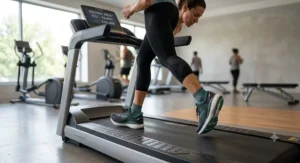
Understanding Pes Cavus, Supination, and Lateral Ankle Instability
Pes cavus is the clinical term for a high, rigid arch that doesn’t flatten under body weight, and it directly shapes which running shoes actually work for you. According to the StatPearls clinical reference on pes cavus, the condition is defined by elevation of the foot’s longitudinal arch alongside forefoot pronation and hindfoot varus — a combination that concentrates pressure on the heel and ball of the foot rather than distributing it evenly, which is exactly why cushioning quality matters more than arch support for this foot type.
Supination (sometimes called underpronation) describes the outward roll that naturally accompanies high arches during the gait cycle — the opposite of the inward roll stability shoes are built to correct. Because that outward roll shifts load toward the lateral edge of the foot, lateral ankle instability becomes a genuine concern for many high-arch runners, particularly on uneven surfaces or worn-down outsoles. This isn’t a niche issue — best neutral shoes women underpronation searches have surged as more runners realize generic “supportive” shoe advice wasn’t designed with their foot type in mind. The practical takeaway: a wider platform (like the Novablast 5 or 1080v15) and a durable lateral outsole (like the Ride 19) both directly address this instability risk without ever introducing the medial correction that would work against a high arch.
Cushion Distribution: What Actually Matters in a Neutral Shoe
Cushion distribution — how evenly a midsole spreads impact force across the heel, midfoot, and forefoot — matters more for high arches than raw stack height alone. Because a rigid, high arch doesn’t flex to spread load the way a flatter foot naturally does, poor cushion distribution concentrates force into two small zones: the heel strike point and the ball of the foot. That’s precisely why shoes like the HOKA Bondi 9 and ASICS Gel-Nimbus 27 use wider platforms and full-length foam rather than isolated cushioning pods — a design choice that spreads pressure across a broader surface area instead of letting it pool at the extremes.
What most buyers overlook is that a taller stack doesn’t automatically mean better distribution; a narrow, tall shoe can actually feel less stable than a shorter, wider one. The New Balance 1080v15‘s contoured wide base is a textbook example of engineering cushion distribution correctly — spreading the same amount of foam over a broader footprint reduces peak pressure without needing to add more material (and more weight). If you’ve ever felt a hot spot develop under your forefoot mid-run, that’s a distribution problem, not necessarily a cushioning-quantity problem, and it’s worth prioritizing platform width over sheer stack height the next time you’re comparing specs.
Long-Term Cost & Maintenance
Running shoes for high arches typically last 300–500 miles depending on your gait and the shoe’s outsole compound, which means cost-per-mile is often a better value metric than sticker price. A $170 HOKA Bondi 9 that lasts 450 miles works out to roughly $0.38 per mile, while a $130 Saucony Ride 19 that only survives 300 miles due to lighter-duty rubber comes out closer to $0.43 per mile — a reminder that the cheaper shoe isn’t automatically the better value.
Runners logging under 15 miles a week can often stretch a pair well past 500 miles, making a durability-focused shoe like the Ride 19 or the budget-friendly Mount to Coast R1 the smarter long-term investment. Higher-mileage runners, meanwhile, tend to see better total value from rotating two pairs — a daily trainer and a max-cushion recovery shoe — since alternating stack heights and drops reduces repetitive-stress injury risk and extends the usable life of both pairs simultaneously.
Problem → Solution Guide
Problem: Constant top-of-foot pressure and lace-bite pain. High-instep feet often clash with standard lacing patterns. Solution: skip an eyelet at the pressure point or switch to a runner’s loop lacing technique; the Mount to Coast R1‘s dual-zone lacing solves this at the shoe level entirely.
Problem: Ankle rolling on uneven pavement or trail edges. This is a textbook supination symptom tied to lateral ankle instability. Solution: prioritize a wider platform shoe like the ASICS Novablast 5 or New Balance 1080v15, and consider a short course of ankle-stability exercises alongside your shoe change.
Problem: Forefoot hot spots or metatarsalgia-type pain after runs. This points to poor cushion distribution concentrating force at the ball of the foot. Solution: a full-length, wide-platform midsole like the HOKA Bondi 9 or ASICS Gel-Nimbus 27 spreads that load more evenly.
Problem: Shoes wearing out unevenly on the outer edge within weeks. Classic lateral wear from a supinated gait. Solution: a durability-focused outsole compound like the Ride 19’s XT-900 rubber holds up longer under that specific wear pattern than softer, lighter rubber blends.
Problem: Feeling unstable in maximum-cushion shoes. Some underpronators feel less grounded in ultra-tall stacks. Solution: step down to a moderate stack option like the Brooks Ghost 17, which balances protection with a more connected ground feel.
✨ Don’t Miss These Exclusive Deals!
🔍 Take your running comfort to the next level with these carefully selected neutral shoes. Click on any highlighted pick above to check current pricing and availability before your size sells out. The right pair can turn every run into one your high arches will actually thank you for.
FAQ
❓ Do I need arch support if I have high arches?
❓ What's the difference between supination and underpronation?
❓ How often should I replace running shoes for high arches?
❓ Can high arches cause ankle instability?
❓ Are HOKA shoes good for high arches?
Conclusion
High arches don’t need to be the reason running feels harder than it should. The fix isn’t more support — it’s the right kind of cushioning, distributed correctly, in a shoe that lets your foot move the way it’s built to move. Whether that’s the all-around reliability of the Brooks Ghost 17, the max-plush comfort of the HOKA Bondi 9, or the surprisingly capable value of the Mount to Coast R1, every option on this list was chosen specifically because it skips the medial correction your foot doesn’t need and focuses on what it does: shock absorption, stability through platform width, and a fit that respects a higher instep.
Take the time to actually test-walk or test-run before committing, pay attention to how your foot feels after 20 minutes rather than 20 seconds, and remember that the “best” shoe is the one that matches your specific mileage, budget, and gait — not the one with the biggest marketing budget. Your high arches have been working hard your whole life; it’s about time your shoes worked with them instead of against them.
Recommended for You
- 7 Best Neutral Running Shoes for Women in 2026
- Minimalist vs Zero Drop Shoes Men: 7 Top Picks for 2026
- 7 Best Zero Drop Running Shoes for Men in 2026
Disclaimer: This article contains affiliate links. As an Amazon Associate, I earn from qualifying purchases. If you purchase products through these links, we may earn a small commission at no additional cost to you.
✨ Found this helpful? Share it with your friends! 💬🤗
