
In This Article
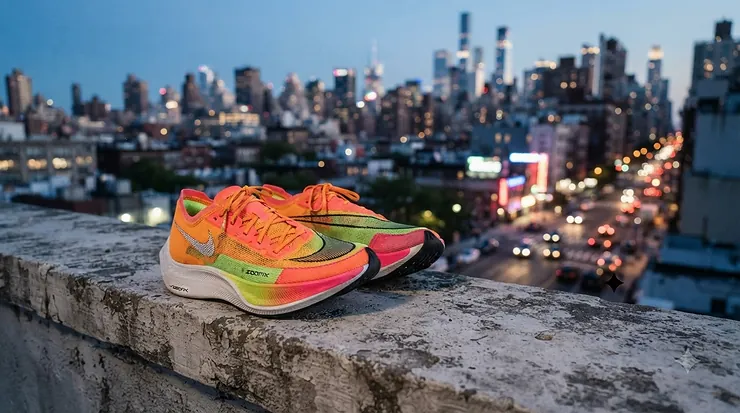
Somewhere between the start-line jitters and that final 400 meters where your lungs start negotiating with your legs, your shoes either disappear beneath you or they don’t. That’s the whole game with racing flats for 5k — you want a shoe light enough to forget about and responsive enough to notice. Racing flats for 5k are low-profile, minimal-weight running shoes built specifically for short, fast efforts, typically shaving several ounces off a standard trainer by trimming foam, simplifying the outsole, and stripping the upper down to essentials. Some now include a thin carbon or nylon plate; plenty of the best ones still don’t, and that’s fine — a plate is a tool, not a requirement.

This guide breaks down seven real, currently available shoes spanning budget-friendly plateless flats to $300 carbon rockets, with honest analysis of who each one actually suits. We pulled specs, weights, and aggregated review sentiment from shoe-lab testers and retailers rather than inventing a single data point, because a 5k is short enough that fit and feel matter more than marketing copy. If you’re new to the category, it helps to understand the broader context of the 5K run itself — a distance where seconds per mile genuinely hinge on footwear choices in a way that longer, more fatigue-dominated races don’t.
Quick Comparison Table
| Shoe | Weight (approx.) | Drop | Best For |
|---|---|---|---|
| Saucony Kinvara 14 | 7.0 oz | 4mm | Budget-conscious first-timers |
| Saucony Type A9 | 6.0 oz | 4mm | Lightweight trainer/racer crossover |
| adidas adizero Takumi Sen 11 | ~7.0 oz | 6mm | Purists who don’t want a plate |
| Nike Streakfly 2 | ~5.0 oz | 4mm | Forefoot strikers chasing a PR |
| New Balance FuelCell SuperComp Pacer v2 | ~7.3 oz | 8mm | Runners who want a cushioned plated ride |
| Nike Vaporfly 4 | 5.9 oz | 6mm | Steady-pace racers wanting max propulsion |
| Mizuno Hyperwarp Pure | 4.9 oz | 3.5mm | Weight-obsessed veterans |
Looking at the spread above, the gap between the lightest option (Mizuno Hyperwarp Pure at 4.9 oz) and the heaviest (New Balance FuelCell SuperComp Pacer v2 at roughly 7.3 oz) is nearly two and a half ounces per shoe — five ounces of extra swing weight across a pair over 3.1 miles. That’s not trivial, but it isn’t the whole story either, since drop, plate stiffness, and stack height shape how a shoe actually rides far more than raw grams do. Budget buyers should note that the two Saucony options undercut the carbon-plated field by $150 or more while still shaving real weight off a daily trainer.
Just one click — help others make better buying decisions too!😊
Top 7 Racing Flats for 5K: Expert Analysis
We researched dozens of current models before narrowing this list to seven shoes that actually earn a spot in a 5k-specific rotation — not marathon super shoes wearing a racing-flat label, and not daily trainers dressed up as speed shoes. Each pick below covers a distinct use case, from a sub-$120 entry point to a $300 purist’s racer.
1. Saucony Kinvara 14 — best budget entry into fast, plateless racing
The Kinvara has quietly been the gateway drug into speed shoes for over a decade, and version 14 keeps that reputation alive at a fraction of the cost of anything with a plate.
At 7.0 oz for a men’s size 9 (6.2 oz women’s), the Kinvara 14 pairs a 31mm/27mm stack with a 4mm drop and a PWRRUN+ sockliner — meaning the added cushioning over previous versions doesn’t come with the sluggish ride you’d expect from more foam. In practice, that translates to a shoe flexible enough to feel fast on tempo runs and stable enough not to punish you for racing in it on a Saturday morning.
Based on the spec comparison, this is the shoe for runners who want to test whether a lighter, lower shoe even suits their stride before committing $200-plus to a plated racer. Reviewers consistently report that the Kinvara 14 fits true to size with a secure, sleeved upper, though a few note the largely exposed foam outsole wears faster than a rubber-heavy sole and can feel slick on wet pavement.
Pros:
- ✅ One of the lightest, most affordable plateless racers available
- ✅ Flexible ride that doubles as a tempo trainer
- ✅ Secure, true-to-size sleeved upper
Cons:
- ❌ Exposed foam outsole wears faster than rubber-covered soles
- ❌ Less grip in wet conditions than shoes with fuller rubber coverage
In the $110-$120 range, the Kinvara 14 is arguably the best value on this entire list for anyone unsure if racing flats are even their thing.
2. Saucony Type A9 — lightest no-plate flat for classic ground feel
If the Kinvara is Saucony’s crossover racer, the Type A9 is the brand’s dedicated, no-nonsense flat — and at roughly 6.0 oz, it’s noticeably lighter on the foot from the first step.
The SSL EVA midsole and PWRTRAC rubber outsole keep the ride low and direct, with a 4mm drop that mirrors the Kinvara but a slimmer platform that feels closer to a track shoe than a road trainer. The 3D-printed overlays on the upper add structural lockdown exactly where a foot tends to splay during a hard push, which matters more than it sounds like on paper — a sloppy upper at 5k race pace translates directly into wasted energy correcting your foot position mid-stride.
What most buyers overlook about a shoe like this is that “no carbon plate” doesn’t mean “no propulsion.” The stiffer, low-stack EVA construction still delivers a snappy toe-off; it just does it through geometry and foam density rather than an embedded plate, which some runners genuinely prefer for the more natural, less rockered feel. Aggregated customer sentiment points to a shoe that fits narrow and runs true to size, with the featherweight upper standing out as the most-praised feature.
Pros:
- ✅ Genuinely minimal weight without a plate’s added cost
- ✅ Secure, structured 3D-printed overlay upper
- ✅ Low, direct ground feel favored by traditionalists
Cons:
- ❌ Narrow fit may not suit wider feet
- ❌ Minimal cushioning limits comfort on longer warm-ups
Priced in the $130-$145 range, the Type A9 sits as the natural step up from the Kinvara for runners who’ve decided they like the low-profile, no-plate feel.
3. adidas adizero Takumi Sen 11 — best pure racing flat for purists
adidas has kept the Takumi Sen deliberately plate-free for over a decade, and the 11th generation continues that tradition as one of the last true racing flats from a major brand.
Weighing in around 7.0 oz for a men’s 9 (5.9 oz women’s 8), the Takumi Sen runs a 33mm/27mm stack with a 6mm drop — taller underfoot than either Saucony option here, but still built on adidas’s Lightstrike Pro-adjacent foam that prioritizes snap over plush cushioning. Here’s what to weigh: the higher drop makes it more forgiving for heel- and midfoot-strikers who’d feel unstable in a 4mm shoe, while the sleek, low-volume upper keeps total weight competitive with shoes that do carry a plate.
The spec sheet won’t tell you this, but user reports suggest the Takumi Sen’s biggest strength is consistency — it’s been a proven 5k-to-10k racer across multiple generations, and reviewers describe it as one of the more forgiving flats for runners transitioning out of daily trainers for the first time. It doesn’t try to be a super shoe, and that restraint is exactly the appeal for buyers who find plated rockers unpredictable at faster paces.
Pros:
- ✅ Proven, multi-generation racing flat pedigree
- ✅ More forgiving 6mm drop than low-drop rivals
- ✅ Lightweight without relying on plate technology
Cons:
- ❌ Costs nearly as much as some plated competitors
- ❌ Less propulsive sensation than carbon-plated options
Expect to pay somewhere in the $180-$190 range, positioning the Takumi Sen 11 as a premium-priced but plate-free alternative for runners who know exactly what they want.
4. Nike Streakfly 2 — most track-spike-like feel on the road
The Streakfly 2 is what happens when Nike takes a track-spike last, bolts in a carbon Flyplate, and dares recreational racers to keep up.
At roughly 5.0 oz with a 27mm/23mm stack and an aggressive 4mm drop, this is a shoe built almost entirely around forefoot loading — the full-length ZoomX midsole and Flyplate combination measured energy return in the high 70-percent range in third-party lab testing, among the highest of any shoe in this guide. What most buyers overlook is that this low-stack construction actually increases ground feel rather than burying it under foam, which is precisely why doctors of running-style reviewers have called it their favorite shoe specifically for short-distance road racing rather than an all-purpose trainer.
Based on the spec comparison, the Streakfly 2 rewards forefoot and midfoot strikers who can handle a narrow, snug fit; it is decidedly less kind to heel-strikers, who may find the low drop and firm rear foot uncomfortable. Reviewers consistently note the wafer-thin tongue can fold over during lacing, a minor but repeated annoyance across multiple independent tests.
Pros:
- ✅ Among the lightest carbon-plated shoes on the market
- ✅ Exceptional lab-measured energy return for short distances
- ✅ Track-spike-inspired geometry rewards quick turnover
Cons:
- ❌ Narrow fit unsuitable for wide or heel-striking runners
- ❌ Thin, minimal upper offers little structure on turns
Pricing sits in the $180-$190 range, making the Streakfly 2 one of the most weight-efficient carbon racers you can currently buy.
5. New Balance FuelCell SuperComp Pacer v2 — best cushioned plated racer
Not every fast runner wants a stripped-down flat, and the Pacer v2 exists precisely for the racer who wants carbon propulsion without sacrificing every bit of cushioning.
At roughly 7.2-7.4 oz with a 35mm/27mm stack and an 8mm drop, the Pacer v2 is the tallest, heaviest shoe on this list — yet it uses the same bowed Energy Arc carbon plate and 100% PEBA FuelCell foam found in New Balance’s marathon-day super shoe, just with less overall stack. What that means in practice is a firmer, more grounded ride than New Balance’s max-cushion racers, but noticeably more forgiving than the Streakfly 2 or Kinvara 14 on tired legs during the back half of a 5k.
The spec sheet won’t tell you this, but user reports suggest the Pacer v2 punches above its price point: independent lab and field reviews have repeatedly called it one of the better values in the carbon-racer category, since it undercuts most $250-plus competitors by $50 or more while delivering comparable propulsion. A recurring complaint in aggregated reviews involves heel-area rubbing for some foot shapes, worth testing before race day.
Pros:
- ✅ Carbon-plate propulsion at a below-average price for the category
- ✅ More cushioned, forgiving ride than low-stack rivals
- ✅ Versatile enough to stretch from 5k to half marathon
Cons:
- ❌ Heaviest shoe in this lineup
- ❌ Some runners report heel-area discomfort or blistering
At around $195-$210, the Pacer v2 remains one of the strongest value propositions among plated 5k racers.
6. Nike Vaporfly 4 — best for steady-pace 5k racers wanting max propulsion
The Vaporfly name built the modern super-shoe category, and version 4 remains a benchmark for what a carbon-plated racer can do at 5k effort.
Weighing 5.9 oz for a men’s 9 (4.9 oz women’s 8), the Vaporfly 4 runs a 36mm/30mm stack — taller than a traditional racing flat — with a full-length ZoomX midsole and carbon Flyplate delivering what testers have measured as some of the most responsive cushioning in the category. Here’s what to weigh: that height means less raw ground feel than the Streakfly 2 or a Saucony flat, but significantly more shock absorption, which matters when the pace you’re holding for 5k is genuinely uncomfortable from mile one.
Based on the spec comparison, the Vaporfly 4 works best for runners who hold a consistent, hard pace throughout the race rather than surging or negative-splitting, since the plate’s benefit is most pronounced at steady, high effort. Reviewers consistently flag a narrow, low-volume heel that can feel unstable for rearfoot strikers, recommending careful lacing or a half-size adjustment to compensate.
Pros:
- ✅ Class-leading energy return from ZoomX foam and Flyplate combo
- ✅ Proven across 5k through half-marathon distances
- ✅ Widely available with strong resale and rotation value
Cons:
- ❌ Narrow heel fit unstable for some rearfoot strikers
- ❌ Taller stack reduces ground feel versus a true flat
Priced around $255-$270, the Vaporfly 4 is a premium investment best justified by runners racing multiple distances beyond just the 5k.
7. Mizuno Hyperwarp Pure — lightest carbon-plated racer available
Mizuno built the Hyperwarp Pure to answer a specific question: what happens if you strip a modern super shoe back down toward old-school racing-flat proportions?
The answer weighs 4.9 oz for a men’s 9, the lightest shoe in this entire guide, built on a 34mm/30.5mm stack with a notably low 3.5mm drop and a full-length carbon plate embedded in 100% PEBA Enerzy XP foam. What most buyers overlook is that despite being this light, the Hyperwarp Pure retains a wider platform through the forefoot than the Streakfly 2, giving it noticeably more lateral stability for a shoe in its weight class — a detail multiple independent testers flagged as unusually well-executed.
Reviewers consistently note this shoe reads more like a traditional racing flat with modern propulsion bolted on than a maximalist super shoe, and several have called it one of the most polarizing releases of the year precisely because it refuses to chase the taller, softer trend dominating the category. The spec sheet won’t tell you this, but user reports suggest lighter runners find it capable well past 5k, while heavier runners may prefer more cushioning underfoot for anything beyond 10k.
Pros:
- ✅ Lightest carbon-plated racer currently on the market
- ✅ Wider forefoot platform adds stability for its weight class
- ✅ Old-school racing-flat feel with modern foam and plate
Cons:
- ❌ Highest price point of any shoe in this guide
- ❌ Firm, snug fit unforgiving for cushioned-shoe loyalists
At roughly $295-$305, the Hyperwarp Pure is a niche, premium purchase for runners who have already decided that every gram matters.
Top 7 Racing Flats for 5K: Full Spec Comparison
| Shoe | Stack Height | Drop | Plate | Price Range | Best For |
|---|---|---|---|---|---|
| Saucony Kinvara 14 | 31/27mm | 4mm | None | $110-$120 | First-time flat buyers |
| Saucony Type A9 | Low-profile | 4mm | None | $130-$145 | Ground-feel purists |
| adidas adizero Takumi Sen 11 | 33/27mm | 6mm | None | $180-$190 | Forgiving no-plate racing |
| Nike Streakfly 2 | 27/23mm | 4mm | Carbon Flyplate | $180-$190 | Forefoot strikers, short races |
| New Balance FuelCell SuperComp Pacer v2 | 35/27mm | 8mm | Energy Arc carbon | $195-$210 | Cushioned plated value |
| Nike Vaporfly 4 | 36/30mm | 6mm | Carbon Flyplate | $255-$270 | Steady-pace max propulsion |
| Mizuno Hyperwarp Pure | 34/30.5mm | 3.5mm | Carbon plate | $295-$305 | Lightest possible plated ride |
Reading this table left to right tells a clear story: the plated shoes here cluster $65-$120 above the plateless flats, but the New Balance FuelCell SuperComp Pacer v2 breaks that pattern as the most affordable carbon-plated entry. Drop values swing from a low 3.5mm (Mizuno Hyperwarp Pure) up to 8mm (New Balance FuelCell SuperComp Pacer v2), which matters more for injury-prone runners than stack height alone — a sudden switch to a low-drop flat without adaptation is one of the more common ways runners tweak a calf or Achilles in race week.

Practical Usage Guide: Breaking In Your New Racing Flats for 5K
Racing flats don’t need the 200-mile break-in period some daily trainers demand, but treating them as race-day-only, out-of-the-box shoes is a mistake worth avoiding. Plan two to three short runs in your new pair before race day — a few easy miles, then one workout at or near goal 5k pace — to confirm fit, check for hot spots, and let the midsole foam settle into its intended flex pattern.
Lacing matters more in a low-volume racing shoe than in a cushioned trainer. A runner’s loop (using the top eyelet to create a heel-lock) solves the narrow-heel slippage several of these shoes exhibit, particularly the Vaporfly 4 and Streakfly 2. Skip thick cushioned socks; a thin, snug racing sock lets the upper do its job without adding volume the shoe wasn’t designed for.
Maintenance-wise, racing flats are disposable by nature compared to trainers — most carry a useful racing lifespan of 100-150 hard efforts before the foam or plate loses its snap, even if the upper still looks fine. Rotate them out of everyday training entirely; save them exclusively for races and key workouts to preserve that responsiveness when it counts. A common first-30-days mistake is wearing a new racing flat for an easy recovery run “just to break it in” — this burns lifespan on a shoe that wasn’t built for slow miles and won’t feel any more broken-in for it.
Real-World Scenarios: Matching a Racing Flat to Your 5K Goals
Consider a college club runner training 25 miles a week on a tight budget, chasing a sub-20 5k for the first time. The Saucony Kinvara 14 or Type A9 makes the most sense here — both deliver a genuine speed-shoe feel for under $150, without asking a still-developing runner to commit to a $250 carbon shoe before they know if the low-drop, low-stack sensation even suits their stride.
Now picture a masters-level runner in their 40s, racing 5ks and 10ks year-round with a well-established gait and a history of calf tightness. The New Balance FuelCell SuperComp Pacer v2’s higher 8mm drop and taller stack offer plated propulsion without the abrupt low-drop transition that could aggravate an old injury, making it the safer plated option for that profile.
Finally, imagine a competitive high school or open-division racer with a narrow, efficient forefoot strike, chasing every possible second off a 5k PR and willing to pay for it. The Nike Streakfly 2 or Mizuno Hyperwarp Pure fit that scenario precisely — both are built around forefoot loading and minimal weight, at the cost of the forgiveness a heel-striker or beginner would need.
✨ Don’t Miss These Exclusive Deals!
🔍 Take your 5k racing setup to the next level with these carefully selected shoes. Click on any highlighted pick to check current pricing and availability, and find the racing flats for 5k that fit your stride and your race-day goals.
Problem → Solution: Common 5K Race-Day Shoe Issues
Blisters from a stiff, unfamiliar upper are the most frequent race-day complaint among first-time racing-flat wearers. The fix is simple: never race in a shoe you haven’t run at least one workout in, and apply a thin layer of anti-chafe balm at known hot spots — typically the Achilles and the outside of the fifth toe — before the gun goes off.
Heel slippage in low-volume shoes like the Nike Vaporfly 4 or Nike Streakfly 2 shows up mid-race as an annoying, energy-wasting foot shift inside the shoe. A runner’s-loop lacing technique through the top eyelet solves this in most cases without needing to size down.
Calf and Achilles soreness after switching to a low-drop flat like the Mizuno Hyperwarp Pure or Saucony Type A9 usually stems from too abrupt a transition from a higher-drop daily trainer. Introduce a low-drop shoe gradually over two to three weeks of short efforts rather than debuting it cold on race morning.
Cold feet on a chilly start line — literally — affect thin-uppered flats more than cushioned trainers. Wearing a slightly thicker sock for the warm-up and switching to a thin racing sock just before the gun keeps blood flow and comfort intact without adding shoe volume during the race itself.
How to Choose Racing Flats for 5K
Picking the right shoe from seven strong options comes down to a handful of decision points, weighted in order of importance for a race this short.
- Start with your strike pattern. Forefoot and midfoot strikers tolerate low-drop shoes like the Streakfly 2 or Hyperwarp Pure far better than heel-strikers, who should lean toward the higher-drop Takumi Sen 11 or Pacer v2.
- Decide if a plate actually helps you. Research on carbon-plated footwear shows a measurable but individually variable running-economy benefit — a peer-reviewed muscle-level analysis found the effect depends heavily on how a runner’s calf and ankle mechanics interact with plate stiffness, meaning some runners respond strongly and others barely at all.
- Set a real budget, not an aspirational one. A $120 plateless flat run confidently beats a $300 shoe that feels unfamiliar because you were too intimidated to train in it beforehand.
- Weigh drop against your injury history. Sudden low-drop transitions are a common contributor to calf and Achilles flare-ups; if you’ve had either, favor the 6-8mm options here.
- Prioritize fit over spec-sheet weight. A half-ounce difference between two shoes matters less than whether the upper locks your foot down without hot spots at race pace.
- Consider versatility beyond the 5k. If you’re also racing 10ks or half marathons, shoes like the Pacer v2 or Vaporfly 4 stretch further than a pure 5k specialist like the Streakfly 2.
- Test before race week, never on it. Every shoe on this list benefits from at least one workout in it before you trust it on the start line.
Lightweight Racing Flats for Men: What Changes and What Doesn’t
Most racing flats are built on unisex or gender-specific lasts with only modest structural differences, but weight and fit are where men’s-specific sizing genuinely matters. Men’s racing flats in this guide generally run heavier in absolute terms simply because men’s sizes are larger — the Mizuno Hyperwarp Pure’s 4.9 oz figure, for instance, is measured on a men’s 9, and the same shoe drops closer to 4.3 oz in a men’s 7 equivalent.
What doesn’t change much between men’s and women’s versions of the same model is the underlying midsole compound, plate stiffness, and drop — a men’s Nike Vaporfly 4 and a women’s Vaporfly 4 share the same ZoomX formulation and Flyplate geometry, just scaled to different last volumes. For men specifically shopping this category, foot volume matters more than most spec-sheet numbers: several shoes here, including the Streakfly 2 and Type A9, run narrow through the midfoot and forefoot, which can be a dealbreaker for wider-footed male runners regardless of how light the shoe measures on paper.
Men chasing a first sub-20 5k are generally better served starting with the Kinvara 14 or Takumi Sen 11 — both offer a more accommodating fit profile than the narrower, race-day-only shoes further down this list, letting a developing runner log real training miles in something close to race feel without punishing wider feet.
Race Day Shoe Selection: Building Your Pre-Race Checklist
Choosing which shoe to wear is only half the decision; when and how you finalize that choice matters just as much for a race as short as a 5k. Lock in your shoe choice at least one week out, not the night before, so you have time for one final short shakeout run in them.
Check the weather forecast against your shoe’s outsole. A Kinvara 14 or Type A9 with minimal rubber coverage becomes noticeably less secure on wet pavement than the fuller-coverage Vaporfly 4 or Pacer v2, so a rainy forecast is a legitimate reason to switch picks even at the last minute if you own more than one option.
Match your shoe to your actual race-day pacing strategy, not your training-run pace. If you plan to hold a hard, steady effort from the gun, a plated shoe like the Streakfly 2 or Vaporfly 4 rewards that pattern; if you tend to start conservatively and close fast, the more neutral feel of a plateless flat may serve you better.
Finally, pack a backup pair. Blisters, a broken lace, or an unexpected weather shift are all solvable problems if you brought a second, already-broken-in shoe to the start line — a detail experienced racers rarely skip and first-timers almost always do.

Ounce Weight Comparison: Why Grams Matter More Than You Think
The weight spread across this guide’s seven shoes runs from 4.9 oz (Mizuno Hyperwarp Pure) to roughly 7.3 oz (New Balance FuelCell SuperComp Pacer v2) — a gap of about 2.4 ounces per shoe, or nearly five ounces across a pair.
| Shoe | Weight (single shoe, men’s 9) | Category |
|---|---|---|
| Mizuno Hyperwarp Pure | 4.9 oz | Lightest carbon-plated |
| Nike Streakfly 2 | ~5.0 oz | Lightest carbon-plated |
| Nike Vaporfly 4 | 5.9 oz | Mid-weight carbon-plated |
| Saucony Type A9 | 6.0 oz | Lightest plateless |
| Saucony Kinvara 14 | 7.0 oz | Mid-weight plateless |
| adidas adizero Takumi Sen 11 | ~7.0 oz | Mid-weight plateless |
| New Balance FuelCell SuperComp Pacer v2 | ~7.3 oz | Heaviest, most cushioned |
Sports science on running economy generally estimates that every 100 grams of added shoe weight costs roughly 1% more energy expenditure at a given pace — meaning the nearly 70-gram difference between the Hyperwarp Pure and the Pacer v2 is a real, if modest, physiological factor over 3.1 miles. That said, weight alone doesn’t determine speed; a heavier shoe with better energy return, like the Pacer v2, can still out-propel a lighter, plateless flat for many runners, which is exactly why this guide weighs stack height and plate presence alongside raw ounces rather than ranking shoes by weight alone.
Track and Field Racing Gear: Beyond the Shoes
Racing flats get the spotlight, but a handful of secondary gear choices meaningfully affect 5k performance, whether you’re racing on the roads or stepping onto a track for a certified time trial. Compression or racing-specific socks reduce microscopic foot movement inside a low-volume flat, which matters more in a shoe like the Streakfly 2 than in a cushioned daily trainer.
For runners racing on an actual outdoor or indoor track rather than the roads, note that track and field racing gear rules differ from road racing shoe rules — track spikes for events 800m and up are capped at a 25mm sole thickness, distinct from the 40mm road-shoe limit governing every shoe in this guide. None of the seven shoes reviewed here are track spikes; all are road-legal racing flats and super shoes intended for road 5k events, so if your goal race is a certified track 5000m, you’ll want a genuine spike, not a road flat.
Beyond footwear, a lightweight, snug-fitting racing singlet reduces wind resistance at 5k race pace more than most runners assume, and a GPS watch set to auto-lap at each kilometer or mile helps you execute the pacing strategy your shoe choice was built around. None of this gear replaces shoe selection as the single biggest equipment decision for a 5k, but it rounds out a race-day setup that matches the effort you’re about to put in.
Racing Flats vs Super Shoes vs Daily Trainers
| Category | Typical Weight | Cushioning | Best Use |
|---|---|---|---|
| Racing flat (no plate) | 5-7 oz | Minimal | 5k-10k races, tempo work |
| Carbon-plated super shoe | 5-7.5 oz | Moderate-high | 5k through marathon racing |
| Daily trainer | 9-11 oz | High | Everyday training miles |
The core distinction isn’t just weight — it’s intent. A daily trainer like a standard cushioned road shoe is engineered for repeated, easy-paced impact absorption across hundreds of training miles, prioritizing durability and joint protection over responsiveness. A racing flat strips that cushioning back deliberately, trading long-term comfort for a lighter, more direct connection to the ground that only makes sense at faster paces and shorter durations.
Carbon-plated super shoes occupy a middle position that didn’t really exist a decade ago: they add back some of a trainer’s cushioning through advanced PEBA foams while keeping weight competitive with a traditional flat, using the embedded plate to recover some of the propulsion a thinner midsole would otherwise sacrifice. For a 5k specifically, the practical takeaway is that a well-fitted plateless flat like the Takumi Sen 11 can still out-race a poorly-fitted super shoe — technology narrows gaps, but it doesn’t eliminate the importance of simply choosing a shoe that matches your stride.
Common Mistakes When Buying Racing Flats for 5K
The single most common mistake is buying the most expensive or most-hyped shoe on a “best racing shoes” list without checking whether its drop and fit actually suit your gait — a $300 shoe that causes calf strain from an abrupt drop change is a worse purchase than a $120 shoe you can actually race comfortably.
A second frequent error is assuming every carbon-plated shoe automatically outperforms every plateless flat. As the research cited earlier in this guide shows, plate benefit varies meaningfully by individual biomechanics, and several reviewers of shoes like the Takumi Sen 11 and Type A9 report performing just as well, if not better, in a well-fitted plateless flat.
Buyers also frequently skip sizing verification, ordering their usual daily-trainer size in a racing flat without accounting for the generally narrower, lower-volume fit these shoes carry. Several models in this guide, including the Streakfly 2 and Vaporfly 4, are widely reported to run narrow or short, making a half-size check worthwhile before committing to a race-week purchase.
Finally, many first-time buyers wait too long to purchase, leaving no time to break in or test the shoe before race day — exactly the scenario the practical usage guide above is meant to prevent.
Safety, Regulations & Compliance Guide
If you’re racing anything beyond a low-key local 5k, it’s worth knowing that footwear technology is actively regulated at the elite level. World Athletics, the global governing body for the sport, maintains a hard 40mm maximum sole thickness for road racing shoes, along with a rule limiting shoes to a single rigid plate system — every model reviewed in this guide falls within those limits and is road-legal for sanctioned competition.
For recreational and local-level 5k races, these rules are rarely enforced beyond the top finishers, since most community races lack the staffing to check footwear compliance across an entire field. That said, if you’re chasing a certified time for a qualifying standard or racing in a USATF-sanctioned event with elite-adjacent enforcement, it’s worth confirming your chosen shoe appears on the current approved list rather than assuming compliance.
Beyond competition rules, basic safety considerations apply to any racing flat: the reduced cushioning that makes these shoes fast also makes them less forgiving on uneven terrain, potholes, or curb transitions common on road-race courses. Scouting your race route in advance, or at minimum staying alert during the final downhill or turn-heavy sections, reduces the ankle-roll risk that comes with trading stability for speed.
Long-Term Cost & Maintenance
Racing flats are not a buy-once, wear-forever purchase, and understanding their realistic lifespan changes the value calculation considerably. Most shoes in this guide last somewhere between 100 and 200 miles of hard effort before the foam compresses and the plate (where present) loses its snap — meaningfully shorter than the 300-500 miles typical of a daily trainer.
Run the cost-per-use math and the picture shifts: a $120 Kinvara 14 used for 15 hard workouts and three races works out to under $7 per session, while a $300 Hyperwarp Pure used the same way costs closer to $17 per session — still reasonable for a serious racer chasing marginal gains, but a meaningful gap for a recreational runner doing two or three 5ks a year. Total cost of ownership also depends on rotation habits: reserving a racing flat exclusively for races and key workouts, rather than everyday training, roughly doubles its useful racing lifespan compared to wearing it for daily miles.
For most runners racing occasionally, the plateless options here — Kinvara 14, Type A9, or Takumi Sen 11 — deliver the strongest long-term value, since their lower upfront cost means less financial pressure to over-extend their lifespan into worn-out territory. Frequent racers chasing every marginal second, on the other hand, may find the higher cost-per-use of a plated shoe justified by measurable performance gains across a full season.

FAQ
❓ What's the difference between a racing flat and a regular running shoe?
❓ Do I need a carbon-plated shoe to race a fast 5k?
❓ How much lighter are racing flats than daily trainers?
❓ Can beginners wear racing flats for their first 5k?
❓ How long do racing flats typically last?
Conclusion
Seven shoes, three price tiers, and one consistent theme: the best racing flats for 5k are the ones that match your strike pattern, your budget, and your actual race-day plan rather than whichever shoe currently tops a viral “fastest shoes” list. A $120 Saucony Kinvara 14 run confidently will beat a $300 shoe that feels unfamiliar underfoot, and a heel-striker forcing themselves into a 3.5mm-drop flat is fighting their own biomechanics before the gun even fires.
Start with fit and strike pattern, layer in your budget, and only then weigh whether a carbon plate is worth the added cost for your specific stride — the research is clear that its benefit isn’t universal. Whichever of these seven you land on, give it at least one real workout before race day, and you’ll toe the line knowing your shoes are working with you, not against you.
🔥 Ready to find your fastest 5k shoe? Compare current prices on today’s picks and lock in your race-day setup before your next start line!
Recommended for You
- Carbon Plate Shoes for Beginners: 7 Safe Picks for 2026
- Carbon Plate Running Shoes: 7 Best Picks to PR in 2026
- 7 Best Waterproof Trail Running Shoes Women Trust in 2026
Disclaimer: This article contains affiliate links. As an Amazon Associate, I earn from qualifying purchases. If you purchase products through these links, we may earn a small commission at no additional cost to you.
✨ Found this helpful? Share it with your friends! 💬🤗
