
In This Article
Your left shoe is worn flat on the inside edge. Your right one matches it. If you’ve ever flipped your sneakers over and noticed that lopsided wear pattern, you already know something your ankles have been trying to tell you for months: you overpronate. Running shoes for overpronation exist for exactly this moment — that split second on every stride when your arch collapses a little too far and your whole leg twists to compensate.
Overpronation, in plain terms, is when your foot rolls inward excessively after it strikes the ground, flattening the arch more than a neutral gait would and shifting stress up through the ankle, shin, and knee. It’s common, it’s manageable, and — contrary to what your Instagram feed might suggest — it isn’t a design flaw in your body. It’s just a pattern, and the right shoe works with that pattern instead of against it.
We dug through real product specs, aggregated review sentiment, and manufacturer data to put together this guide, and according to the American Podiatric Medical Association, choosing footwear based on your arch type and pronation pattern is one of the simplest ways to head off running injuries before they start. That’s the whole philosophy behind stability running shoes for overpronation: guide the foot gently, don’t fight it into submission.
Below, you’ll find seven real shoes worth trying, honest breakdowns of what actually helps versus what’s marketing fluff, and a plain-English walk through gait analysis, medial post technology, and what “ankle rolling inward” really means for your training. No invented five-star reviews. No fairy tales about miracle cures. Just what the research and the reviewers are actually saying.
Quick Comparison Table
| Shoe | Support Style | Best For | Price Range |
|---|---|---|---|
| Brooks Adrenaline GTS 25 | GuideRails (dynamic) | All-around daily training | $130–$145 |
| ASICS Gel-Kayano 32 | 4D Guidance System | Long-distance, moderate-severe overpronation | $160–$175 |
| Saucony Hurricane 26 | PWRRUN PB + medial support | Max cushion, high mileage | $150–$165 |
| Hoka Arahi 8 | H-Frame geometry | Lightweight guidance, faster days | $135–$150 |
| New Balance Fresh Foam X 860v15 | Stability Plane | Structured everyday support | $140–$155 |
| Brooks Glycerin GTS 23 | GuideRails (plush) | Recovery runs, all-day comfort | $155–$180 |
| ASICS GT-2000 13 | LITETRUSS | Budget-friendly mild-moderate support | $100–$120 |
A pattern jumps out fast here: nobody’s building rigid, ankle-locking motion-control bricks anymore. Every entry on this table leans on dynamic guidance systems rather than a single hard wedge of foam, which is exactly why 2026’s stability shoes feel closer to neutral trainers than the clunky “corrective” shoes of a decade ago. If you’re on a tighter budget, the ASICS GT-2000 13 gets you real medial support without the premium price tag, while runners logging serious weekly mileage will probably get more mileage — literally — out of the Saucony Hurricane 26 or ASICS Gel-Kayano 32.
💬 Found a shoe that fits your stride? Save this comparison before you forget which one was which!
Top 7 Running Shoes for Overpronation: Expert Analysis
1. Brooks Adrenaline GTS 25 — best all-rounder for daily miles
The “GTS” in the name stands for “Go-To Shoe,” and Brooks has leaned into that identity for over two decades now. This generation keeps that reputation intact.
The GuideRails support system doesn’t sit under your arch like a traditional post — instead, it flanks the heel with higher-density foam on both sides, only engaging when your knee wobbles out of its natural path. Paired with a DNA LOFT v3 midsole, that translates into a ride that feels cushioned first and corrective second, which matters because rigid stability shoes tend to get abandoned in the closet after week three. Based on the spec comparison against its GTS 24 predecessor, the redesigned upper and slightly softer forefoot make this one noticeably more forgiving for runners transitioning from a stiffer daily trainer.
Reviewers consistently report that the GTS 25 disappears underfoot in the best way — you stop noticing the support is there, which is precisely the point of guidance-based stability. A recurring critique in aggregated feedback is that the toe box runs snug for wider feet, so half-sizing up is a common workaround.
Pros:
- ✅ Support feels present only when your form breaks down
- ✅ Versatile enough for tempo runs and recovery jogs alike
- ✅ Wide range of width options (narrow to extra-wide)
Cons:
- ❌ Toe box runs narrow for standard-width feet
- ❌ Less plush than max-cushion competitors on this list
Priced in the $130–$145 range, the Brooks Adrenaline GTS 25 is the shoe we’d point a first-time stability buyer toward — it’s the safest, least polarizing pick on this entire list.
2. ASICS Gel-Kayano 32 — most advanced guidance system
Thirty-two versions in, the Kayano line reads less like a running shoe and more like a long-running research project ASICS keeps refining.
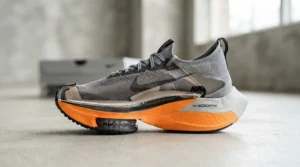
The FF BLAST PLUS midsole runs noticeably softer than earlier Kayano generations, while the redesigned 4D GUIDANCE SYSTEM reads your stride in real time rather than relying on a static wedge of firmer foam. What that means in practice: the correction ramps up only as your pronation increases, so a light overpronator and a moderate one both get an appropriately calibrated ride out of the same shoe. What most buyers overlook about this model is that it works nearly as well for neutral runners chasing extra stability on tired, late-run legs as it does for dedicated overpronators.
Aggregated review sentiment repeatedly praises the adaptive, non-intrusive feel of the correction, though a common complaint is that the snug, secure mesh upper runs warm on hot-weather runs.
Pros:
- ✅ Correction adapts to stride rather than staying static
- ✅ PureGEL heel insert smooths out hard heel strikes
- ✅ Trusted, decades-long track record for durability
Cons:
- ❌ Runs warm in summer conditions
- ❌ Heavier than the Hyperion-style speed-stability shoes
Sitting in the $160–$175 range, the ASICS Gel-Kayano 32 earns its premium price with genuinely adaptive tech — this is the shoe for runners with moderate-to-severe overpronation who log serious weekly volume.
3. Saucony Hurricane 26 — best shock absorption for heavy heel-strikers
If your knees ache after long runs regardless of what shoe you’re wearing, the problem might not be pronation at all — it might be impact. The Hurricane 26 tackles both.
Built on Saucony’s PWRRUN PB foam with a noticeably tall stack height, this shoe prioritizes shock absorption over minimalist feel, and it shows: the ride is soft without collapsing into mush, which is a harder balance to strike than it sounds. Here’s what to weigh: that tall stack does add a bit of heft, so if you’re chasing a fast 5K time, this isn’t your race-day shoe — but for easy and long runs, the cushioning-to-support ratio is genuinely excellent.
Reviewers consistently note superb traction and comfort even on long, tired-legs miles, with the most common critique being that the shoe runs slightly heavier than its stack height might suggest at first glance.
Pros:
- ✅ Exceptional shock absorption for heavy heel-strikers
- ✅ Subtle stability that doesn’t feel restrictive
- ✅ Superb outsole traction in wet or variable conditions
Cons:
- ❌ Heavier build than similarly stacked competitors
- ❌ Overkill for shorter, faster training sessions
Expect to pay in the $150–$165 range for the Saucony Hurricane 26 — the pick for runners whose overpronation shows up hardest at mile 10, not mile 1.
4. Hoka Arahi 8 — lightest stability shoe for faster days
Hoka built its name on tall, marshmallow-soft cushioning, and the Arahi line is the brand proving that stability doesn’t have to mean heavy.
The H-Frame geometry replaces a traditional medial post with a firmer foam structure that spans a wider footprint under the arch and heel, which is a cleverer solution than it sounds — rather than stacking a dense wedge of foam on the inside of the shoe, the geometry itself resists collapse. That keeps overall weight down while the slightly higher drop and rockered sole ease heel-to-toe transitions for runners who overpronate under fatigue. On paper this means faster tempo runs and shorter daily miles feel noticeably less clunky here than in most stability shoes.
A recurring theme in aggregated feedback is that the Arahi feels closer to a neutral daily trainer than a corrective shoe, with the main knock being reduced aggressiveness for genuine speedwork compared to lighter racing flats.
Pros:
- ✅ Noticeably lighter than most stability competitors
- ✅ Smooth, rockered transition from heel to toe
- ✅ Doubles nicely as an all-day walking shoe
Cons:
- ❌ Less aggressive correction than dedicated max-support models
- ❌ Narrower fit than some Hoka neutral models
Priced around $135–$150, the Hoka Arahi 8 suits runners with mild-to-moderate overpronation who refuse to sacrifice pace for support.
5. New Balance Fresh Foam X 860v15 — most structured everyday support
New Balance rebuilt the 860 nearly from scratch this generation, and the result is a bigger, more substantial shoe than longtime fans might expect.
The full-length Stability Plane sits within the Fresh Foam X midsole, using firmer density material specifically positioned to resist arch collapse rather than simply cushioning around it. Stack height climbed noticeably versus the v14, which softens the landing but adds a bit of bulk underfoot — what the spec sheet won’t tell you, but reviewers note, is that the wider platform makes this one of the more secure-feeling stability shoes for runners with genuinely flat feet, not just mild inward roll. Based on the spec comparison, this is a shoe built for structured daily miles, not a shoe you’ll reach for on tempo day.
Reviewers consistently point to the plush landing and dependable support as standout traits, with the most repeated concern being that the standard width runs snug for some feet — though wide and extra-wide options are available.
Pros:
- ✅ Full-length Stability Plane resists arch collapse directly
- ✅ Plush landing without feeling unstable
- ✅ Wide and extra-wide width options available
Cons:
- ❌ Bulkier, heavier platform than previous generations
- ❌ Standard width runs narrow for some foot shapes
In the $140–$155 range, the New Balance Fresh Foam X 860v15 is a strong pick for runners who want dedicated structural support built directly into the foam, not just guidance.
6. Brooks Glycerin GTS 23 — best premium daily trainer for long miles
Think of this as the Adrenaline GTS’s plusher, more indulgent older sibling — same GuideRails logic, considerably more cushion underneath it.
DNA Tuned foam sits at the core of the midsole, delivering a softer, more adaptive landing than the firmer DNA LOFT setup in the Adrenaline line, while GuideRails guidance still keeps excess inward roll in check during easy and recovery efforts. What most buyers overlook about this model is how well it doubles as an all-day walking or standing shoe — the plush ride holds up over hours on your feet, not just miles on the road. Reviewers consistently describe the ride as substantial without feeling sluggish, a difficult balance for a shoe built specifically around comfort-first stability.
The most common critique in aggregated feedback is the higher price point relative to the Adrenaline, alongside a slightly heavier feel that speed-focused runners may not appreciate.
Pros:
- ✅ Exceptionally plush ride for recovery and long runs
- ✅ Doubles effectively as an all-day comfort shoe
- ✅ Durable outsole holds up over high mileage
Cons:
- ❌ Premium price compared to the standard Adrenaline
- ❌ Too heavy and soft for faster training paces
Expect $155–$180 for the Brooks Glycerin GTS 23 — worth it if your overpronation flares up specifically on long, tired-legs efforts rather than short daily runs.
7. ASICS GT-2000 13 — best budget stability shoe
Not every overpronator needs (or wants) to spend $170 on a running shoe, and the GT-2000 line has quietly stayed the industry’s most reliable budget stability option for years.
The LITETRUSS support system replaces ASICS’s older, stiffer DuoMax post with a lighter, more flexible guidance structure, trimming weight without gutting the support runners actually rely on. Reviewers consistently frame this as the shoe you recommend to a friend just starting to suspect they overpronate — mild-to-moderate correction, a familiar ASICS fit, and a price that doesn’t demand a leap of faith. Here’s what to weigh: the cushioning stack is noticeably thinner than the Kayano or Hurricane, so high-mileage marathoners may eventually want to upgrade.
A recurring theme in aggregated feedback is genuine surprise at how “normal” this shoe feels for a stability model — nothing about it screams “corrective device,” which is exactly the direction the whole category has moved.
Pros:
- ✅ Genuinely affordable entry point into stability shoes
- ✅ Lighter, more flexible support than older ASICS motion-control models
- ✅ Familiar, true-to-size ASICS fit
Cons:
- ❌ Thinner cushioning stack than premium options on this list
- ❌ Less shock absorption for very high weekly mileage
At $100–$120, the ASICS GT-2000 13 is the shoe we’d recommend to anyone who suspects they overpronate but isn’t ready to commit real money before confirming it.
Top 7 Products: Full Specs & Ratings
| Shoe | Weight (approx.) | Drop | Support Tech | Price Range | Best For |
|---|---|---|---|---|---|
| Brooks Adrenaline GTS 25 | 9.9 oz (M) | 12mm | GuideRails | $130–$145 | Daily training |
| ASICS Gel-Kayano 32 | 10.5 oz (M) | 10mm | 4D Guidance | $160–$175 | High mileage |
| Saucony Hurricane 26 | 10.9 oz (M) | 8mm | PWRRUN PB medial | $150–$165 | Heavy heel strikers |
| Hoka Arahi 8 | 8.7 oz (M) | 5mm | H-Frame geometry | $135–$150 | Faster/lighter days |
| New Balance Fresh Foam X 860v15 | 11.6 oz (M) | 6mm | Stability Plane | $140–$155 | Structured support |
| Brooks Glycerin GTS 23 | 10.4 oz (M) | 10mm | GuideRails (plush) | $155–$180 | Recovery/long runs |
| ASICS GT-2000 13 | 9.5 oz (M) | 8mm | LITETRUSS | $100–$120 | Budget entry point |
Lay these seven side by side and the drop heights alone tell a story: the Hoka Arahi 8 sits lowest at 5mm, prioritizing a natural, ground-level transition, while Brooks Adrenaline GTS 25 and Brooks Glycerin GTS 23 sit highest at 10-12mm, cushioning the heel strike more aggressively for runners who land hard. Weight tracks almost exactly with cushioning volume — the New Balance Fresh Foam X 860v15 is the heaviest shoe here because it’s also carrying the tallest, plushest stack. None of that makes one shoe “better”; it just means your ideal pick depends on whether you’re chasing speed, comfort, or somewhere in between.
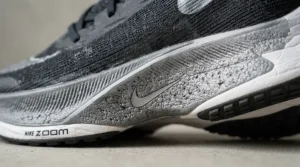
The Practical Setup & Break-In Guide
Buying the right shoe is only half the job — how you introduce it to your feet matters just as much.
Start with a 10-14 day break-in window where you alternate the new shoe with your old pair rather than jumping straight to 100% use. Stability shoes, even gentle guidance-based ones like the Brooks Adrenaline GTS 25 or ASICS GT-2000 13, shift load through your ankle and hip slightly differently than a neutral shoe, and your connective tissue needs time to adjust. A common mistake in the first month is going straight into a long run in a brand-new pair — save that for week three, once the midsole has softened slightly and your gait has adapted.
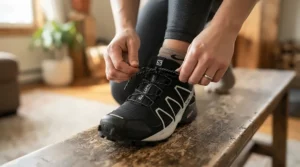
Rotate insoles seasonally if you run in variable climates, and re-lace using a runner’s loop (the extra eyelet near the ankle) if you notice heel slip, since a sloppy heel lock undermines even the best guidance system. Replace your shoes every 300-500 miles regardless of how the tread looks — midsole foam compresses and loses its supportive properties long before the outsole visibly wears through, and that silent breakdown is exactly when old injuries tend to resurface.
Real-World Scenarios: Which Shoe Fits Your Life
The marathon-training commuter: Logging 35+ weekly miles on pavement, moderate overpronation, budget flexible. The ASICS Gel-Kayano 32 or Saucony Hurricane 26 make the most sense here — both are built to absorb the cumulative pounding of genuinely high mileage without the support degrading by week 12 of a training block.
The budget-conscious beginner: New to running, suspects overpronation after a store gait check, not ready to spend big before confirming the diagnosis. The ASICS GT-2000 13 is the low-risk entry point — real support, familiar fit, a price that won’t sting if it turns out a neutral shoe would’ve worked just as well.
The lunchtime tempo runner: Squeezing 4-6 miles into a workday, wants speed without abandoning support entirely. The Hoka Arahi 8 threads that needle better than anything else on this list, keeping weight down while still guiding the stride.
How to Choose Running Shoes for Overpronation
- Confirm your pronation pattern first. Check wear patterns on old shoes or get a gait analysis before assuming you need a stability shoe at all.
- Match support level to severity. Mild inward roll rarely needs the same correction as moderate-to-severe overpronation — over-correcting can create new problems.
- Prioritize mileage over marketing. A shoe rated for your typical weekly distance matters more than any single “advanced” feature.
- Try before committing to a dozen pairs. Fit varies wildly between brands even at the same stated support level.
- Factor in your primary run type. Long slow runs favor cushioned options like the Brooks Glycerin GTS 23; faster days favor lighter builds like the Hoka Arahi 8.
- Budget for replacement, not just purchase. A $110 shoe replaced on schedule beats a $180 shoe worn 200 miles too long.
- Reassess every 12-18 months. Pronation patterns can shift as strength, weight, or running form change over time.
Common Mistakes When Buying Stability Running Shoes for Overpronation
The single biggest mistake is skipping verification entirely — plenty of runners buy a stability shoe because a friend recommended it, not because they’ve confirmed they actually overpronate. Modern research has genuinely complicated the old “if you overpronate, you need a stability shoe” logic, and plenty of runners do just fine in neutral shoes despite some inward roll.
A second common error is over-correcting: choosing the most aggressive support option available “just to be safe,” which can feel restrictive and occasionally shifts strain to a different joint rather than eliminating it. Finally, many runners ignore width entirely — a shoe like the New Balance Fresh Foam X 860v15 runs snug in standard width but offers wide and extra-wide versions that solve the problem instantly, yet get overlooked because shoppers default to whatever size they’ve always bought.
Stability Shoes vs. Neutral Running Shoes
| Feature | Stability Shoe | Neutral Shoe |
|---|---|---|
| Arch/medial support | Reinforced (GuideRails, medial post, plane) | Minimal to none |
| Weight | Slightly heavier on average | Generally lighter |
| Best for | Overpronators, flat arches | Neutral or supinated gaits |
| Correction feel | Present but often subtle | None by design |
The honest answer from current research is that matching shoes to your pronation type doesn’t guarantee injury prevention the way it was once marketed to — plenty of overpronators run entirely pain-free in neutral shoes. That said, if you’re already dealing with discomfort tied to excessive inward roll, the added guidance in a stability shoe genuinely changes how your stride feels late in a run, even if it isn’t a guaranteed fix. Treat this table as a starting filter, not gospel.

Gait Analysis: How to Actually Know If You Overpronate
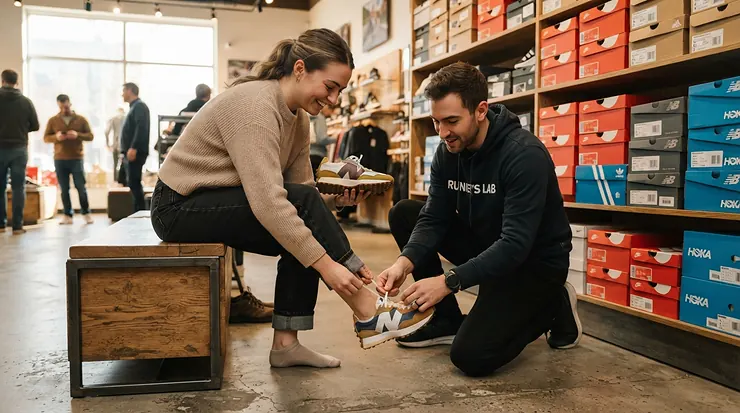
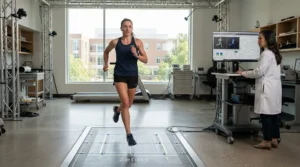
Gait analysis running assessments come in two flavors, and they are not created equal. The casual version — a running-store employee watching you jog on a treadmill for thirty seconds — is convenient but notoriously prone to overdiagnosing overpronation, since a few strides rarely capture how your form holds up over real mileage. The more reliable version involves a physical therapist or sports medicine professional analyzing your stride with slow-motion video or force-plate data across a longer distance.
According to England Athletics’ running club guidance, the simplest at-home check is examining the wear pattern on an old, well-used pair of shoes: place them side by side on a flat surface, and look at whether they tilt inward, outward, or sit neutral. A shoe wearing down heavily along the inner edge is one of the clearest signs you’re dealing with the kind of overpronation these shoes are built to address. It’s not a lab-grade diagnosis, but it’s a genuinely useful first filter before you spend money on a formal assessment — or on a shoe you may not actually need.
Medial Post Technology, Explained
Medial post technology used to mean one thing: a wedge of noticeably firmer foam built into the inside (medial) edge of the midsole, designed to resist compression and physically slow the rate at which your arch collapses inward. It’s blunt, effective, and — as brands have since discovered — not always necessary to get the same result.
Peer-reviewed research backs up the core mechanism here. A study published through the University of Jyväskylä’s biomechanics research found that medially posted insoles measurably reduced peak forefoot eversion and altered rearfoot-to-tibia mechanics during both walking and running in overpronating subjects — meaningful evidence that this isn’t purely marketing. That said, most 2026 shoes on this list, including the ASICS Gel-Kayano 32 and Hoka Arahi 8, have shifted toward geometry-based systems (wider platforms, dual-density foam zones, frame structures) rather than a single rigid post, because a distributed structure tends to feel less abrupt underfoot while still resisting collapse. The technology evolved; the underlying physics didn’t.
Ankle Rolling Inward: What Correction Actually Looks Like
“Ankle rolling inward” is the plain-language version of everything we’ve been discussing, and it’s worth separating from a related but distinct issue: an unstable ankle that rolls during a single misstep (a sprain risk) versus a consistent inward roll during the natural gait cycle (overpronation). Stability running shoes address the second pattern, not the first — no shoe substitutes for ankle strength work if instability is your core issue.
For genuine gait-related inward roll, correction works cumulatively rather than instantly. The broader medical literature on foot pronation describes it as a normal, even necessary shock-absorbing motion — the goal of a stability shoe was never to eliminate it, only to prevent the excessive, injury-associated version of it. Expect a properly fitted shoe to change how your stride feels within the first few runs, but changes in actual joint stress and injury risk typically show up over weeks of consistent use, not overnight.
What to Expect: Real-World Performance
Specs are one thing; a real run is another. In practice, most 2026 stability shoes feel remarkably close to their neutral counterparts for the first several miles — the guidance only becomes noticeable as fatigue sets in and your form naturally starts to break down, which is exactly when you need it most. Expect the correction in shoes like the Brooks Adrenaline GTS 25 to feel almost invisible on an easy 3-mile jog, then noticeably more present around mile 8 of a long run when your hips start to drop and your knees start to wobble.
Temperature and terrain shift the experience too. Warmer weather makes snugger uppers like the ASICS Gel-Kayano 32‘s feel noticeably warmer, while wet or uneven surfaces put more emphasis on outsole traction than on the stability system itself — a shoe with excellent guidance but a mediocre outsole, like some early-generation stability models, can still feel unstable on a rainy trail.
Long-Term Cost & Maintenance
A $110 pair of ASICS GT-2000 13 shoes replaced diligently every 400 miles will, over two years of moderate mileage, cost roughly the same as a single pair of premium shoes worn twice as long as they should be — except the budget shoes will have been supportive for the entire lifespan, while the overworked premium pair spent its last 150 miles offering none of the cushioning or correction you paid for. That’s the real math behind long-term shoe cost: replacement discipline matters more than sticker price.
Rotating two pairs — a daily trainer like the New Balance Fresh Foam X 860v15 and a lighter option like the Hoka Arahi 8 — also extends usable life for both, since midsole foam gets a full rest day to recover its cushioning properties between wears, rather than compressing continuously.

Frequently Asked Questions
❓ Do I really need running shoes for overpronation?
❓ What's the difference between medial post and GuideRails technology?
❓ How often should I replace stability running shoes?
❓ Can stability running shoes fix my overpronation permanently?
❓ Are stability running shoes good for walking too?
Conclusion
Overpronation isn’t a flaw to panic about — it’s just information about how your body moves, and the right shoe simply works with that information instead of ignoring it. Whether you land on the budget-friendly ASICS GT-2000 13, the do-everything Brooks Adrenaline GTS 25, or the max-cushion Saucony Hurricane 26, the goal is the same: less strain, more comfortable miles, and a stride that holds up when you’re tired, not just when you’re fresh.
Start with a real gait check, match the support level to what you actually need rather than what sounds most impressive on a spec sheet, and give any new pair a proper break-in period before trusting it with a long run. The best running shoes for overpronation aren’t the ones with the most aggressive correction — they’re the ones you forget you’re wearing until the exact moment you need them.
Recommended for You
- Running Shoes For Wide Feet Women: 7 Comfortable Picks (2026)
- Running Shoes For Wide Feet Men: 7 Best 2E-4E Picks (2026)
- Running Shoes For Flat Feet: 7 Best Picks For 2026
Disclaimer: This article contains affiliate links. As an Amazon Associate, I earn from qualifying purchases. If you purchase products through these links, we may earn a small commission at no additional cost to you.
✨ Found this helpful? Share it with a running buddy who needs it! 💬🤗
